
The Science-Based Guide to Whole-Body Electrical Muscle Stimulation
How WB-EMS produces muscle contractions, how stimulation variables change the experience, what research can and cannot tell us, and how to approach training conservatively.
Whole-body electrical muscle stimulation uses electrodes positioned over several large muscle groups to deliver controlled electrical pulses while a user performs voluntary movements. The external stimulus can increase muscular demand during low-load exercise, but the response depends on electrode contact, current amplitude, pulse characteristics, exercise selection, training status, and recovery. EMS is a training tool—not a substitute for movement, progressive exercise, sleep, or nutrition.
Educational information, not medical advice · Last evidence review: August 2026
Evidence note: Outcomes reported in WB-EMS studies vary by population and protocol. This guide summarizes mechanisms and practical considerations; it does not diagnose, treat, or prescribe.
What Is Electrical Muscle Stimulation?
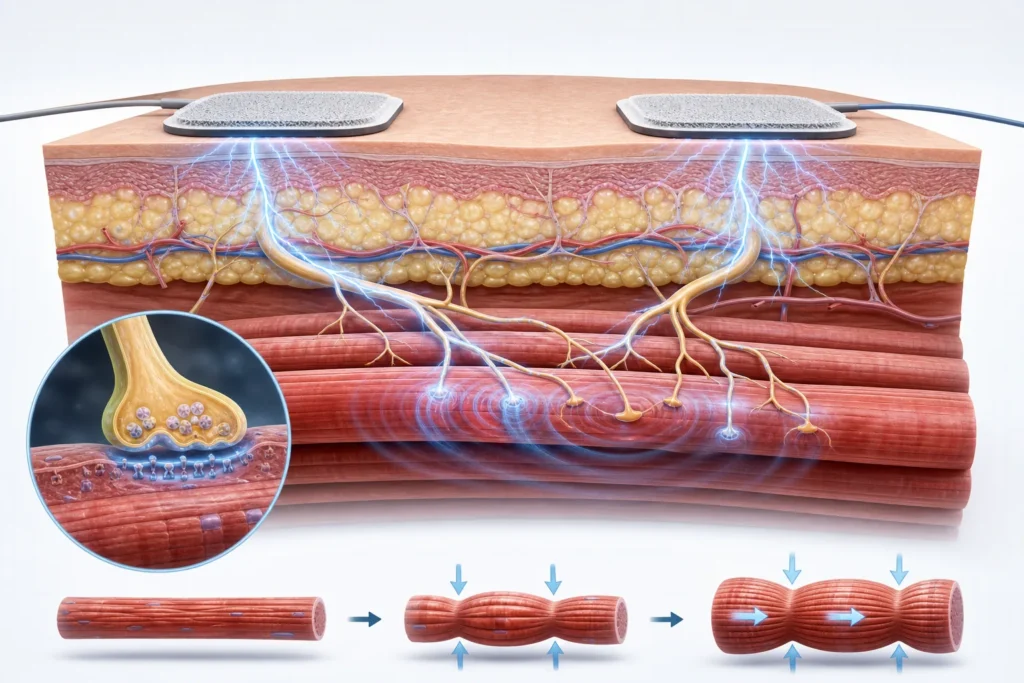
Electrical muscle stimulation applies current through electrodes on the skin. When the current is strong enough to depolarize nearby motor axons, those nerves transmit signals to the muscle fibers they control, producing a contraction. In whole-body EMS, multiple electrode zones are coordinated so several large muscle groups can be stimulated during the same exercise interval.
The current does not travel through the body as a single deep wave. Its effective distribution is shaped by electrode size and position, skin–electrode contact, tissue impedance, current amplitude, and the anatomy beneath each electrode. A stronger setting is not automatically a better setting: it generally recruits more excitable motor axons and increases contraction force, but it may also increase discomfort and fatigue.
Voluntary and electrically evoked recruitment
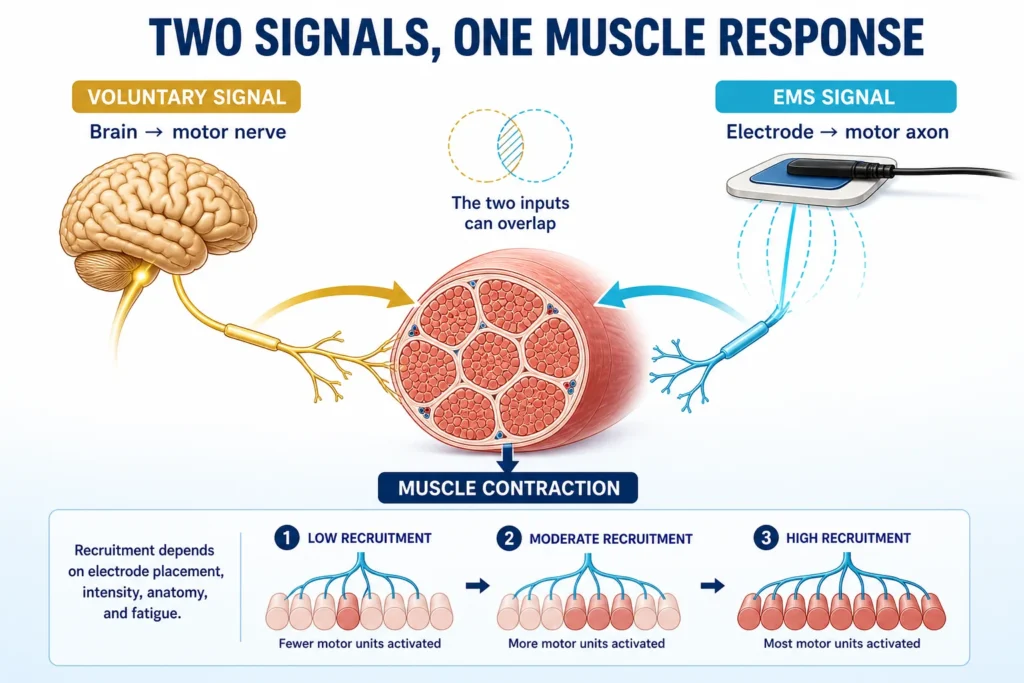
During voluntary exercise, the nervous system recruits motor units according to the force and coordination the task requires. Surface EMS adds a second activation pathway by depolarizing motor axons beneath the electrodes. The two inputs can overlap, which is why a low-load movement may feel substantially harder during stimulation. Our explainer on what actually happens during an EMS workout walks through a session step by step.
It is more accurate to describe EMS as additional recruitment in the stimulated region than as guaranteed access to “deeper” muscle fibers. Recruitment is affected by electrode placement, current amplitude, anatomy, fatigue, and the device waveform. EMS also does not teach movement skill on its own; technique still comes from voluntary practice. We look at the wider claims in whether EMS training is real or just hype.
WB-EMS, NMES and TENS are not interchangeable
Three related technologies are often confused, and the difference matters when you read a study or a product claim.
- WB-EMS stimulates several large muscle regions during a supervised or app-guided exercise session. See what a full-body EMS suit is and how it works.
- NMES usually targets one or a few muscles and is often used in sports or rehabilitation settings.
- TENS is primarily used for sensory-level stimulation associated with pain management; it is not designed to create the same training contraction.
For background on how these approaches developed, see a brief history of EMS.
How EMS Training Works
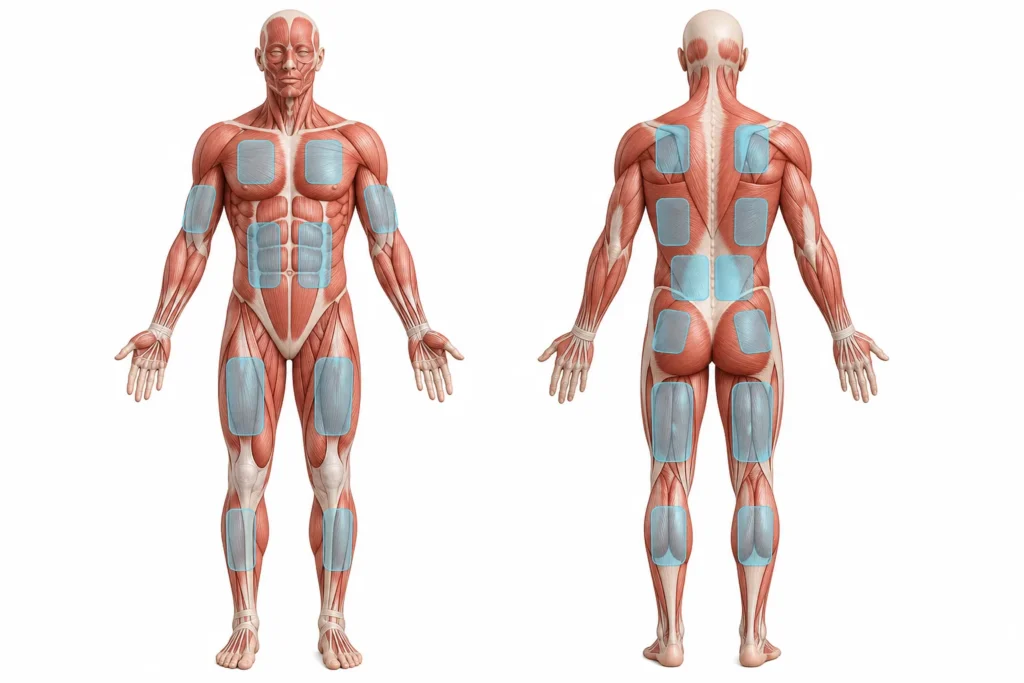
An EMS suit contains integrated electrodes positioned over several large muscle groups. During a session those zones deliver controlled pulses while you perform simple, low-load movements. How much of the muscle actually responds depends on electrode contact, current amplitude, the waveform the device uses, and the anatomy beneath each electrode — not on the suit alone.
Electrodes, impulses and muscle recruitment
You typically alternate short bursts of stimulation with rest while moving. The stimulated region receives an additional activation input on top of your own neural drive, which is why a light movement can feel demanding. Recruitment is regional and variable: it is shaped by where the electrodes sit, how much current is used, your anatomy, and how fatigued the muscle already is.
What a conservative WB-EMS session looks like
A typical WB-EMS session alternates stimulated work intervals with rest while the user performs controlled, low-load movements. 20 minutes is common in commercial settings, but duration alone does not define the dose. A short session at a high current can be more demanding than a longer session at a low current.
For a new user, the scientific priority is familiarization: establish even electrode contact, learn the sensation, keep the perceived intensity moderate, use simple movements, and observe recovery before increasing the dose. Progress one variable at a time rather than simultaneously raising intensity, session duration, exercise difficulty, and weekly frequency.
Key takeaway: EMS supplements your own effort with a second activation pathway in the stimulated region. It does not replace voluntary training, and it does not guarantee access to muscle fibers that voluntary effort cannot reach.
What EMS Training Actually Feels Like
Most first-timers describe the sensation as a deep, tingling tightness that builds as intensity rises, followed by a clear release between impulses. It should feel strong but never painful. You stay in control of the dial and increase intensity gradually as you get comfortable.
How to prepare
Hydration and good electrode contact make a big difference to comfort and effectiveness. Our EMS session preparation checklist walks through exactly what to do beforehand.
What to wear
Most suits are worn over a thin, slightly damp base layer for conductivity. Here’s what to wear under an EMS suit for the best contact and comfort.
EMS Suit Types: Wired vs. Wireless
The biggest hardware decision is wired vs. wireless. Both deliver the same core stimulation; they differ in freedom of movement, price and setup.
| Wired EMS | Wireless EMS | |
|---|---|---|
| Freedom of movement | Tethered to a control box; better for stationary or studio-style sessions | Full range of motion; train anywhere |
| Typical setting | Studios, clinics, fixed home setups | At-home and on-the-go training |
| Setup | More cabling; often paired with a base unit | App-controlled, minimal cabling |
| Price | Often lower for the suit itself; studio gear can be costly | Higher upfront for the convenience |
| Best for | Guided/structured sessions, max signal stability | Convenience, flexibility, busy schedules |
If freedom of movement and at-home convenience matter most, wireless usually wins — here’s why many people choose a wireless EMS suit.
At-Home EMS vs. Studio EMS
You can train with EMS at home with your own suit, or attend trainer-led sessions at a studio. Each suits a different budget, schedule and confidence level.
| At-home EMS | Studio EMS | |
|---|---|---|
| Cost over time | One-time suit purchase; low ongoing cost | Per-session or membership fees add up |
| Convenience | Train on your schedule, no travel | Fixed appointments and location |
| Guidance | Self-directed (use app programs & guides) | Hands-on coaching and setup |
| Learning curve | Steeper at first; pays off quickly | Lower — a trainer handles settings |
| Best for | Independent, busy people | Beginners who want supervision |
Common EMS Settings & Programs
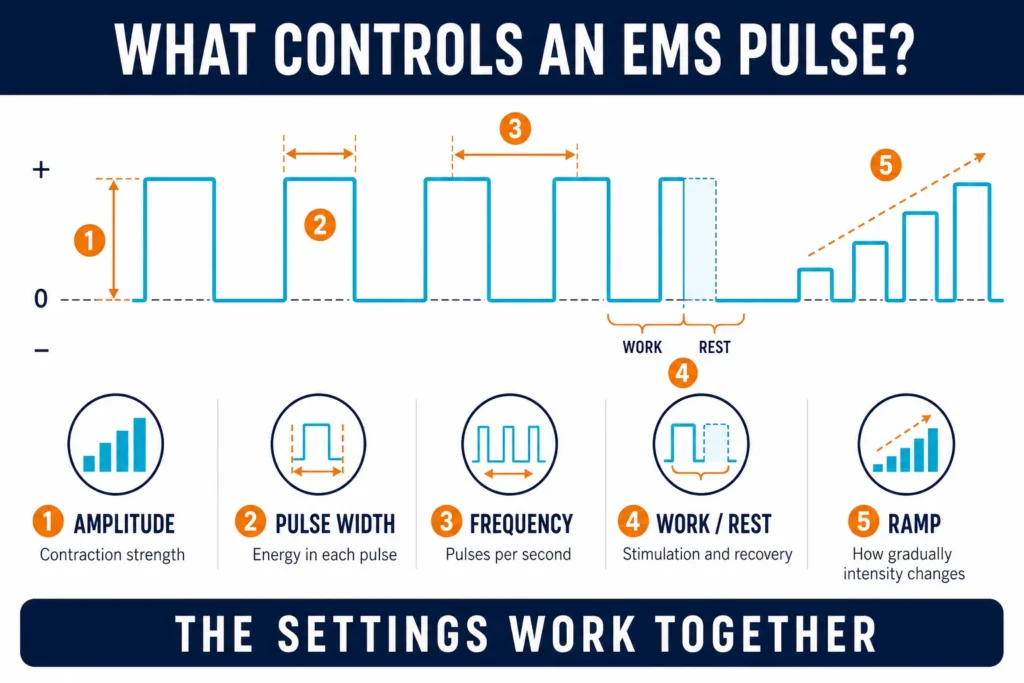
An EMS program is defined by several interacting variables. No single frequency is inherently a “fat-loss,” “strength,” or “recovery” setting — program effects come from the complete combination of waveform, intensity, duty cycle, exercise, session duration, and training dose.
The variables that shape an EMS pulse
- Current amplitude (intensity): influences how many excitable motor axons are recruited and how strong the contraction feels.
- Pulse width: the duration of each pulse; changing it alters the electrical charge delivered per pulse and can affect recruitment and comfort.
- Frequency: pulses per second. At sufficiently high frequencies, individual twitches merge into a more sustained contraction. The useful range depends on the device, muscle group, and training purpose.
- Duty cycle: the ratio of stimulated work time to rest time. Rest intervals affect fatigue and the quality of later contractions.
- Ramp time: how gradually the current rises and falls, which can improve comfort and coordination with movement.
Device presets are not standardized across brands. A program name should not be treated as a clinical dose. Follow the manufacturer’s contraindications and obtain professional guidance when medical conditions or rehabilitation goals are involved.
| Goal | Typical program feel | What to focus on |
|---|---|---|
| Strength & toning | Stronger contractions, longer holds | Controlled compound movements |
| Endurance | Faster cycles, moderate intensity | Steady tempo, more reps |
| Fat loss / metabolic | Continuous, full-body activation | Keep moving between impulses |
| Recovery | Gentle, low-intensity pulses | Relax and let muscles flush |
Tip: Not sure where to start? Our EMS Protocol Builder can help you structure a conservative starting session — treat its output as a starting point to adjust, not a prescription.
Dose, adaptation and recovery
WB-EMS can create substantial muscle stress despite light external loads. New users should avoid maximal sessions and allow enough time to assess soreness and recovery. A cautious starting pattern is one familiarization session per week, followed by gradual progression only when recovery is normal. Some experienced users may train more often, but frequency should reflect intensity, training history, other exercise, and the manufacturer’s instructions. Our EMS wellness routine integration guide covers fitting sessions around the rest of your training.
Severe or unusually persistent muscle pain, marked weakness, swelling, or dark urine after a session requires prompt medical evaluation. These symptoms can be associated with significant muscle injury and should not be dismissed as ordinary soreness.
Safety fundamentals
- Complete the device’s health screening and follow its contraindications.
- Begin with a familiarization phase; do not chase the highest tolerable current.
- Ensure full, even electrode contact and stop if stimulation produces focal burning, sharp pain, dizziness, palpitations, or unusual neurologic symptoms.
- Do not place electrodes across the chest, on the head, or over the front or side of the neck.
- Avoid training when acutely ill, dehydrated, intoxicated, or unable to reliably report discomfort.
- Allow recovery between demanding WB-EMS sessions and account for other resistance or endurance training.
Seek qualified medical advice when an implanted electronic device, pregnancy, seizure disorder, cardiovascular disease, thrombosis risk, recent surgery, active cancer treatment, or another significant condition may affect suitability. Because contraindication lists and regulatory status vary by device and jurisdiction, follow your manufacturer’s instructions rather than treating any single list as exhaustive. We also cover 8 common EMS training myths debunked.
Who Should Avoid EMS — or Ask a Doctor First
EMS can help some users, but certain conditions call for caution. This is general education, not medical advice — ask a qualified medical professional first if any of the following apply.
Do not use / strong precaution
- Pacemakers, ICDs, or other implanted electronic medical devices (risk of interference).
- Pregnancy.
Get medical clearance first
- Epilepsy or any seizure disorder.
- Heart conditions or cardiovascular disease.
- Deep vein thrombosis (DVT), active phlebitis, or circulatory disorders.
- Recent surgery, a hernia, or acute injury/inflammation.
- Cancer or active treatment.
- Any other serious or unmanaged medical condition.
Whether EMS is appropriate depends on the program, intensity, consistency and the individual. When in doubt, check with your doctor before starting.
What the Evidence Can Reasonably Support
Research suggests that supervised WB-EMS can improve some measures of strength and body composition in certain populations, particularly when it is used consistently as part of a structured program. However, study protocols, comparison groups, devices, and participant populations vary. That makes it inappropriate to promise a specific result, or to assume that findings from a supervised study apply to every home device.
Strength and function
Plausible when stimulation is paired with repeated voluntary exercise and progressive loading of the training stimulus. The adaptation comes from the training you do, not from the current itself — see EMS suits vs. the gym for how the two compare. Commonly targeted regions include core strengthening and glute activation, though “targeting” reflects where the electrodes sit rather than selective access to particular fibers.
Recovery and movement quality
Gentle stimulation may be used in some recovery contexts, but recovery claims should stay modest, and EMS does not “flush” muscle or replace medical or rehabilitation care. Some users apply lower-intensity programs when working on hamstring/quad balance, posture, or shoulder activation for desk workers. Evidence for these specific uses is limited, and voluntary practice remains what builds movement skill.
Body composition
EMS does not directly “melt” fat. Possible changes in body composition should be interpreted alongside diet, total activity, adherence, and study design — the same factors that drive body-composition change with any training method. For context on how whole-body systems are used, see our full-body EMS overview.
Joint-friendly training
Low external loads may be useful for some people, but low load does not mean low physiological stress — WB-EMS can be demanding even when nothing heavy is being lifted. This matters most for people returning to training or managing joint discomfort; see EMS for muscle weakness in seniors and the mind-body wellness angle. Anyone with a significant health condition should get individual medical advice first.
Common Mistakes Beginners Make
- Cranking intensity too high, too soon instead of building up gradually.
- Skipping hydration or poor electrode contact (see what to wear).
- Training too frequently with no recovery days.
- Treating EMS as a total replacement for movement and nutrition.
- Believing the hype — sort it out with myths debunked.
- Not preparing — use the session checklist.
How to Read EMS Research
When evaluating a study or a product claim, check:
- Was the intervention WB-EMS, local NMES, or TENS?
- Were sessions supervised, and how was intensity progressed?
- What population was studied — healthy adults, athletes, older adults, or patients?
- Was EMS compared with no exercise, conventional exercise, or the same exercise without stimulation?
- Were outcomes measured objectively, and was the study long enough to assess adaptation?
- Was the device or study funded by a manufacturer?
A statistically significant result is not automatically a large or meaningful real-world benefit. The most useful evidence comes from multiple well-designed studies with comparable protocols — not a single favorable result.
EMS Suit Buying Guide
The right suit depends on how and where you’ll train. Weigh these factors before buying:
- Fit & electrode coverage — a well-fitting suit with full muscle-group coverage transmits the signal better.
- Wired vs. wireless — match it to at-home freedom vs. studio stability.
- App & programs — quality presets and intensity control per muscle group.
- Certification & safety — look for appropriate clearances; see our FDA-cleared EMS suit review.
- Support & warranty — responsive support and clear guarantees.
Suits and brands we've reviewed:
Suits



Brands

Top Pick EMS Suit
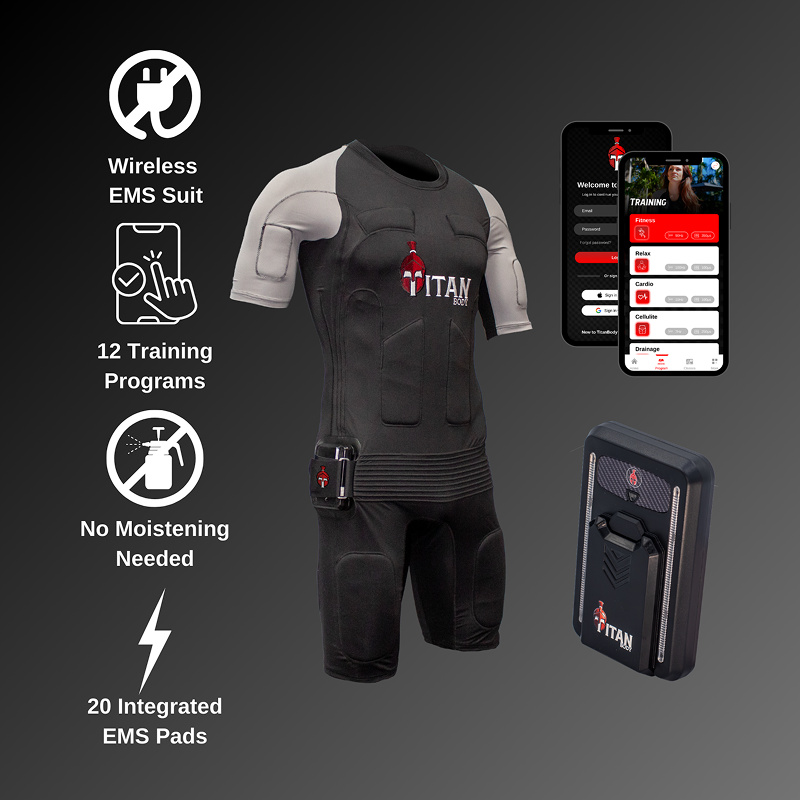
TitanBody
5.0
Our Rating

Subscription-Free Power Suit
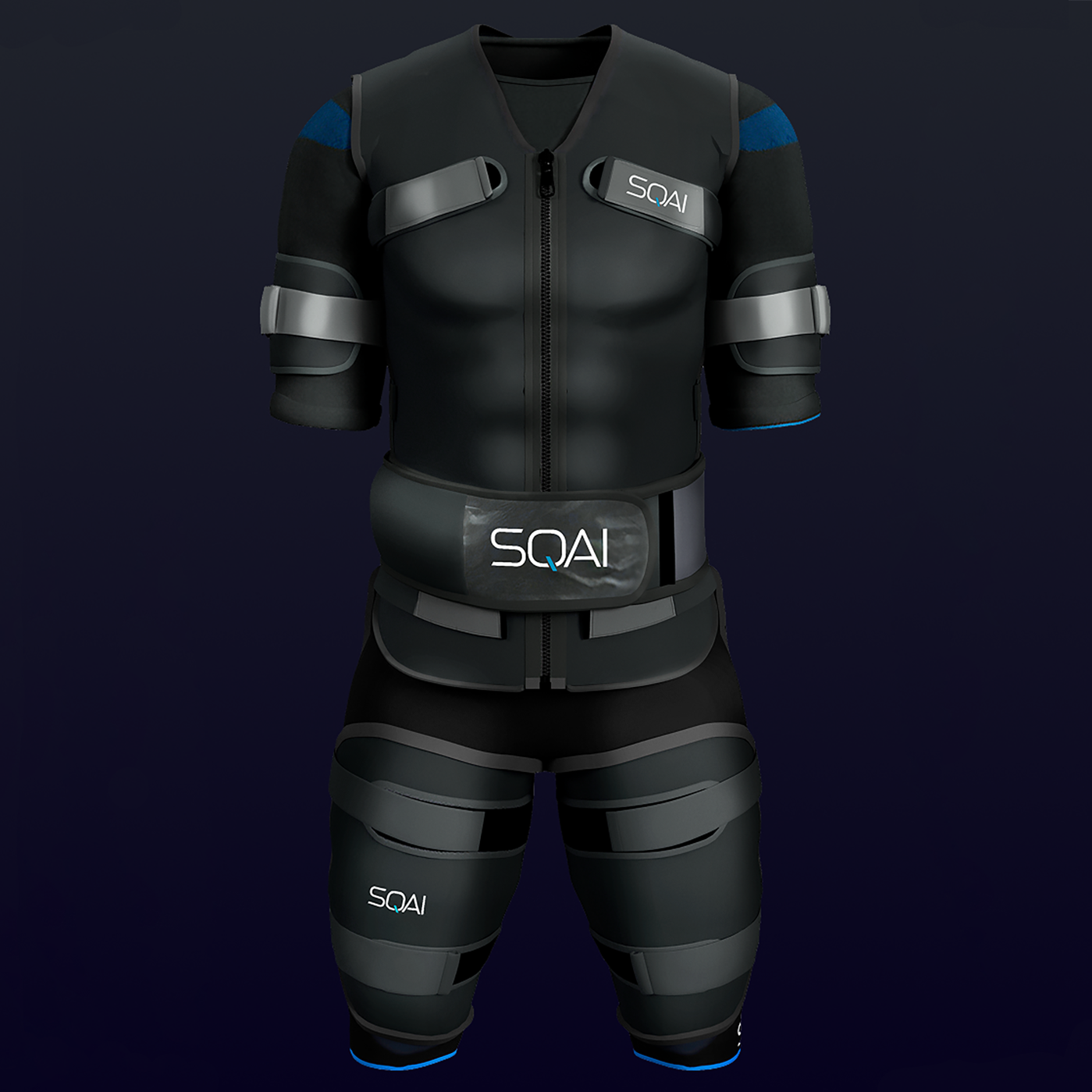
SQAI
3.6
Our Rating

Studio-Grade EMS at Home
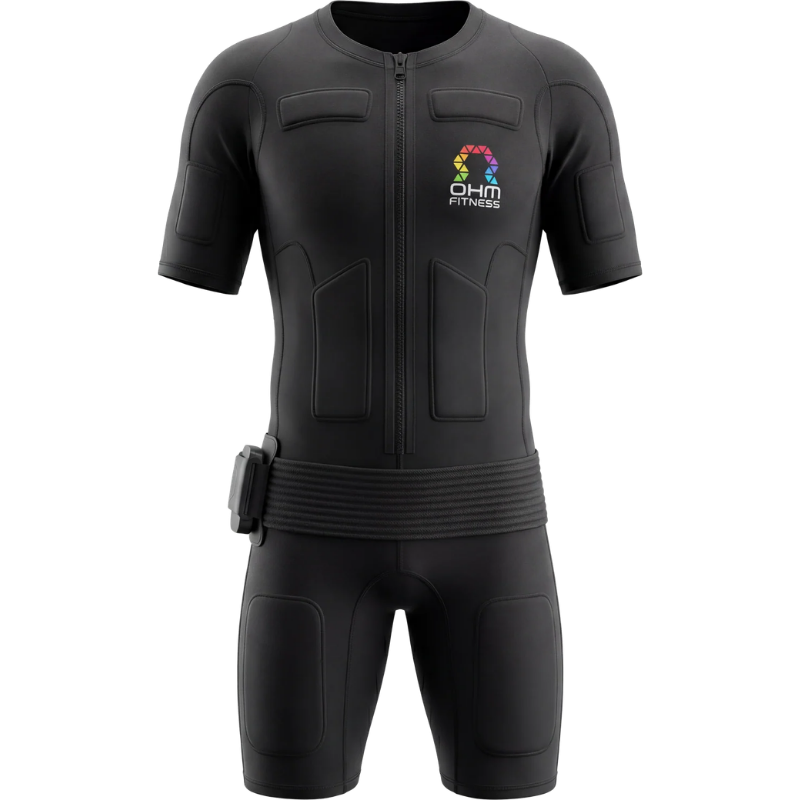
OHM Fitness
3.9
Our Rating

The Studio EMS Standard
miha bodytec
4.2
Our Rating
26-Electrode Wireless EMS
Katalyst
4.1
Our Rating
Frequently Asked Questions
Is EMS training safe?
How often should I do EMS?
Many people do well with one to two whole-body sessions per week with recovery days in between. Beginners should start shorter and lighter.
Can EMS help with weight loss?
It can add training volume in less time and may support body-composition goals as part of an active routine and sensible nutrition — but it isn’t a stand-alone fat-loss solution.
Wired or wireless — which should I choose?
Wireless gives full freedom of movement and at-home convenience; wired setups suit studios and structured sessions.
Do I need a trainer, or can I train at home?
Both work. Studios offer hands-on guidance; at-home suits offer convenience and lower ongoing cost.
How long is an EMS session?
Most whole-body EMS sessions are around 20 minutes.
Can I use EMS with a pacemaker or during pregnancy?
No — pacemakers/implanted devices and pregnancy are situations where you should not use EMS without specific medical guidance. Always ask a qualified medical professional first.
Related EMS Guides
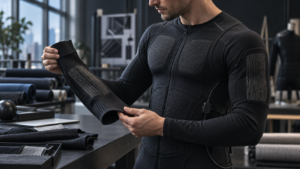
Conductive Fabric Electrodes in EMS Suits: Materials, Contact, and Wear
Learn how conductive textile EMS electrodes work, why
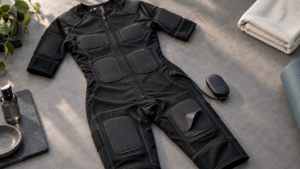
Why EMS Electrode Contact Becomes Patchy and How to Fix It
Fix patchy or sharp EMS stimulation by checking
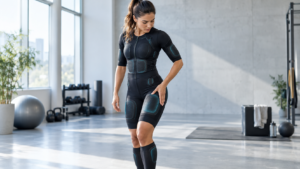
How Electrode Size Changes Current Density and Sensation in EMS
Learn how EMS electrode area and placement affect
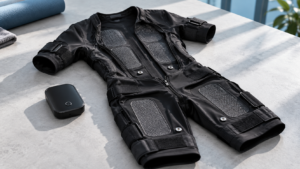
EMS Suit Lifespan: Signs That Electrodes, Fabric, or Connectors Are Wearing Out
Learn what affects EMS suit lifespan and how
How to Remove Odor From an EMS Suit Without Harsh Chemicals
Remove EMS suit odor by using the approved
This guide is for general educational purposes and does not constitute medical advice. EMS may support various fitness and wellness goals for some users, with results depending on the program, intensity, consistency and the individual. If you have any medical condition or concern — including a pacemaker or implanted device, pregnancy, epilepsy, or a heart condition — consult a qualified medical professional before starting EMS training.