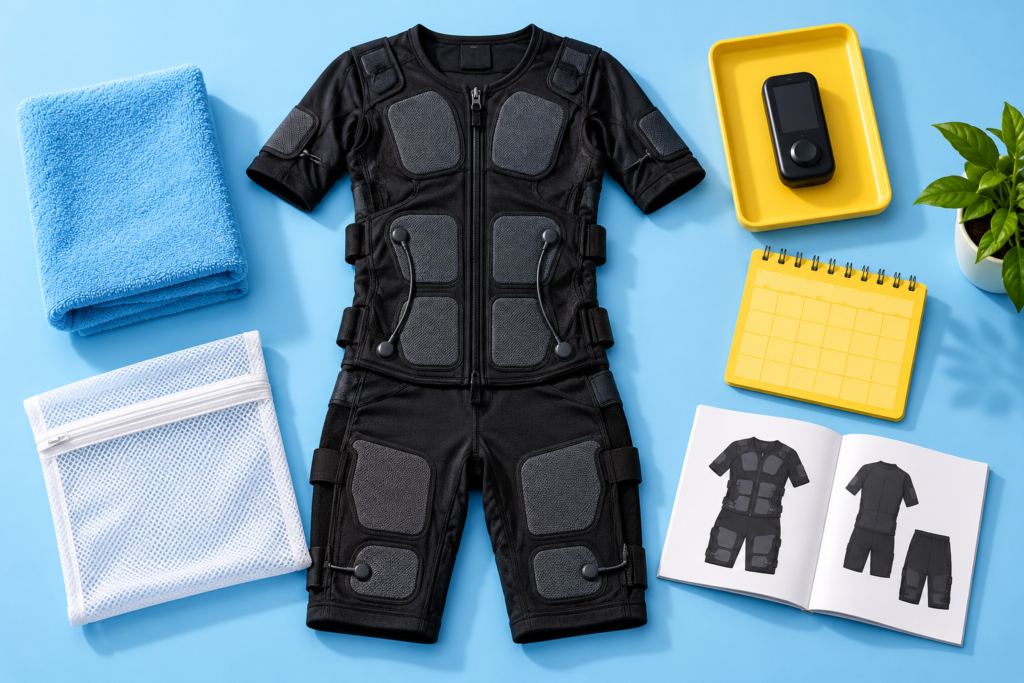
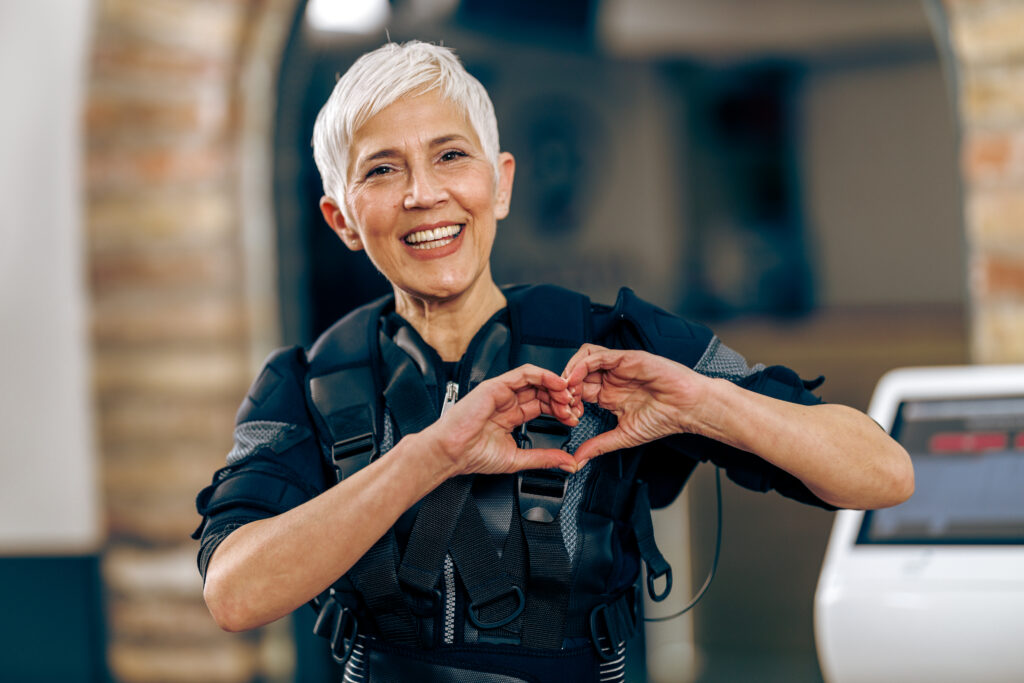
Muscle strength is one of the strongest predictors of healthy aging outcomes. Older adults with greater muscle mass and strength live more independently, fall less frequently, recover from illness faster, and have longer, healthier lives than those with lower muscle mass and strength.
The progressive loss of muscle mass and strength with aging, known as sarcopenia, is not inevitable. But it does represent a significant physiological challenge that requires intentional intervention to counteract. For many older adults, that intervention needs to be accessible, joint-friendly, and sustainable, which is where EMS muscle weakness seniors programs have genuine and growing relevance.
Resistance training is the most effective evidence-based intervention for sarcopenia prevention and treatment, but its adoption among older adults is low. Physical limitations, joint pain, fear of injury, and lack of access to suitable facilities are among the barriers that prevent many seniors from performing conventional resistance training with sufficient frequency and intensity. EMS training addresses several of these barriers simultaneously, providing meaningful muscle activation in short supervised sessions without the joint loading or complex technique demands of conventional exercise.
The Aging Muscle Challenge: Why EMS Muscle Weakness Seniors Programs Matter
After age 50, most adults lose one to two percent of their muscle mass per year without active intervention. Walston et al. (2019) report that this rate accelerates to three percent per year or more after age 70, driven by reduced anabolic hormone levels, blunted muscle protein synthesis response to dietary protein, chronic low-grade inflammation, neurological changes in motor unit function, and reduced physical activity.
The functional consequences are profound:
- Loss of lower extremity strength reduces walking speed, stair-climbing ability, and the capacity to rise from chairs
- Muscle weakness is one of the primary risk factors for falls, the leading cause of injury-related death in adults over 65
- Reduced muscle mass is associated with slower recovery from illness, surgery, and hospitalization
- Progressive loss of independence is one of the most feared consequences of sarcopenia among older adults
An overview published in the Journal of Cachexia, Sarcopenia and Muscle (2010) estimates that sarcopenia affects between 5 and 13 percent of adults aged 60 to 70 and between 11 and 50 percent of those aged 80 and older, making it one of the most prevalent and consequential conditions in older adult health. The case for EMS muscle weakness seniors programming as a practical response to this challenge is well supported.
What the Research Says About EMS for Muscle Weakness in Seniors
The research base for EMS muscle weakness seniors applications is among the strongest in the broader EMS literature. Multiple randomized controlled trials have specifically examined whole-body EMS in older adult populations, producing consistently positive findings for the outcomes most relevant to healthy aging.
Kemmler et al. (2014) examined the impact of whole-body EMS on body composition in elderly women at risk for sarcopenia in the TEST-III trial, finding significant improvements in muscle mass measured by DXA, leg strength measured by leg press, and metabolic health markers following the training program. These are precisely the outcomes that EMS muscle weakness seniors programs aim to produce.
A key advantage documented across older adult EMS research is the favorable benefit-to-effort ratio. Whole-body EMS produced meaningful improvements in muscle strength and function in older adults performing only two brief 20-minute sessions per week. That volume is far more achievable and sustainable for many seniors than the conventional resistance training volumes required for comparable outcomes.
Research specifically in older adults with sarcopenic obesity, the combination of elevated fat mass and reduced muscle mass, has found whole-body EMS particularly effective for simultaneously addressing both components of this pattern. EMS muscle weakness seniors programs in this population reduced fat mass and increased lean mass in individuals for whom conventional exercise was too demanding to sustain at therapeutic intensity.
EMS and Fall Prevention in Older Adults
Fall prevention is one of the most important outcomes in older adult health, and it is directly relevant to EMS muscle weakness seniors programming.
Several studies have found that whole-body EMS training in older adults improves measures of static and dynamic balance alongside strength improvements. This matters because falls in older adults are rarely caused by muscle weakness alone. They result from the interaction of muscle weakness, impaired balance, reduced reaction time, and poor neuromuscular coordination. EMS training’s neuromuscular effects appear to extend beyond simple strength gains to the coordination and balance improvements that are essential for meaningful fall risk reduction.
Kemmler et al. (2022) in Frontiers in Physiology examined the feasibility and safety of whole-body EMS specifically in frail older adults, a population at particularly high fall risk, finding that EMS was both safe and well tolerated in this vulnerable group with appropriate supervision and conservative intensity management. This is an important finding for EMS muscle weakness seniors applications at the more challenging end of the functional spectrum.
Why EMS Works Well for Seniors Who Struggle With Conventional Exercise
The barriers to conventional resistance training for older adults are real and significant. Understanding why EMS muscle weakness seniors programs address these barriers helps clarify where EMS fits in a broader healthy aging approach.
Conventional resistance training challenges for seniors include:
- Joint pain from osteoarthritis or previous injuries that makes loaded exercise uncomfortable
- Balance limitations that make free weight exercises unsafe without significant assistance
- Cardiovascular restrictions that limit the intensity of sustained conventional exercise
- Complex exercise technique demands that require significant coaching and supervision
- High perceived exertion that reduces motivation and long-term adherence
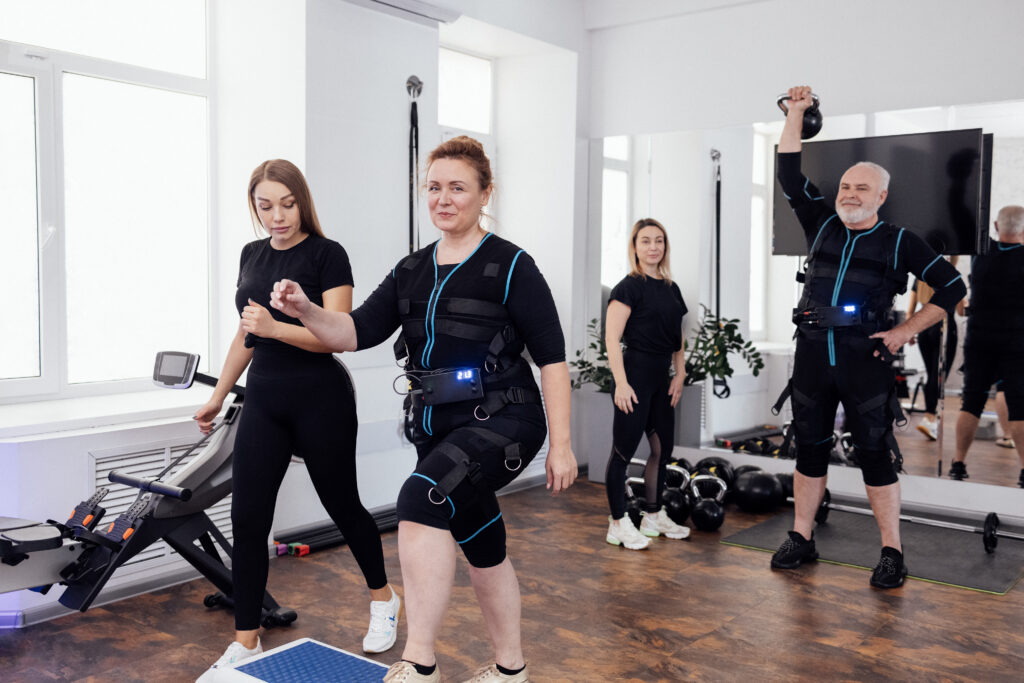
EMS muscle weakness seniors programs address several of these simultaneously. Sessions are short, typically 20 minutes. The muscle conditioning stimulus does not require heavy loads or complex movement patterns. The joint stress is significantly lower than conventional resistance training at comparable muscle activation levels. And the supervised studio environment provides the safety and guidance that many older adults need to exercise with confidence.
This does not mean EMS muscle weakness seniors programs are effortless. Sessions are genuinely physically demanding, and older adults typically experience meaningful delayed onset muscle soreness after initial sessions. But the demands are more manageable and more accessible than conventional resistance training for many seniors, which is why adherence in older adult EMS research has been consistently strong.
Practical EMS Programming Considerations for Older Adults
EMS muscle weakness seniors programming requires conservative intensity management and careful progression. The aging neuromuscular system is more sensitive to EMS stimulation, and older adults typically experience more significant muscle soreness after initial sessions than younger populations.
A few important practical principles:
- Begin at very low intensity and progress gradually over four to six weeks to establish a positive training experience and allow the neuromuscular system to adapt
- Twice-weekly sessions of 20 minutes are the standard evidence-supported frequency, providing sufficient stimulus for meaningful adaptation while respecting reduced recovery capacity
- Professional supervision is important for both safety monitoring and the motivation and guidance support that helps older adults maintain training quality and consistency
- Medical clearance from a healthcare provider before beginning is particularly important for seniors, who are more likely to have contraindications that need to be identified before training starts
Absolute contraindications for EMS in older adults include implanted cardiac devices such as pacemakers and ICDs, active deep vein thrombosis, and certain other implanted electronic devices. Relative contraindications requiring medical assessment include uncontrolled hypertension, certain cardiac conditions, skin conditions at electrode sites, and active cancers. Screening for these conditions is a non-negotiable part of responsible EMS muscle weakness seniors program design.
Conclusion
EMS muscle weakness seniors programming offers a genuinely valuable and increasingly well-evidenced approach to maintaining strength, function, and independence in older adults. It addresses the barriers to conventional resistance training while producing the muscle strength, body composition, and functional improvements that healthy aging demands.
For older adults who want to maintain their strength, independence, and vitality, and for healthcare providers and exercise professionals supporting this goal, EMS represents a time-efficient, joint-friendly, and evidence-supported addition to healthy aging programs. The research base for EMS muscle weakness seniors applications is strong, and it continues to grow.
Ready to find the best EMS suit for you? Check out our brand reviews and product reviews to help inform your decision. You can also play with our product comparison tool to find the option that fits your goals and budget.
Frequently Asked Questions
Is EMS training safe for older adults? EMS muscle weakness seniors programs can be safe for older adults with appropriate professional supervision, conservative intensity management, and medical clearance. The aging neuromuscular system requires more conservative initial intensities and slower progression than younger populations. Contraindications including cardiac devices and certain medical conditions should be screened before beginning.
Can EMS help seniors build muscle? Research specifically in older adult populations has found whole-body EMS training produces significant improvements in muscle mass and strength, making it one of the better-evidenced non-pharmacological interventions for sarcopenia management. Two weekly 20-minute sessions produce meaningful muscle maintenance and development in older adults who cannot sustain conventional resistance training.
Does EMS reduce fall risk in older adults? Several studies have found that whole-body EMS training in older adults improves lower extremity strength and balance measures, both key determinants of fall risk. The improvement in these functional outcomes alongside muscle strength suggests EMS muscle weakness seniors programs may contribute meaningfully to fall risk reduction.
How is EMS different from regular exercise for seniors? EMS provides a meaningful muscle conditioning stimulus in 20-minute supervised sessions without the high joint loading, complex exercise technique, or high perceived exertion of conventional resistance training. This makes EMS muscle weakness seniors programs more accessible for older adults with joint pain, balance limitations, or reduced exercise tolerance. The benefit-to-effort ratio is particularly favorable for this population.
What medical conditions prevent older adults from using EMS? Absolute contraindications for EMS in older adults include implanted cardiac devices, active deep vein thrombosis, and certain other implanted electronic devices. Relative contraindications requiring medical assessment include uncontrolled hypertension, certain cardiac conditions, skin conditions at electrode sites, and active cancers. Medical clearance is particularly important in older adults due to the higher prevalence of these conditions in this population.