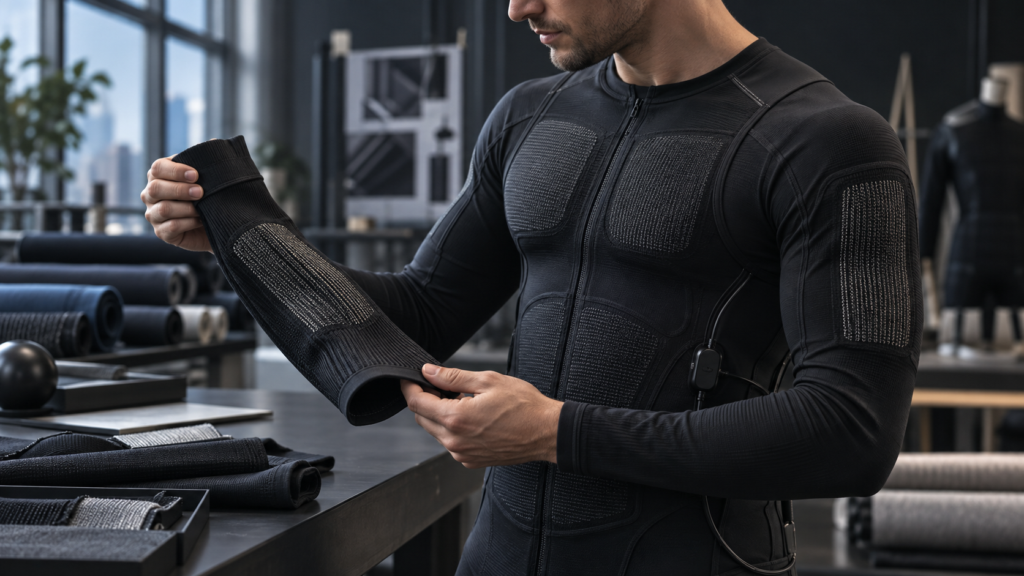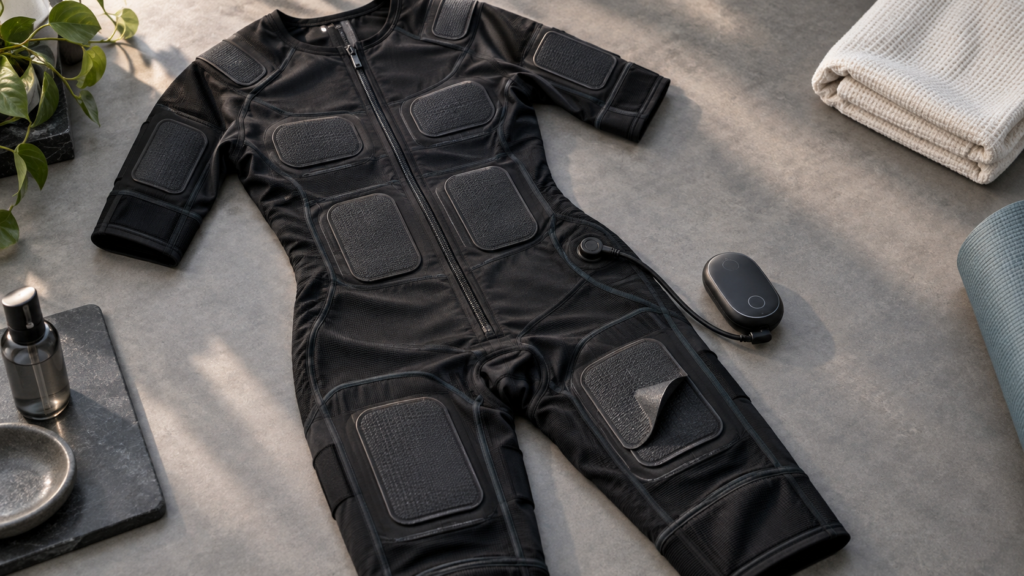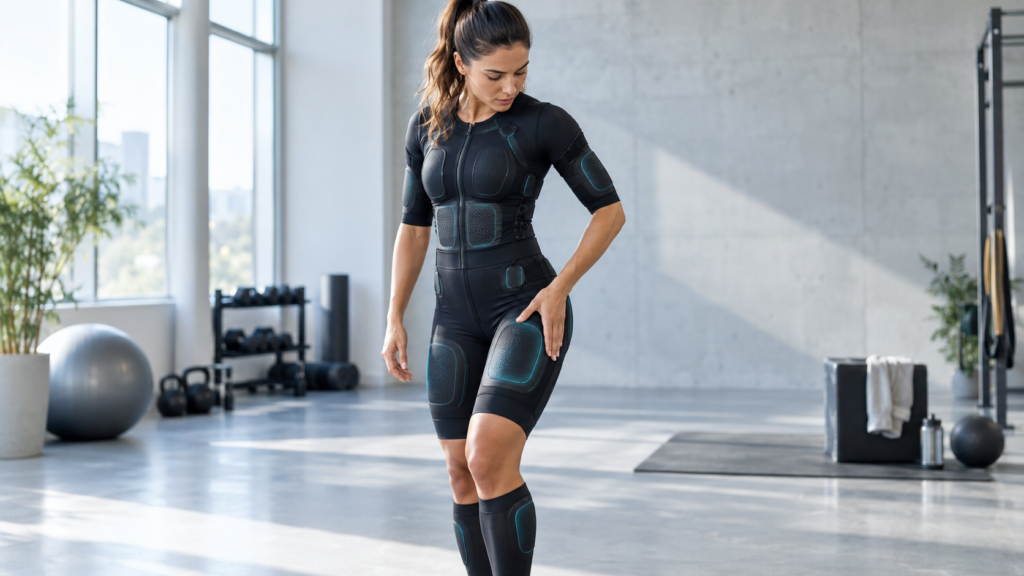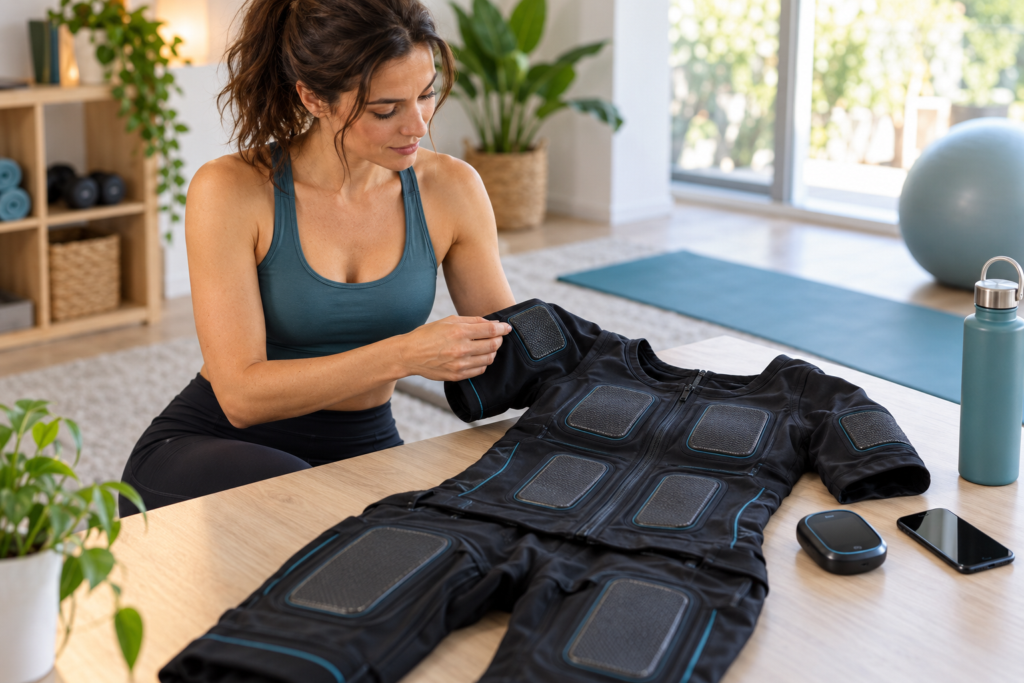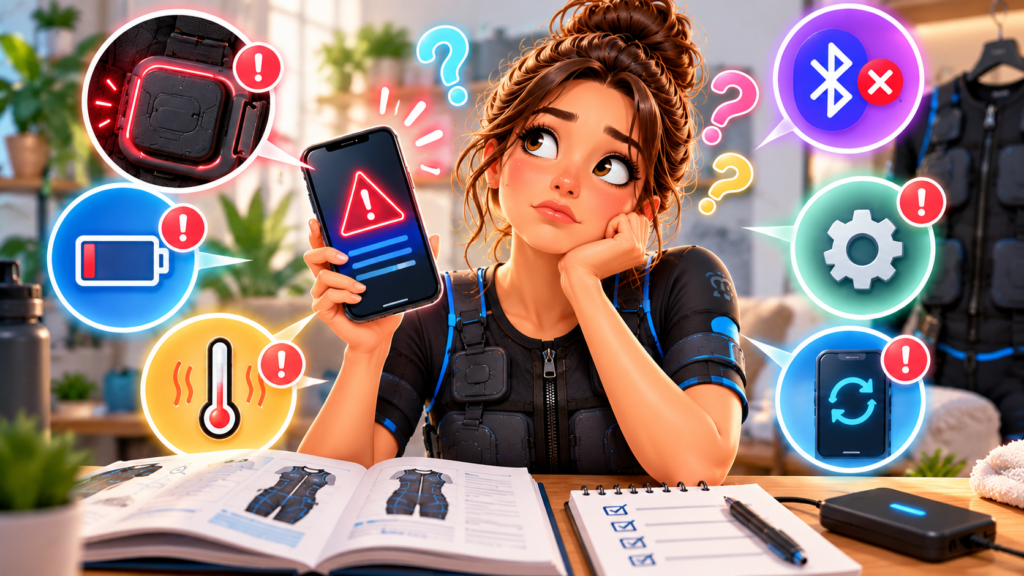
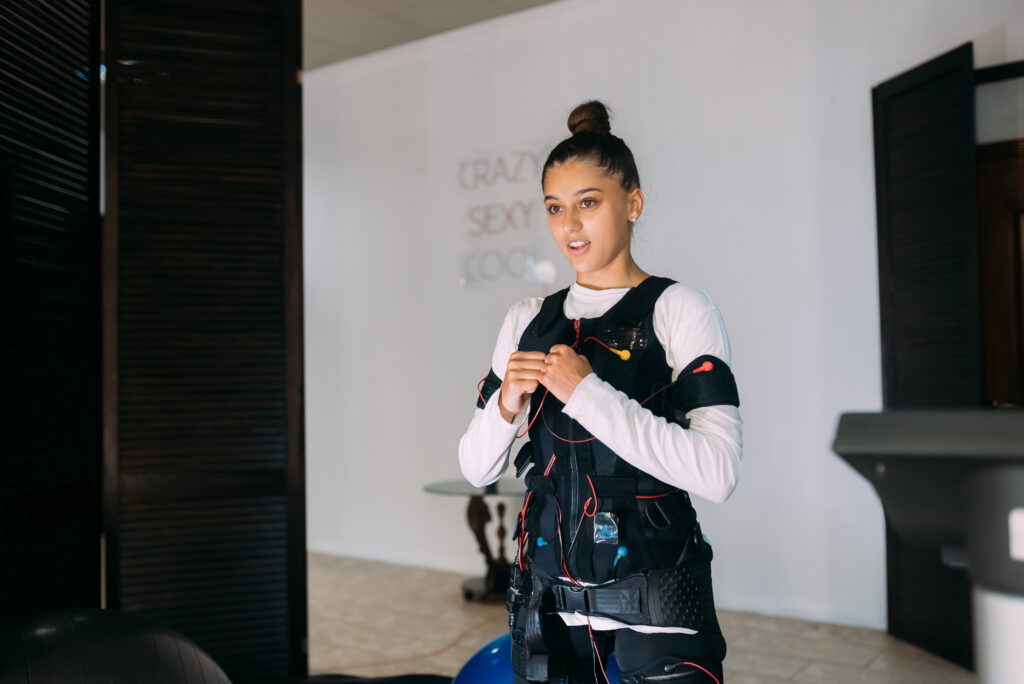
If you’re wondering how long is EMS training supposed to last, the short answer is 15 to 20 minutes for most sessions, but your very first session should be shorter and gentler than that. EMS suits work differently than a regular gym session, so the usual “more time equals more results” logic doesn’t really apply here. Below is a breakdown of what the research actually says about session length, based on the current international expert guidelines for whole-body electromyostimulation (WB-EMS).
The Short Answer: How Long Is EMS Training on Average
For someone who has already gone through a few weeks of training, a typical EMS session runs about 20 minutes for a higher-intensity, strength-style workout, or 30 to 40 minutes for a lower-intensity, endurance-style session. That’s according to the 2023 international consensus guideline on WB-EMS published by a panel of exercise scientists from Germany, Spain, Italy, Brazil, and the US. So if you’re asking how long is EMS training once you’re past the beginner stage, plan for a window closer to 20 to 40 minutes depending on the format.
Your First EMS Session Looks Different
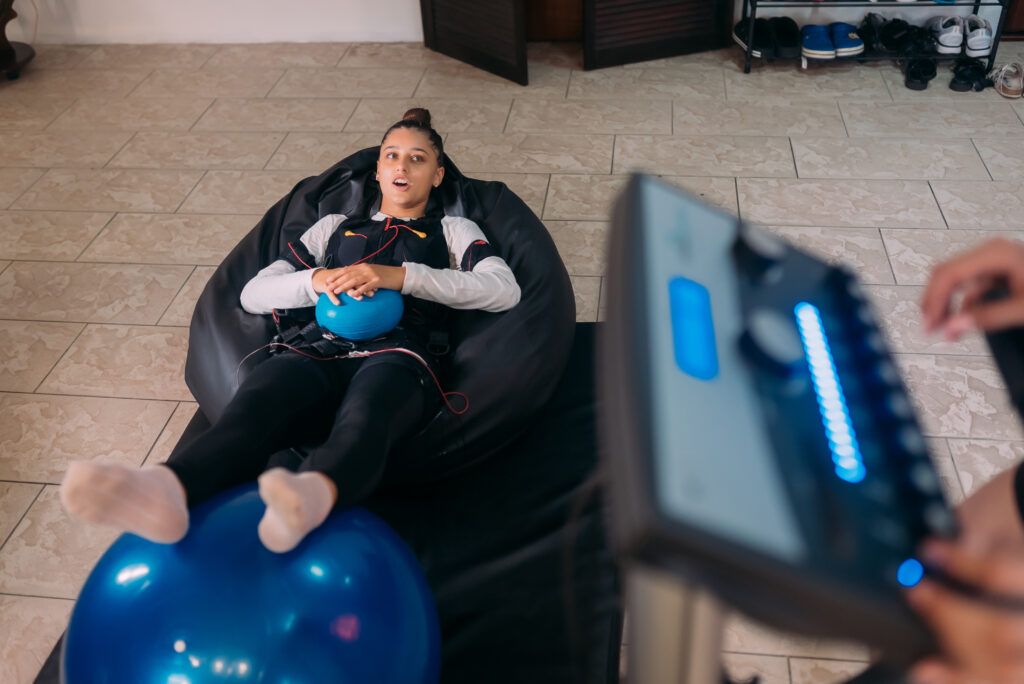
Here’s where a lot of people get the timing wrong. How long is EMS training on day one is a completely different question than how long a session looks a few months in. The same expert guideline recommends a much shorter, lower-intensity structure for a first-timer: about 5 minutes of continuous, low-level stimulation just to get your body used to the sensation, followed by roughly 12 minutes of intermittent stimulation using short impulses (about 4 seconds) with gentle ramp-ups and short breaks in between. That’s around 17 minutes total, and it’s intentionally kept light.
This isn’t a suit malfunction or your trainer going easy on you. It’s how the technology is supposed to be introduced. WB-EMS activates a much larger share of your muscle fibers at once than a voluntary contraction does, so even a short session creates a bigger internal workload than it looks like from the outside.
How Session Length Changes as You Adapt
So how long is EMS training after those first few sessions? According to the guideline, there’s an 8 to 10 week familiarization and conditioning period. During this window, session length stays capped at 20 minutes and frequency stays capped at once per week, with intensity building gradually rather than jumping straight to a hard effort.
Once you’re past that conditioning period, the ceiling opens up a bit. You can move to:
- A 20-minute, higher-intensity session structured like resistance training, or
- A 30 to 40 minute, lower-intensity session structured more like an endurance workout
Either way, the answer to how long is EMS training rarely goes much past 40 minutes, even for experienced users. That’s a deliberate safety choice, not a limitation of the suit.
Why EMS Sessions Stay Short Compared to a Regular Workout
It’s worth explaining the “why” here instead of just the “how long.” Traditional resistance training only recruits a portion of your muscle fibers at a given intensity, and your nervous system gradually brings in more fibers as effort increases. WB-EMS bypasses a lot of that gradual recruitment by stimulating major muscle groups directly and simultaneously. That’s part of why a WB-EMS session can produce comparable strength and body composition changes to a longer, more traditional workout in less time, and also why the research consistently caps sessions at 20 to 40 minutes rather than encouraging longer ones. More time under stimulation isn’t a shortcut to faster results. It’s a bigger systemic load that needs proper recovery.
How Often You Should Train, and Why Rest Matters
Duration and frequency are connected, so it’s worth covering both. During the 8 to 10 week conditioning phase, frequency is limited to once a week. After that, the guideline recommends at least a 4-day gap between higher-intensity sessions to allow the muscles to recover and adapt properly. Skipping that recovery window is one of the more common mistakes people make once they start feeling comfortable with the suit and want to push the pace.
Setting Realistic Expectations for Session Length
If you’re the type to plan out a fitness goal ahead of time, it’s worth knowing that research on physical activity goal-setting found that people who set longer session-duration goals for themselves tended to end up more physically active overall, compared to those who focused only on frequency. That doesn’t mean you should stretch an EMS session past what’s recommended. It means going in with a realistic, honest expectation for how long is EMS training at your current stage helps you stick with it rather than getting discouraged by a slow start.
Ready to Try an EMS Suit for Yourself?
Now that you know how long is EMS training for a first session versus a conditioned one, the next step is finding the right suit for your goals and budget. Check out our product and brand reviews to see how the top EMS suits on the market stack up on coverage, intensity control, and battery life, or jump straight into our comparison tool to line up specs side by side and find the best fit for you.
FAQ: How Long Is EMS Training?
1. What is EMS training?
EMS training stands for Electrical Muscle Stimulation training. It uses controlled electrical impulses to stimulate muscles while you perform exercises. It can help activate multiple muscle groups and make your workout more efficient.
2. How long is EMS training for a beginner?
Around 15 to 17 minutes, including a short familiarization phase, at low intensity.
3. How long is EMS training once you’re used to it?
Typically 20 minutes for higher-intensity sessions, or 30 to 40 minutes for lower-intensity ones.
4. How often should you do EMS training? Once a week during the first 8 to 10 weeks, then with at least a 4-day recovery gap between higher-intensity sessions afterward.
5. Why is EMS training shorter than a normal workout? Because it activates a much larger portion of your muscle fibers at once, so the same session length produces a bigger training load than traditional exercise.