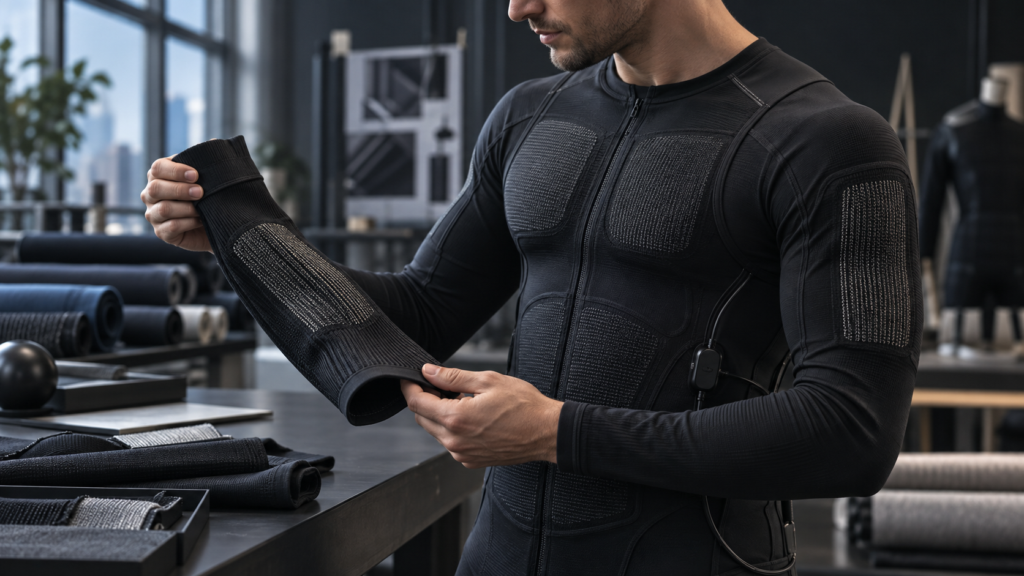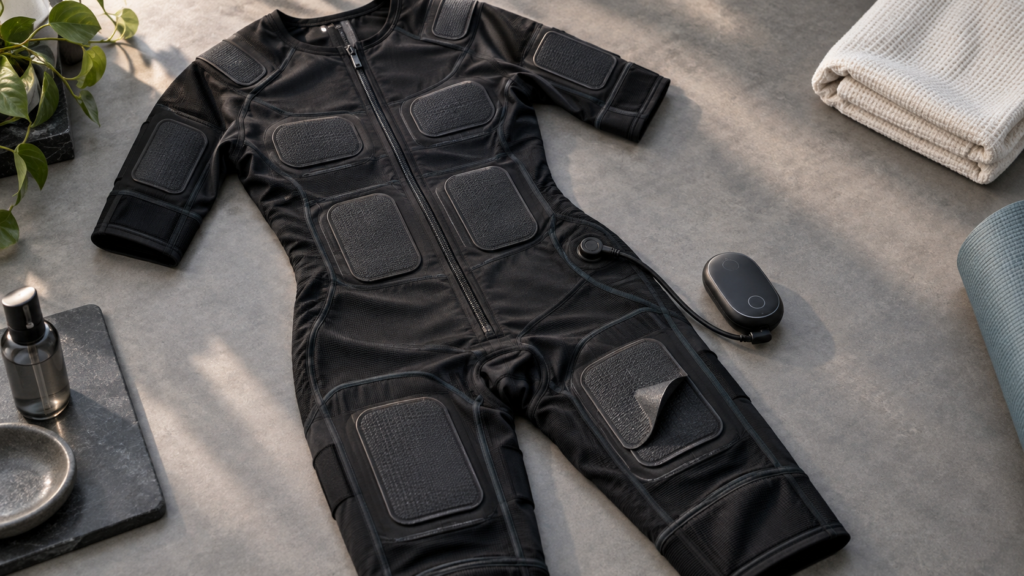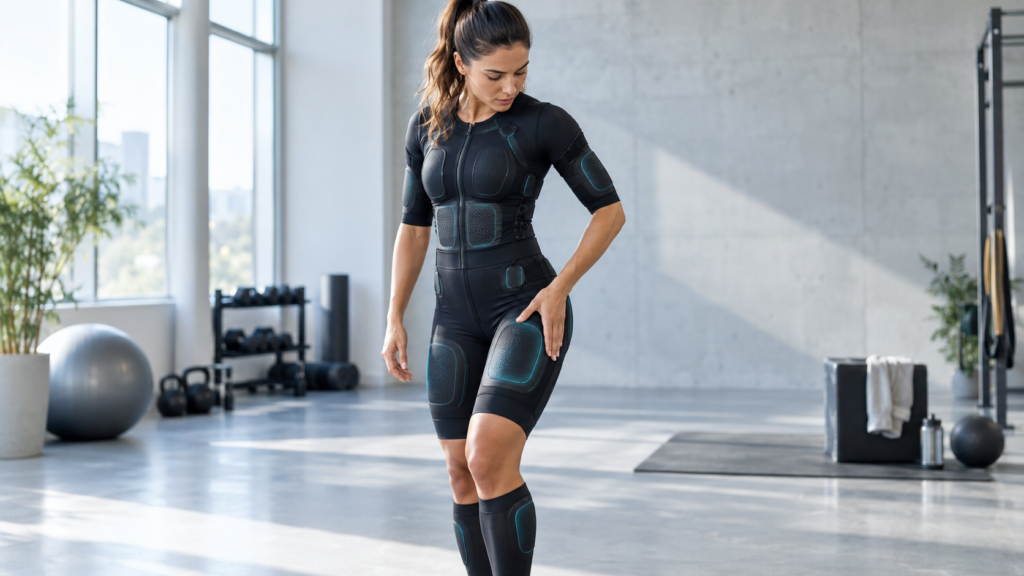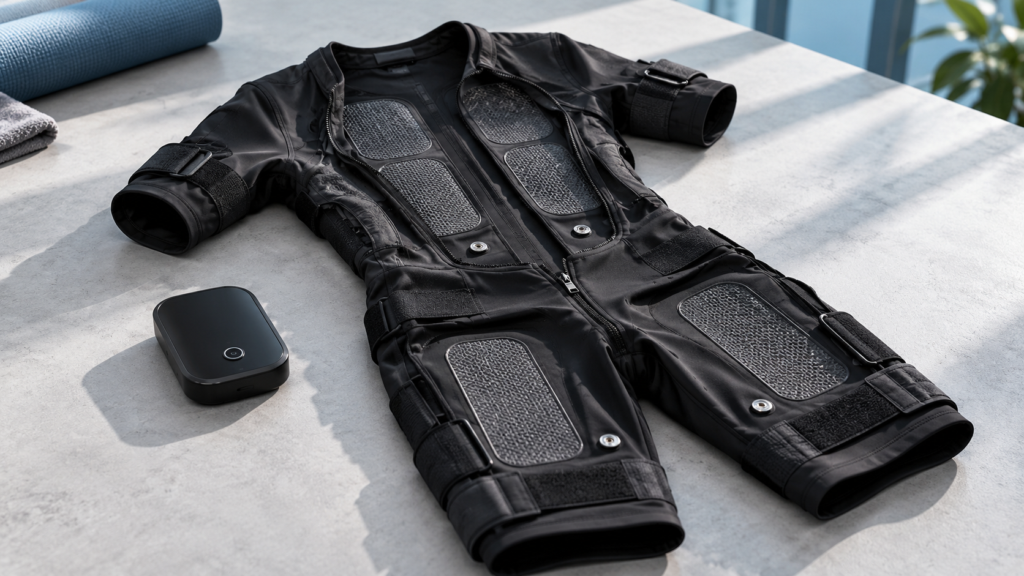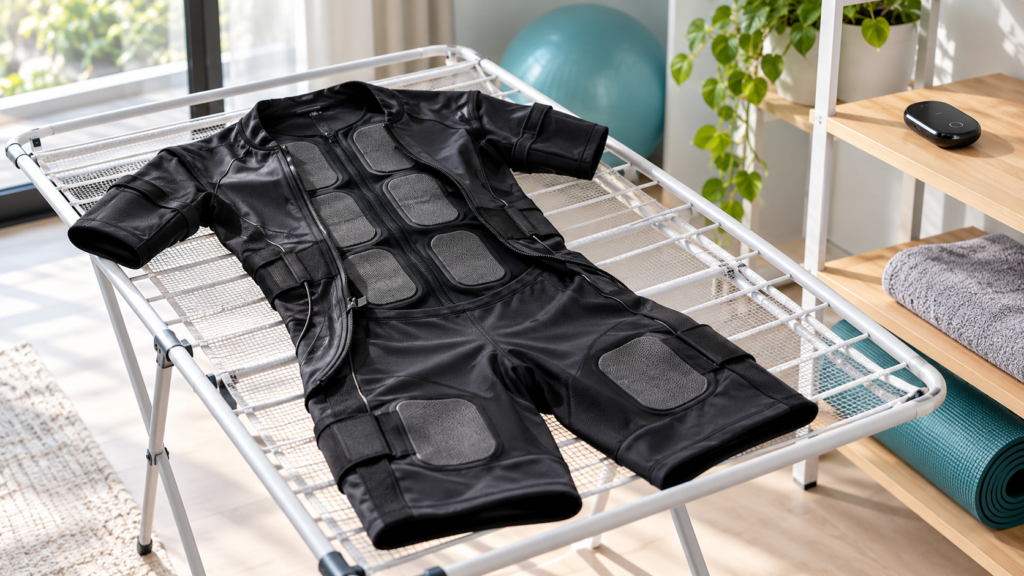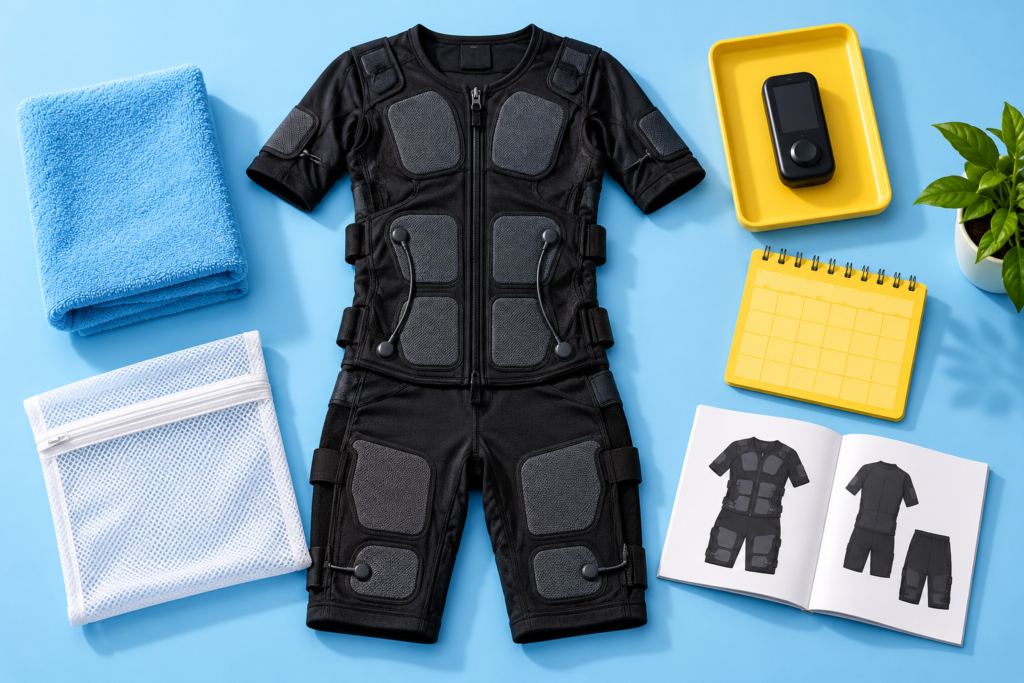
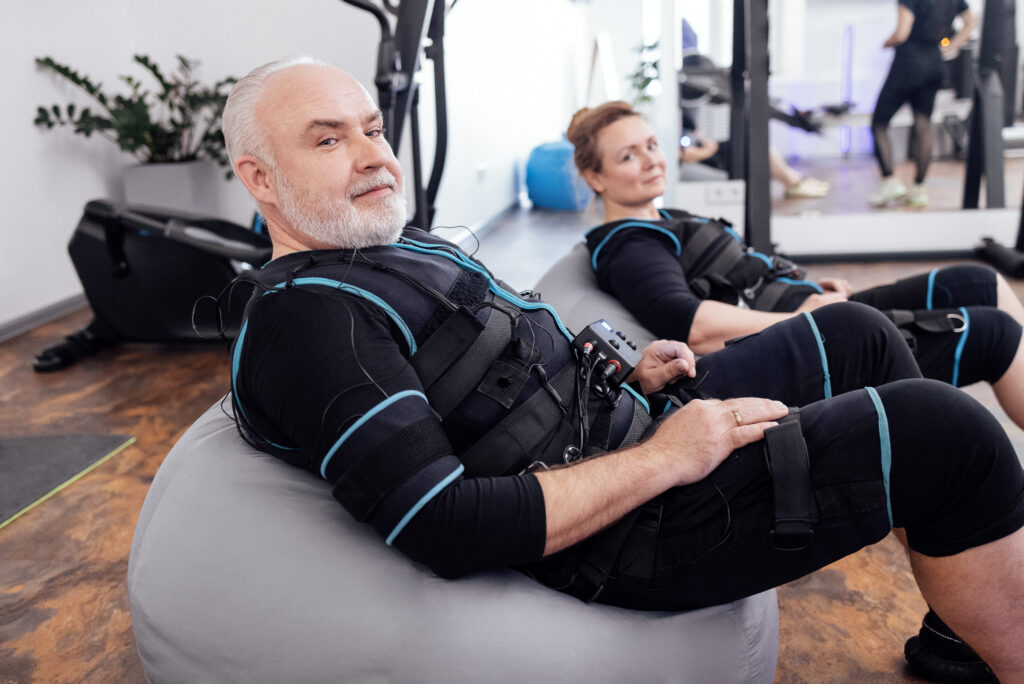
An EMS suit for fat loss has become a popular topic in the fitness world, and it’s easy to see why. The idea of putting on a suit, flipping a switch, and watching fat melt away sounds appealing. But some of the claims floating around don’t hold up against the research. Here are 7 common myths worth clearing up before you decide if EMS training is right for your goals.
Myth 1: An EMS Suit for Fat Loss Burns Fat Directly During the Session
This is probably the biggest misconception out there. EMS works by sending electrical impulses that trigger muscle contractions, not by targeting fat cells directly.
A systematic review and meta-analysis looking at whole-body electromyostimulation in non-athletic adults evaluated outcomes across muscle mass, total body fat mass, and strength. The findings point to EMS working primarily on muscle tissue, with fat-related changes coming as a secondary effect of increased muscle activity and metabolic demand rather than a direct fat-burning mechanism.
Myth 2: An EMS Suit for Fat Loss Targets Belly or Thigh Fat Specifically
Spot reduction, the idea that you can target fat loss to one area of the body, has been debated in exercise science for decades. It doesn’t hold up any better for EMS than it does for crunches or leg lifts.
Research on exercise-induced fat loss has generally found that physical exercise leads to fat utilization across the whole body rather than pulling specifically from the tissue next to the muscles being worked. If a product is marketed as a way to melt fat off your stomach or thighs specifically, that claim isn’t backed by the evidence.
Myth 3: Results Happen Without Diet or Lifestyle Changes
It would be nice if any single tool could offset a poor diet, but that’s not how body composition works.
A randomized controlled trial studying whole-body electromyostimulation in postmenopausal women found meaningful improvements in strength and power, but only trivial to small effects on body composition. In other words, EMS training can support a broader routine, but it isn’t a replacement for the nutrition and lifestyle habits that actually drive fat loss.
Myth 4: An EMS Suit for Fat Loss Works Better Than Traditional Strength Training
EMS has some unique advantages, but “better than everything else” isn’t one of the claims the research supports.
A 16-week randomized controlled trial comparing whole-body electromyostimulation to high-intensity resistance training measured lean body mass and total body fat using DXA scans. Both training methods produced meaningful changes, suggesting EMS is a comparable option rather than a superior one.
Myth 5: More Sessions Per Week Means Faster Fat Loss
More isn’t automatically better when it comes to EMS training. Overtraining muscle tissue that’s still recovering from electrical stimulation can backfire.
A study on once-weekly whole-body electromyostimulation in amateur golfers found meaningful improvements in strength, stability, lean body mass, and body-fat content with just one session per week over 16 weeks. That’s a good reminder that consistency and recovery matter more than frequency alone when using an EMS suit for fat loss.
Myth 6: An EMS Suit for Fat Loss Has the Same Metabolic Effect as Running
EMS and cardio work through different mechanisms, so it makes sense that they wouldn’t produce identical metabolic results.
A randomized controlled trial examining an eight-week running program with a whole-body EMS suit measured resting metabolic rate and body fat percentage alongside traditional running without EMS. The findings suggest EMS can complement cardio-based training, but it isn’t a one-to-one substitute for the metabolic demands of running.
Myth 7: An EMS Suit for Fat Loss Requires No Real Effort
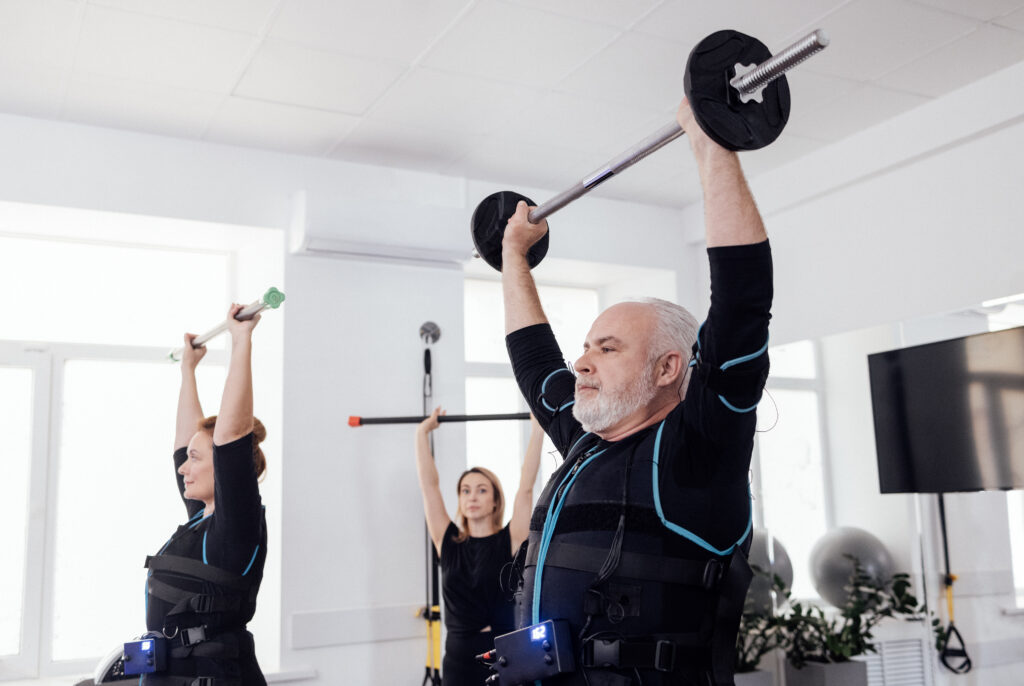
This might be the most persistent myth of all. While EMS does the work of triggering contractions, most study protocols pair the suit with active movement, not passive standing.
The reality is that this kind of training tends to work best as part of an active training session, not a device you strap on and forget about. Treating it as a complement to movement, rather than a substitute for it, lines up with how the research studies were actually designed.

The Bottom Line
An EMS suit for fat loss can be a useful addition to a broader fitness routine, but it isn’t a shortcut around diet, consistency, or traditional training. Understanding what the research actually supports, rather than what marketing claims promise, is the best way to set realistic expectations before you get started.
Interested in having an EMS suit? Check out our product reviews to find the best suit for you, or use our effective comparison tool.