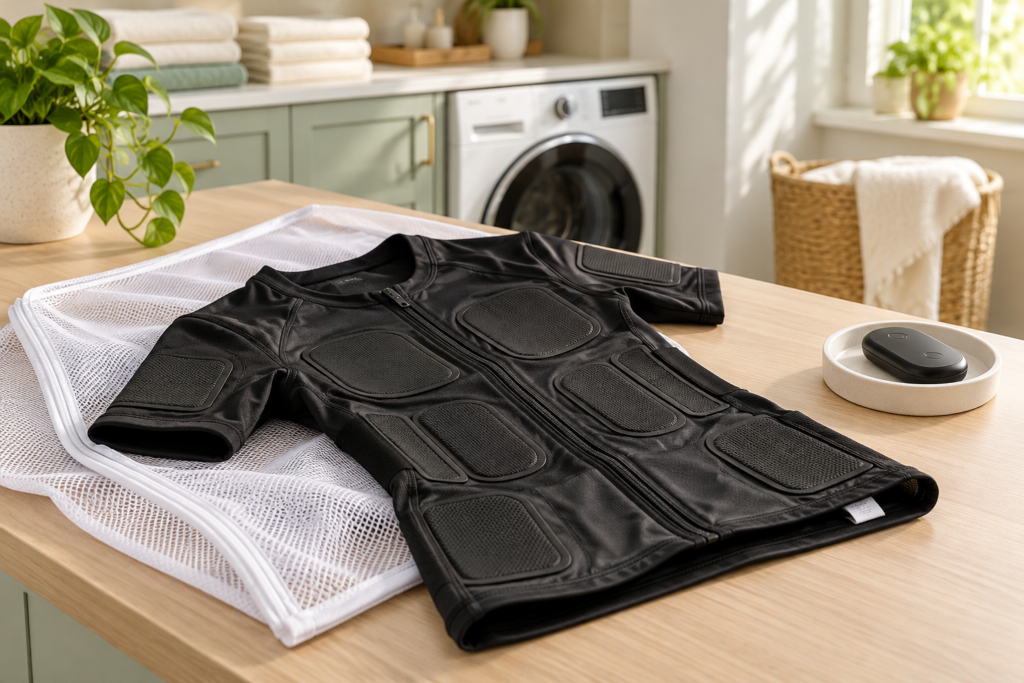
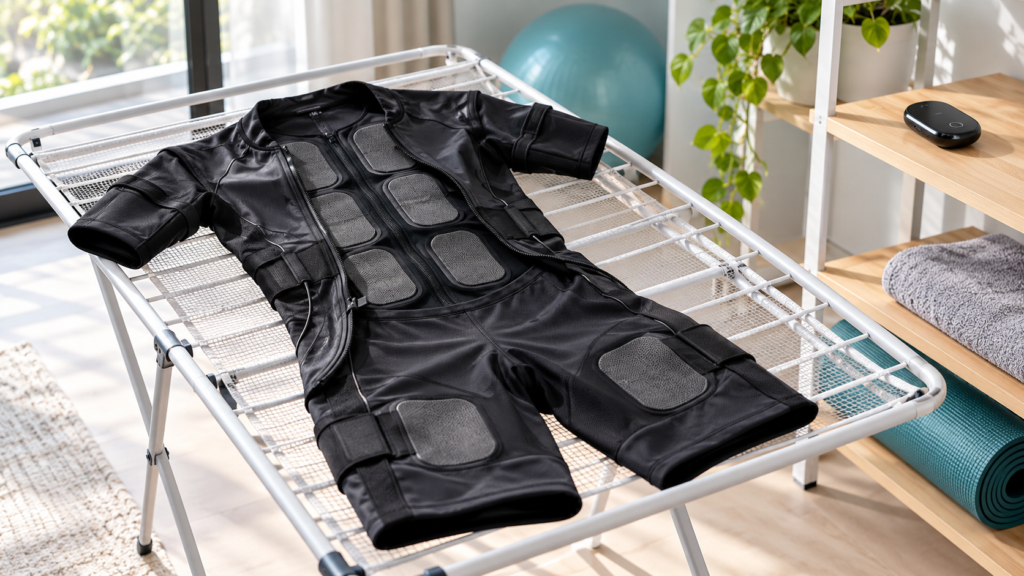
Quick Answer
If you are wondering how to remove odor from EMS suit fabric, start by finding the source. Follow your exact model’s approved wash instructions, use the permitted detergent amount, and let every layer dry before storage. Check the bag and accessories, too. Avoid deodorizing sprays or home remedies unless the manufacturer approves them. An unusual smell from the controller or battery requires stopping use, rather than washing the electronics.
Key Takeaway
Learning how to remove odor from EMS suit materials means addressing sweat, residue, contamination, or trapped moisture. Fragrance can cover a smell without fixing its cause. Protect the suit’s conductive components by following its care instructions and contacting the manufacturer when odor persists after approved cleaning and complete drying.
You finish your workout, take off your EMS suit, and notice that it has developed a smell you would rather not carry into your next session. Your first thought might be to add more detergent, spray it with something fresh, or try the vinegar trick that worked on your gym clothes.
Pause before reaching for the laundry cabinet.
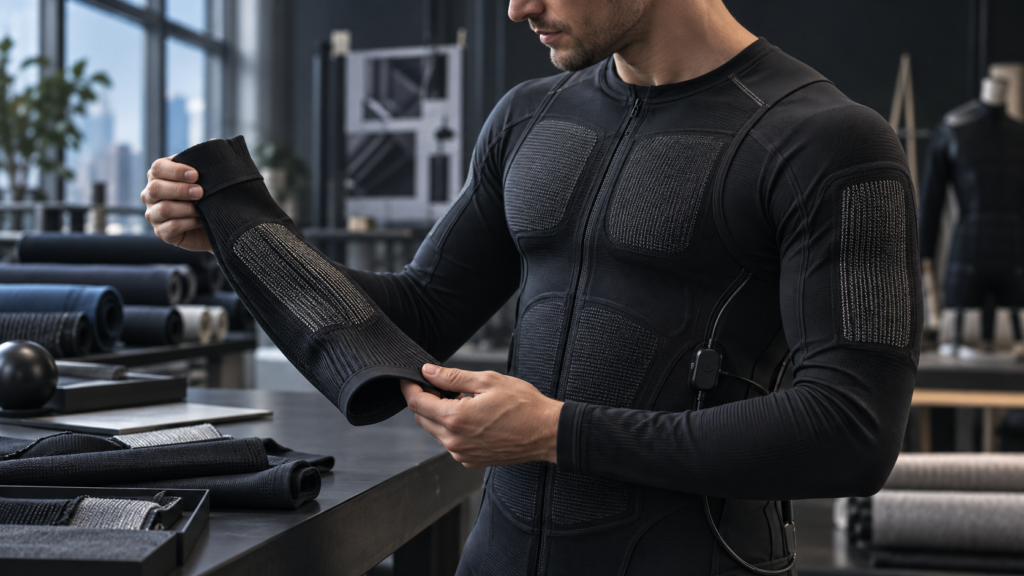
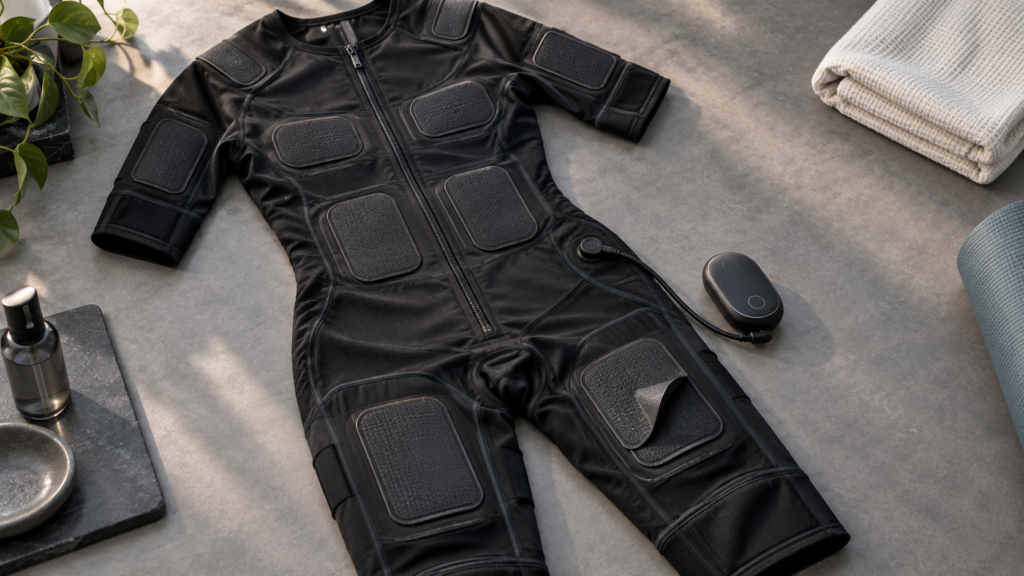
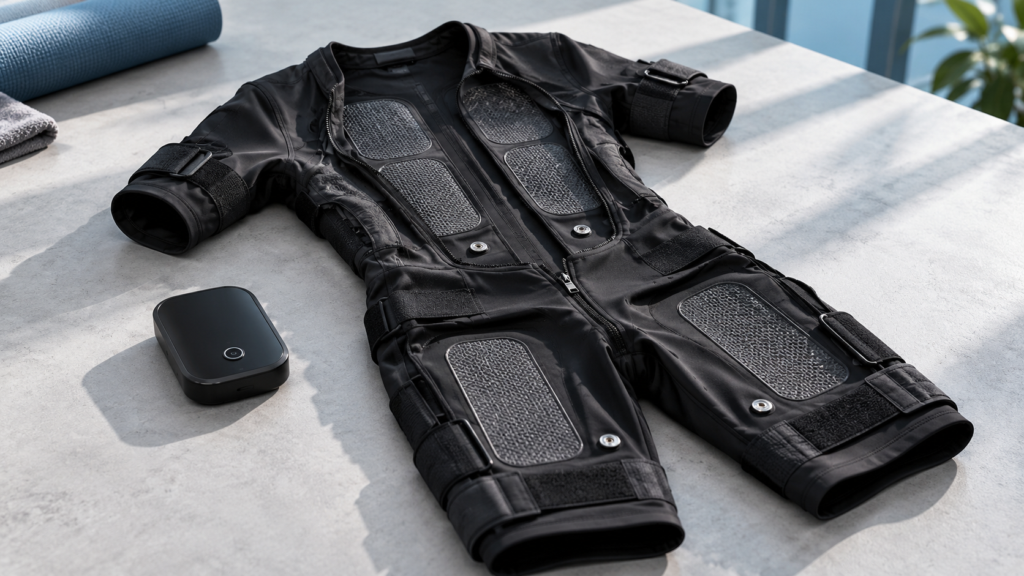
Your suit has more going on than an ordinary workout shirt. Its electrodes, connectors, and layered materials need specific care. Figuring out how to remove odor from EMS suit fabric starts with finding the cause and choosing a cleaning method the garment can tolerate.
Here is how to work through it without turning a manageable smell into damaged equipment.
Why Does Your EMS Suit Smell?
Several things can contribute to odor, including retained sweat and skin oils, microbial activity, detergent residue, and moisture left in the garment. The source may also be a damp storage bag or an unwashed accessory.
That matters because how to remove odor from EMS suit materials depends on what is causing it. Another wash will not solve a dirty storage case, and extra fragrance will not remove trapped moisture.
Start by checking what changed. Did you leave the suit packed after training? Put it away before it dried? Switch detergents or start using more than usual?
Think of odor as a clue that helps you review the routine. It does not identify the exact cause on its own.
🔎 EMS Odor Detective
Something smells off? Pick a clue to explore what to check next.
POSSIBLE SOURCE
Sweat, oils or retained soil
Garment care route
-
Separate and inspect
Remove electronics. Check the suit and base layer separately.
-
Follow the exact care label
Use only the permitted wash method and measured detergent.
-
Dry every layer
Follow the drying instructions before returning it to storage.
Clues guide inspection. Smell alone cannot confirm cleanliness or hardware safety. Always follow your manufacturer’s instructions.
First, Check Whether the Smell Comes From Fabric or Electronics
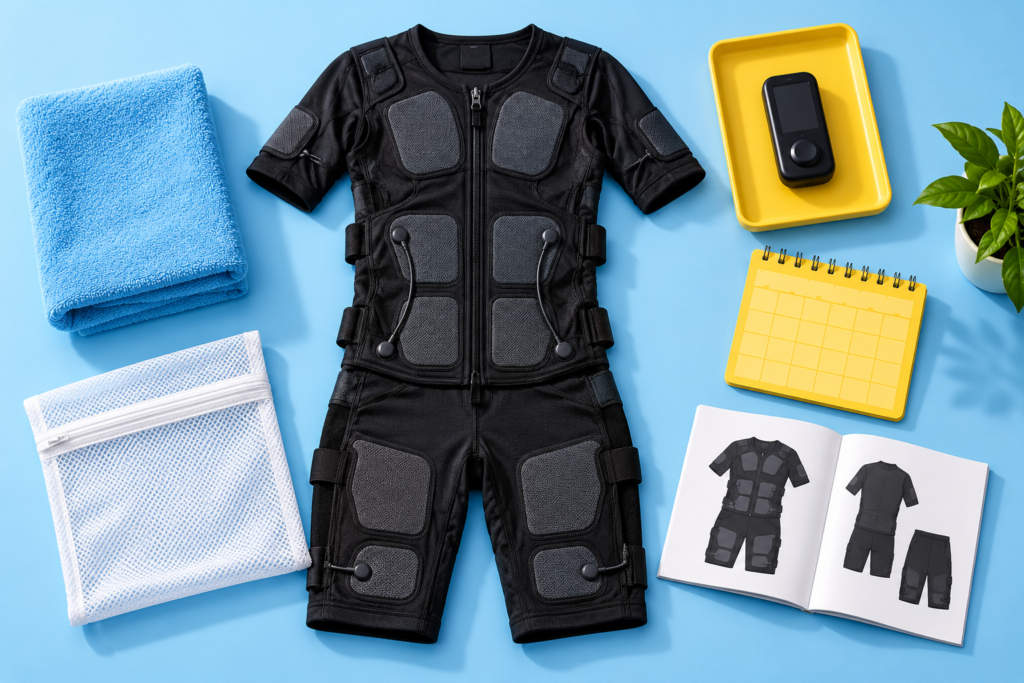
Before washing anything, turn the system off and remove detachable electronics according to the instructions. Check the suit, approved base layer, washable straps, laundry bag, and storage case separately.
There is an important boundary when learning how to remove odor from EMS suit equipment. A fabric-cleaning problem and a battery problem need different responses.
If an unusual chemical, burning, or hot-plastic smell comes from the controller, charger, or battery, stop using and charging it. Do not bring it close to your face to investigate, open it, or try washing it.
The U.S. Fire Administration identifies odor, excessive heat, discoloration, swelling, leaking, and unusual noises as reasons to stop using a lithium-ion battery. Contact the manufacturer for further guidance. If it is smoking or burning, leave the area and call emergency services.

Use the Care Instructions for Your Exact Suit
The most useful instructions on how to remove odor from EMS suit fabric come from the manufacturer of that particular garment.
Check whether it requires hand washing or permits machine washing. Then confirm the water temperature, detergent, rinse and spin restrictions, laundry bag requirements, and drying method. Remove only the parts the manual identifies as detachable.
For example, eaglefit’s cleaning FAQ specifies a delicate cycle at a maximum of 30°C, its supplied laundry bag, and no spinning. It recommends hand washing to extend the suit’s lifespan.
Wiemspro’s Slim Plus guidance recommends hand washing with cold water and pH-neutral soap. These are instructions for those products, rather than a cleaning recipe for all EMS suits.
Our guide to machine washing an EMS suit explains which care details to check before choosing a cycle.
Measure the Detergent Instead of Adding More
A stronger smell can make an extra pour of detergent feel reasonable. However, more soap does not automatically mean a cleaner garment.
Excess detergent may rinse out poorly and leave residue. If the suit feels unusually soapy or stiff after washing, review the detergent type and dose with the manufacturer before repeating the process.
When deciding how to remove odor from EMS suit fabric, stay within the permitted cleaning instructions. Measure the approved product and ask about an additional rinse if residue remains. Do not add a deodorizing treatment to compensate for a detergent problem.
Think of it like rinsing shampoo from your hair. Adding another handful is unlikely to help you remove what is already there.
Give Every Layer Time to Dry
Drying deserves as much attention as washing when you are working out how to remove odor from EMS suit materials.
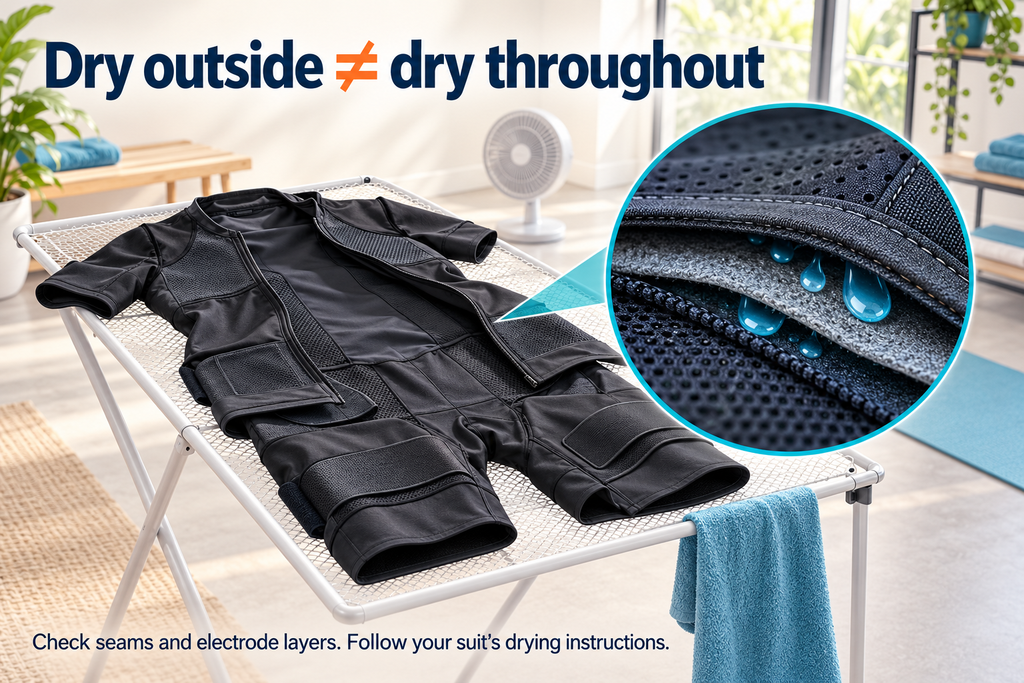
The outside can feel dry while thicker seams, folded areas, or electrode-backed sections still hold moisture. Check those areas before packing the garment away, without pulling apart or altering its construction.
PEPPER’s original-suit manual specifically warns against keeping the suit packed while wet because mildew and bacteria may build up. It also requires air drying and prohibits tumble drying for that model.
Follow your suit’s approved drying position and provide airflow. Avoid folding damp sections together or using a radiator, hair dryer, or other heat source unless its instructions explicitly permit that method.
The EMS suit drying guide provides a checklist to help you review the process. Finish drying before storage, then follow any separate pre-use moistening instructions your model requires.
Skip Unapproved Odor-Removal Shortcuts
Searching for how to remove odor from EMS suit fabric can bring up advice intended for ordinary sportswear. Check compatibility before transferring any of it to your suit.
Unless the manufacturer explicitly approves them, avoid these treatments.
- Chlorine bleach or oxygen bleach.
- Vinegar or baking-soda soaks.
- Fabric softener and scent boosters.
- Essential oils or fragrance sprays.
- Enzyme-based sportswear treatments.
- Alcohol and household disinfectants.
- Ozone or ultraviolet deodorizing devices.
Compatibility depends on the garment’s materials, coatings, adhesives, and conductive components. A product being suitable for regular laundry does not establish that it is suitable for your EMS equipment.
You do not need to experiment to learn how to remove odor from EMS suit materials. Ask the manufacturer to identify an approved product when the manual is unclear, including its concentration and application method.
“Natural” is a description, not a compatibility test.
Check the Bag Before Blaming the Suit
If the odor comes back after storage, inspect the storage environment.
A damp laundry bag or musty case can undermine your cleaning routine. Wash the bag according to its own label. Clean the case or shelf using a suitable method, and let everything dry before returning the suit. Avoid leaving cleaner where it could transfer onto the garment or contacts.
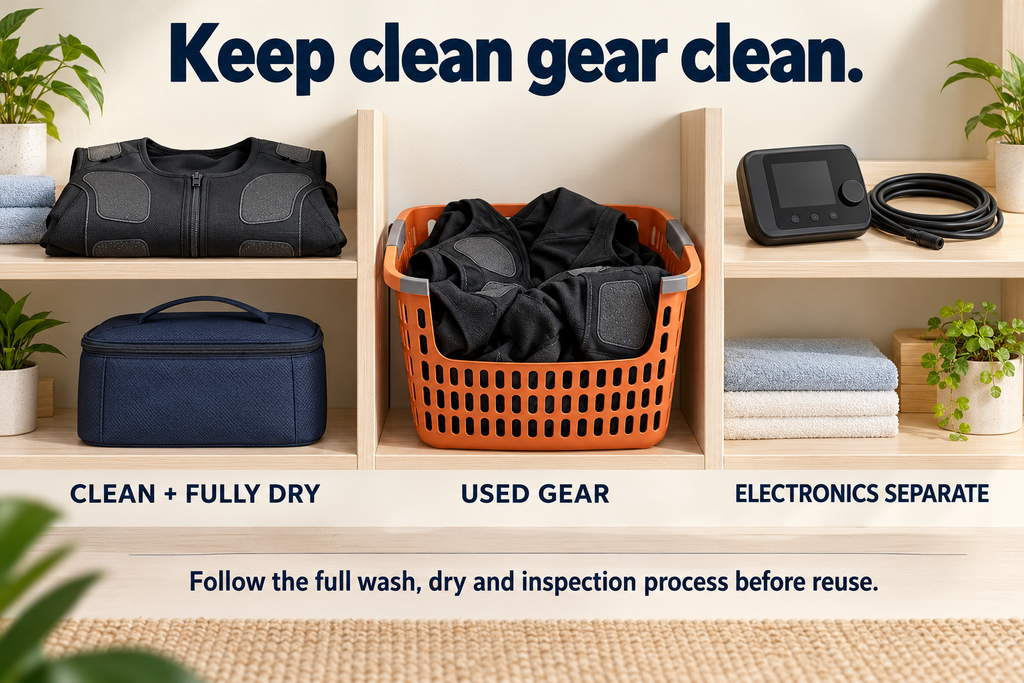
When troubleshooting how to remove odor from EMS suit fabric, treat storage as part of the process. Keep clean, dry equipment away from used or damp clothing.
For shared equipment that the manufacturer permits multiple people to use, maintain separate clean and used areas. Allow enough time between users for the required cleaning and drying.
What if the Smell Will Not Go Away?
Sometimes how to remove odor from EMS suit materials becomes a question for the manufacturer, especially after an approved wash and complete drying have failed.
Stop using the affected garment and seek guidance if you notice persistent mustiness, visible mold, unexplained staining, a slimy surface, or layers peeling apart. An odor concentrated at a connector also warrants inspection rather than repeated washing.
Describe what you noticed and provide the model name, care products used, wash method, and drying routine. Photographs may help support assess visible changes.
For a shared suit with body-fluid contamination, follow the facility’s contamination procedure and the manufacturer’s instructions. A reduction in smell does not establish that the garment is ready for another user.
Make Odor Prevention Part of Your Workout Routine
Once you understand how to remove odor from EMS suit fabric, build the care steps into the end of each session.
- Unpack the suit promptly after training.
- Wash an approved base layer after use, following its label.
- Clean the garment at the frequency specified for your model and use.
- Let the textile layers and washable accessories dry fully.
- Keep detachable electronics away from damp fabric.
- Check that the storage bag and space are clean and dry.
Use our guide on how often to wash an EMS suit to review how sweat, sharing, and contamination affect cleaning decisions.
The goal is a clean, dry, intact suit that meets its care instructions. A perfume-like smell is unnecessary, and smell alone cannot confirm cleanliness.
Frequently Asked Questions
What is the first step in learning how to remove odor from EMS suit fabric?
Locate the source. Check the fabric, accessories, bag, and storage area separately. An unusual odor from electronics requires stopping use and contacting the manufacturer.
Can I use vinegar on my EMS suit?
Only if the manufacturer explicitly permits it for your model. A vinegar soak recommended for regular gym clothes is not automatically compatible with conductive garments.
Is fabric softener safe for an EMS suit?
Do not assume so. Use it only when the suit’s instructions specifically allow it. Fragrance and softness do not confirm that a product is suitable for electrode contact areas.
Why does the odor return after washing?
Possible causes include retained soil, incomplete drying, detergent residue, or a contaminated bag. If you have followed the approved process and the smell persists, ask the manufacturer how to remove odor from EMS suit materials without exceeding their care limits.
Can I wear a musty EMS suit?
Clean and dry it according to its instructions first. Persistent mustiness, visible growth, or damaged material warrants manufacturer guidance before further use.
Should I wash my EMS suit after every workout?
Follow the instructions for your exact model and situation. Some manufacturers allow less frequent washing for personal garments. Those schedules should not be applied automatically to another model or shared equipment.
Keep the Care Routine Simple and Consistent
Knowing how to remove odor from EMS suit fabric comes down to identifying the source, using approved cleaning methods, drying thoroughly, and keeping storage clean.
If the odor persists, get product-specific help. Your next step should protect both the garment and its function, while making it easier to return to training with properly maintained equipment.