When people talk about electrical muscle stimulation, they often use the terms interchangeably—but NMES vs EMS research reveals two very different worlds of science. Neuromuscular electrical stimulation (NMES) has decades of clinical data behind it, while whole-body EMS suits are building an emerging but promising research base of their own. Understanding the distinction matters whether you’re a consumer, a trainer, or simply someone trying to make sense of what the studies actually show. Research into neuromuscular electrical stimulation nmes vs ems suits continues to evolve as more studios adopt evidence-based approaches.
Defining the Terms: NMES and WB-EMS
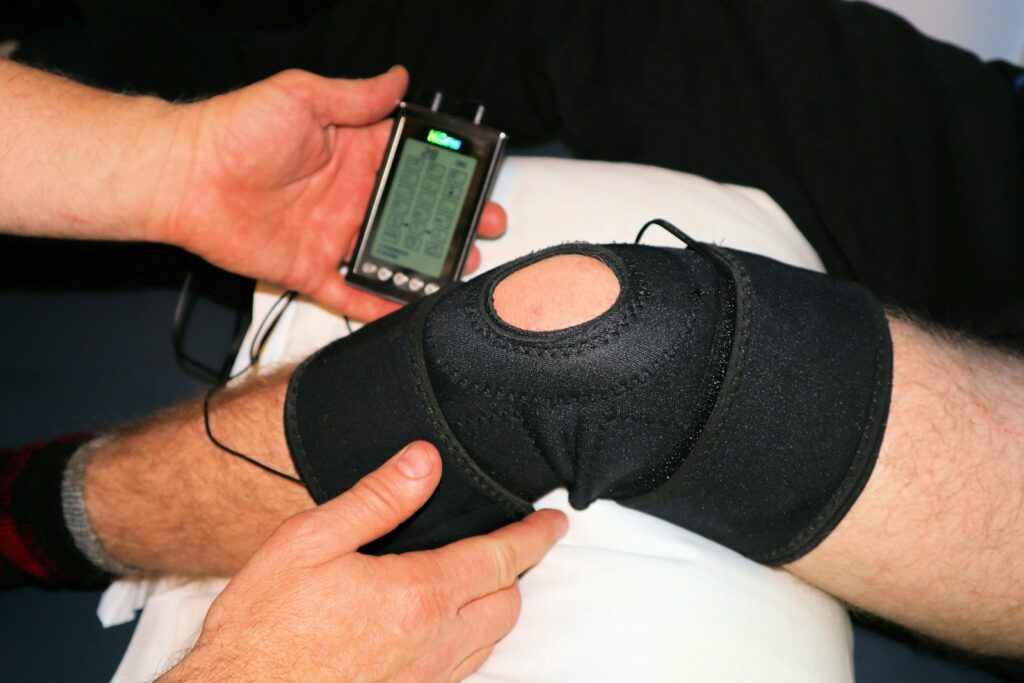
Before diving into NMES vs EMS research, it helps to clarify what each term means. Neuromuscular electrical stimulation (NMES) is a clinical modality that delivers electrical current to a specific muscle or muscle group through surface electrodes placed directly on the skin. It has been used in physical therapy and rehabilitation for decades to prevent atrophy, restore motor function, and manage pain following injury or surgery. Understanding neuromuscular electrical stimulation nmes vs ems suits is key for any trainer looking to modernize their program.
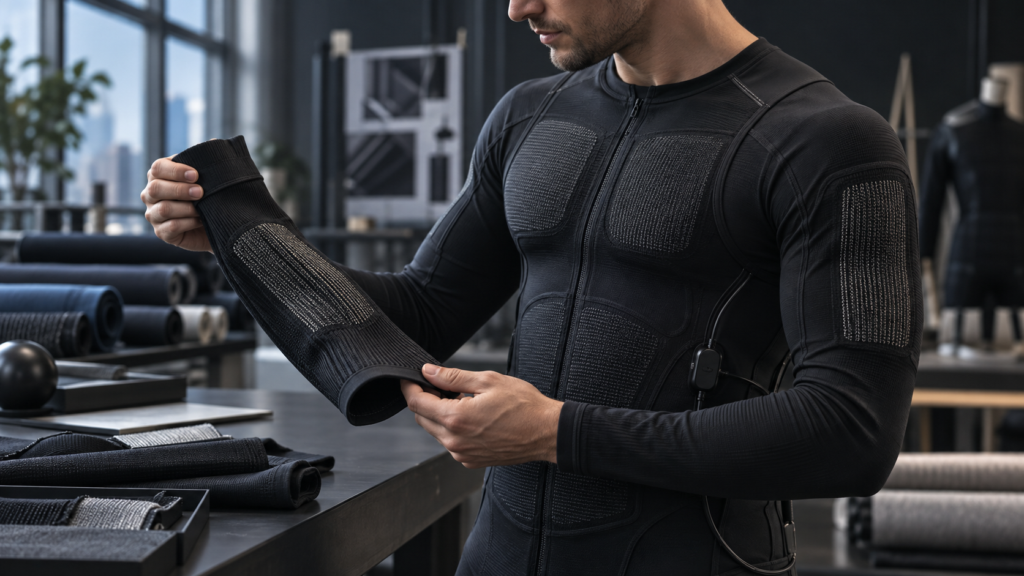
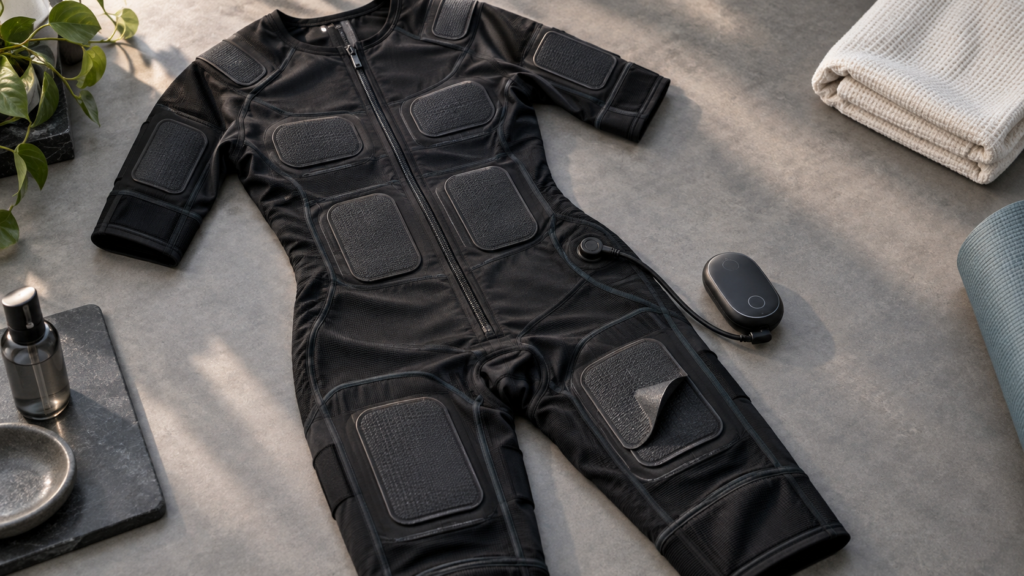
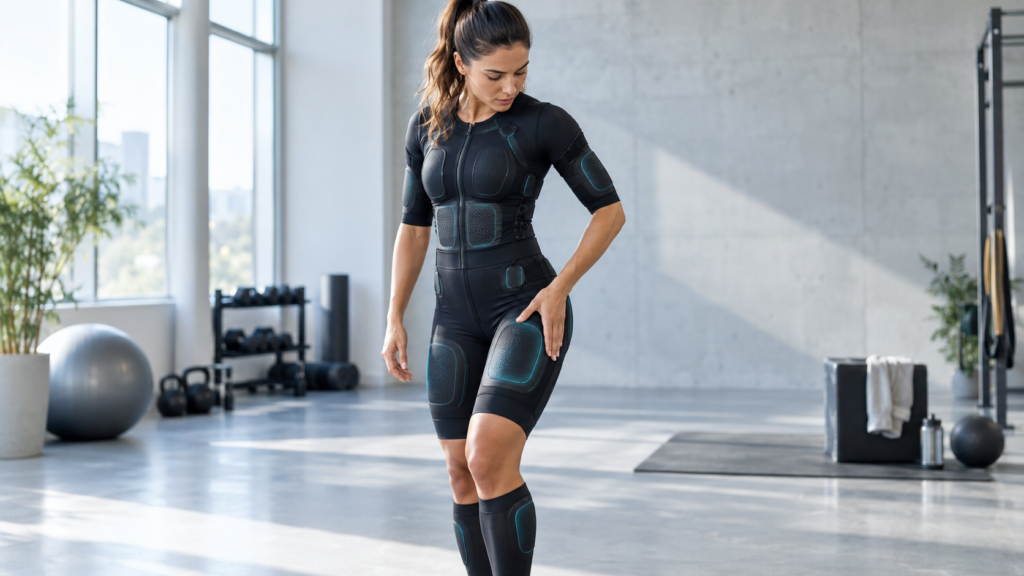
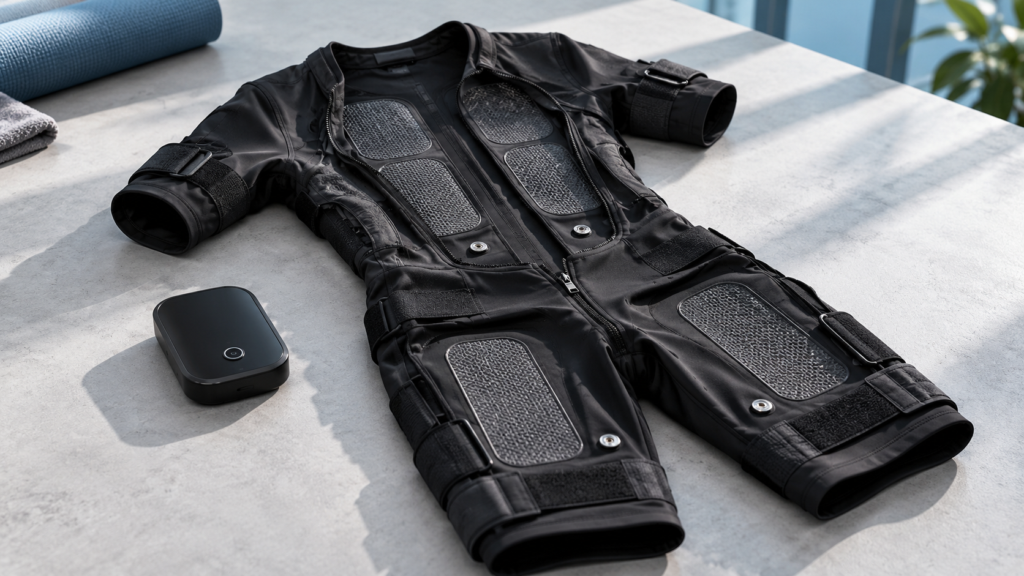
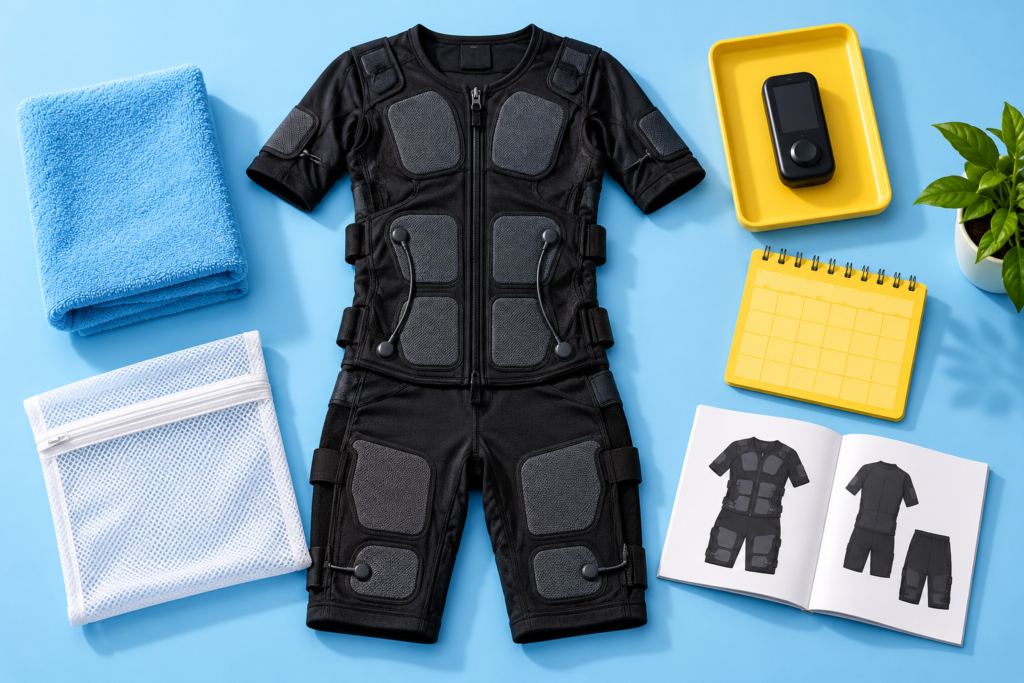
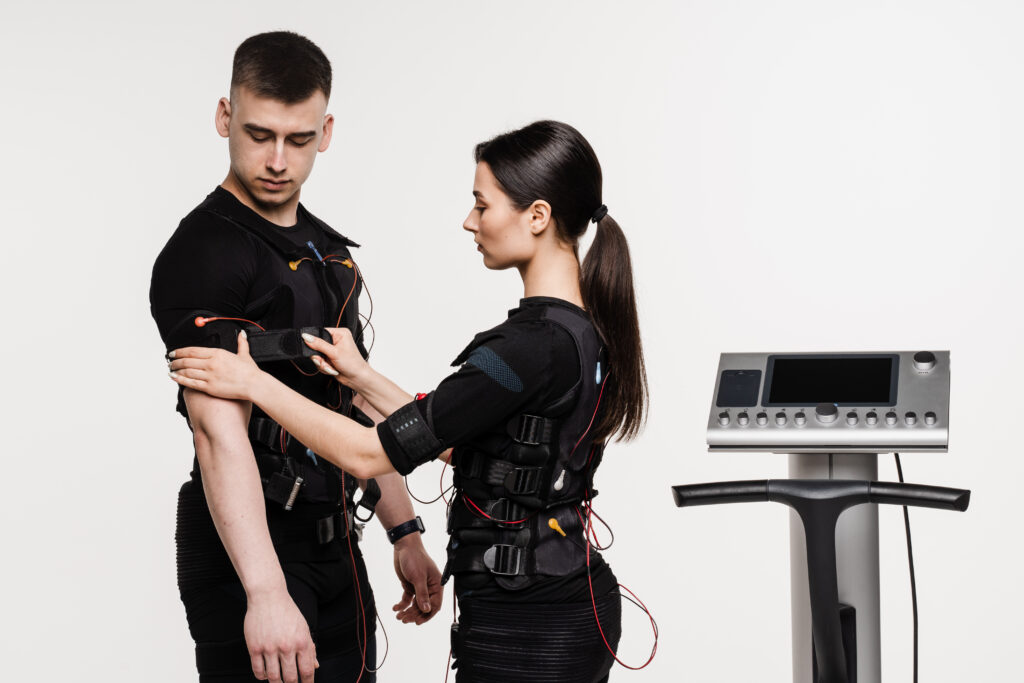
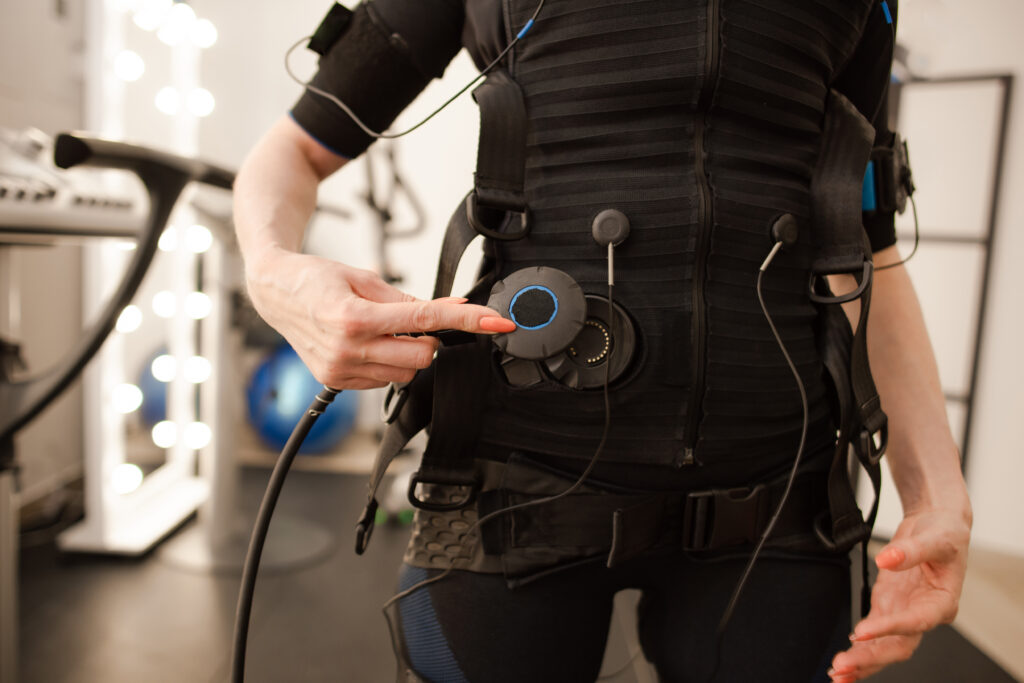
Whole-body EMS (WB-EMS), by contrast, refers to wearable suits or vests fitted with electrodes that stimulate multiple large muscle groups simultaneously. These suits are used primarily in fitness and performance settings rather than clinical rehabilitation. The research comparing neuromuscular electrical stimulation vs EMS suits shows that while both use electrical current, their protocols, intensities, electrode configurations, and intended populations differ substantially. The evidence supporting neuromuscular electrical stimulation nmes vs ems suits is growing steadily in the professional fitness space.
The Evidence Base for Clinical NMES: Neuromuscular electrical stimulation nmes vs ems suits
Clinical NMES has one of the most well-established bodies of evidence in electrotherapy. Research published by Nussbaum et al. demonstrates that NMES can produce meaningful improvements in muscle strength and reduce atrophy in patients who cannot perform voluntary exercise due to injury or neurological conditions. The parameters used in these studies—pulse width, frequency, intensity, and electrode placement—are tightly controlled and standardized—a hallmark of rigorous NMES vs EMS research methodology. For coaches exploring neuromuscular electrical stimulation nmes vs ems suits, proper protocol design is essential.
A landmark review in Physical Therapy by Gregory and Bickel (2005) examined neuromuscular adaptations to NMES and concluded that electrical stimulation can elicit strength gains comparable to voluntary training under certain conditions, particularly in post-surgical and immobilized patients. This kind of depth is what separates the clinical NMES fitness EMS difference—clinical NMES operates in a controlled, evidence-driven environment where dosage and outcomes are measurable and reproducible. Clients asking about neuromuscular electrical stimulation nmes vs ems suits deserve clear, evidence-informed guidance.
From a regulatory standpoint, NMES devices intended for medical use are classified and regulated by the U.S. Food and Drug Administration (FDA), which distinguishes them from general-use consumer EMS devices. This regulatory distinction is itself part of the broader NMES vs EMS research landscape: clinical devices must meet safety and efficacy standards that consumer fitness EMS products are not required to meet. The practical application of neuromuscular electrical stimulation nmes vs ems suits varies depending on goals and client profile.
Protocol Differences That Drive Research Gaps
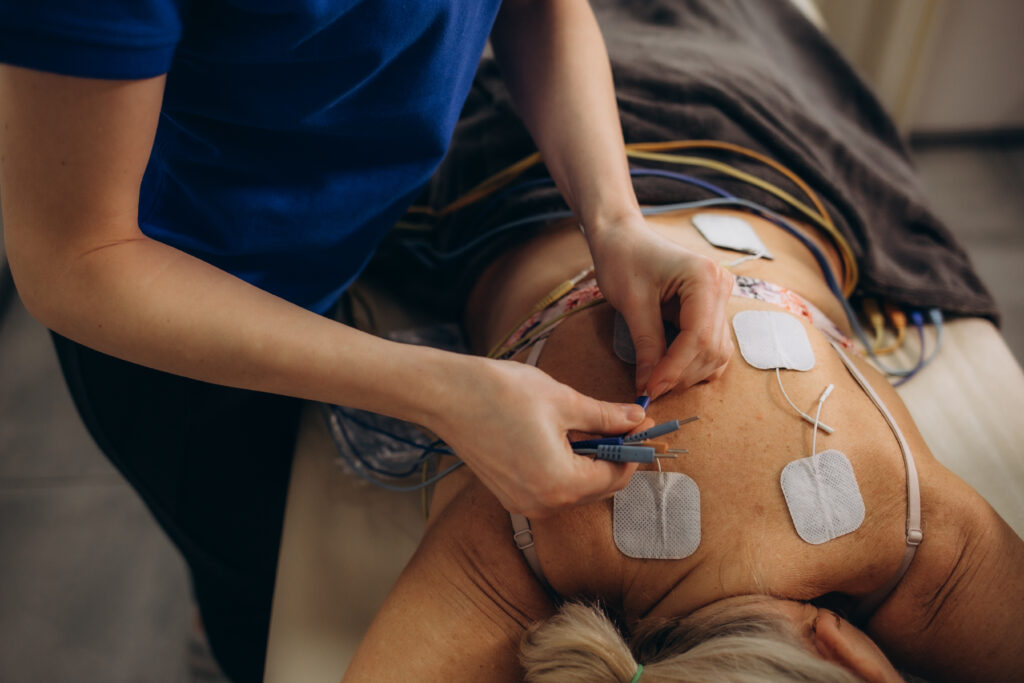
One of the core reasons the NMES research EMS comparison is so complex is that the two technologies use fundamentally different stimulation protocols—a key reason why NMES vs EMS research comparisons can be so complex. Clinical NMES typically targets one or two muscle groups at a time with relatively high current intensity delivered in short, controlled sessions. This localized approach makes it easier to measure outcomes and attribute effects to the intervention. Studios investing in neuromuscular electrical stimulation nmes vs ems suits report strong client retention and satisfaction.
WB-EMS suits, on the other hand, stimulate up to 16 major muscle groups simultaneously at lower individual intensities. The multi-site, full-body activation makes it difficult to apply traditional single-muscle research protocols. As Maffiuletti et al. (2011) noted in the European Journal of Applied Physiology, neuromuscular electrical stimulation produces different physiological responses depending on stimulation frequency, pulse characteristics, and the metabolic state of the targeted tissue—variables that are much harder to control in a whole-body setting. Anyone serious about neuromuscular electrical stimulation nmes vs ems suits should prioritize certified equipment and trained staff.

Evidence Base Differences: What the WB-EMS Studies Show
To fully grasp NMES vs EMS research, consider the evidence base for WB-EMS is growing, but it is younger and more heterogeneous than the NMES literature. Studies on whole-body EMS suits have shown improvements in body composition, muscle strength, endurance, and back pain reduction in healthy adults and older populations. However, variability in study design—including differences in session frequency, suit models, current parameters, and training combinations—makes it difficult to draw universal conclusions. The business case for neuromuscular electrical stimulation nmes vs ems suits is supported by both research and real-world results.
This does not mean WB-EMS lacks scientific credibility. It means the field is maturing. The NMES vs EMS research gap is partly a function of time: NMES has had decades longer to accumulate systematic reviews and randomized controlled trials. WB-EMS research is catching up, with an increasing number of peer-reviewed studies examining specific populations, training frequencies, and outcome measures. The neuromuscular electrical stimulation vs EMS suits comparison becomes more nuanced with each new study. Getting the most from neuromuscular electrical stimulation nmes vs ems suits requires consistent protocol and progress tracking.
Population and Application Differences
Understanding the clinical NMES fitness EMS difference also requires looking at who these technologies are designed for. Clinical NMES is primarily studied in patient populations: post-surgical recovery, neurological rehabilitation, chronic pain management, and muscle re-education. The research reflects these contexts, with strict inclusion/exclusion criteria and controlled clinical settings.
WB-EMS research, by contrast, tends to study healthy adults, recreational athletes, older adults managing age-related muscle loss, and individuals with limited time for traditional exercise. The goals in these studies are fitness-oriented—muscle gain, fat loss, performance enhancement, and time efficiency—rather than clinical recovery. When evaluating NMES research EMS comparison data, it’s important to recognize that, in the context of NMES vs EMS research, you’re often comparing apples and oranges: different populations, different protocols, different outcomes.
What This Means for Consumers
For consumers considering WB-EMS suits, the key takeaway from the NMES vs EMS research literature is straightforward: don’t dismiss EMS suit research because it doesn’t look like clinical NMES research. The two serve different purposes and are studied accordingly. WB-EMS suits are not medical devices seeking FDA approval for treating conditions—they are fitness tools, and the growing body of fitness science behind them is increasingly rigorous.
At the same time, understanding the NMES vs WB-EMS distinction helps consumers ask better questions. If a brand claims its product is supported by “decades of clinical research,” ask whether that research was conducted on the specific whole-body suit format or on localized NMES devices. The distinction matters for understanding what results you can realistically expect from a fitness-oriented EMS suit.
Conclusion
The NMES vs EMS research conversation is not about which technology is better—it’s about recognizing that they are different tools with different research histories and different applications. Clinical NMES has a deep, standardized evidence base built around rehabilitation. WB-EMS suits have an emerging, fitness-focused evidence base that is rapidly growing in both volume and rigor. When you understand the NMES research EMS comparison in this light, you’re better equipped to evaluate marketing claims, interpret study findings, and make informed decisions about which technology fits your goals.
Ready to explore EMS suits backed by real-world evidence? Read our EMS product reviews or use our product comparison tool to find the right fit for your training needs.
Frequently Asked Questions
What is the main difference between NMES and whole-body EMS suits?
NMES targets one or two specific muscles with clinical-grade electrical stimulation, primarily for rehabilitation. Whole-body EMS suits stimulate multiple large muscle groups simultaneously for fitness and performance goals. The NMES vs EMS research base reflects these different applications and populations.
Is the research on WB-EMS suits as strong as the research on clinical NMES?
Clinical NMES has a longer and more standardized research history, largely because it has been studied in controlled medical settings for decades. WB-EMS research is newer but growing rapidly. The difference in evidence volume reflects time and funding, not necessarily a difference in effectiveness for their respective applications.
Why does the FDA regulate NMES devices but not consumer EMS suits the same way?
The FDA classifies NMES devices as medical devices because they are intended to treat medical conditions. Consumer whole-body EMS suits are marketed for fitness and wellness, placing them in a different regulatory category. This is a key part of the clinical NMES fitness EMS difference from a legal and safety perspective.
Can WB-EMS suits be used for rehabilitation like clinical NMES?
Some physical therapists and sports medicine practitioners are beginning to explore WB-EMS in rehabilitative contexts, but consumer EMS suits are not cleared for medical use. Clinical NMES remains the appropriate tool for post-surgical or neurological rehabilitation under professional supervision.
What should I look for when evaluating EMS suit research claims?
When applying NMES vs EMS research principles, look for whether the cited studies used whole-body EMS suits or localized NMES devices. Check the population studied (healthy adults vs. patients), the stimulation parameters, and the outcome measures. The NMES research EMS comparison becomes much clearer when you understand the context behind each study.
Does neuromuscular electrical stimulation vs EMS suits come down to intensity?
Intensity is one factor, but the full picture involves electrode placement, stimulation frequency, session duration, number of muscle groups targeted, and the goals of the intervention. Neuromuscular electrical stimulation vs EMS suits is ultimately a question of clinical precision versus broad fitness activation—each optimized for its own purpose.