Quick Answer
There is no universal EMS suit lifespan. How long your suit lasts depends on its materials, fit, training frequency, cleaning, storage, and handling. Follow your manufacturer’s service limits, inspect the garment before each session, and stop using equipment with damage or unexplained performance changes.
Key Takeaway
Judge EMS suit lifespan by condition and performance alongside the manufacturer’s instructions. Worn electrodes, stretched fabric, damaged connectors, recurring faults, and battery problems deserve attention. Raising the intensity or making an improvised repair does not resolve the underlying wear.
Your EMS suit may still look like workout clothing after years of use. But the fabric, electrodes, connectors, and controller do different jobs, and they may wear out at different times.
That makes EMS suit lifespan more complicated than checking the purchase date. A newer suit can develop damage, while an older garment may remain usable within its manufacturer’s service limits.
The useful question is whether your equipment still fits, functions, and meets the conditions its manufacturer requires.
How long does an EMS suit last?
There is no single replacement age that applies to every brand.
For example, eaglefit states that its suit lasts an average of three to four years with proper use. That is a product-specific estimate, not a guarantee for every EMS garment. eaglefit Switzerland
When comparing EMS suit lifespan claims, check what the manufacturer means. Does the estimate cover the garment alone? Does it assume a particular cleaning routine? Are the controller and battery covered separately?
A warranty period answers a different question. It describes coverage under specific terms, rather than promising that every component will remain usable for that exact length of time.
What affects EMS suit lifespan?
Think about the work your suit does between purchase and replacement.
It stretches when you put it on. It moves through exercises. Its connectors are attached and removed. The fabric encounters sweat, cleaning, drying, and storage.
A studio garment used by several people each day has a different use history from a personal suit worn weekly. However, infrequent use does not eliminate the need for inspection.
Your EMS suit lifespan record should consider:
- How often the garment is used.
- How many people wear it.
- How it is washed and dried.
- Whether it maintains the correct fit.
- How connectors and controller mounts are handled.
- Whether faults or repairs keep recurring.
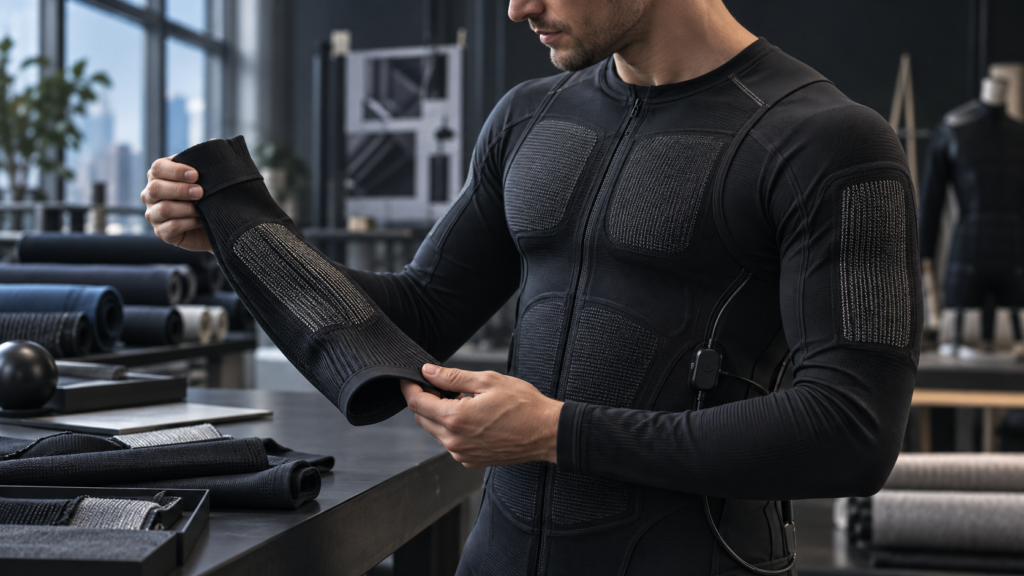
Check conductive electrodes for visible changes
Electrode condition belongs near the top of any EMS suit lifespan inspection.
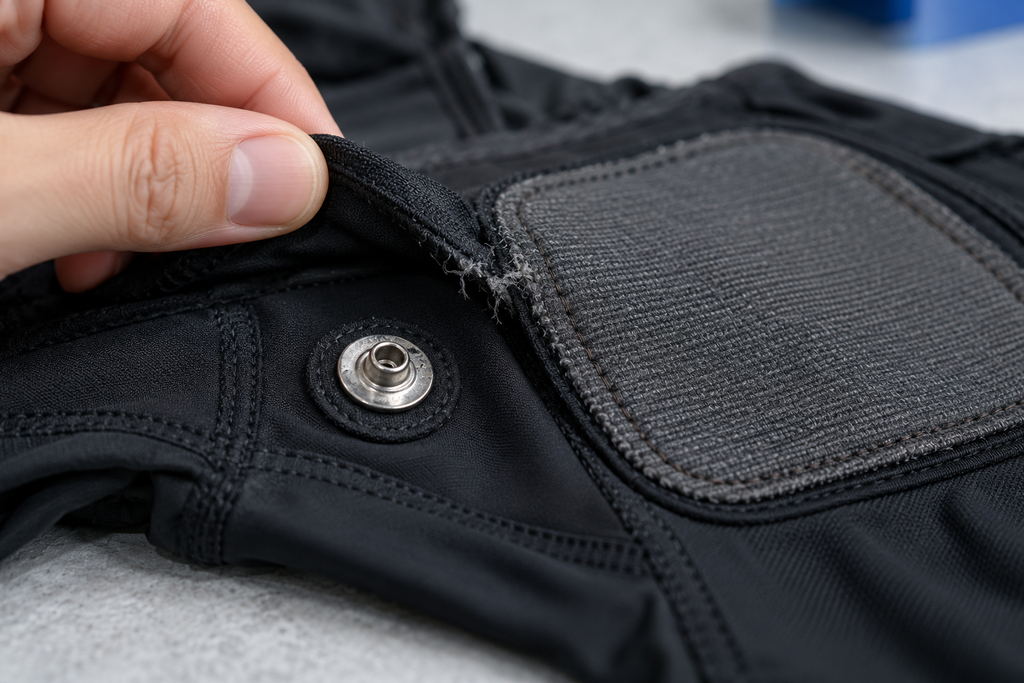
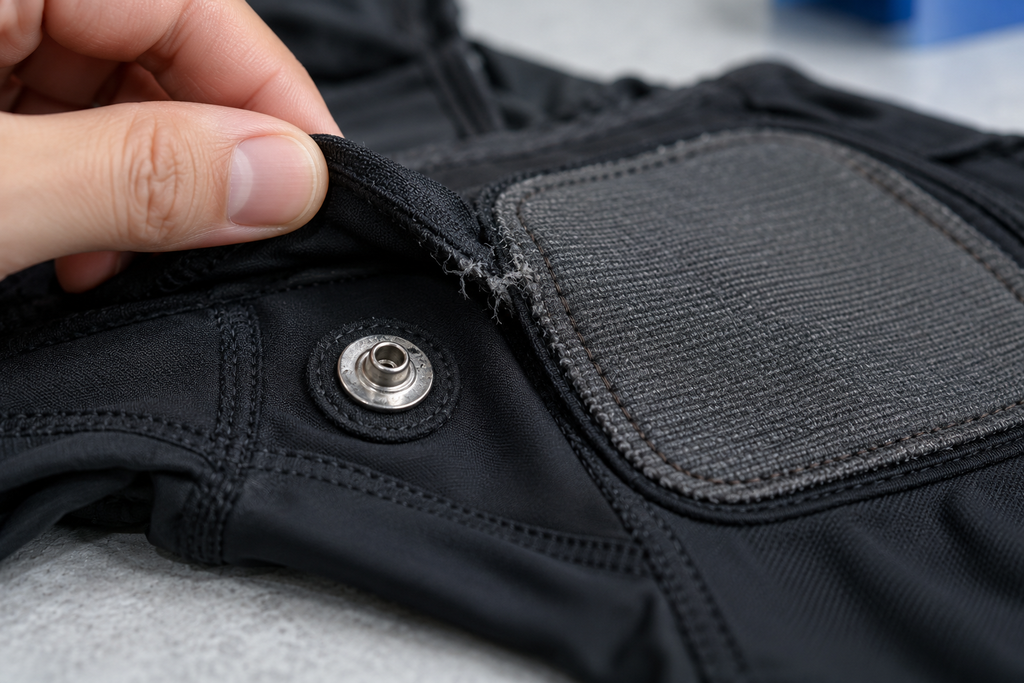
With the system switched off and electronics removed as instructed, examine the conductive areas under good lighting. Compare them with earlier photographs or the manufacturer’s illustrations where available.
Look for changes such as:
- Fraying or thinning.
- Peeling, cracking, or separation between layers.
- Persistent folds or distorted panels.
- New stiffness or discoloration.
- Damage around seams bordering an electrode.
These observations do not tell you exactly how much useful life remains. They give you specific information to document and send to support.
PEPPER’s Original suit manual, for example, directs users to inspect for damage and avoid using a damaged suit.
Does needing more intensity mean the suit is worn out?
A higher setting alone cannot diagnose the end of EMS suit lifespan.
Fit, electrode contact, preparation, program settings, and your response to training can affect how stimulation feels.
Before assuming the garment has failed, follow the troubleshooting instructions for your model. eaglefit’s support guidance includes checking fit, PowerBox attachment, electrode activation, and the preparation it specifies. Those instructions should not be transferred automatically to another brand. eaglefit Switzerland
If the change persists, document it and contact the manufacturer. Avoid repeatedly increasing output to compensate for an unexplained problem.
Check whether the garment still holds its shape
Fit is another part of EMS suit lifespan because the garment needs to hold its electrodes in their intended positions.
Compare the clean, dry suit with the brand’s original fit guidance. Check the abdomen, thighs, arms, closures, and controller mount.
Does the material return to shape? Are areas permanently baggy? Does the suit shift where it previously stayed in place?
A change in your own measurements can also affect fit, so loose fabric does not automatically prove the textile has worn out.
Either way, a garment that no longer fits correctly needs reassessment. Ask the manufacturer whether adjustment, another size, or replacement is appropriate.
Take movement-related faults seriously
Some problems appear only during movement.
You might notice a zone cutting out during a squat, a connection dropping when you bend, or an error recurring in the same position.
These patterns can help support investigate an EMS suit lifespan concern, but they do not confirm an internal conductor failure. Contact, attachment, and other system issues may also be involved.
Stop the session and record what happened. Include the affected zone, movement, error message, and whether the problem has occurred before.
Do not keep bending or pulling an energized connection to reproduce the fault.
Inspect connectors and controller mounts
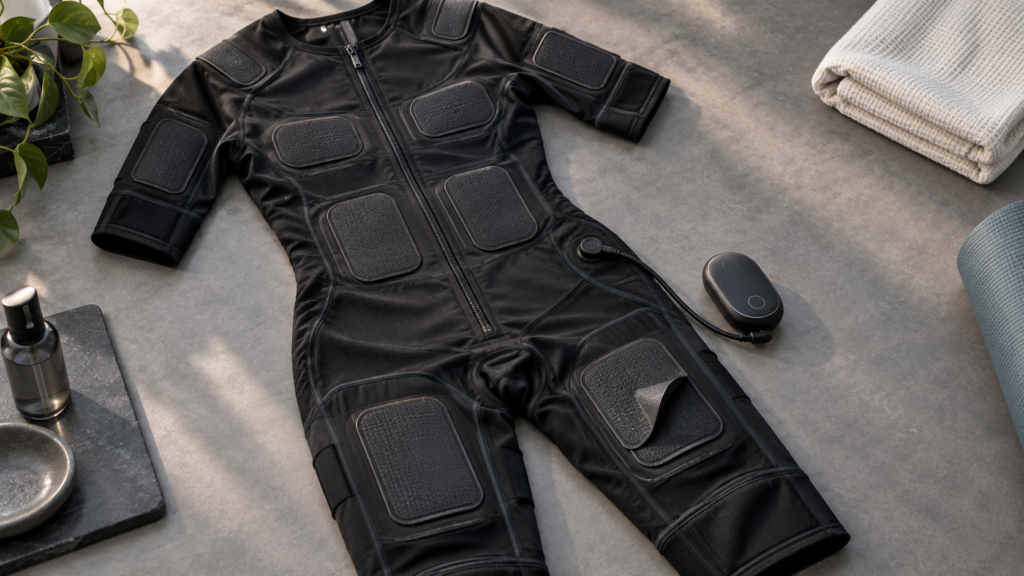
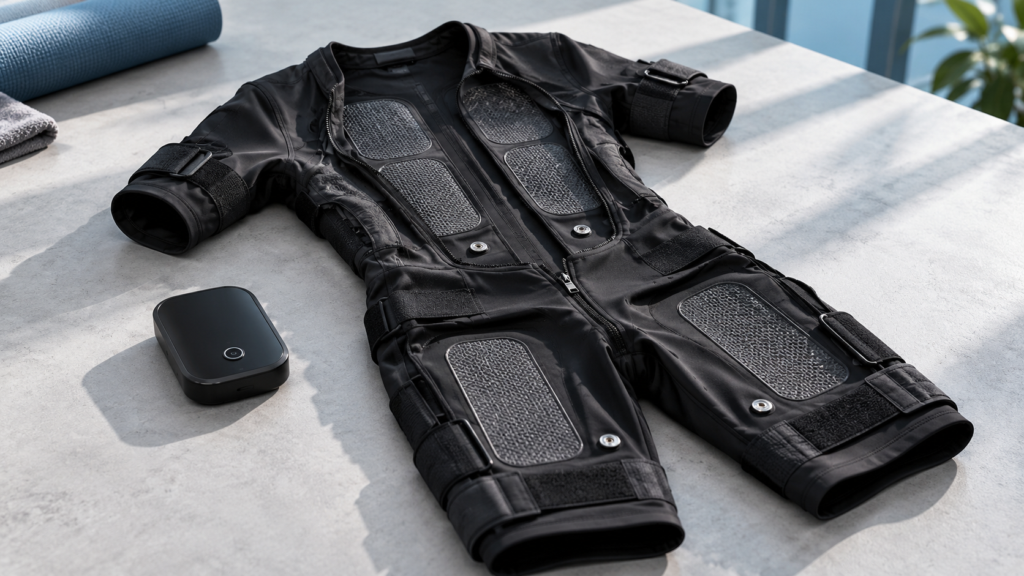
Check the connection points your system actually uses. These may include snaps, plugs, magnetic contacts, cables, or a controller mount.
Look for:
- Bent, recessed, or missing contacts.
- Corrosion or persistent residue.
- Cracked housings.
- Loose attachments.
- Exposed wire or damaged insulation.
- A connection that no longer seats normally.
A connector problem does not automatically mean the entire garment must be replaced. It does mean the equipment needs assessment before further use.
For EMS suit lifespan decisions, ask whether the affected part can be serviced or replaced through an authorized process.
Avoid sewing through electrical areas, shimming a loose contact, or attaching a substitute connector yourself. PEPPER’s manual prohibits modifications and warns against unspecified accessories and cables.
Separate garment wear from controller and battery problems
The controller and battery may need attention before the garment does, or vice versa.
When assessing EMS suit lifespan, record controller behavior separately from textile condition.
Useful observations include shorter runtime, unexpected shutdowns, charging failures, and unusual heat. These symptoms need troubleshooting because battery aging is only one possible explanation.
Stop using or charging a unit with swelling, leakage, physical damage, or an unusual odor, and contact the manufacturer for instructions.
Do not open a sealed controller or install an unapproved battery. PEPPER’s instructions specifically advise against tampering with the power box and direct users not to use a damaged battery box. peppermove.com
Protect EMS suit lifespan with the right cleaning routine
Cleaning should follow the exact garment instructions.
A wash temperature, detergent, spin setting, or drying method approved for one suit may be unsuitable for another. Even models from the same brand may have different requirements.
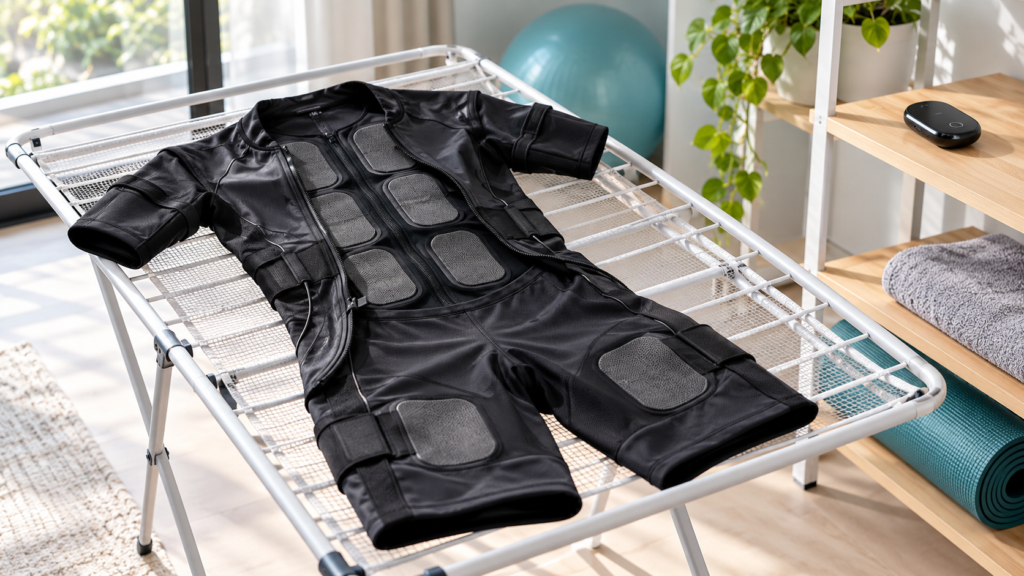
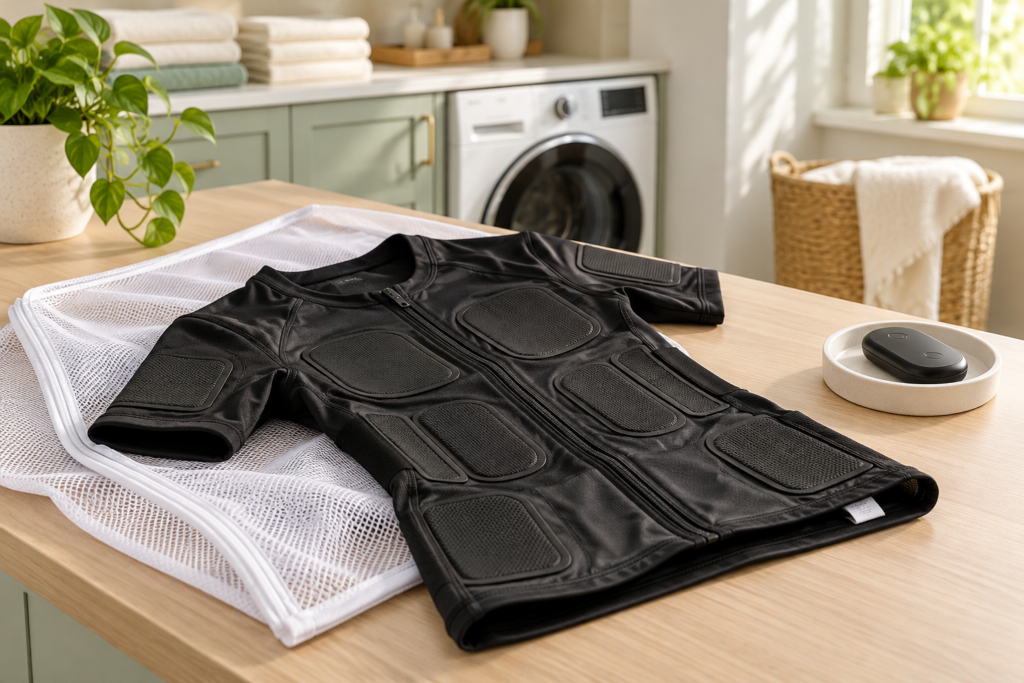
For example, eaglefit’s care instructions specify a delicate cycle at a maximum of 30°C, the supplied laundry bag, and no spinning. Those are its instructions, rather than a universal EMS cleaning recipe. eaglefit Switzerland
Protecting EMS suit lifespan should not mean skipping necessary hygiene. It means cleaning the equipment properly and allowing it to dry as directed before storage.
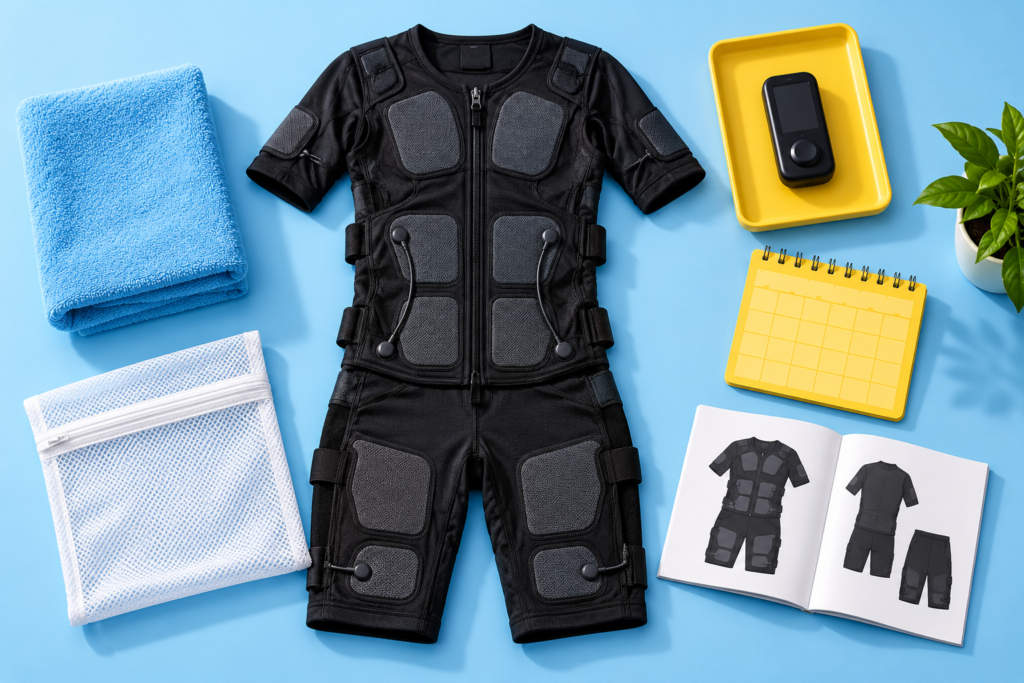
Keep a simple maintenance record
Memory makes gradual changes hard to spot. A short record gives you something more useful to compare.
For personal equipment, keep notes on purchase date, recurring issues, repairs, and changes in fit or runtime.
For shared equipment, assign each garment an ID and track:
- Its in-service date.
- Approximate sessions or users.
- Wash cycles.
- Inspection findings.
- Error messages and affected zones.
- Authorized repairs and replacement parts.
- Controller or battery concerns.
Photographs can help document visible changes. Use consistent lighting and keep client or personal information out of the images.
An EMS suit lifespan log also helps support understand whether a problem appeared suddenly or developed over time.

When should you replace an EMS suit?
Replacement may be appropriate when the manufacturer identifies damage as unserviceable, the garment cannot maintain its required fit, or faults persist after authorized service.
Before paying for a repair, ask what will be replaced, whether the remaining equipment is compatible, and what coverage applies afterward.
If the manufacturer specifies a service-life limit or retirement condition, follow it.
The goal of tracking EMS suit lifespan is to make a timely decision based on the equipment’s condition and the manufacturer’s assessment.
Frequently asked questions
Is EMS suit lifespan always three to four years?
No. eaglefit publishes that average for its own suit with proper use. Other products may have different estimates, service limits, and care requirements. eaglefit Switzerland
Can I keep using a suit after its warranty ends?
Warranty expiration alone does not determine whether the equipment remains usable. Check its condition, any stated service limits, and the manufacturer’s guidance.
Can conductive fabric be repaired?
Ask the manufacturer whether an authorized repair exists for your model. Do not assume that an ordinary fabric patch or stitched repair is suitable for an electrode or electrical pathway.
Should a studio replace every suit on the same schedule?
A schedule can prompt inspections, but individual garments may have very different use histories. Combine scheduled checks with usage records, manufacturer requirements, and immediate removal when damage or faults appear.
The practical takeaway
There is no universal expiration date for an EMS suit.
Inspect the electrodes, check the fit, examine connections, and record changes in performance. Treat the garment, controller, and battery as separate components when asking about service or replacement.
When something changes, pause and investigate through the manufacturer’s approved process. A higher setting or improvised fix can hide a problem without resolving it.