
Conductive Fabric Electrodes in EMS Suits: Materials, Contact, and Wear
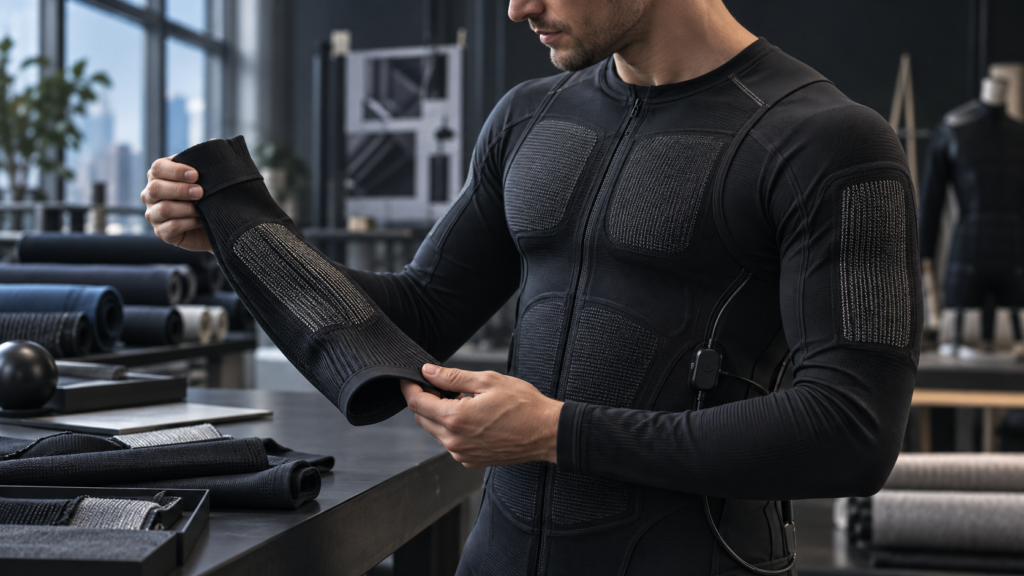
Learn how conductive textile EMS electrodes work, why moisture and compression matter, and how washing and wear can affect garment performance.
Why EMS Electrode Contact Becomes Patchy and How to Fix It

Fix patchy or sharp EMS stimulation by checking fit, moisture, skin preparation, connectors, and electrode wear before raising intensity.
How Electrode Size Changes Current Density and Sensation in EMS
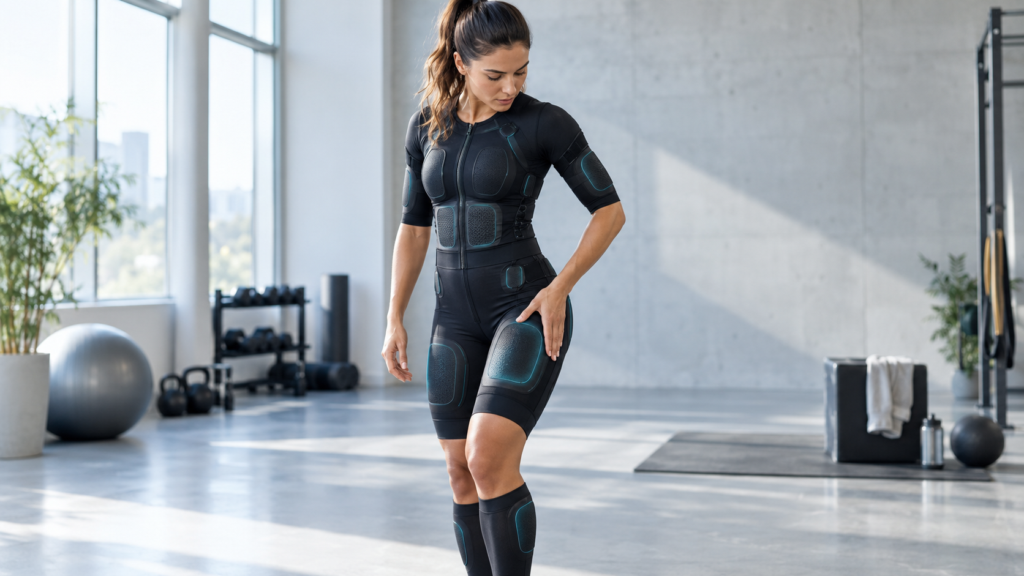
Learn how EMS electrode area and placement affect current density, comfort, and muscle contraction—and why smaller is not automatically more precise.
EMS Pulse Width Explained: What Microseconds Mean for Muscle Stimulation
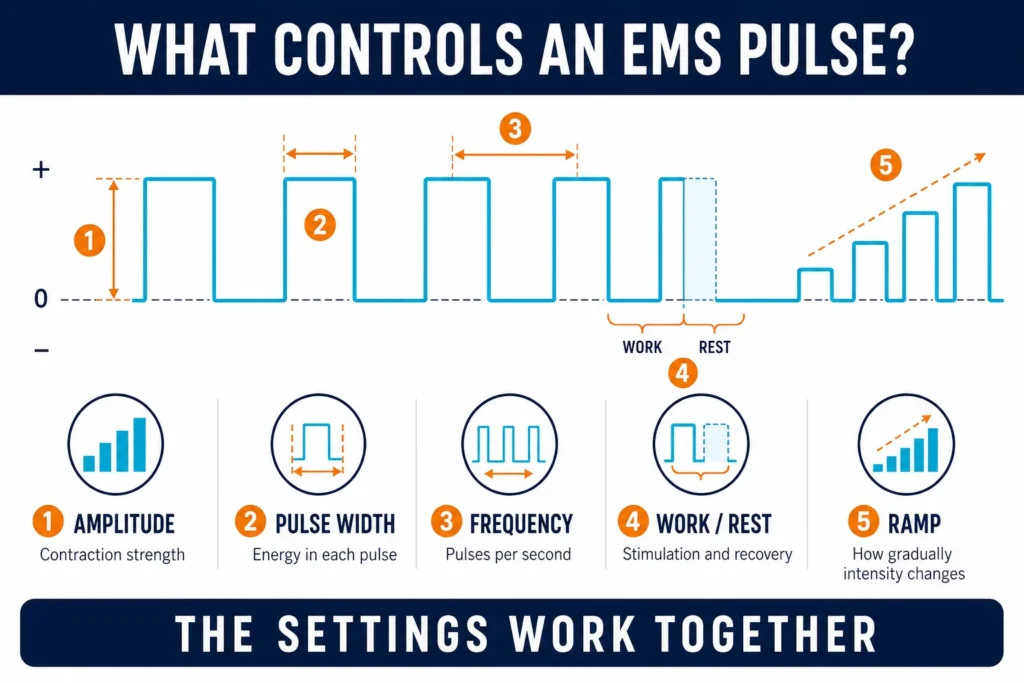
Learn what EMS pulse width means, how it interacts with intensity and electrode contact, and why device settings should not be compared in isolation.
EMS Duty Cycle Explained: Work Time, Rest Time, and Why the Ratio Matters
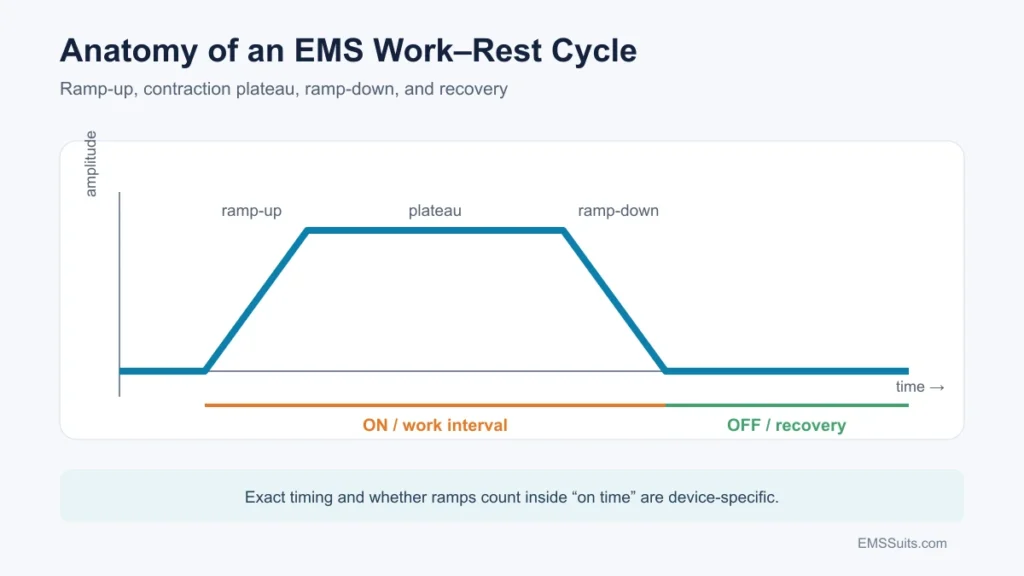
Understand EMS duty cycle, on and off times, work-to-rest ratios, and why recovery intervals matter for muscle fatigue and session design.
What Is Ramp Time in EMS Training and How Does It Change a Session?
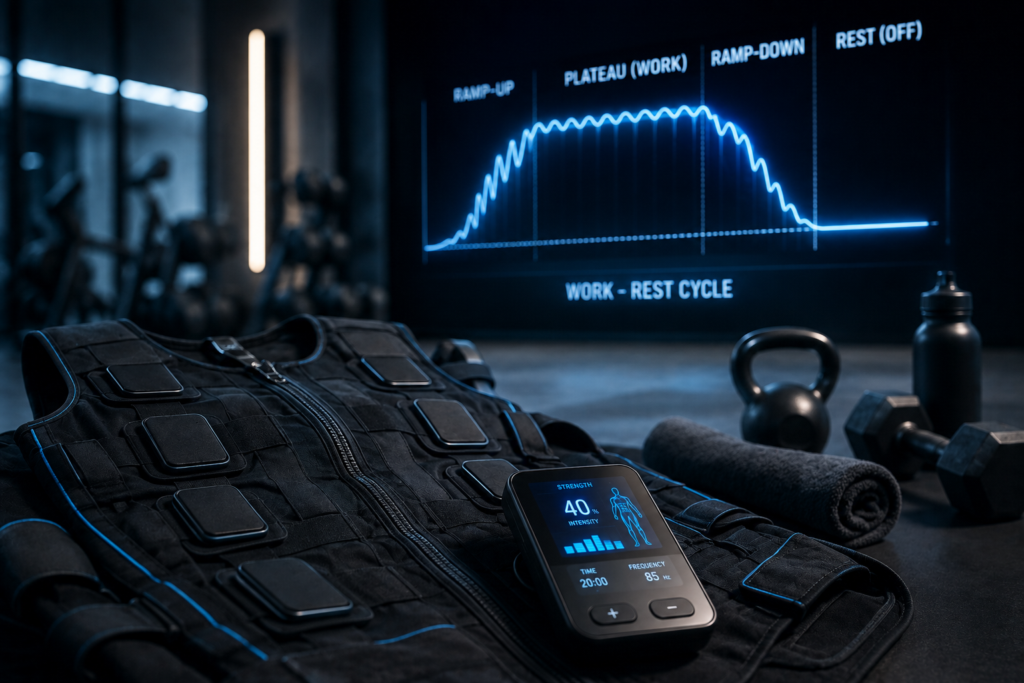
Learn what EMS ramp-up and ramp-down times mean, how they affect contraction timing, and why users should follow device-specific programs.
EMS Amplitude vs Intensity: Two Terms Users Commonly Confuse
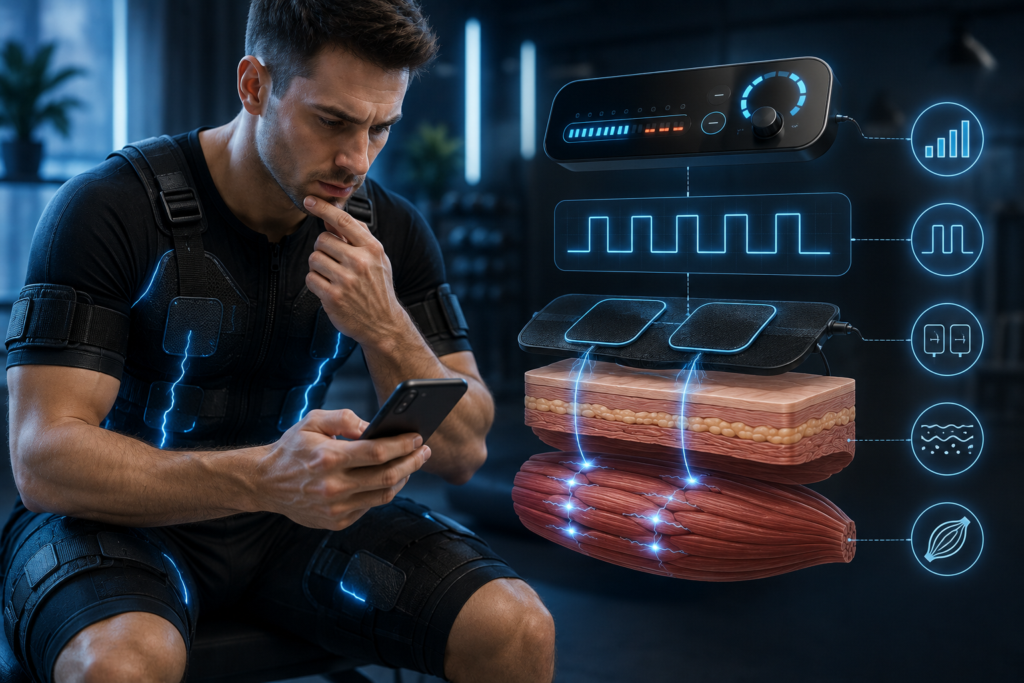
EMS amplitude and intensity are often used interchangeably. Learn what each term can mean and why percentages cannot be compared across devices.
Monophasic vs Biphasic EMS Waveforms: A Practical Introduction
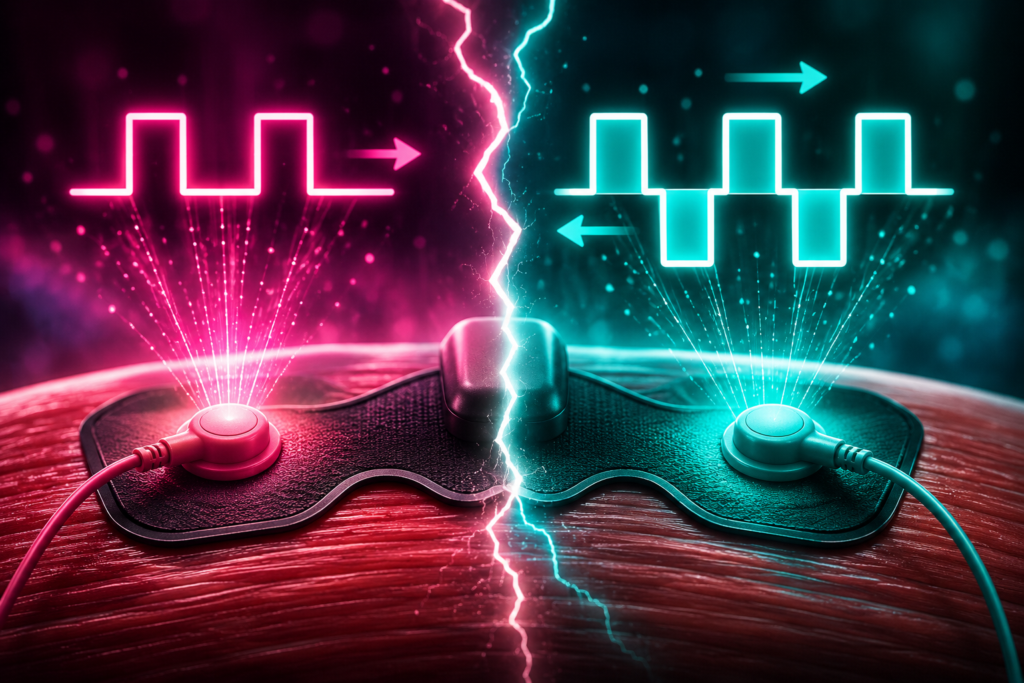
Compare monophasic and biphasic EMS pulses, learn what balanced waveforms mean, and understand why waveform alone cannot rank a device.
Constant Current vs Constant Voltage EMS Devices: What Is the Difference?

Learn how constant-current and constant-voltage EMS devices respond to changing skin impedance and why neither design can be judged by one specification.
How EMS Controllers Synchronize Multiple Muscle Channels
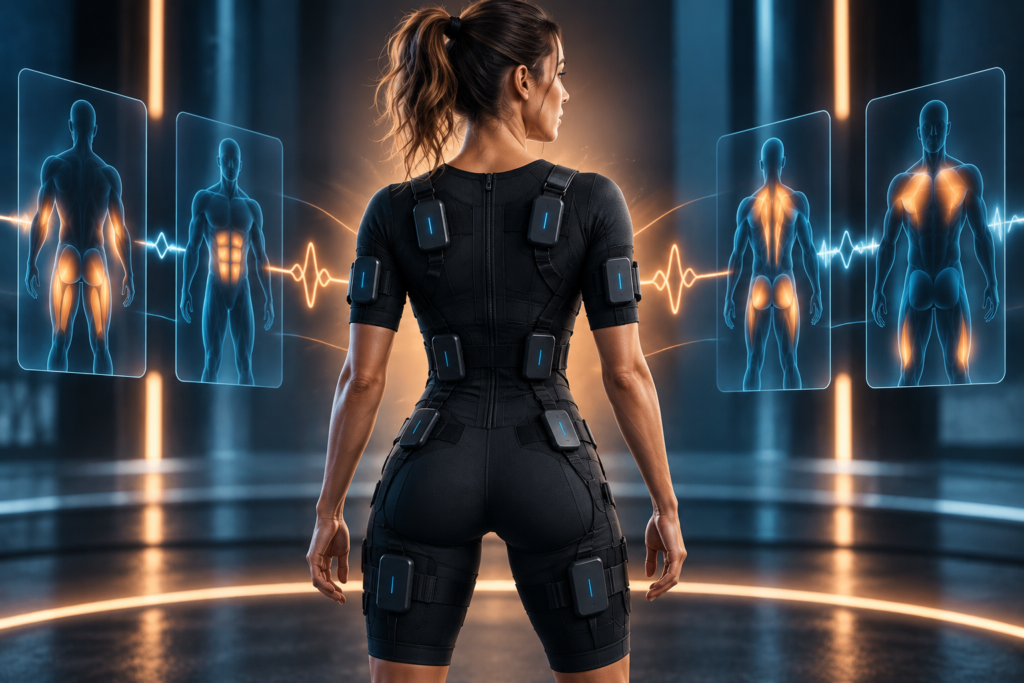
Learn how synchronous and alternating EMS channels coordinate muscle zones, why timing matters, and what to check before moving under stimulation.