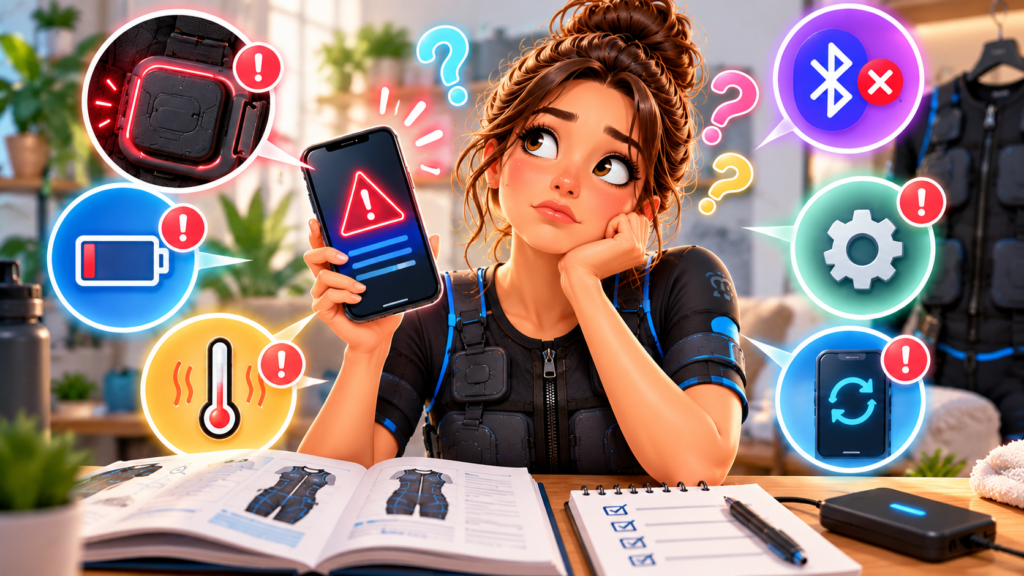
EMS should not feel like one sharp pinprick inside a broad muscle zone. A localized sting, a hot-feeling edge, or stimulation that appears only in part of an electrode often points to uneven contact rather than a need for more intensity.
Pause the session before troubleshooting. Raising the controller to overcome poor contact can increase current through the small area that is still touching the skin.
What patchy contact feels like
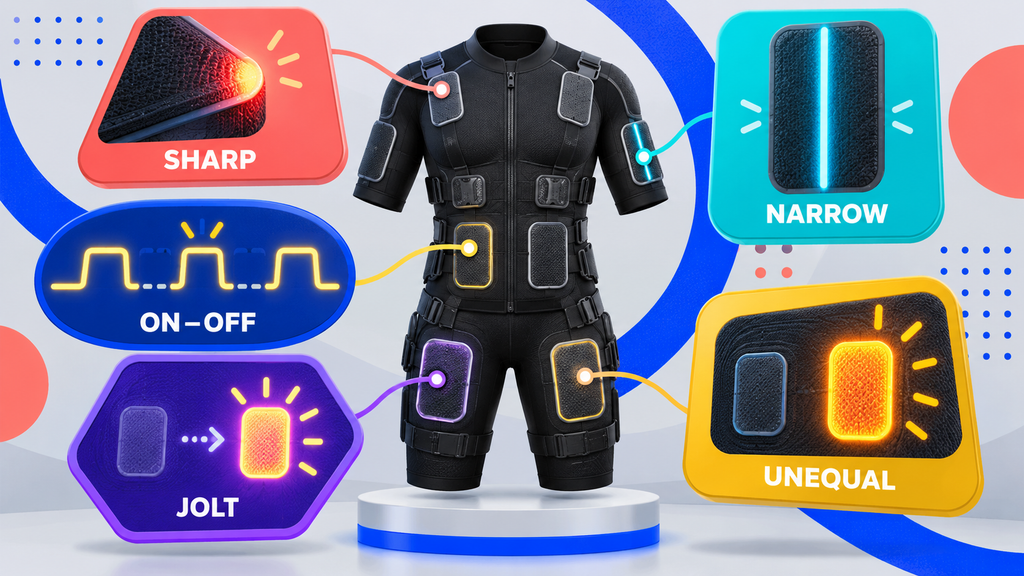
Users describe poor contact in several ways:
- One corner feels much sharper than the rest.
- A broad electrode produces only a narrow line of sensation.
- The zone cuts in and out during movement.
- A high displayed level produces little contraction, followed by a sudden jolt.
- The left and right sides feel dramatically different.
These signs can also have other causes, so they are not a device diagnosis. They are reasons to stop, inspect the setup, and consult support if the problem remains.
Why incomplete contact changes sensation
Electrode specifications assume a conductive surface area. If a wrinkle, dry patch, or lifted edge reduces the area that actually carries current, average current density can rise in the portion still connected.
Our guide to EMS electrode size and current density explains this relationship. Real current distribution is not perfectly uniform, which is why edge contact and moisture matter.
Step 1: return intensity to zero
Pause or stop stimulation using the device’s normal control. Return the affected zone to zero before moving the garment, controller, or connector. Do not adjust a live electrode against the skin unless the manual explicitly provides a safe procedure.
If there is a burning smell, visible damage, overheating, or skin injury, power the system off and do not restart it. Contact the manufacturer or qualified service provider.
Step 2: inspect suit fit
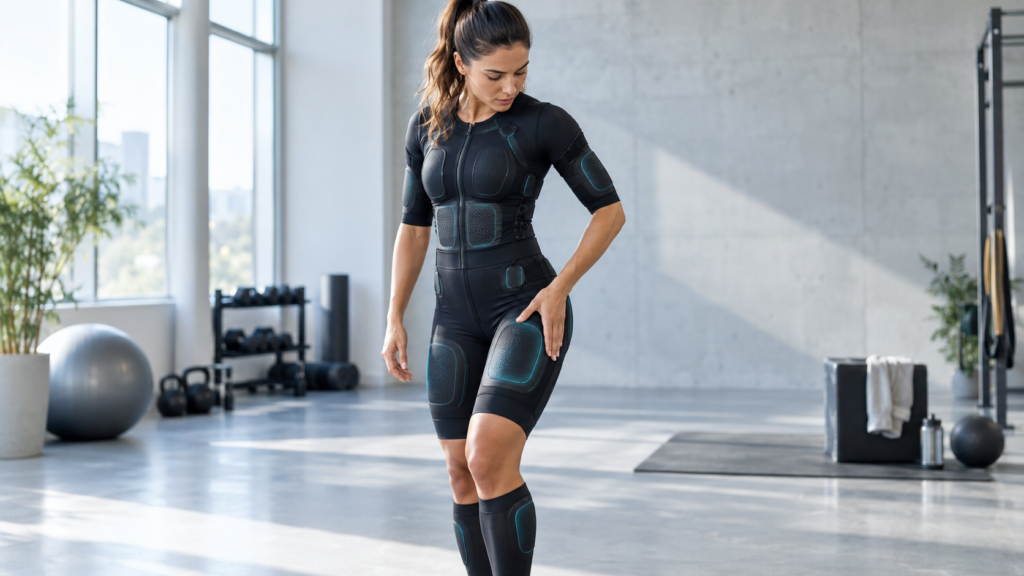
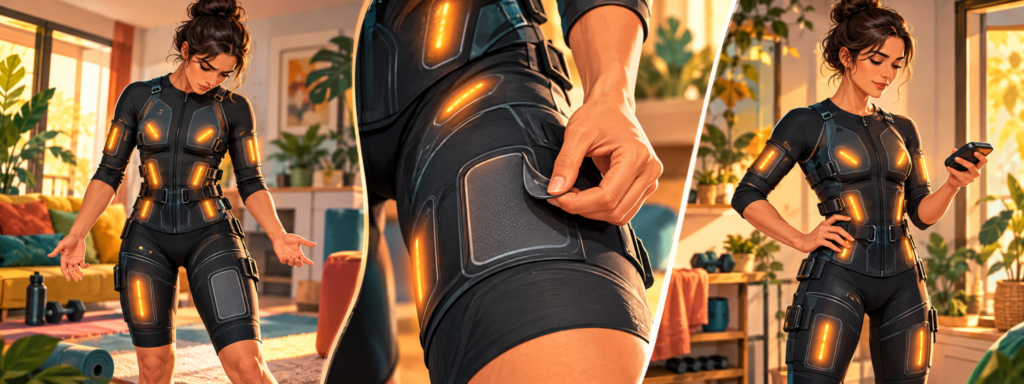
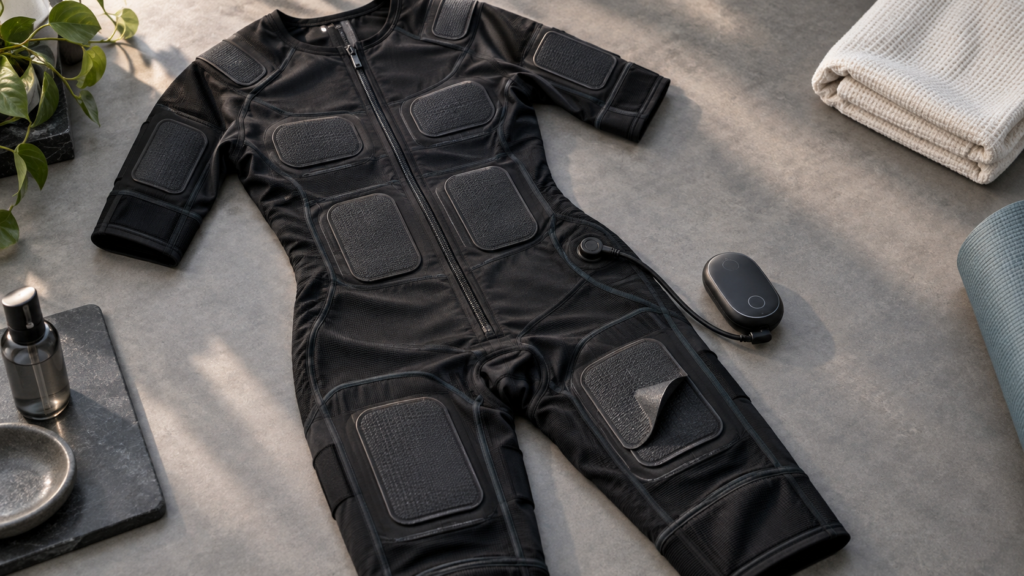
The electrode should lie flat over its intended region. Check for:
- Wrinkles across the conductive panel.
- A garment seam pulling the panel away from the body.
- Twisting around the torso or limb.
- Straps that are unevenly tensioned.
- A suit that has stretched or is the wrong size.
Correct fit while the controller is disconnected or output is off. A suit should be snug enough for contact without restricting breathing, circulation, or normal controlled movement.
Step 3: follow the correct moisture method
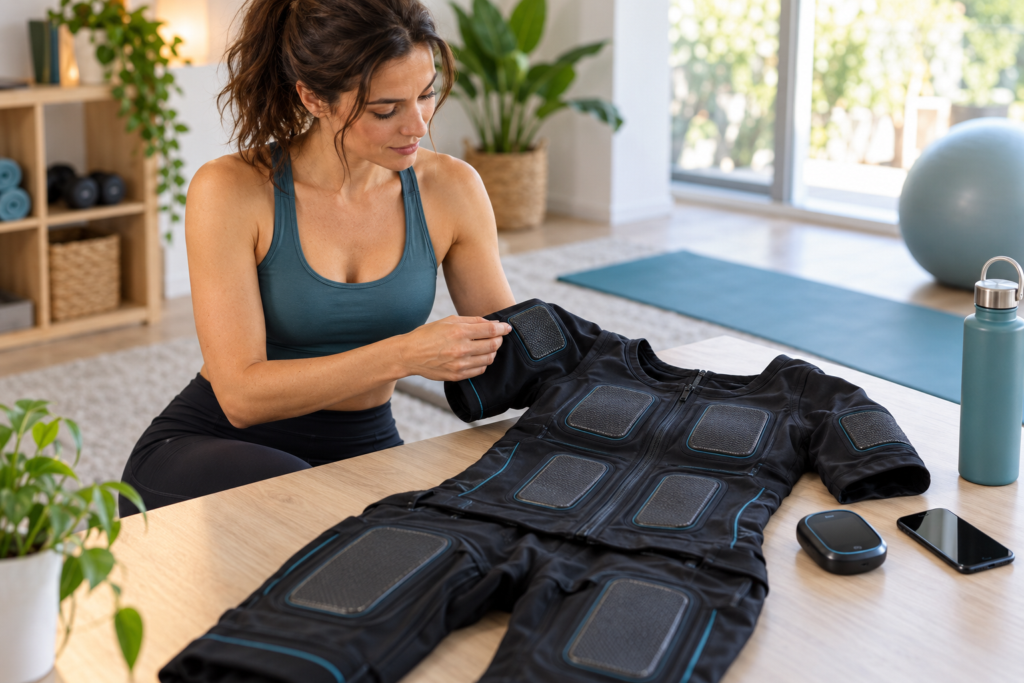
Wet-electrode systems may require each conductive surface to be evenly dampened. Water should be applied only where and how the manual specifies. Saturating electronics or using an unapproved spray is not a safe substitute.
Dry-electrode systems should not automatically be wetted. They may depend on direct skin contact, compression, and normal perspiration. PEPPER’s official troubleshooting guidance, for example, tells users of its system to warm up or moisten electrodes, while other products use different contact designs. The device-specific manual wins.

Step 4: prepare the skin
Lotions, oils, and heavy body products can interfere with an electrode interface. Clean and dry the skin according to the product instructions. Do not scrub aggressively or apply alcohol unless the manufacturer specifically allows it.
Body hair can prevent some electrode types from lying flat. Do not shave immediately before a session if that causes irritation. Follow the device’s skin-preparation guidance or ask its support team for an approved method.
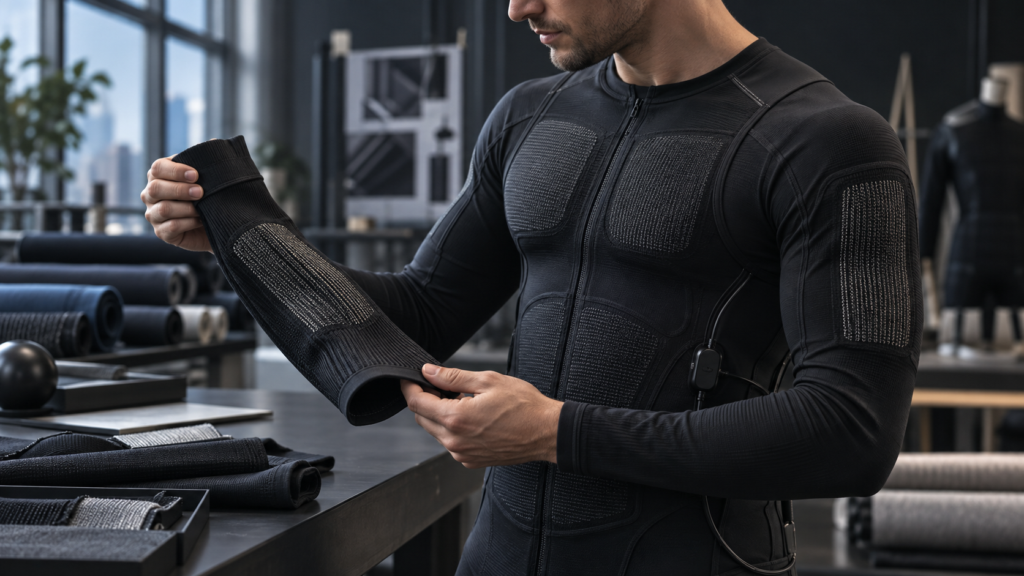
Step 5: inspect connectors and conductive panels
With power off, examine:
- The controller attachment.
- Cable plugs and strain-relief points.
- Snaps, contacts, and garment connectors.
- Conductive textile for fraying, peeling, or residue.
- Any removable electrode for dryness or lifting.
An intermittent problem that appears only during a squat can indicate a loose connector or conductor that changes with movement. Stop using the affected channel until the cause is resolved.
Step 6: restart low and change one thing at a time
After correcting contact, restart with the affected zone at a low setting. Increase gradually only during the phase allowed by the manufacturer.
Change one zone at a time. If every slider is adjusted together, it becomes difficult to identify which contact point caused the sharp sensation.
When the problem is probably not user setup
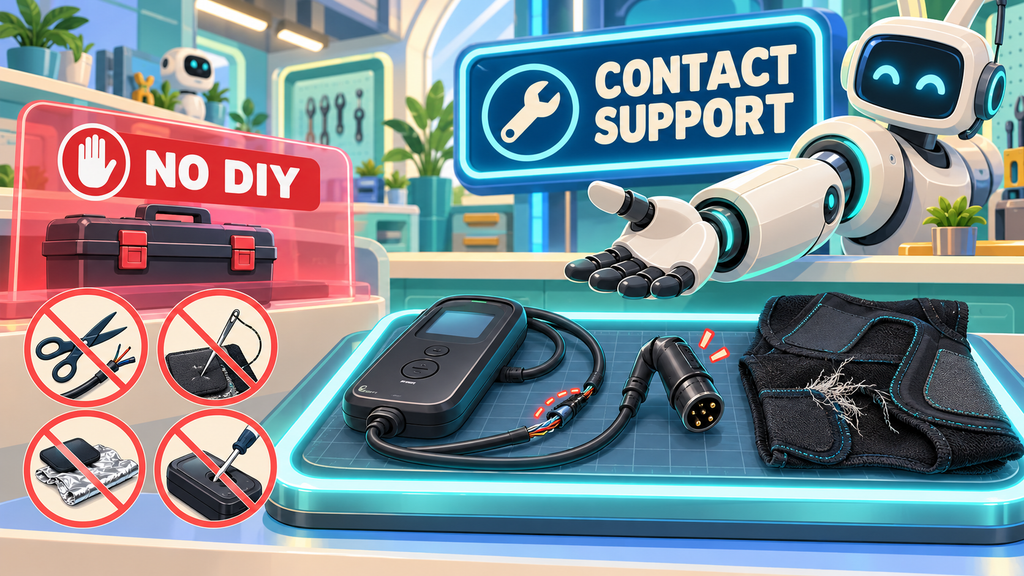
Contact support when:
- The same zone fails after correct fit and preparation.
- The fault follows a specific cable or controller attachment.
- Conductive fabric is visibly damaged.
- A contact or connector is corroded, bent, or loose.
- The device shows a persistent error code.
- Stimulation remains painful at a low setting.
Do not open a sealed controller, splice cables, sew through conductive panels, or add foil, gel, or another improvised conductor.
Frequently asked questions
Should I increase intensity if one electrode feels weak?
Check contact first. Raising output can make a small connected area feel sharper without restoring full electrode contact.
Why does contact improve after warming up?
Heat and perspiration can change the skin-electrode interface, especially in some dry textile systems. That does not replace correct fit or the manual’s preparation steps.
Can I use electrode gel in an EMS suit?
Only if the manufacturer explicitly permits that product and method. Unapproved gel can damage textiles or electronics and alter current distribution.
Is left-right sensation supposed to be identical?
Not necessarily, but a large sudden difference warrants a fit, moisture, and connector check before intensity changes.
The practical takeaway
Patchy EMS contact is a setup or equipment warning, not a challenge to tolerate. Stop stimulation, return the affected zone to zero, flatten and align the garment, use the correct moisture method, prepare the skin, and inspect connectors.
Restart low only after full contact is restored. If the problem repeats, discontinue that zone and use manufacturer support rather than an improvised repair.
Before changing current to compensate for uneven sensation, use the skin-preparation checklist to remove common contact variables.