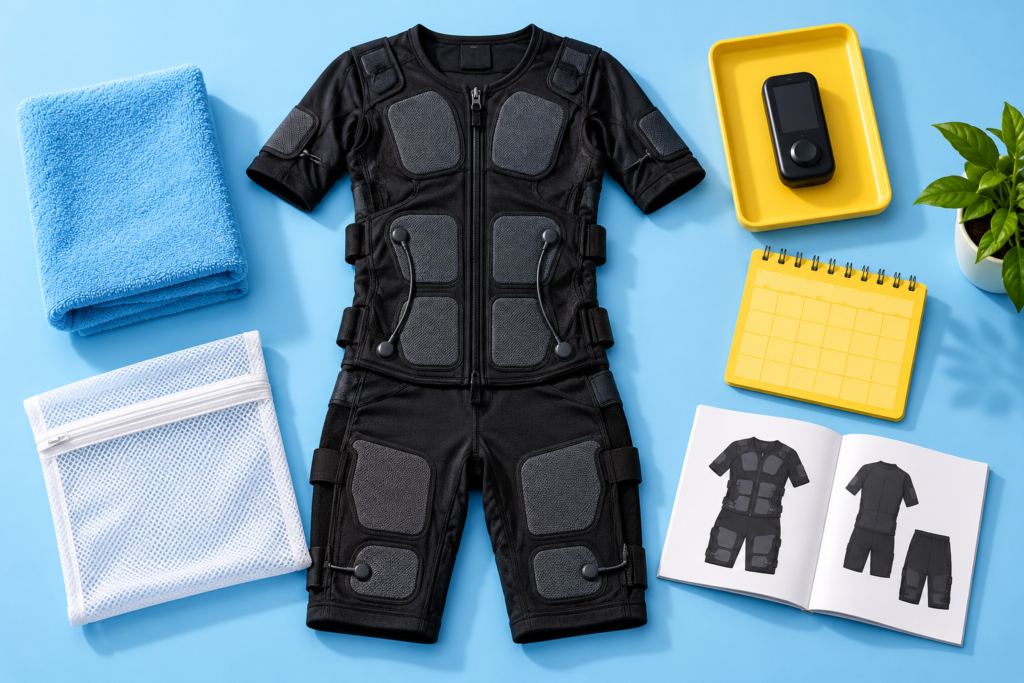

EMS training is a versatile and growing fitness tool, but it is not universally appropriate. Like any form of exercise that involves external stimulation of the body’s neuromuscular system, EMS suit contraindications exist for documented physiological reasons, and understanding them matters. These are medical conditions, circumstances, or device-related factors that make EMS training inadvisable without medical clearance, or inadvisable altogether.
Understanding EMS suit contraindications is not about limiting access to EMS training unnecessarily. It is about ensuring that people who try EMS training do so safely, that responsible studios screen their clients carefully, and that individuals with complex health histories have the information they need before their first session. This article is not a substitute for medical advice. Anyone with a health concern should consult their healthcare provider before beginning EMS training.
Absolute EMS Suit Contraindications: Do Not Use Without Medical Consultation
Some conditions represent absolute EMS suit contraindications. These are circumstances where the risks associated with electrical stimulation are clearly documented and where professional guidelines recommend avoiding EMS use entirely, or only proceeding under explicit approval from a treating physician.
Implanted electronic devices are a primary absolute contraindication. This includes:
- Cardiac pacemakers
- Implantable cardioverter-defibrillators (ICDs)
- Cochlear implants
- Any other electronic implant
The electrical impulses generated by EMS suits can potentially interfere with the function of these devices, creating a risk of serious cardiac or neurological complications. Anyone with any form of implanted electronic device should not use an EMS suit without direct guidance from the physician who manages that device.
Epilepsy is another absolute EMS suit contraindication in most professional guidelines. Electrical stimulation of the body can potentially trigger seizure activity in individuals with epilepsy, and the risks of experiencing a seizure during a training session are significant. Individuals with a history of epilepsy should discuss EMS use with their neurologist before proceeding.
Pregnancy is universally listed among EMS suit contraindications. The effects of electrical stimulation on a developing fetus are not fully studied, and the appropriate position is to avoid EMS training entirely during pregnancy. After childbirth, individuals should also consult their healthcare provider and allow adequate postnatal recovery before returning to EMS training.
Active malignancy (cancer) in or near the area being stimulated is also among the recognized EMS suit contraindications. Electrical stimulation may theoretically influence local tissue physiology in ways that are not well studied in oncological contexts. Kemmler et al.’s 2023 international guideline for whole-body EMS outlines these absolute contraindications in detail and represents the current professional consensus on safe EMS practice.

EMS Training Risk Factors: Conditions Requiring Medical Clearance
Beyond absolute EMS suit contraindications, a range of conditions require individuals to seek explicit medical clearance before beginning EMS training. These are not automatic disqualifications, but EMS training should not begin until a healthcare provider has confirmed it is appropriate.
Serious cardiac conditions fall into this category, including:
- Recent heart attack
- Unstable angina
- Uncontrolled arrhythmia
- Severe heart failure
EMS training places real physiological demands on the body, and for individuals with compromised cardiac function, those demands need to be assessed in the context of their specific condition.
Severe or uncontrolled hypertension also warrants medical consultation before EMS use. Exercise in general raises blood pressure transiently, and the combined effect of physical exertion and EMS-induced muscle contraction should be evaluated by a physician for individuals with poorly controlled blood pressure.
Peripheral neuropathy, meaning nerve damage that reduces sensation in the extremities, requires careful consideration as an EMS training risk factor. Intact sensation is important during EMS sessions because it allows the user to provide accurate feedback about intensity levels. Reduced sensation may mean that excessive intensity is applied without adequate warning signals, increasing the risk of skin irritation, burns, or muscle damage.
Active skin conditions, open wounds, or skin infections in areas where electrodes would be placed are also EMS suit contraindications for those specific areas until the skin has healed. Individuals who have undergone recent surgery, particularly in the abdominal, cardiac, or thoracic regions, should obtain surgical clearance before beginning EMS training.
Thrombosis or a history of deep vein thrombosis (DVT) is another EMS training risk factor requiring medical consultation, as the effect of electrical stimulation on venous blood flow in individuals with clotting conditions should be assessed by a physician. The documented side effects of whole-body EMS reviewed by Kemmler et al. (2018) and the rhabdomyolysis case literature both reinforce why thorough screening for these risk factors is non-negotiable.
Age-Related EMS Suit Contraindications
EMS training is generally not recommended for children or adolescents outside of specific supervised clinical or rehabilitation contexts. The developing neuromuscular and skeletal systems of young people are not the intended targets of fitness-oriented EMS training, and the parameters of most EMS suits are not calibrated for pediatric use. This makes age one of the more straightforward EMS suit contraindications to identify during intake screening.
For older adults, EMS training can be appropriate and potentially beneficial, particularly for supporting muscle maintenance. However, the higher likelihood of concurrent medical conditions in this population means that health screening becomes even more important. Nussbaum et al.’s clinical review of neuromuscular electrical stimulation provides useful context on how population-specific factors influence safe EMS application. Any older adult with a chronic health condition should seek medical clearance before beginning EMS training.
Medications That Affect EMS Training Safety
Certain medications can affect how the body responds to electrical stimulation and exercise, making them relevant EMS training risk factors even when the underlying condition alone might not be an absolute contraindication. These include:
- Anticoagulant medications (blood thinners): Increase the importance of avoiding any skin trauma at electrode sites
- Heart rate or blood pressure medications: May influence how the body responds to the cardiovascular demands of the session
- Medications affecting muscle function, nerve conduction, or pain perception: May alter the user’s ability to accurately report sensation during a session, which is important for safe intensity calibration
Any individual taking medication for a chronic condition should disclose this fully during their EMS intake screening. Who should avoid EMS training or require modified protocols is often determined as much by medication as by diagnosis.
Who Should Avoid EMS Training: The Role of Intake Screening
Reputable EMS studios use thorough health intake questionnaires before a client’s first session, and update them periodically for returning clients. This screening is the primary mechanism through which EMS suits contraindications are identified, and appropriate referrals or precautions are made.
As a client, your responsibility in this process is complete honesty. The 2016 guidelines by Kemmler et al. in the German Journal of Sports Medicine were among the first to formalize intake screening as a foundational safety requirement, a standard that has only been reinforced in subsequent research. Providing accurate health information during intake is not a bureaucratic exercise. It is the foundation of your safety during every session.
If you are unsure whether a medical condition or medication is relevant to EMS suit contraindications, mention it anyway and let a qualified professional make that determination.

Conclusions
EMS suit contraindications exist for real, documented physiological reasons, and they are taken seriously by responsible studios and certified trainers. EMS training is safe and effective for the right candidates, and identifying those candidates starts with an honest, thorough health screening. If you have any health condition, take any medication, or are unsure about your suitability, the right first step is a conversation with your healthcare provider. A clear picture of your health is the foundation of any safe training program, EMS included.
Head over to our product and brand pages to discover the best EMS suit for you. You can also test out the product comparison shopping tool to help with your decision-making.
Frequently Asked Questions
Can I do EMS training if I have a pacemaker?
No. Individuals with implanted cardiac pacemakers or defibrillators should not use EMS suits. The electrical impulses from EMS devices can interfere with the function of these devices, and this is considered an absolute EMS suit contraindication across professional safety guidelines.
Can I use EMS after surgery?
It depends on the type of surgery, the area involved, and how much time has passed. Surgical clearance from the treating surgeon is required before returning to EMS training after any significant procedure. The specific timeline varies considerably depending on the operation.
Is EMS safe if I have diabetes?
Diabetes itself is not necessarily an absolute EMS suit contraindication, but it does require careful consideration. Individuals with diabetic neuropathy may have reduced sensation that affects intensity feedback, and blood sugar management around exercise sessions also requires attention. Medical clearance from a physician familiar with the individual’s diabetes management is strongly recommended.
Can I use EMS training with a metal implant, such as a hip or knee replacement?
Metallic orthopedic implants are generally not considered EMS suit contraindications in the way that electronic devices are. However, the proximity of electrodes to implant sites and individual clinical history should be discussed with an orthopedic surgeon or the physician managing the implant before beginning EMS sessions.
Should I tell my EMS trainer about all my medications?
Yes, always. Disclosing all current medications during health intake is important, even if they seem unrelated to exercise. Medications affecting heart rate, blood pressure, blood clotting, nerve function, or muscle physiology may all be relevant EMS training risk factors that influence how your sessions are designed and managed.