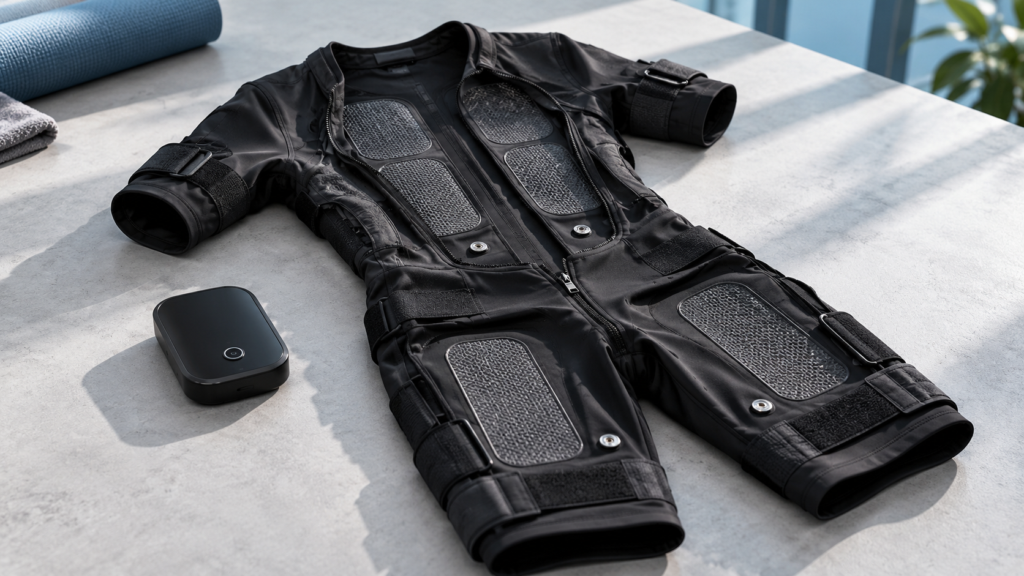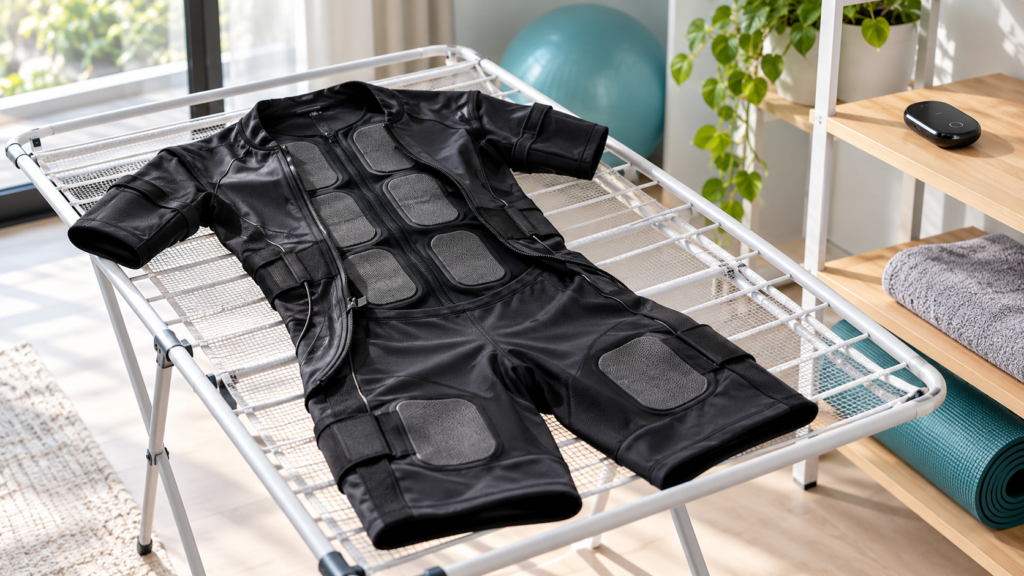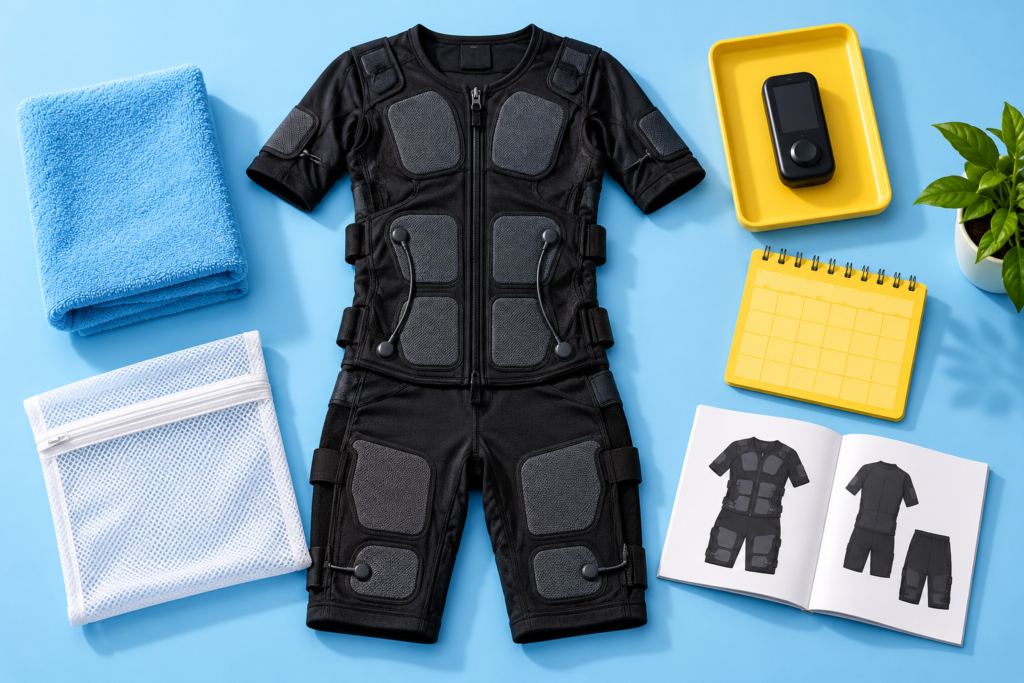
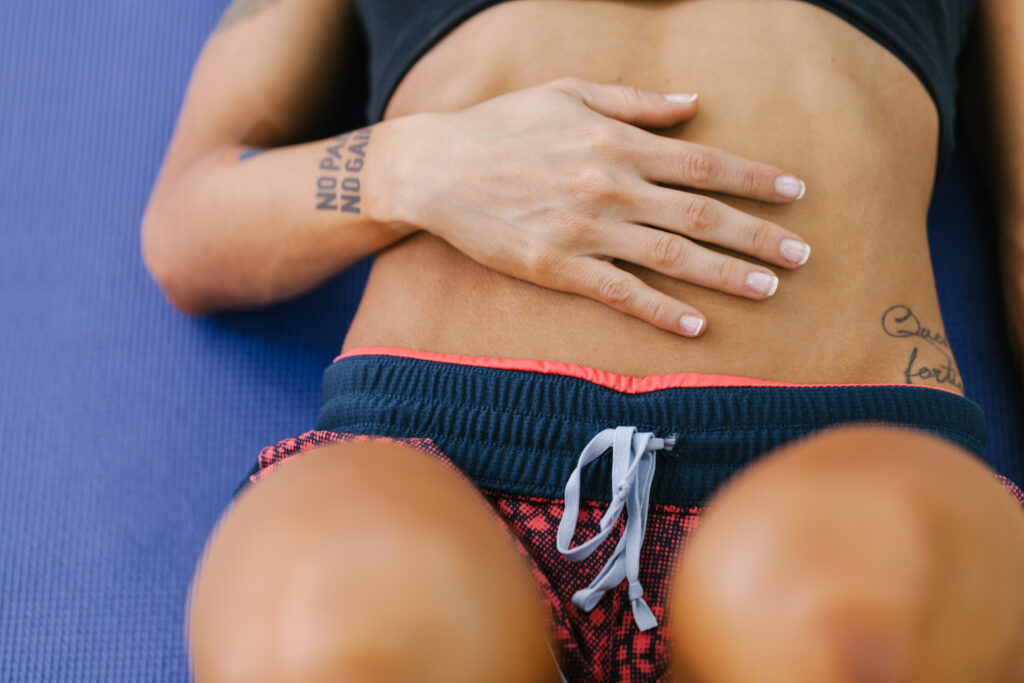
Knowing exactly what to wear under EMS suit is one of the most overlooked parts of EMS session prep and one of the most important. Unlike a standard gym workout, where nearly any athletic wear will do, EMS training has specific clothing requirements that directly affect how well the electrical stimulation reaches your muscles.
This guide breaks down the right EMS suit base layer, what fabrics and fits work best, what to avoid entirely, and why it all matters for getting real results from your sessions. Whether you’re preparing for your first studio appointment or setting up a home EMS routine, getting your EMS training clothing right from the start saves you a lot of guesswork.
What to Wear Under EMS: Why Your Base Layer Matters for EMS Training
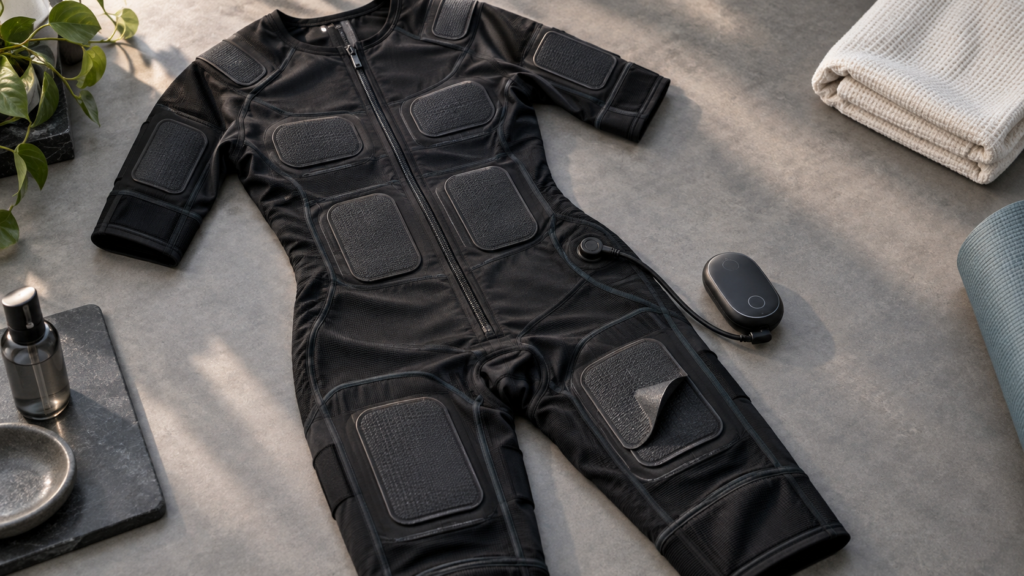
According to Kemmler et al. (2023) in Frontiers in Physiology, proper electrode-to-skin contact is a key factor in safe and effective whole-body EMS training. The electrical impulses generated by the suit travel from the electrodes, through your base layer fabric, and into the skin and muscle tissue beneath. That means the thickness, material, and moisture content of what you wear under an EMS suit all have a direct impact on how well the stimulation actually works.
Your EMS suit base layer serves three main functions:
- Hygiene barrier — Keeps your skin separated from a shared studio suit, protecting both you and the equipment
- Conductivity support — Helps maintain the moisture level needed for the electrodes to make proper contact, especially in wet electrode systems
- Comfort layer — Prevents electrode pads from feeling abrasive directly on the skin during an active session
The wrong clothing, whether too thick, too loose, or the wrong material, can interfere with electrical conductivity, reduce stimulation effectiveness, and make for an uncomfortable session. Nussbaum et al. note that proper neuromuscular electrical stimulation requires reliable current delivery to be effective, which reinforces why the EMS session outfit you choose matters.

The Best Base Layer for EMS Training: Fabric and Fit
The short answer: thin, form-fitting, and moisture-wicking synthetic fabric.
The standard recommendation across professional EMS studios is athletic wear made from:
- Nylon
- Polyester
- Elastane / Lycra
- Blended synthetic fabrics
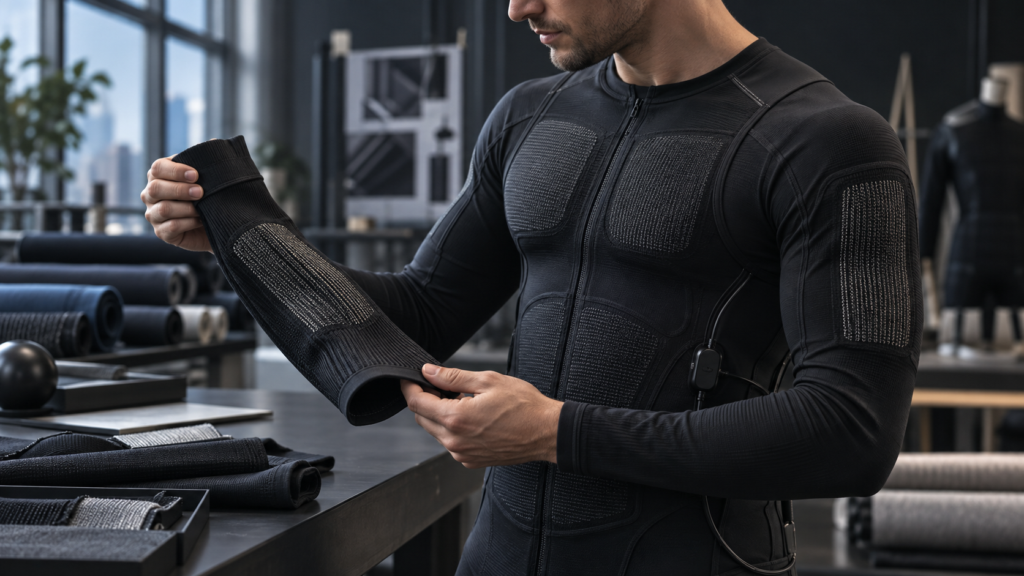
These materials sit close to the skin, manage sweat effectively, and support consistent electrode conductivity throughout your session.
Fit Is the Most Important Factor
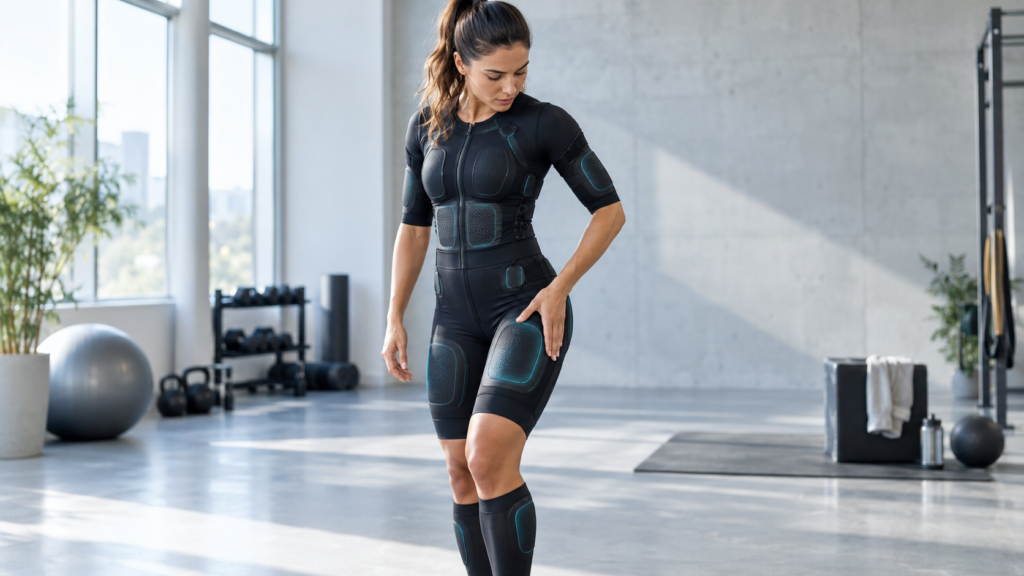
When thinking about what to wear under an EMS suit, fit matters more than almost anything else. Your base layer needs to sit snugly against your skin across every major muscle group, including your chest, back, core, hips, thighs, and upper arms. Loose or baggy clothing creates air gaps between the electrode and the fabric, which disrupts the current and reduces the quality of the stimulation.
Compression-style athletic wear is ideal for EMS suit preparation:
- Lower body: Compression shorts or full-length compression leggings
- Upper body: Compression vest or form-fitting athletic top
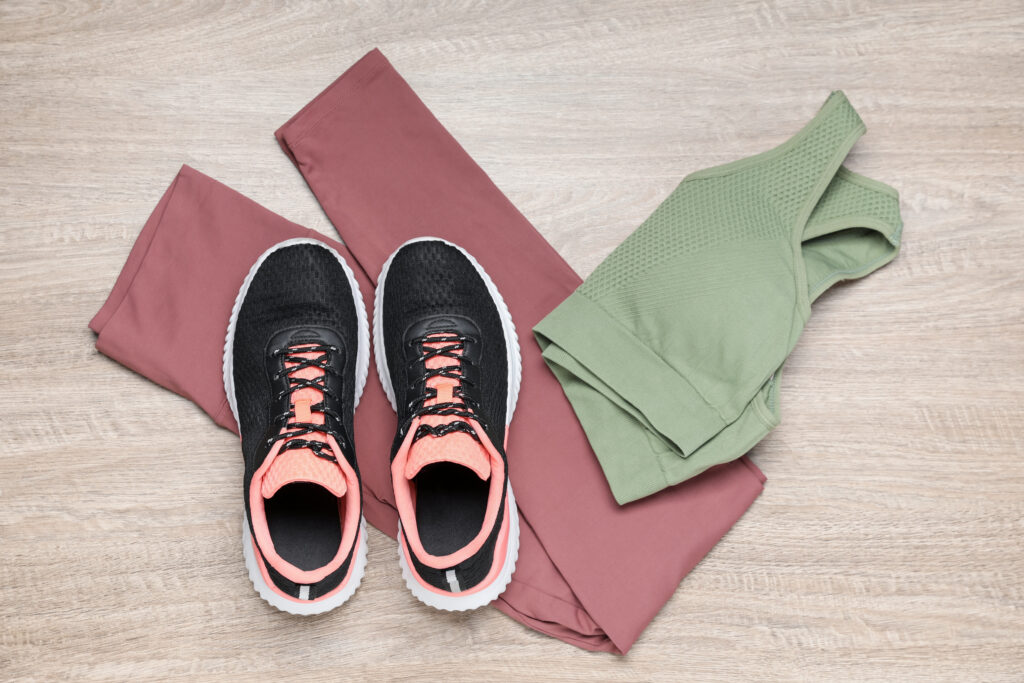
- Women: Non-padded sports bra without underwire, with minimal seams at electrode contact points
- Men: Form-fitting boxer briefs or shorts without thick seams in electrode areas
This level of close skin contact is exactly what EMS suits are designed to work with.
What NOT to Wear Under an EMS Suit
Just as important as knowing the right EMS training clothing is knowing what to leave at home.
Avoid these for any EMS session:
- Cotton clothing — Absorbs and retains moisture instead of wicking it away, which causes uneven conductivity and weaker stimulation. Cotton is also typically thicker and less form-fitting than needed.
- Thick or padded sportswear — Fleece, sweatshirts, heavily structured shorts, or padded compression gear create too much distance between the electrode and your skin.
- Clothing with metal components — Underwire bras, metal-studded waistbands, or decorative metal on fabric can concentrate the electrical current at the metal contact point, causing skin irritation or discomfort. The FDA’s consumer guidance on electronic muscle stimulators highlights the importance of using EMS equipment safely, which includes avoiding metal near electrodes.
- Thick-seamed underwear — Heavy seams at electrode contact points can reduce conductivity and cause pressure discomfort during the session.
A thicker base layer doesn’t just feel different. It measurably reduces how much electrical current reaches the muscle, making it harder to get effective stimulation. Thin fabric is consistently recommended for a reason.
What to Wear Under EMS: Studio-Provided Clothing vs. Bringing Your Own
Many EMS studios either include a recommended base layer in the session price or make one available to purchase or rent. Using studio-provided EMS suit preparation clothing has real advantages:
- Guaranteed compatibility with the specific suit and electrode system
- Consistent conductivity across different body types
- One less thing to remember for new clients
If you’re bringing your own EMS training clothing, follow these hygiene practices:
- Always bring a freshly laundered base layer to each session
- Avoid re-wearing a base layer from a previous session without washing it, as pre-saturated fabric affects both conductivity and hygiene
- For home EMS users, wear a thin, clean, close-fitting synthetic layer over the full body surface that the suit will cover
Footwear and Accessories for EMS Sessions
Your clothing choices don’t stop at the base layer. A few other EMS suit preparation details are worth keeping in mind:
- Footwear: Athletic trainers or sports shoes with good grip are standard. Some studios run sessions in socks only or use studio-specific shoes, especially if the EMS suit includes lower leg electrodes, so it’s worth asking ahead of time.
- Jewelry and accessories: Leave all jewelry, watches, and metal accessories in a locker before the session begins.
- Medical devices: If you wear a continuous glucose monitor, insulin pump, or other wearable medical device, discuss it with your trainer before your first session. These devices may be relevant to your EMS protocol.
What to wear under EMS: EMS Session Outfit Checklist
Wear:
- Thin, form-fitting synthetic base layer (nylon, polyester, elastane)
- Compression shorts or leggings (lower body)
- Compression vest or athletic top (upper body)
- Seamless, non-padded underwear without metal hardware
- Athletic shoes with grip (unless the studio specifies otherwise)
Avoid:
- Cotton fabric in any form
- Thick, padded, or fleece-style sportswear
- Underwire bras or clothing with metal components
- Baggy or loose-fitting athletic wear
- Jewelry, watches, or metal accessories
Conclusion
Getting dressed for an EMS session is a small detail with a real impact on your results. The right EMS session outfit, meaning thin, synthetic, and form-fitting, sets you up for better electrode contact, more effective stimulation, and a more comfortable experience overall. When in doubt, reach out to your EMS studio before your first session. Most are happy to walk new clients through exactly what to wear.
Are you ready to select your EMS suit? View our brand and product review, and test out our product comparison shopping tool to help you decide.
Frequently Asked Questions
Can I wear regular gym shorts and a t-shirt to an EMS session?
Possibly, and it depends on the material and fit. Thin, form-fitting synthetic gym shorts usually work fine. A regular cotton t-shirt is not ideal because it’s too thick and the wrong material for good conductivity. If you’re deciding what to wear under an EMS suit for the first time, default to compression-style synthetic fabric.
Do EMS studios provide the base layer, or do I need to bring my own?
It varies. Some studios include a base layer as part of the session fee. Others recommend you bring your own and specify exactly what type. Always check with your studio before your first session.
Can I wear the same base layer to multiple EMS sessions?
Yes, but it needs to be freshly laundered between sessions. Wearing a used base layer without washing it affects conductivity, hygiene, and comfort during the session.
Does a thicker base layer reduce the EMS sensation?
Yes. More material between the electrode and your skin means less current reaching the muscle, which weakens the stimulation. This is the core reason thin, close-fitting fabric is the standard recommendation for EMS suit base layers.
What should women specifically wear under an EMS suit?
A non-padded, underwire-free sports bra paired with compression leggings or shorts is the typical recommendation. The goal is close skin contact across all electrode areas without metal components or excess padding.