The quadriceps and hamstrings are the primary movers of the knee and among the most important muscle groups for athletic performance and lower extremity joint health. The balance between these opposing muscle groups, commonly assessed as the hamstring-to-quadriceps strength ratio, is a well-established predictor of knee injury risk. Insufficient hamstring strength relative to quadriceps is associated with elevated risk of both hamstring strain and ACL injury.
Developing adequate hamstring strength and maintaining appropriate balance is a priority in athletic training programs across multiple sports. And yet hamstring strengthening remains one of the areas where training programs most commonly underinvest. The quadriceps respond more readily to conventional training, the hamstrings are harder to effectively isolate, and the posterior chain is frequently neglected in the quad-dominant training patterns of many sports.
EMS hamstring quad injury prevention addresses this gap directly. By providing targeted neuromuscular stimulus to the posterior chain alongside the anterior, EMS training supports more balanced lower extremity development than conventional quad-dominant programming alone achieves. This article examines the injury prevention importance of hamstring-quad balance, how EMS supports both muscle groups, and how to integrate EMS hamstring quad injury prevention into a comprehensive training program.
Why Hamstring-Quad Balance Matters for Injury Prevention
The hamstring-to-quadriceps ratio, comparing peak hamstring to peak quadriceps torque at comparable joint velocities, is widely used in clinical sports medicine as an indicator of lower extremity injury risk. Conventional reference values suggest that the hamstrings should produce approximately 60 percent of the force that the quadriceps generate during isokinetic testing at moderate speeds.
Ratios significantly below this threshold are associated with elevated risk of both hamstring strain in sprinting and jumping sports and ACL injury in cutting and landing sports. This is the foundational injury prevention rationale behind EMS hamstring quad injury prevention programming.
Athletic training programs that emphasize quadriceps development through squats, leg presses, and similar quad-dominant exercises can progressively widen the strength imbalance between the two muscle groups, inadvertently increasing injury risk even as absolute strength improves. Specific and deliberate hamstring strengthening is increasingly included in evidence-based injury prevention programs to address this common imbalance.
Beyond the ratio itself, hamstring fatigue during training and competition is a significant risk factor for hamstring strain. Fatigued hamstrings lose their ability to provide the eccentric braking force needed during high-speed running, creating a critical vulnerability during the late stages of matches and training sessions. Improving hamstring muscular endurance alongside strength is an important and often overlooked component of EMS hamstring quad injury prevention.
How EMS Supports Hamstring Development
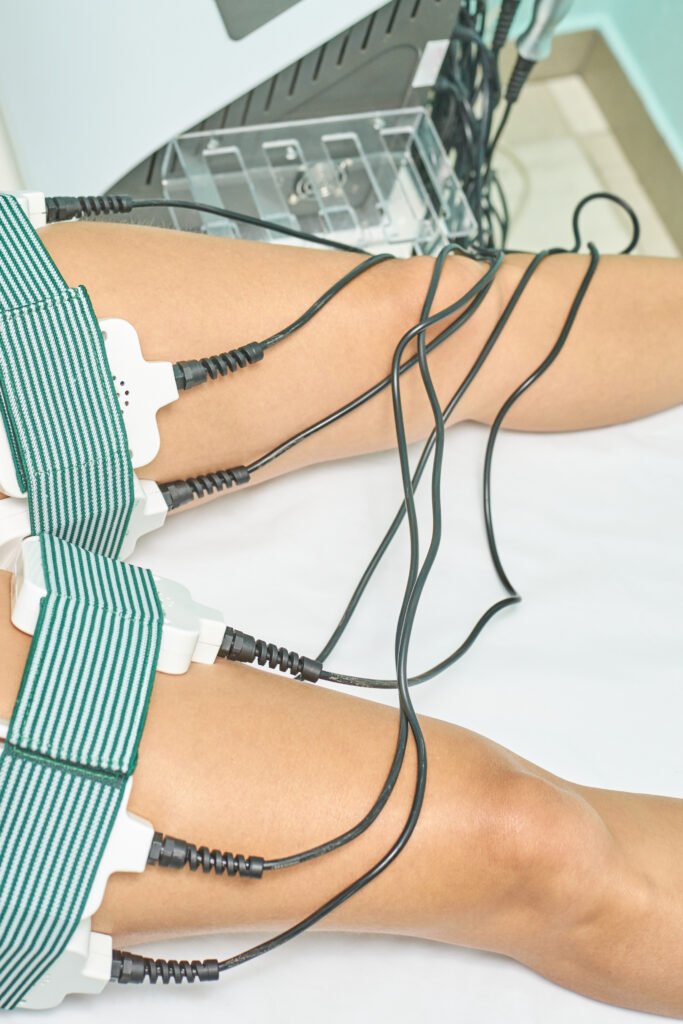
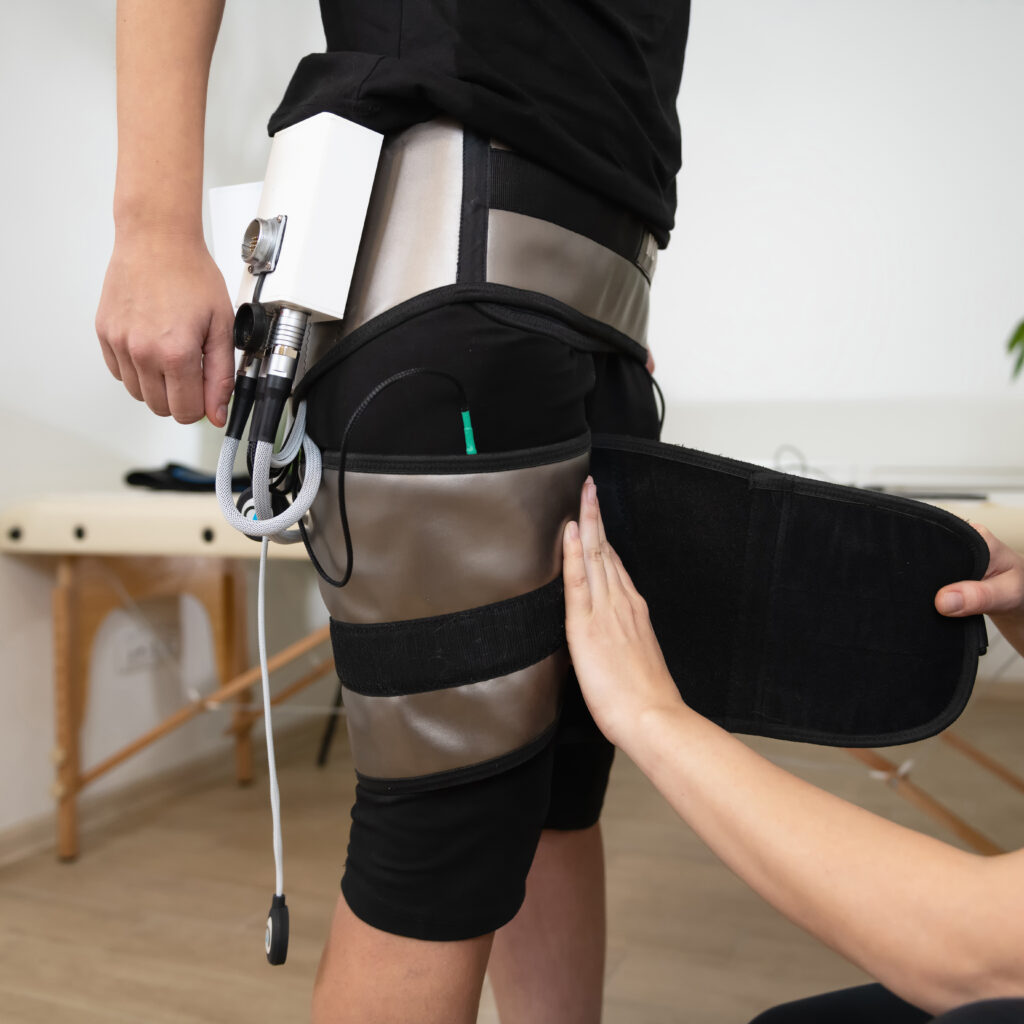
EMS hamstring quad injury prevention works partly through targeted conditioning of the hamstring muscle group using electrode placement targeting the biceps femoris, semimembranosus, and semitendinosus. This provides a direct neuromuscular stimulus that supplements conventional hamstring training.
Nussbaum et al. in Physiother Can note that neuromuscular electrical stimulation is particularly effective for activating muscles with impaired voluntary recruitment, which applies directly to the hamstrings in populations whose training has been dominated by quad-focused exercises. High-frequency EMS targeting the posterior thigh can activate hamstring muscle fibers, including high-threshold motor units, in ways that complement the eccentric-focused conventional hamstring exercises of evidence-based injury prevention programs.
Eccentric hamstring training, the mode most associated with injury prevention effectiveness, involves the hamstrings producing force while lengthening. EMS combined with controlled lengthening movements of the hamstrings provides an eccentric stimulus that may offer training qualities different from conventional concentric EMS conditioning. This combination is an area of growing research interest in EMS hamstring quad injury prevention applications.
For athletes who need additional hamstring work beyond what their primary training program provides, EMS hamstring conditioning adds targeted posterior chain stimulus without the additional joint loading of more conventional exercises. This is particularly relevant during periods when training volume is already high and adding conventional exercise volume is not practical.
How EMS Supports Quadriceps Development and Knee Stability
The quadriceps side of EMS hamstring quad injury prevention is equally important, though for different reasons. The focus here is less on building overall quad strength, which conventional training tends to develop adequately, and more on targeting specific portions of the quadriceps that conventional training underactivates.
The vastus medialis oblique, the medial portion of the quadriceps, plays a critical role in patellar tracking and knee stability. VMO weakness relative to the vastus lateralis is associated with patellar maltracking, patellofemoral pain, and altered knee mechanics under load. EMS targeting of the VMO can directly activate and strengthen this muscle in ways that squats and leg presses, which tend to activate the quadriceps broadly, do not consistently achieve.
Research in post-surgical knee rehabilitation provides the strongest evidence base for EMS quadriceps applications. A 2021 systematic review and meta-analysis (PMID 34926522) found that neuromuscular electrical stimulation after total knee arthroplasty produced meaningful improvements in quadriceps strength and knee joint function compared to conventional rehabilitation alone. A 2025 systematic review and meta-analysis (PMID 39811154) found similarly positive results for EMS effects on quadriceps strength and knee function after ACL surgery.
While these are rehabilitation rather than prevention contexts, the evidence for EMS quadriceps activation quality is directly relevant to EMS hamstring quad injury prevention in athletes with identified VMO weakness or quadriceps activation deficits.
Whole-Body EMS for Lower Extremity Balance
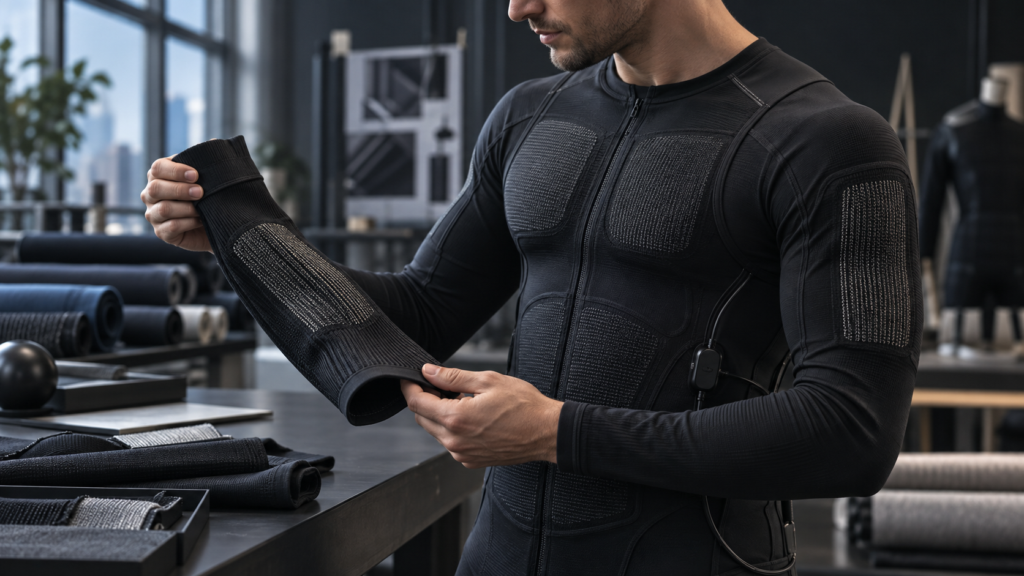
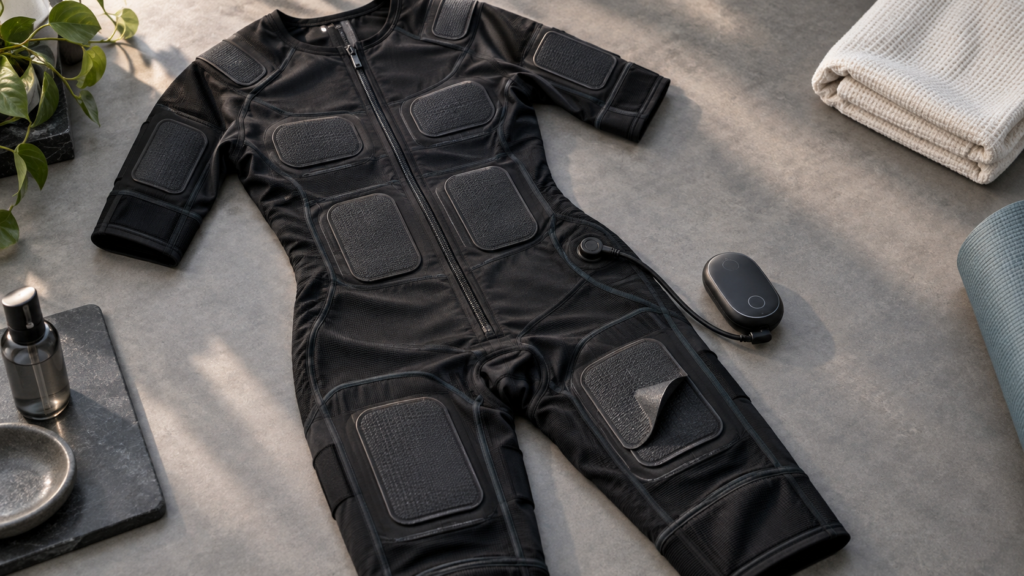
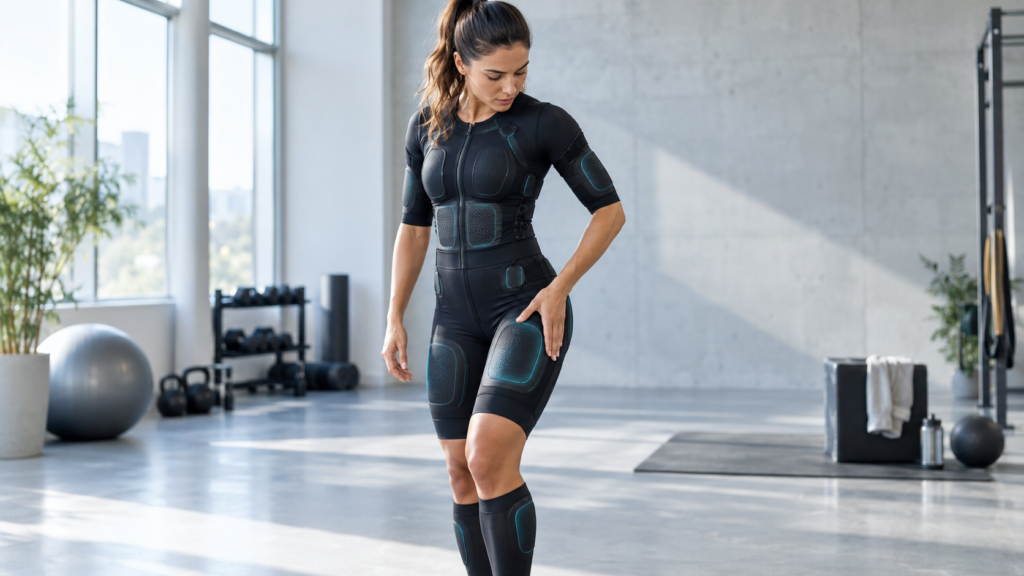
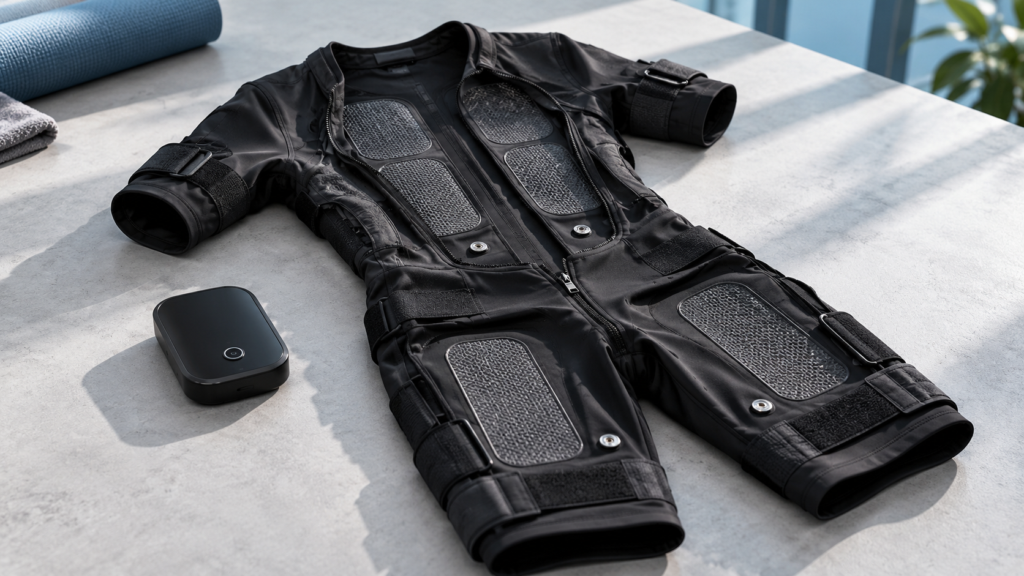
One of the most relevant applications of EMS hamstring quad injury prevention is whole-body EMS training, which comprehensively activates both the anterior and posterior leg musculature simultaneously. This provides a more balanced stimulus for the entire lower extremity kinetic chain than quad-dominant conventional training alone.
Whole-body EMS training engages the quadriceps, hamstrings, glutes, and supporting musculature within the same session, potentially supporting more balanced development across these muscle groups over time. For athletes whose sport-specific training dominates the anterior chain, whole-body EMS training provides a systematic counterbalance that supports the posterior chain development central to EMS hamstring quad injury prevention.
Dirks et al. (2014) in Acta Physiologica demonstrated that neuromuscular electrical stimulation maintains muscle activation and prevents atrophy in targeted muscle groups, supporting the rationale for using EMS to maintain hamstring conditioning during high training volume periods when conventional posterior chain work is reduced.
Integrating EMS Hamstring Quad Injury Prevention Into Athletic Programs
EMS hamstring quad injury prevention is most effective when integrated within established evidence-based lower extremity injury prevention programs rather than used as a standalone intervention. Programs such as the FIFA 11+ for football provide the sport-specific movement training and neuromuscular coordination development that EMS conditioning alone cannot deliver.
A few practical integration principles:
- Twice-weekly EMS sessions targeting identified weakness patterns, particularly the hamstrings, VMO, and glutes, integrate well into typical athletic conditioning programs
- EMS sessions should be considered part of the total strength training load and overall training volume managed accordingly to avoid cumulative fatigue
- Pre-training EMS hamstring activation, using brief low-intensity sessions before conventional training, can prime the posterior chain for better recruitment quality during the session itself
- Post-injury return-to-sport programs for hamstring strain or ACL injuries provide another context where EMS hamstring quad injury prevention conditioning can be integrated, supporting muscle activation during rehabilitation phases when conventional loading is limited
A 2021 systematic review (PMC8167342) examining neuromuscular electrical stimulation parameters for postoperative quadriceps strength found that EMS protocols with appropriate frequency and intensity parameters produced consistent quadriceps strength improvements, providing relevant guidance for the design of EMS hamstring quad injury prevention protocols in athletic populations.
Working with sports medicine professionals and strength and conditioning specialists who understand both the sport-specific injury risk landscape and appropriate EMS protocols produces the most effective outcomes from EMS hamstring quad injury prevention programming.
Conclusion
EMS hamstring quad injury prevention offers a valuable supplementary tool within comprehensive lower extremity injury prevention programming. By providing targeted neuromuscular stimulus to both the hamstrings and quadriceps, particularly the posterior chain and VMO that conventional training tends to underactivate, EMS supports more balanced lower extremity development than quad-dominant conventional training alone achieves.
The injury prevention relevance of hamstring-quad balance makes this a high-value application for athletes in sprinting, cutting, and jumping sports. Used alongside established injury prevention programs and under the guidance of qualified sports medicine and strength professionals, EMS hamstring quad injury prevention conditioning provides a meaningful and evidence-supported contribution to keeping athletes healthy and performing at their best.
Ready to find the best EMS suit for you? Check out our brand reviews and product reviews to help inform your decision. You can also play with our product comparison tool to find the option that fits your goals and budget.
Frequently Asked Questions
Can EMS prevent hamstring injuries? EMS hamstring quad injury prevention conditioning may contribute to injury prevention by developing hamstring strength, endurance, and activation quality alongside conventional training. A balanced hamstring-to-quadriceps ratio is an evidence-based injury prevention target, and EMS can supplement the hamstring development that supports this balance. EMS works best as part of a comprehensive injury prevention program rather than as a standalone intervention.
What is the hamstring-to-quad ratio and why does it matter? The hamstring-to-quadriceps ratio compares peak hamstring to peak quadriceps strength, with hamstrings at approximately 60 percent of quadriceps strength as a conventional reference range. Significantly lower ratios are associated with elevated risk of hamstring strain and ACL injury. Developing hamstring strength relative to quadriceps is a primary target of EMS hamstring quad injury prevention programming.
Can EMS strengthen the VMO? Yes. EMS conditioning targeting the vastus medialis oblique can directly activate and strengthen this muscle. VMO EMS is used in knee rehabilitation programs for patellar tracking problems and has preventive application for athletes with identified VMO weakness. Appropriate electrode placement is important for effective VMO targeting.
Should I use EMS for hamstrings alongside Nordic curls? EMS hamstring conditioning complements Nordic hamstring curls and other eccentric-heavy hamstring exercises well as part of a comprehensive hamstring development program. The two modalities provide different stimulus qualities. EMS offers direct electrical activation while Nordic curls develop high eccentric force production. Both contribute to the hamstring strength and resilience needed for effective EMS hamstring quad injury prevention.
How often should athletes use EMS for injury prevention conditioning? Twice-weekly EMS conditioning sessions targeting identified weakness patterns including the hamstrings, VMO, and glutes integrate well into typical athletic conditioning programs. The sessions should be considered part of the total strength training load and overall training volume managed accordingly to avoid cumulative fatigue.