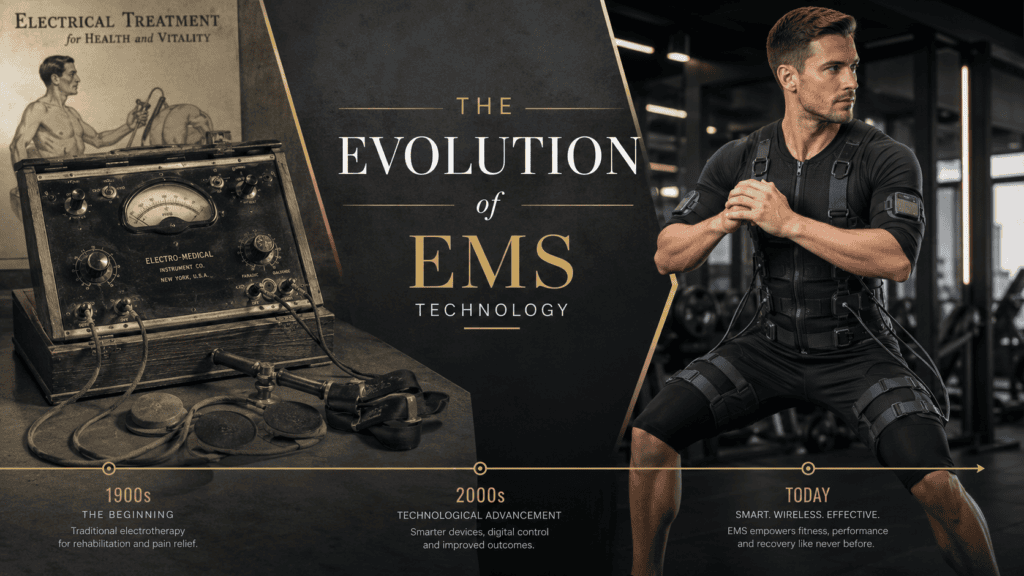
Electrical muscle stimulation goes back a long way, from Roman doctors treating gout with electric rays to Luigi Galvani twitching frog legs with metal in the 1780s and Soviet sports scientists turning the current into an athletic tool in the 1970s. We covered that whole arc in our history of EMS post. The origin of EMS suits in Germany, though, is a shorter and more specific story, and it explains the wearable gear you actually train in today.
Germany didn’t invent electrical current, and it didn’t invent the science of making a muscle fire, both of which were understood long before. What it invented was the whole-body suit itself, the wearable system that turned a clinical technique into a workout.
The origin of EMS suits in Germany: from one muscle to the whole body
For most of the twentieth century, EMS was a local tool. A pad on a knee in a physiotherapy clinic, a pulse to rebuild a wasted muscle after surgery. Useful, but one spot at a time. The German leap was to wire the whole body into a single garment and fire all the big muscle groups together, controlled by a trainer, as a workout instead of a treatment. The German researchers who later set the field’s standards even fixed a definition: whole-body EMS means at least six current channels stimulating at once. That threshold is the line between a rehab electrode and the suit you wear in a studio.
The company from Gersthofen
The origin of EMS suits in Germany has a specific address. The business took shape in Gersthofen, a town in Bavaria, where miha bodytec launched in 2007. It came out of miha Maschinen, an older firm that had made sports and medical equipment for decades, so the engineering was already in the building. The concept work traces to the early 2000s, and the leading German sport scientists date the commercial launch to the mid-2000s.
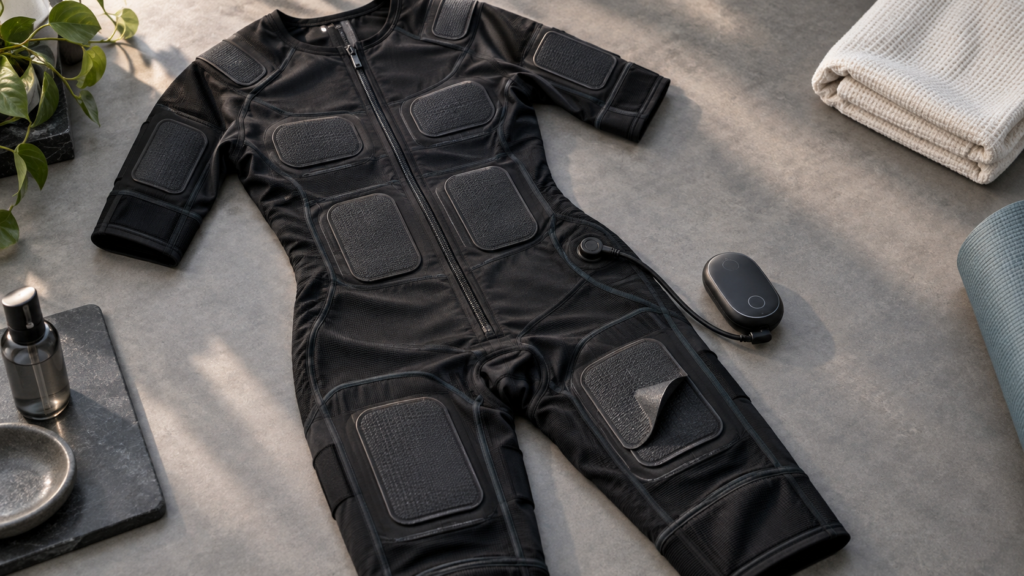
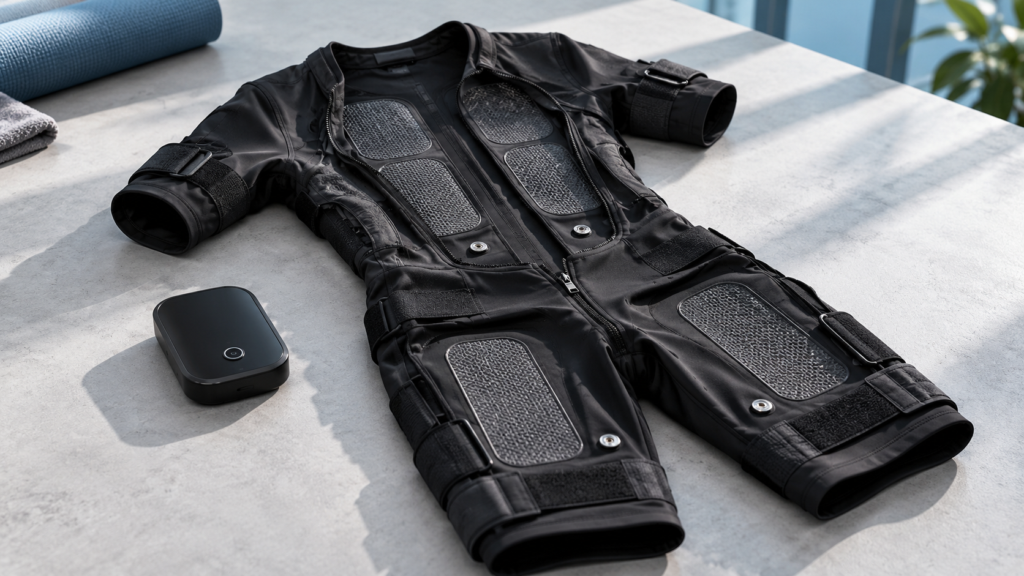
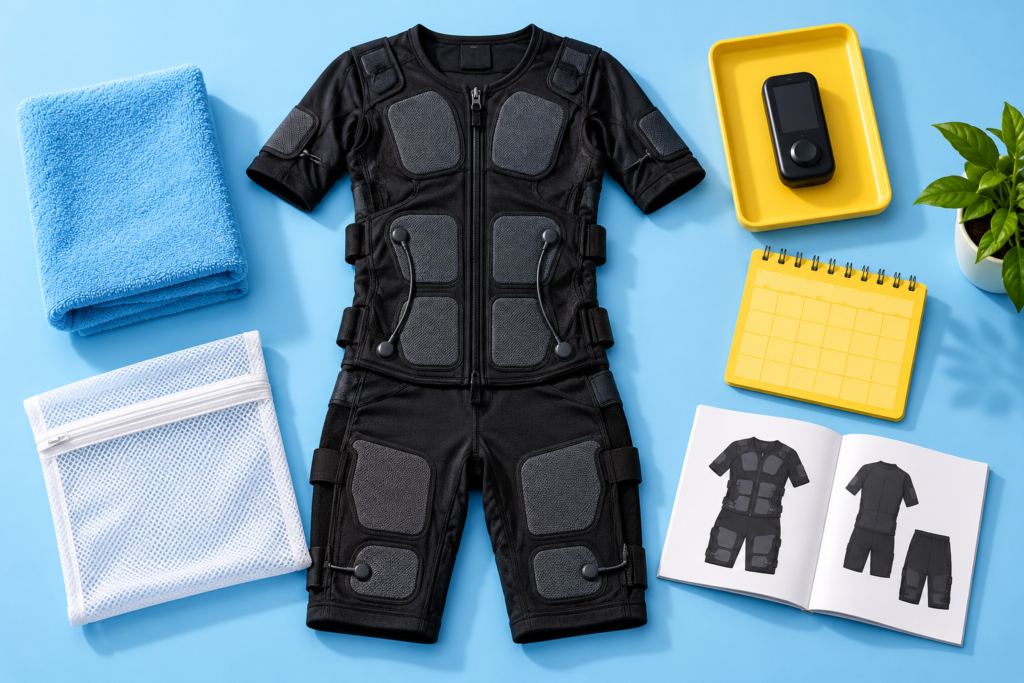
miha bodytec became the market leader and set the template most studios still run: a vest and straps carrying electrodes over the major muscle groups, wired to a control unit the trainer adjusts. The format that made it a business was short. Twenty minutes, one trainer, one or two clients, sold as the match for a much longer gym session.
The athletes went first
The suit earned its name in sport before it reached the public. The Klitschko brothers used EMS in boxing. Players at FC Bayern Munich and on the German national team trained with it, and Real Madrid picked it up abroad. Usain Bolt reportedly used a whole-body system while recovering from injury before the 2008 Olympics. When studios opened to ordinary customers, that reputation came with the gear.
Germany also wrote the rules
Germany became the first country to regulate EMS as something that needed watching. The EMS body suit fires large muscles harder than most people would push themselves, and a reckless first session can cause rhabdomyolysis, where overworked muscle floods the blood with proteins that can strain the kidneys.
After case reports, including hospitalized professional soccer players, German sport scientists published comprehensive safety guidelines. Commercial EMS then came under a mandatory national standard, the NiSV (Germany’s ordinance covering non-ionizing radiation). It requires a qualified, trained instructor to run every session. A government regulating a fitness class under its radiation-protection law tells you how seriously the country took its own invention. Learn more about whether EMS training is safe in our full safety guide.
Germany walked so the world could run
Without the EMS technology and Germany introducing the EMS body suit, we wouldn’t have some of the top tier EMS suit brands that we have now. Over time, technological advances eventually led to more improved suits to enhance athletic performance and make training more convenient and comfortable.
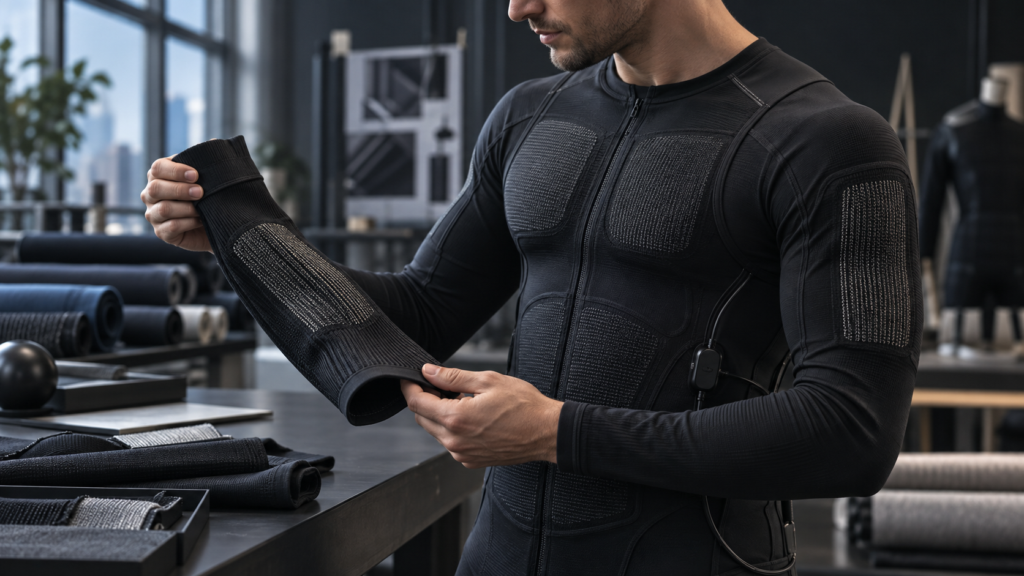
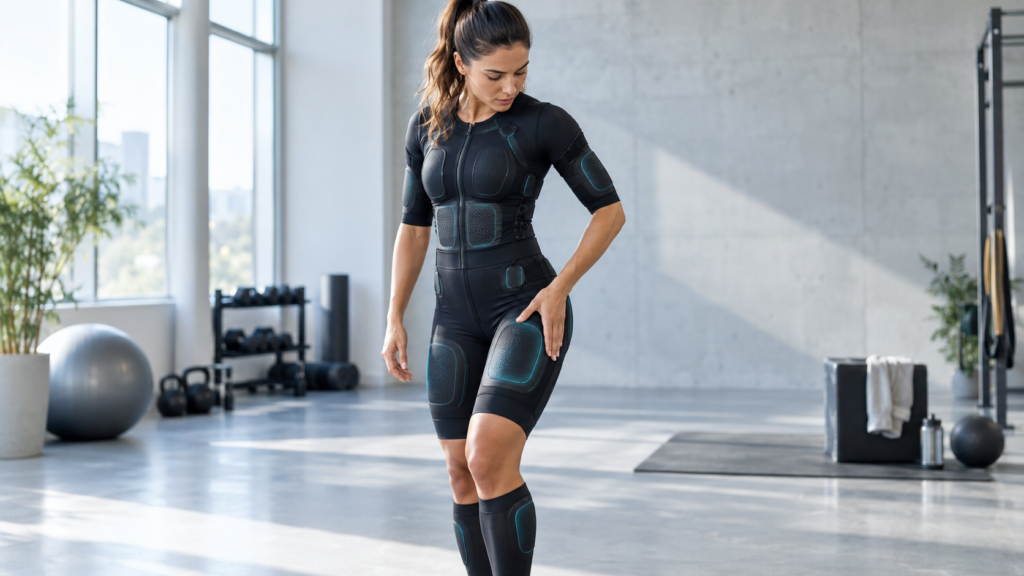
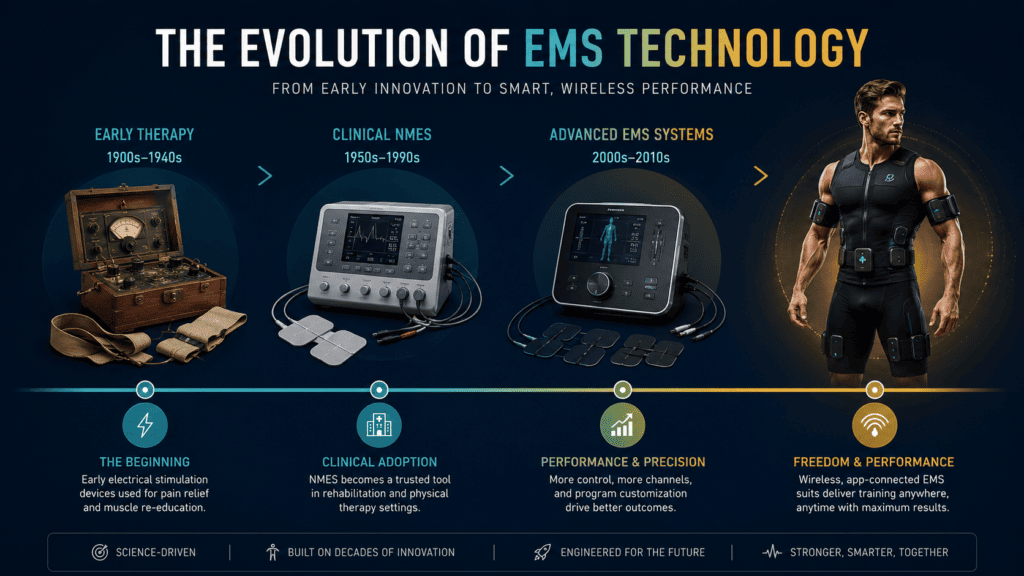
The wired vest that once tethered you to a control box gave way to wireless suits you can move freely in. The wet suits that needed spraying before every session gave way to dry electrodes that work with the sweat your body already makes. App-guided programs let people run structured workouts on their own, and some systems added medium-frequency stimulation to reach the muscle more deeply.
The early studio model kept a trained instructor at the controls, and Germany’s regulated studios still work that way. Consumer suits took a different path. Newer models build the safeguards in, with app-guided programs and built-in intensity limits, so people can now operate an EMS body suit safely at home, without a professional in the room.
It caught on at home first, where German researchers counted more than 2,000 commercial whole-body EMS providers with roughly a quarter of a million clients and industry figures put the number of dedicated studios near 2,700. From there it moved across Europe and around the world, pulling in new companies from the United States, Spain, and beyond.
None of that changes the origin of EMS suits in Germany. The country laid the track, the suit, the whole-body method, and the training standards the rest of the industry borrowed, and the brands that came after have been running on it ever since.
Trace it back far enough and you land in one place. However much the technology has improved, and wherever your suit was built, the origin of EMS suits in Germany is where the whole story starts.
The Origin of EMS Suits in Germany: Buy the suit, not the flag
Germany being the birthplace of the suit is a real selling point, and plenty of brands make the most of it. That heritage is worth something, but it is not a spec. A suit does not have to be built in Germany, or cleared by a German authority, to be well made or safe to use.
Be careful, though, because that selling point gets abused. Some brands claim to be made in Germany when they are not, banking on the association to move product, and some go further and advertise FDA clearance they do not actually hold. Origin fraud like this is real and gets punished: in 2022 the U.S. Federal Trade Commission fined an apparel company more than $200,000 for cutting “Made in China” tags off products and sewing in “Made in USA” labels. A German name or a German-sounding backstory tells you nothing on its own, so if FDA clearance matters to you, confirm it in the FDA’s public database rather than trusting the marketing.
So treat “German” as a nice-to-have, not a reason to buy, and judge the suit on what it actually offers. Look at the things that separate a quality suit from a cheap one, like electrode coverage, build quality, and real certification. Our guides walk through how to choose the best EMS suit, the features that matter in a professional wired suit or a wireless suit, and how to choose the right studio.