Not all wired EMS suits are created equal. The quality differences between professional EMS suit systems — in electrode design, suit construction, control unit capability, and manufacturer support — have meaningful effects on training outcomes, session quality, client safety, and the long-term economics of running a professional EMS business. Understanding what distinguishes high-quality professional EMS systems from lower-quality alternatives is an important competency for any EMS studio operator or practitioner evaluating equipment. Research into professional wired EMS suit features continues to expand as more studios adopt this approach.
EMS suit quality assessment is complex because many of the most important quality indicators are not immediately visible: electrode coverage and positioning precision, stimulation waveform quality, control unit software sophistication, and manufacturer compliance with regulatory standards are characteristics that require informed evaluation rather than surface inspection. The purchase price of EMS equipment is a rough but imperfect proxy for quality — the most expensive systems are not always the best fit for every context, and some professional-grade systems offer excellent quality at mid-market price points. Understanding professional wired EMS suit features is key for any trainer looking to modernize their offering.

This article identifies the key features and quality indicators that matter most when evaluating professional wired EMS suits — giving studio operators the framework to make informed equipment decisions. The evidence supporting professional wired EMS suit features is growing steadily in the professional fitness space.
Electrode Design and Coverage
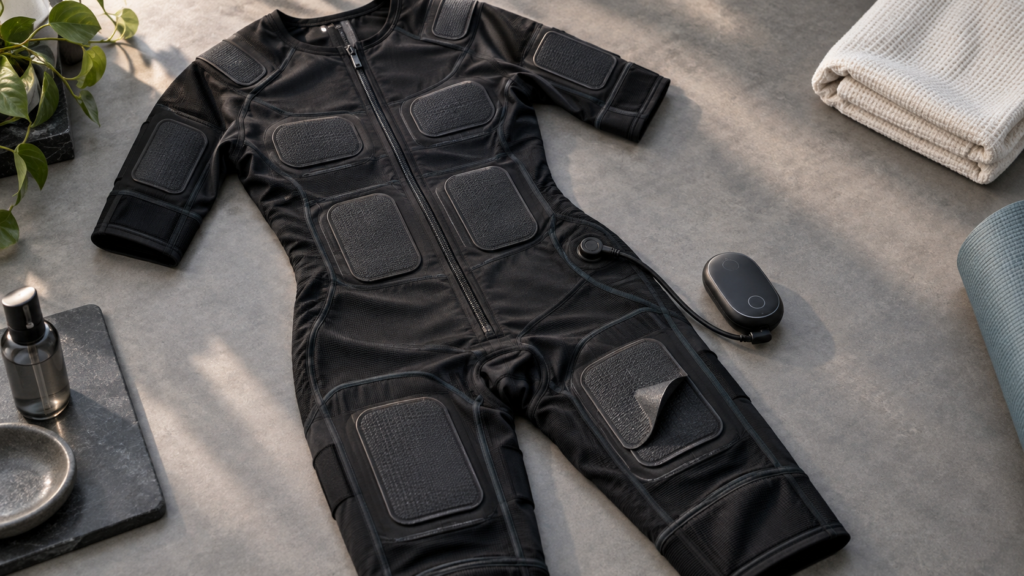
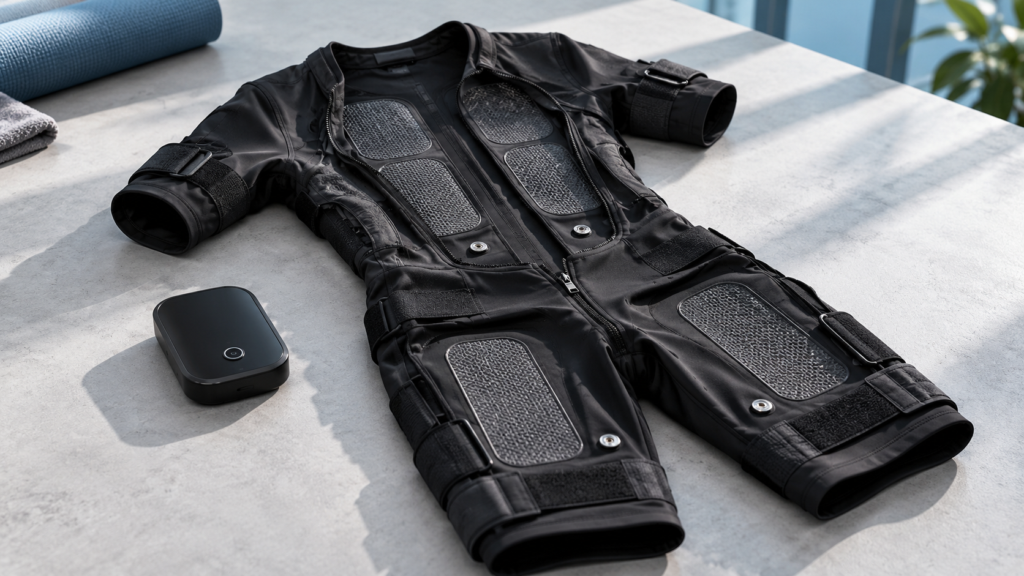
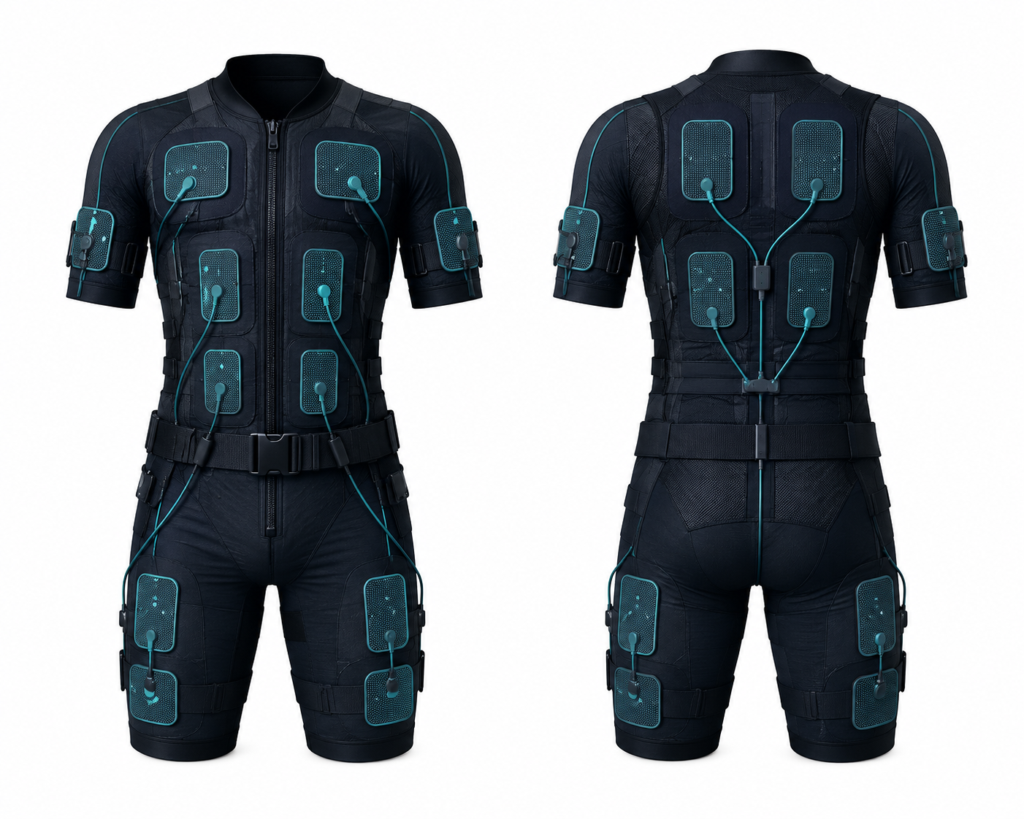
Electrode design is the most technically important quality dimension of an EMS suit. The electrodes — the conductive areas that deliver electrical current to the underlying muscle tissue — must be sized, positioned, and constructed to provide effective, consistent stimulation of the target muscle groups across a range of client body sizes. Poor electrode positioning that doesn’t align with major muscle groups, insufficient electrode surface area that concentrates current delivery and increases discomfort, or inconsistent electrode conductivity that produces uneven stimulation are all quality problems that affect both training effectiveness and client experience. [source] For coaches exploring professional wired EMS suit features, proper protocol design is essential.
The number of independently controllable electrode channels in the control unit determines the granularity of stimulation customization available. Professional systems typically offer 16 to 20 or more independent channels corresponding to different muscle groups, allowing precise individual adjustment of each area’s stimulation intensity. Systems with fewer channels that group multiple muscle groups under single controls limit the individualization possible in protocol design. Clients asking about professional wired EMS suit features deserve clear, evidence-informed guidance.
Electrode material quality affects both conductivity performance and durability. High-quality electrode materials maintain consistent electrical conductivity across repeated dampening and drying cycles, are resistant to bacterial growth that causes odor and hygienic degradation over time, and withstand the mechanical stress of repeated donning, session movement, and cleaning without losing conductivity or structural integrity. The practical application of professional wired EMS suit features varies depending on goals and client profile.
Suit Construction and Fit: Professional wired EMS suit features
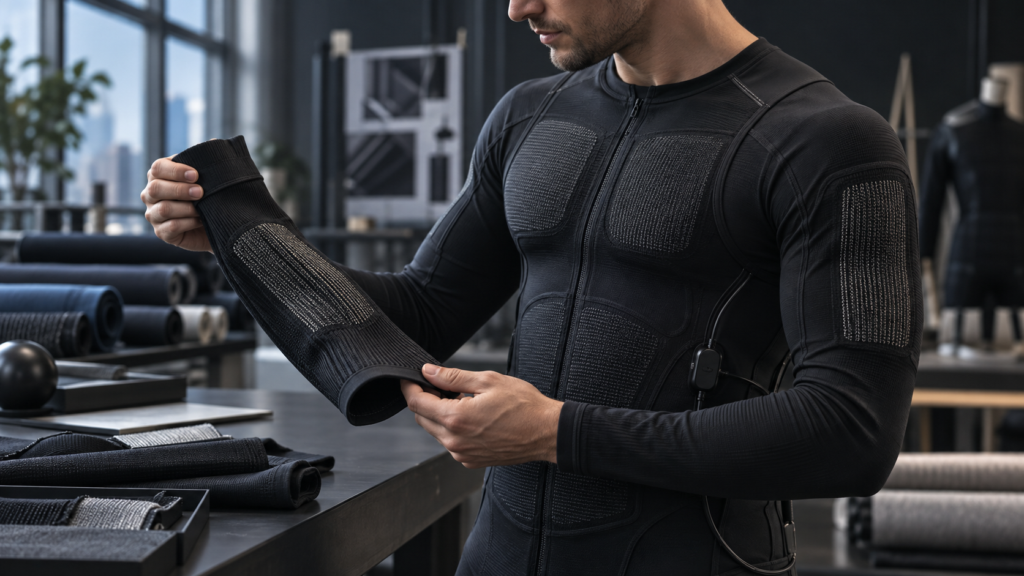
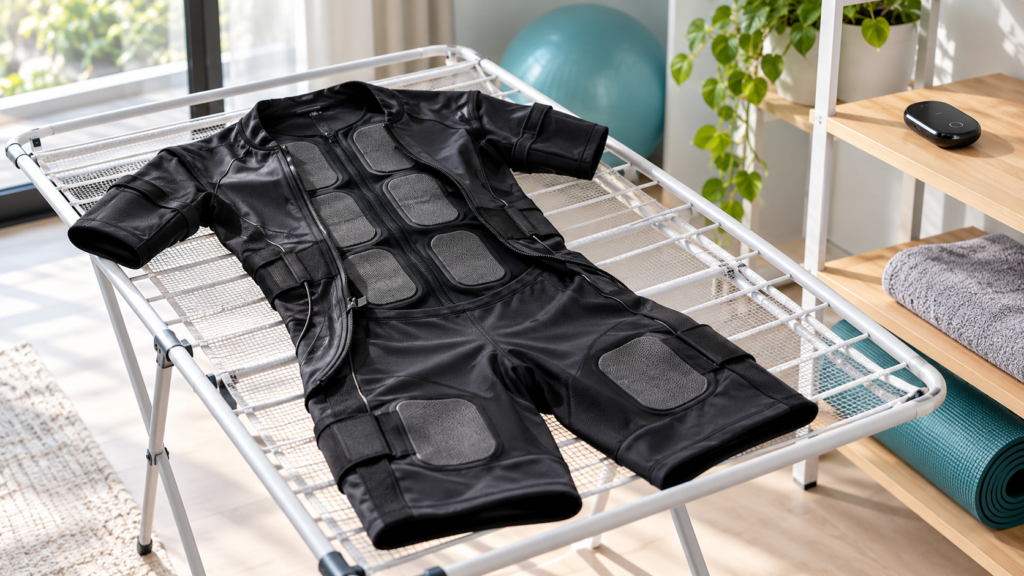
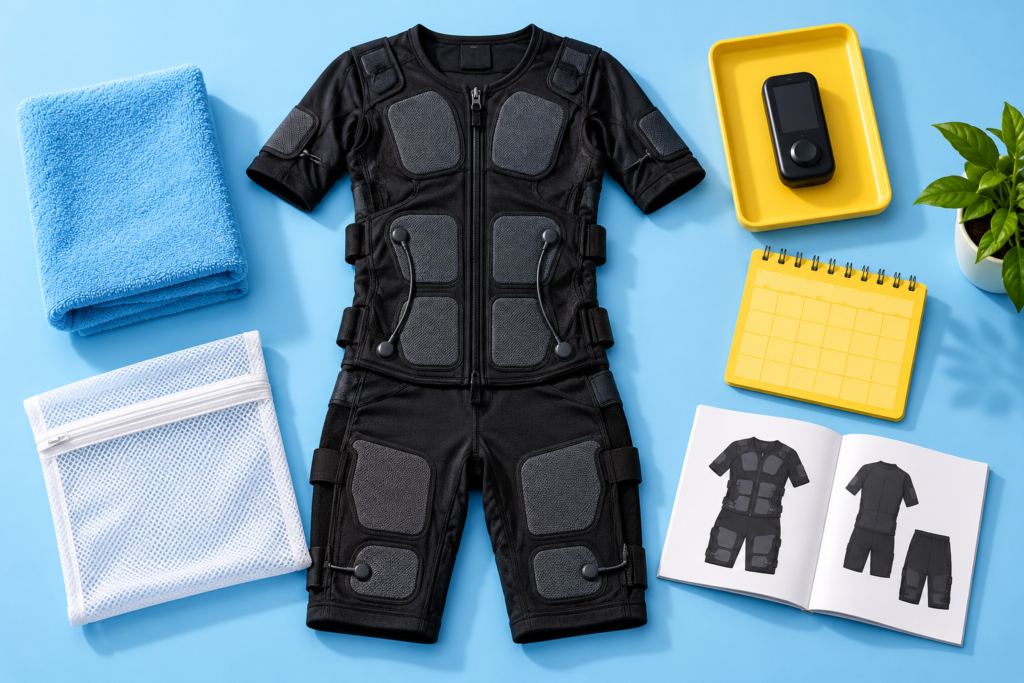
Suit construction quality affects comfort, electrode contact maintenance, hygiene management, and durability across the many session cycles a professional suit must withstand. The base fabric should be a high-quality, moisture-wicking material that maintains close contact with the body across a range of movement, dries efficiently between uses, and withstands frequent washing without degrading. The suit structure should hold electrode areas firmly against the skin during exercise without restricting movement or causing discomfort at edges or seams. [source] Studios investing in professional wired EMS suit features report strong client retention and satisfaction.
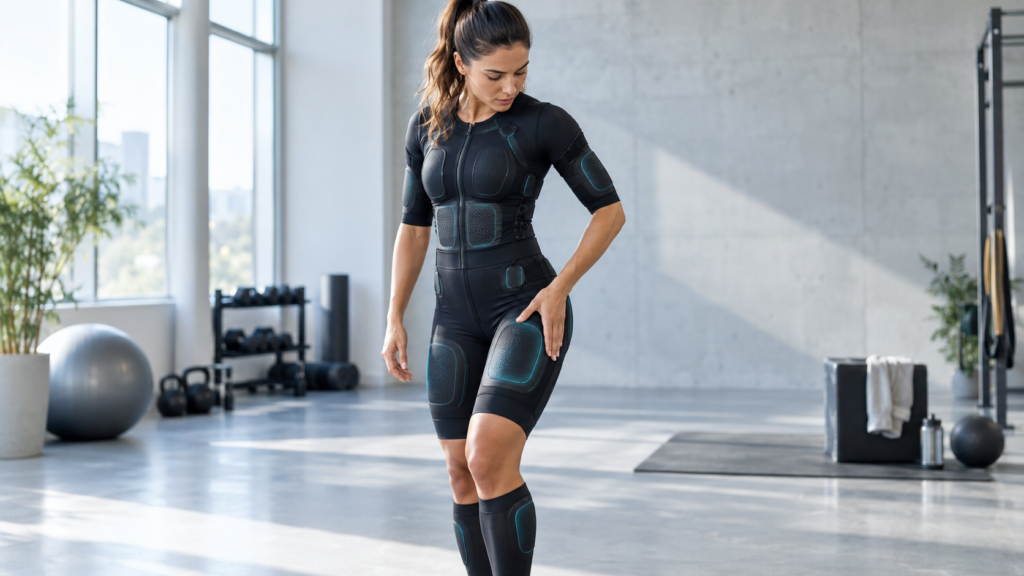
Size range and fit precision are important for effective stimulation: electrode areas must align with the major muscle groups for which they are designed, and this alignment requires appropriate suit sizing for the individual client. Professional EMS systems offer multiple suit sizes (typically five to seven sizes across the adult body size range) to ensure appropriate fit across the client population. Suits that are too large or too small for a specific client will produce suboptimal electrode positioning and inconsistent stimulation quality. Anyone serious about professional wired EMS suit features should prioritize certified equipment and trained staff.
Modular suit designs — where individual electrode areas or suit segments can be replaced independently rather than requiring whole-suit replacement — reduce the long-term consumable cost of professional EMS operations. Electrode areas typically wear more quickly than the suit structure; systems that allow electrode replacement without full suit replacement are more economical over the equipment’s operational life. The business case for professional wired EMS suit features is supported by both research and real-world results.
Control Unit and Software Quality
The control unit is the brain of the EMS system — and its quality determines the sophistication, safety, and ease of protocol design available to the trainer. Key control unit quality indicators include: the number of independently controllable channels; the frequency and pulse width adjustment range available; the precision of intensity adjustment (fine-grained adjustment is more important than the maximum intensity available); and the user interface quality that affects how easily trainers can manage protocols during sessions. [source] Getting the most from professional wired EMS suit features requires consistent protocol and progress tracking.
Safety features in professional control units include current limiting that prevents delivery of current above safe thresholds, error detection that identifies electrode contact loss or connection problems, and ramp-up features that gradually increase stimulation intensity at session start to prevent startling or uncomfortable intensity jumps. These safety features are non-negotiable in professional equipment but may be absent in lower-quality systems. Safety remains a top priority in any professional wired EMS suit features program.
Software and data features — the ability to save and recall client protocol settings, track session history, and generate session reports — vary significantly across professional systems and affect operational efficiency. Studios with multiple staff managing multiple clients across complex schedules benefit substantially from good software; solo operators with simpler workflows may find basic control unit interfaces fully adequate. Professionals offering professional wired EMS suit features benefit from ongoing education and certification.
Conclusion
Selecting a professional wired EMS suit system is a significant investment decision that deserves careful evaluation across all quality dimensions: electrode design and coverage, suit construction and fit range, and control unit capability and safety features. The right system for a specific studio depends on the client population, session design approach, and operational scale — but quality in the core technical dimensions should not be compromised for cost. [source]
Consulting with certified EMS practitioners who have experience with multiple systems, requesting manufacturer demonstrations and trial periods where available, and evaluating the manufacturer’s regulatory compliance, training support, and customer service quality all contribute to an informed equipment decision that the studio can rely on for years of professional operation.
Frequently Asked Questions
What makes a professional EMS suit better than consumer versions? [source]
Professional EMS suits offer higher intensity ranges, more electrode channels with independent control, superior electrode materials and construction, larger size ranges for diverse client populations, professional-grade stimulation waveforms, and compliance with medical device regulatory standards. Consumer EMS devices are typically limited in intensity, channel count, and regulatory compliance relative to professional systems.
How many electrode channels should a professional EMS suit have?
Professional EMS systems typically have 16 to 20 or more independently controllable electrode channels corresponding to different muscle groups. More channels allow greater individualization of stimulation intensity per muscle group. Systems with fewer channels that group multiple muscle groups together limit protocol customization.
How often do EMS suit electrodes need replacing?
Electrode replacement frequency depends on use frequency, cleaning protocols, and electrode quality. Professional studio electrodes used intensively (multiple sessions daily) may need replacement every six to twelve months; those in lighter use may last longer. Modular suit designs that allow independent electrode replacement reduce the cost of electrode maintenance.
What safety features should a professional EMS control unit have?
Important safety features include current limiting at maximum safe thresholds, electrode contact monitoring that detects loss of skin contact, gradual intensity ramp-up at session start, and safety shutoffs for fault conditions. These features are standard in quality professional systems and should be confirmed before purchasing.
How do I evaluate EMS suit quality before buying?
Request manufacturer demonstrations with the suit on a representative client, ask for references from existing studio operators using the system, review the manufacturer’s regulatory certifications, evaluate the quality of training and ongoing support offered, and if possible trial the system for a period before committing to purchase. Price alone is an insufficient quality indicator.
Ready to explore EMS suit options? Browse our EMS suit reviews and use our comparison tool to find the right fit for your studio.