Most people spend 60 to 90 minutes at the gym to get a good workout in. A full body EMS suit can cut that down to 20 to 25 minutes. And the research says the results are just as good. If you’ve been seeing EMS suits show up in fitness content and want to know what they actually are, this post covers it all: what the suit does, how it works, what studies have found, and whether it might be right for you.
What Is a Full Body EMS Suit?
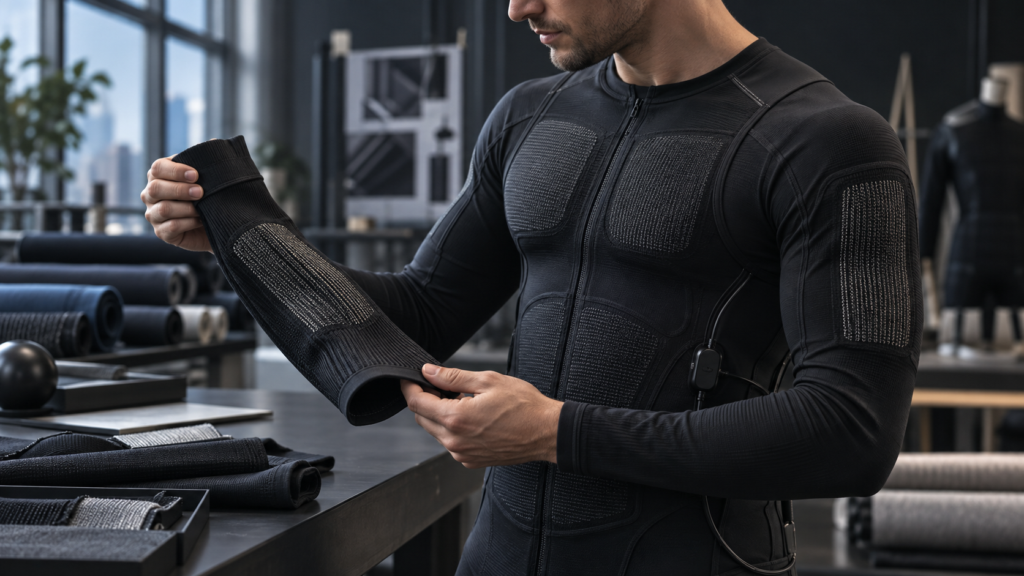
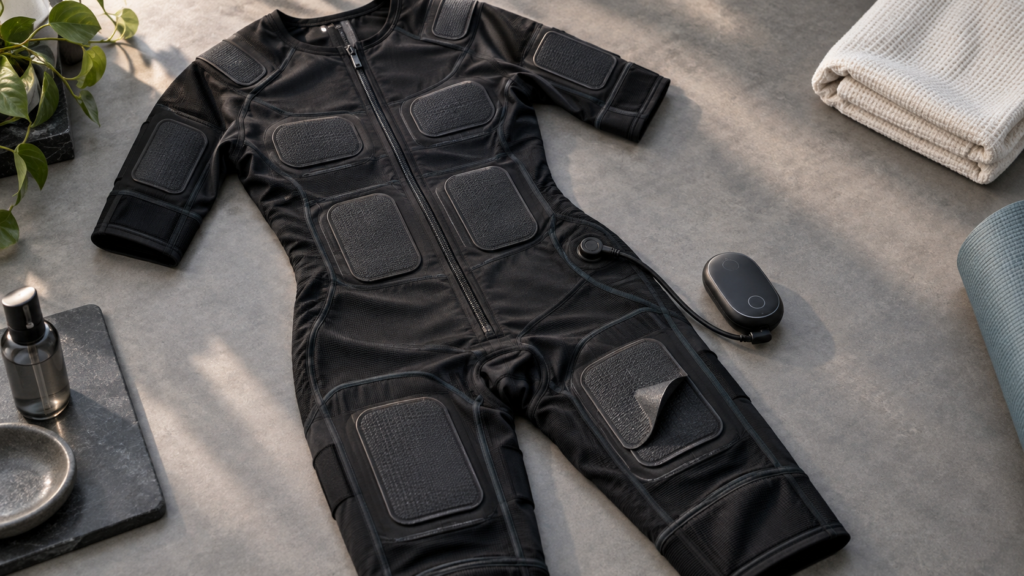
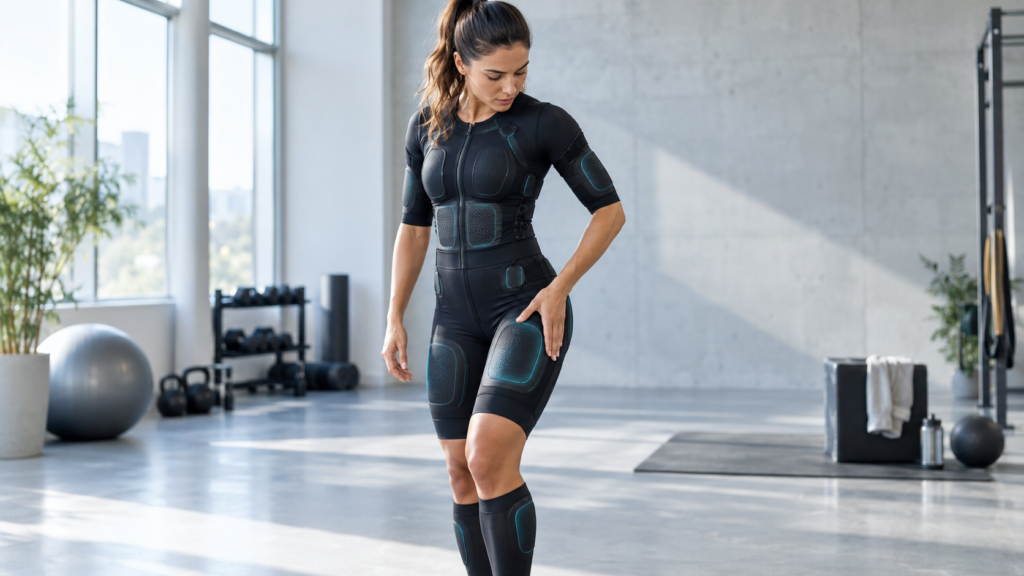
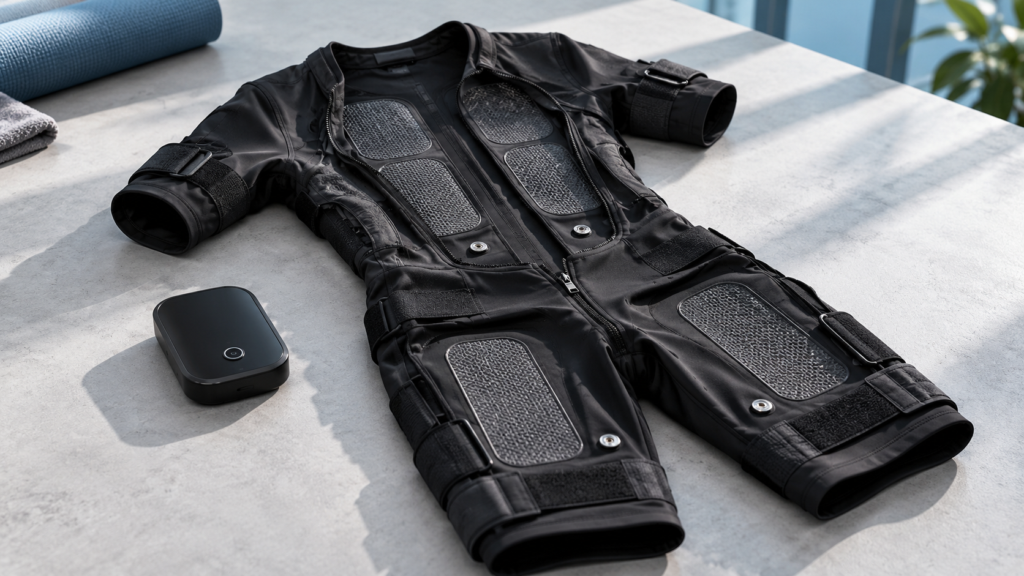
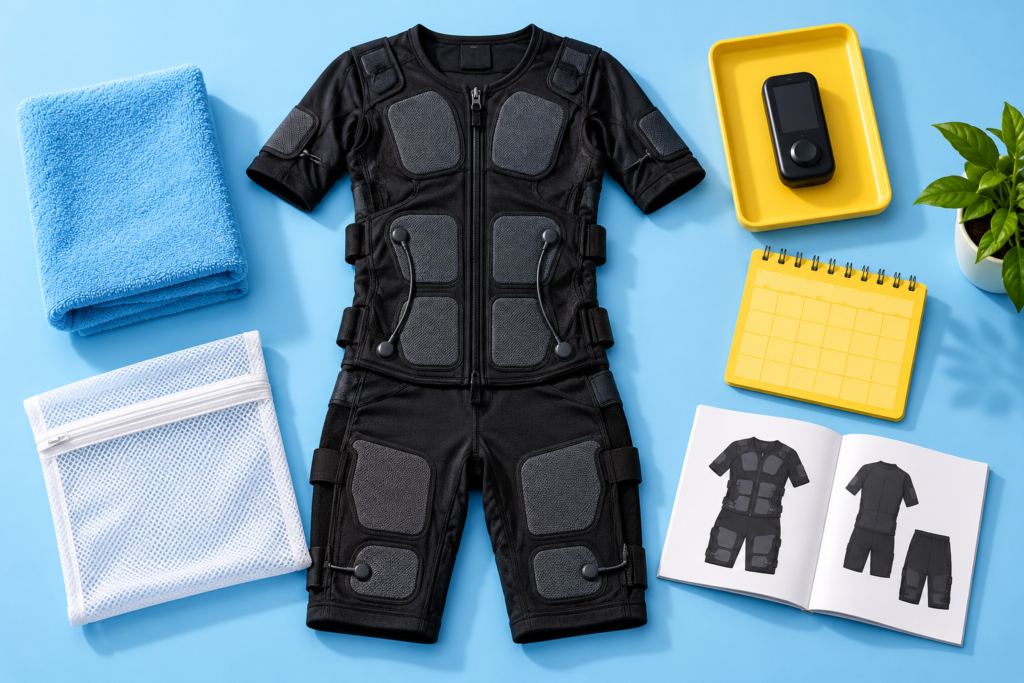
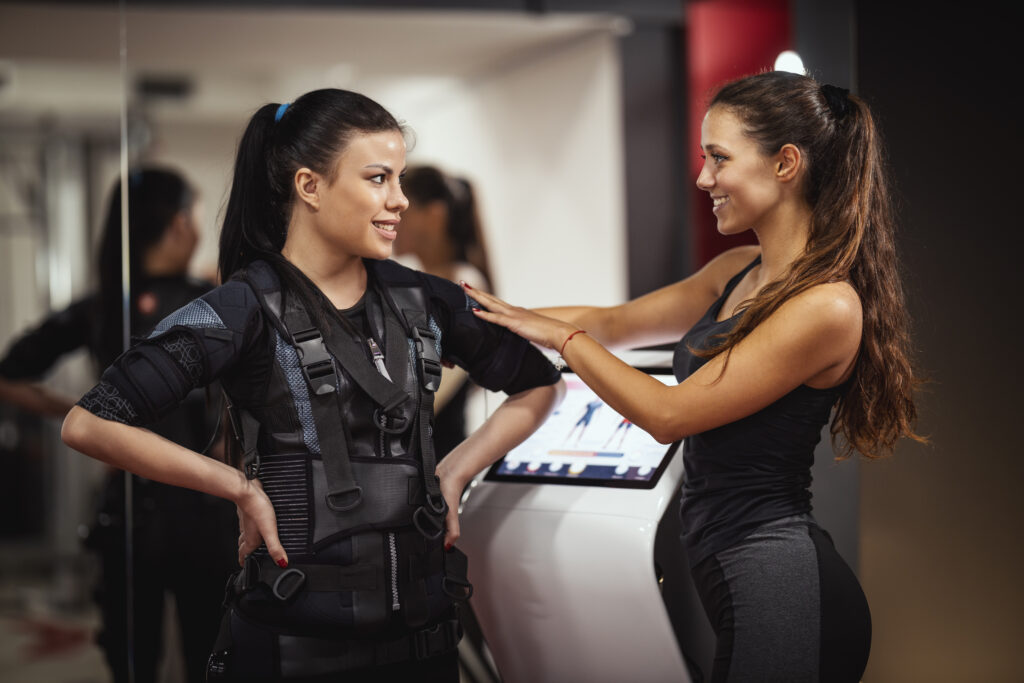
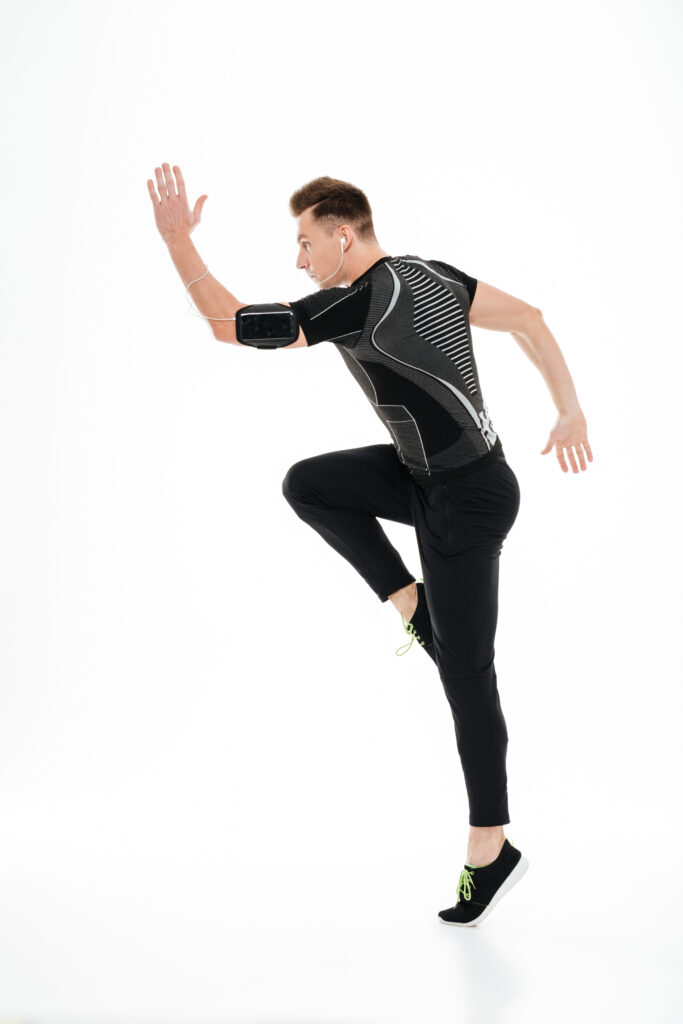
EMS stands for electrical muscle stimulation. A full body EMS suit is a workout suit with small pads built into it called electrodes. When you wear it, those pads send gentle electrical pulses to your muscles to make them contract. It’s kind of like what your muscles already do during a workout, but with a little extra push from the suit.
The suit covers most of your body: arms, core, back, glutes, and legs. It works all of those areas at the same time.
This is not the same as those little ab stimulator patches you’ve probably seen online. Those only work on one small area. A full body EMS suit is a whole different level. A 2024 study published in Scientific Reports found that WB-EMS suits can target up to 14 to 18 different areas of the body at once, covering up to 2,800 cm² of muscle, with the intensity adjustable for each zone separately.
How Does It Work?
Here’s the simple version. Normally, your brain sends a signal to your muscles telling them to move. EMS skips part of that process. The suit sends electrical pulses straight to your muscles, making them contract whether you’re pushing hard or not.
That means every muscle group the suit covers is being worked at the same time, even the ones your body usually ignores or leaves out. Your body can’t just rely on its strongest muscles the way it normally would.
Research from PMC shows that EMS suits typically run at 80 to 85 Hz with a pulse width of about 350 µs. Those are the technical settings that make the contractions strong enough to actually train your muscles. A 2021 study in Medicina found that a single EMS session can fire up to eight different muscle groups at the same time, which is something that’s very hard to do with regular exercise in the same amount of time.
What Does the Research Say?
Scientists have studied EMS suits on a lot of different types of people: young adults, older adults, athletes, people with joint pain, and people trying to lose weight. Here’s what they found.
Muscle Strength and Size
A large review published in Frontiers in Physiology looked at 16 different studies with 897 total participants and found that using a full body EMS suit leads to real, measurable gains in lean muscle mass for everyday adults who aren’t competitive athletes.
A separate study from Frontiers in Public Health backed that up, finding that EMS training improved both muscle strength and body composition compared to a group doing regular resistance training.
Fat Loss and Body Composition
EMS suits don’t just build muscle. They can help with fat loss, too. A 2025 study from ScienceDirect found that activating a large amount of muscle at once bumps up your metabolism and burns more energy, which helps reduce body fat over time.
A review in PMC found that across most EMS studies, participants tend to lose fat and gain muscle simultaneously. That’s a combination that’s hard to achieve with diet or regular exercise alone.
One study even looked at women who were cutting calories to lose weight. Research published in PMC found that the women using an EMS suit held onto their muscle while losing fat, while the other groups lost both. That’s a big deal if you’re trying to lose weight without losing strength.
Time Savings
This might be the biggest selling point. A 20-week study from ScienceDirect put two groups head to head: one did 25-minute EMS sessions twice a week, and the other did 90-minute traditional gym sessions twice a week. Both groups got stronger and leaner, but the EMS group got there in less than a third of the time.
Good for People With Joint Pain or Limited Mobility
Because the suit does a lot of the work, it’s been studied as an option for people who struggle with regular exercise. A 2024 study in Scientific Reports found that people with knee osteoarthritis, a condition that makes it painful to lift or squat, saw real improvements in pain and function after using a full body EMS suit. The suit lets them train their muscles without putting as much stress on their joints.
A 12-month study from the TEST-III trial in PMC looked at older women who were at risk of losing muscle mass and didn’t want to do traditional exercise. EMS training helped them hold onto muscle and reduce belly fat, and they actually stuck with it. That says something about how manageable the workouts felt.
Who Is a Full Body EMS Suit Good For?
Based on the research, EMS suits tend to work well for:
- Busy people who don’t have time for long gym sessions but still want real results
- People getting back into fitness who want a lower-impact starting point
- Older adults who want to keep their muscles without heavy lifting
- Athletes who want more muscle training without adding more hours to their schedule
- People with joint pain who have a hard time with regular resistance training
Are There Any Risks? (The Honest Part)
For most healthy adults, a full body EMS suit is safe when used the right way and built up gradually. But it’s worth knowing the risks. The suit works a lot of muscle at once, and that’s exactly what makes it powerful and what requires some care.
A paper in the German Journal of Sports Medicine pointed out that because EMS hits so many muscles at once at high intensity, using it incorrectly can overload your body. In serious cases, this can lead to a condition called rhabdomyolysis, where muscle breaks down so fast that it can damage your kidneys. This is rare and usually tied to improper use, but it’s real.
International safety guidelines published in Frontiers in Physiology stress that trainers need to know what they’re doing and that intensity should be ramped up slowly, especially for new users.
Some people should talk to a doctor before trying EMS, and some should skip it entirely:
- People with pacemakers or implanted devices because the electrical signal can interfere with them
- Pregnant women, because it hasn’t been shown to be safe for the baby
- People with serious heart conditions, like uncontrolled high blood pressure or a recent heart attack
- People with active cancer
- Anyone recovering from recent surgery or with open wounds
- People with epilepsy or serious nerve conditions
When in doubt, check with your doctor first.
What to Look for in a Full Body EMS Suit
Not all EMS suits are made the same. Here’s what actually matters:
How much of your body it covers. More muscle groups covered means a better, more complete workout. Look for suits that hit your arms, core, glutes, and legs, not just your midsection.
Adjustable intensity per zone. You don’t want every part of your body getting the same setting. Your legs can probably handle more than your arms. A good suit lets you dial in each area.
Wet vs. dry electrodes. Some suits need you to wet the pads before use. Dry systems are easier. Both work, so just know which one you’re getting.
Built-in programs and app support. You shouldn’t have to guess at the right settings. A solid suit comes with guided programs and ideally an app to track your sessions over time.
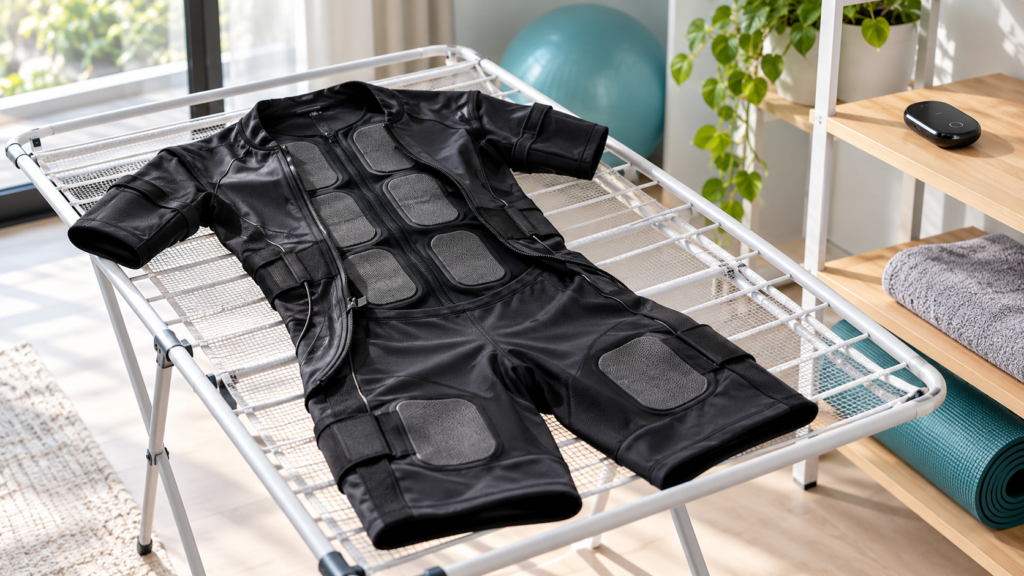
Materials and durability. The suit goes against your skin every session. It should be well-made, easy to clean, and built to last.
The Bottom Line
A full body EMS suit is not a shortcut. It’s a real training tool with solid research behind it. Studies show it can help you build muscle, lose fat, and get stronger, all in a fraction of the time a regular gym session takes. It works especially well for people who are short on time, dealing with joint issues, or just getting back into fitness.
Like any tool, it works best when you use it right and ease into it.
If you’re curious to try one, check out our review pages for various EMS brands and products, or use our comparison tool.