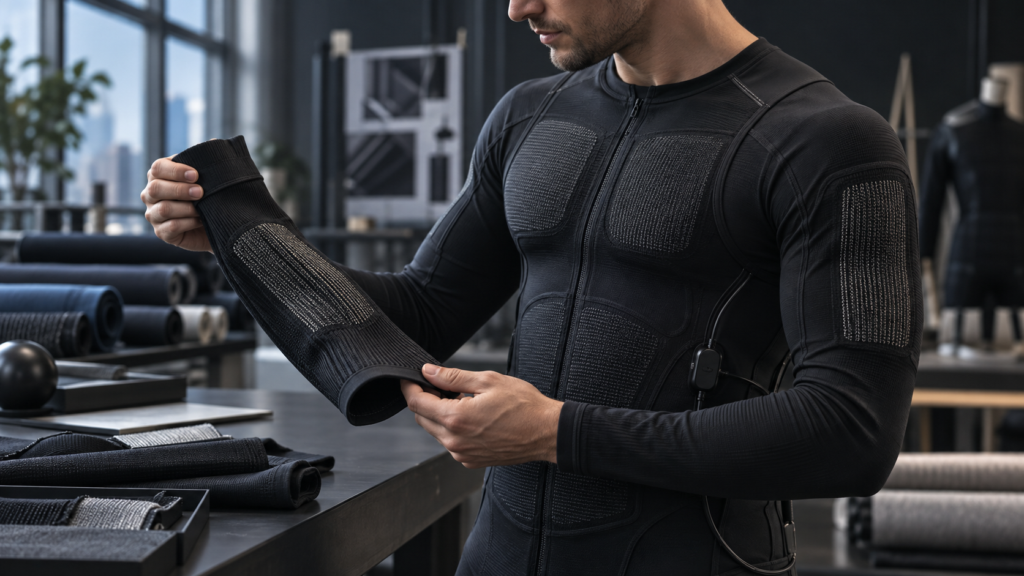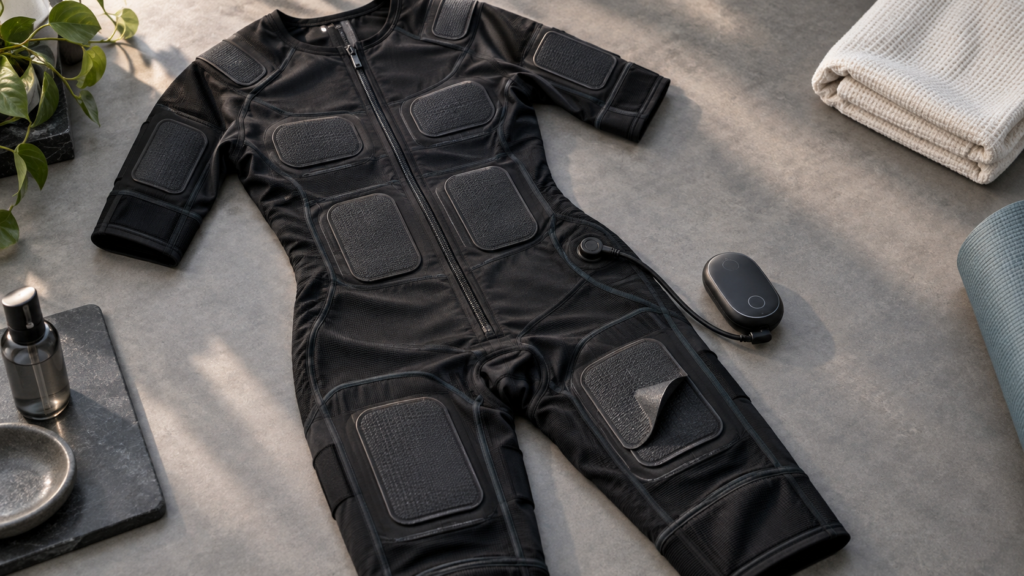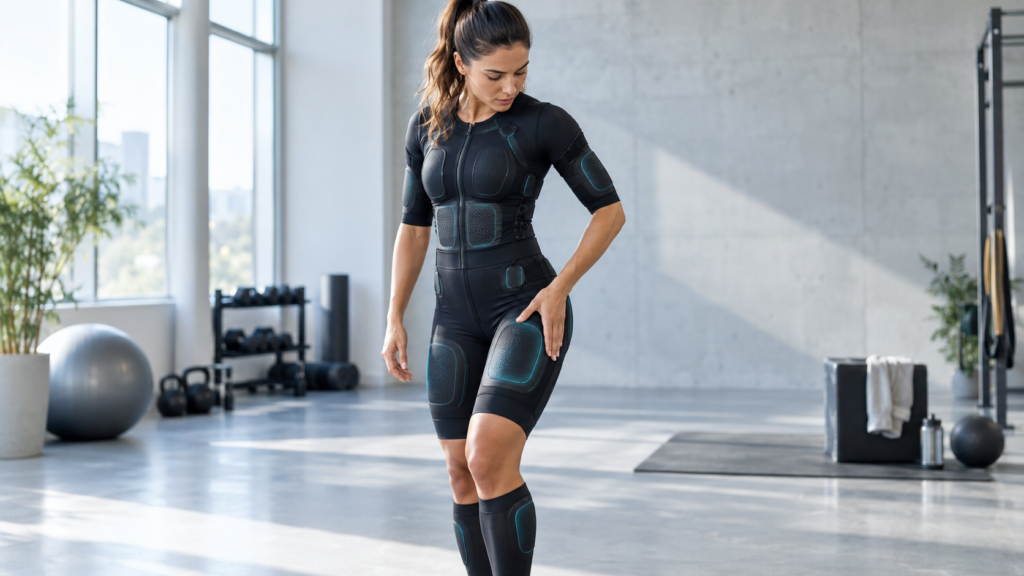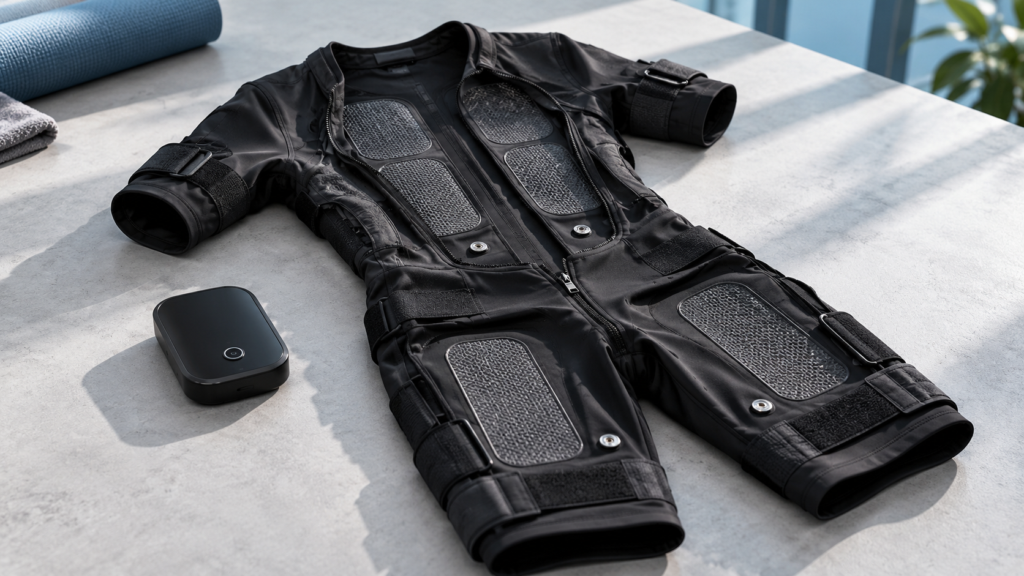

If you’ve been writing off regular exercise because your calendar just won’t cooperate, EMS training for busy people might be the most realistic fitness solution you haven’t tried yet.
Why Time Is the Real Barrier to Fitness (And How EMS Solves It)
Exercise adherence research consistently shows that time is one of the top reasons working adults skip the gym. And it makes sense. A conventional gym session doesn’t just cost you 60 minutes. Factor in the commute, changing, the workout itself, showering, and getting back to your desk, and you’re looking at closer to two hours per visit.
EMS training for busy people cuts that down significantly. A 20-minute EMS workout session, combined with travel and prep, typically runs 40 to 60 minutes total. For many professionals, that’s the difference between “I can actually do this” and “there’s just no way.”
Whole-body EMS has been shown to produce meaningful neuromuscular stimulation in compressed timeframes, which is a core reason EMS training for busy people has become such a popular alternative to conventional gym routines. The FDA also recognizes EMS devices as cleared medical and fitness tools, though it’s worth understanding the distinction between clinical EMS and whole-body fitness EMS before getting started.
What Makes EMS Training Time Efficient
Here’s what separates a 20-minute EMS workout from a 20-minute treadmill jog:
- Whole-body muscle activation. EMS suits deliver electrical impulses to multiple muscle groups simultaneously, producing a training stimulus that would take far longer to replicate with conventional resistance training.
- No equipment to set up or program. A trainer handles everything. You show up, suit up, and train.
- No self-motivation required for programming. This matters more than it sounds after a long workday.
- Sweat without the hour-long commitment. Sessions are intense in a compressed window, not drawn out.
This is why EMS training time efficiency isn’t just a marketing claim. Research supports the capacity of electrical muscle stimulation to produce meaningful physiological outcomes when used correctly and consistently. For busy people, EMS training delivers that stimulus without demanding the kind of schedule restructuring that makes most gym routines fall apart.
How to Build EMS Training Into a Professional Schedule
The most effective approach to EMS training for busy people is to treat your sessions the way you treat an important meeting: pre-book, calendar-block, and protect the time.
Recommended scheduling approaches for busy professionals:
- Early morning sessions (6:00 to 7:30 AM): Many EMS studios open early specifically for professional clients. A 6:30 AM session lets you finish, shower, and be at your desk by 8:30 AM.
- Lunchtime sessions: A 20-minute EMS workout for professionals fits comfortably into a lunch break, especially at studios in urban office districts.
- Early evening on commute days: Stopping at a studio on the way home adds minimal time to a day that already ends late.

The twice-weekly EMS fitness schedule that works best for most people:
| Day Pairing | Why It Works |
|---|---|
| Monday + Thursday | Space sessions 72 hours apart, keeps weekend open |
| Tuesday + Friday | Same spacing, front-loads the week |
| Wednesday + Saturday | Midweek reset plus a weekend morning slot |
The 48 to 72-hour recovery window between sessions isn’t an inconvenience. For busy people, EMS training is actually designed around realistic schedules. You’re not expected to train every day, and the built-in rest requirement makes the commitment far easier to sustain than a five-day gym routine.
Managing Energy When Work and Training Overlap
One thing EMS training for busy people requires is honest self-awareness about your energy levels going into each session.
Demanding cognitive work depletes overall physiological resources. A week with back-to-back high-stakes meetings or a looming deadline may mean your body needs a slightly lower-intensity session than usual. A good EMS trainer will adjust based on where you are that day.
Key recovery factors for professionals using EMS:
- Sleep is non-negotiable. Seven to nine hours is where training adaptation actually happens. If work is chronically affecting your sleep, reduce session intensity until it stabilizes.
- Mental fatigue counts as fatigue. Don’t push through a hard EMS session on four hours of sleep after a 12-hour workday.
- Communicate with your trainer. They can dial the intensity up or down based on your current state.
This flexibility is one of the underrated advantages of EMS training for busy people. Unlike a self-directed gym session where you’re entirely responsible for managing your own output, a trainer-guided EMS workout adapts to you in real time.
Nutrition for Busy People Doing EMS Training
You don’t need a meal prep routine or a macro spreadsheet. For EMS training to work, you need adequacy, not perfection.
Practical nutrition principles for professionals:
- Hit your protein. Muscle recovery depends on it. Easy high-protein options that require almost no prep:
- Greek yogurt
- Eggs (hard-boiled or scrambled)
- Canned fish (tuna, salmon, sardines)
- Pre-cooked rotisserie chicken
- Protein shakes for busy mornings
- Stay hydrated. This matters more on EMS training days. Dehydration affects both performance and recovery.
- Don’t chronically under-eat. Skipping meals consistently on top of an EMS training schedule will stall your results. Even simple, fast meals count.
The goal for nutrition around EMS training for busy people isn’t a perfect diet. It’s enough consistent nutritional support for training adaptation to actually take place.
Why EMS Training for Busy People Tends to Stick Long-Term
Fitness habits fail when the friction is too high. A gym routine with multiple weekly time blocks, programming decisions, equipment logistics, and travel time is high-friction by design. One missed week easily becomes two.
EMS training for busy people removes most of that friction from the start:
- No equipment to own or maintain
- No workout programming to design
- Trainer-guided sessions mean no guesswork
- Short enough to fit into almost any schedule without restructuring your life
- Twice weekly, not five days a week
When an EMS fitness schedule is pre-booked and calendar-protected, it becomes easier to maintain over months and years than almost any other fitness format. That consistency is ultimately what makes EMS training for busy people not just a time-efficient option, but a genuinely sustainable one.

Conclusion
EMS training offers busy professionals a genuinely practical solution to the challenge of consistent fitness, a 20- to 30-minute, trainer-guided, whole-body workout that requires minimal scheduling, no equipment ownership, and no self-programming.
The most important factor in making it work is treating it with the same intentionality as any other important professional commitment: booking in advance, protecting the time in your calendar, and showing up consistently. Fitness built on a sustainable schedule over months and years is worth more than any single perfect workout.
Ready to find the right EMS suit for you and your busy schedule? Head over to our product reviews and brand reviews to see which one sticks out to you. You can also try our product comparison shopping tool.
Frequently Asked Questions About EMS Training for Busy People
Can I do EMS training during a lunch break?
Yes. A 20-minute EMS workout fits easily into a lunch break, especially at studios located near workplace districts. Many urban EMS studios specifically offer midday time slots for professional clients.
Will I feel too tired to work after a session?
A well-calibrated session should leave your muscles fatigued but your mind clear. Some people actually feel more energized after training. If post-session fatigue is noticeably affecting your work, talk to your trainer about adjusting intensity.
How many sessions per week is realistic for very busy people?
EMS training for busy people works well at one or two sessions per week. One session produces meaningful results when you’re consistent. Two is the standard recommendation for most goals. More than two is rarely necessary and can lead to inconsistency if your schedule doesn’t genuinely support it.
Do I need to shower after a session before going back to work?
EMS sessions do produce sweating, particularly at higher intensities, so yes, showering is generally a good idea before returning to a professional setting. Most studios have shower facilities, so factoring that into your time estimate is worth doing.
Is EMS training worth the cost for someone on a tight budget?
That depends on what you value. For professionals who prioritize time efficiency and structured, trainer-led workouts, many find the per-session cost comparable to or better than a full gym membership they rarely use. Introductory offers and package pricing can also make EMS training for busy people more accessible.