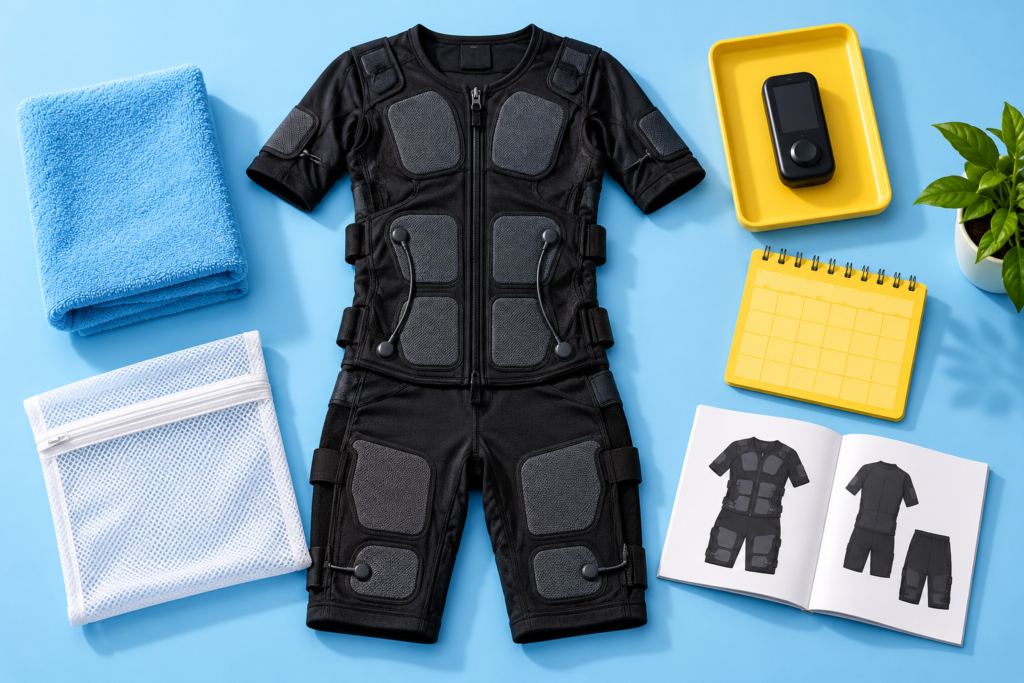
EMS Technology
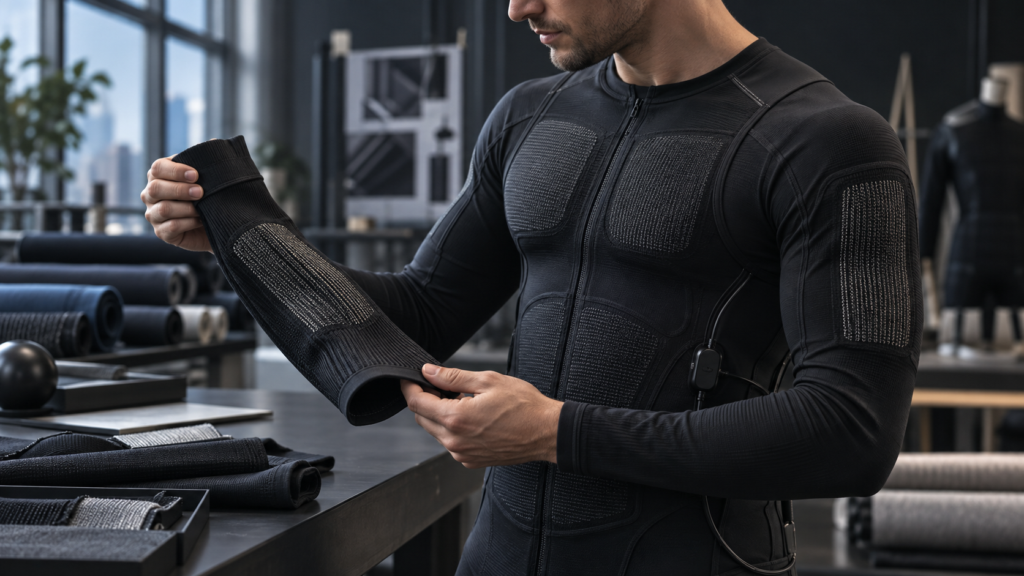
Conductive Fabric Electrodes in EMS Suits: Materials, Contact, and Wear
Learn how conductive textile EMS electrodes work, why moisture and
Includes:
BEST FOR
Home Workouts, Travel & Time-Saving Training
TECHNOLOGY
Dry EMS (Electro-Pulse Pads)
AVERAGE PRICE
$1,299
CONNECTIVITY
Wireless
Editor's Take
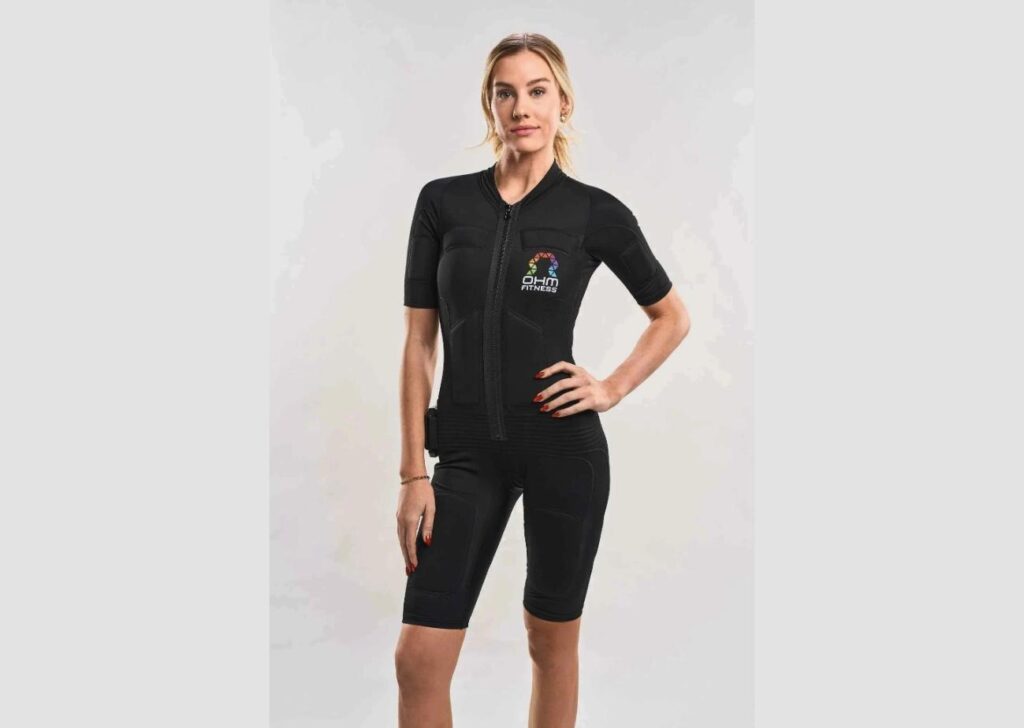
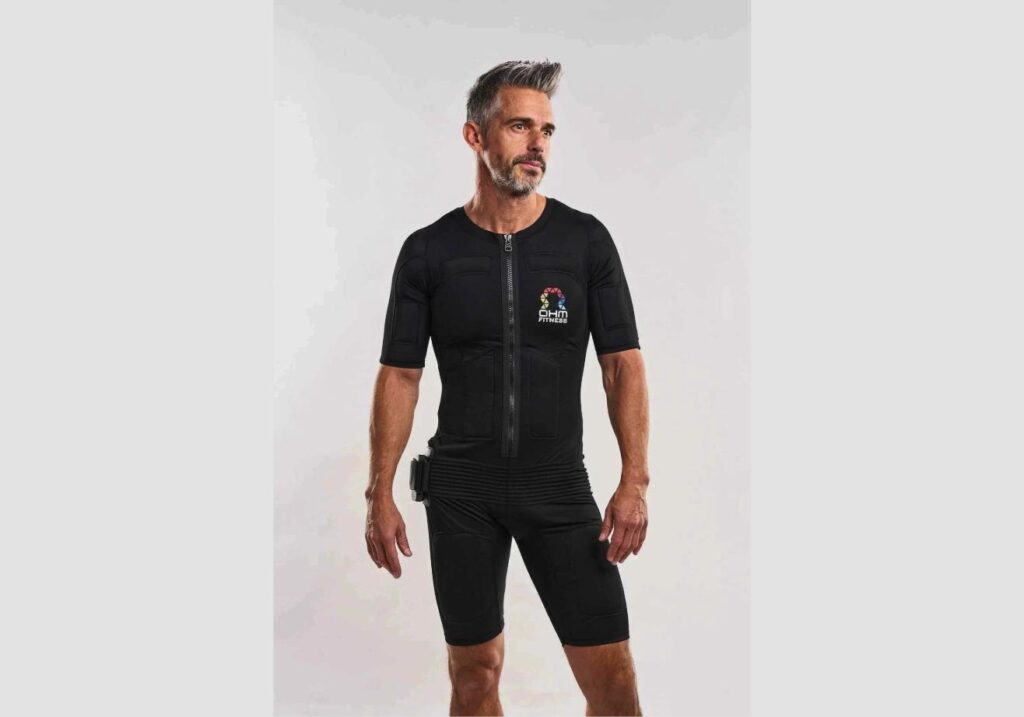
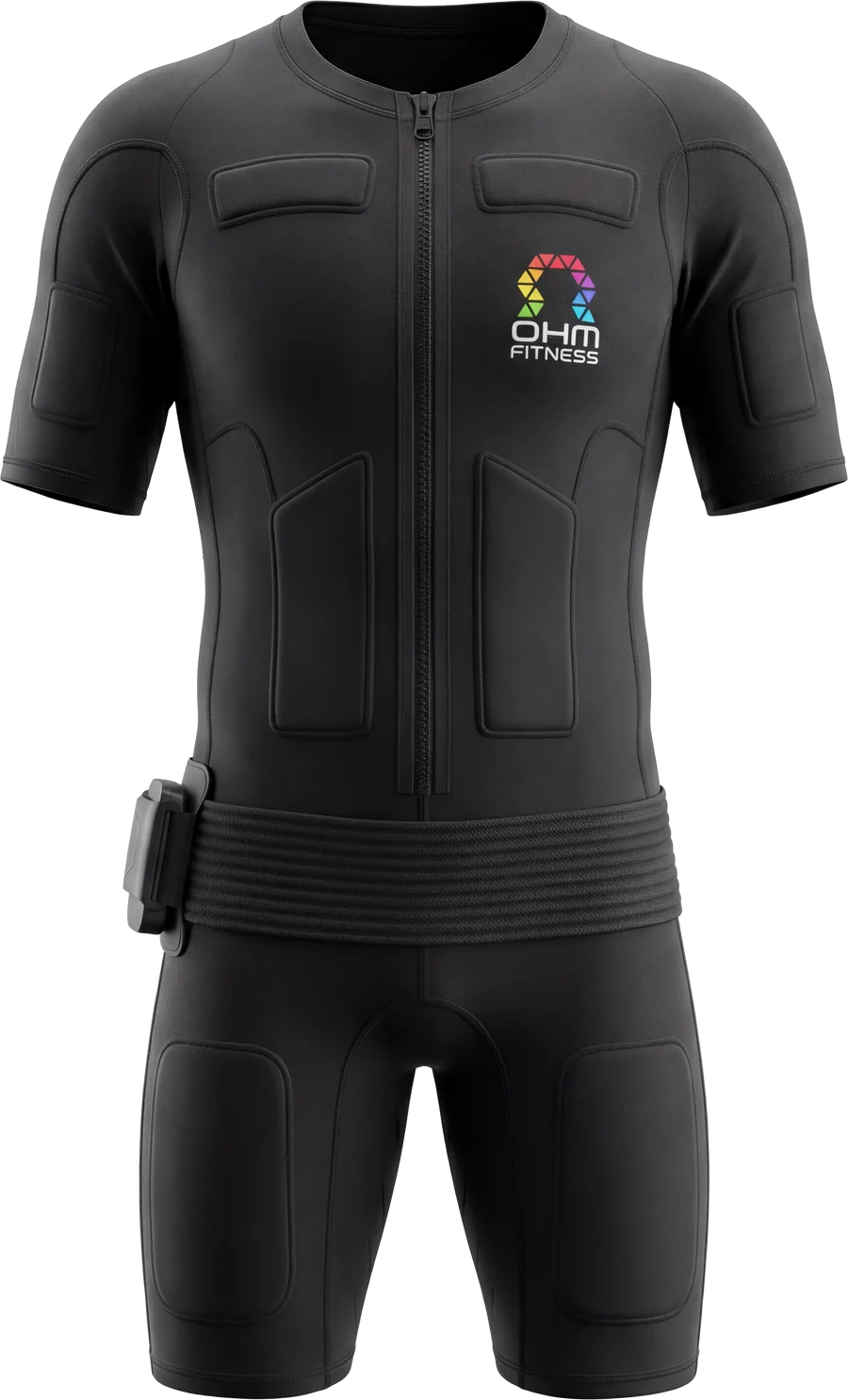
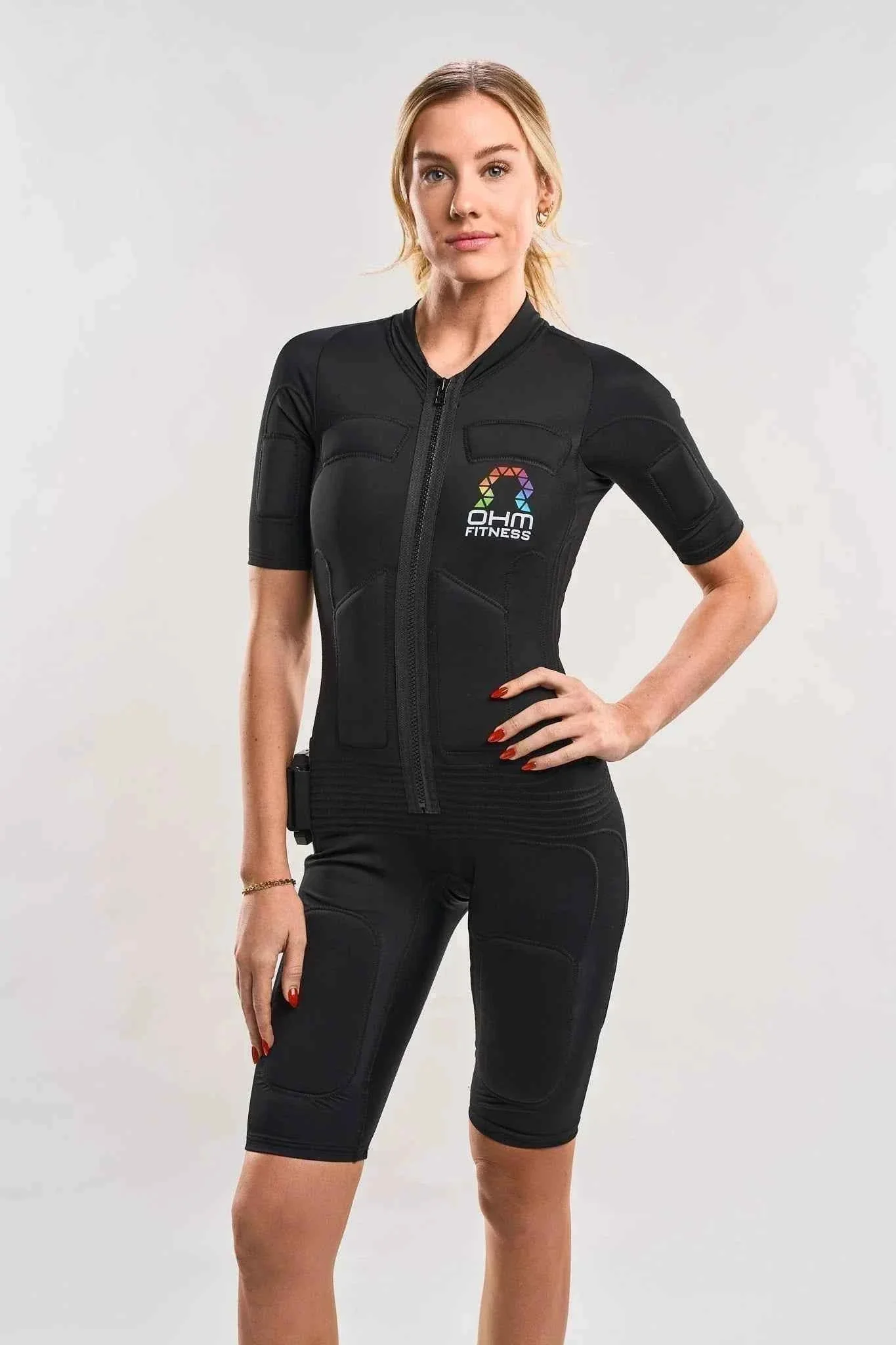
OHM Fitness takes the EMS experience it offers in its studios and packages it into a system you can use on your own with OHM at Home. The $1,299 kit includes the emPower Suit, rechargeable emPower Pack, OHM app, waist belt, wash pouch, and resistance bands. The suit itself has 20 electro-pulse pads and connects wirelessly to the app, where you can control stimulation and choose how you want to train.
At first glance, $1,299 makes OHM one of the more approachable ways to get into a premium at-home EMS system. But this is one of those purchases where we’d really encourage you to look beyond the price on the product page. OHM requires a monthly membership to connect and use the suit at home, and those plans limit how many EMS training minutes you receive each month.
There’s another detail we’d want you to know before buying: the emPower Suit is engineered for a 100-use lifespan and is programmed to stop operating once it reaches that limit. That’s very different from simply replacing a suit whenever normal wear eventually catches up with it, and we’d absolutely factor the cost of future replacement suits into your decision.
OHM does have some things going for it, including personalized onboarding, guided workouts, a long-lasting battery, and a relatively inexpensive 30-day trial if you decide it isn’t for you. In this review, we’ll go through the suit, app, membership, price, shipping, returns, warranty, and what customers are saying so you can decide whether the lower upfront price still makes sense once you understand the complete ownership experience.
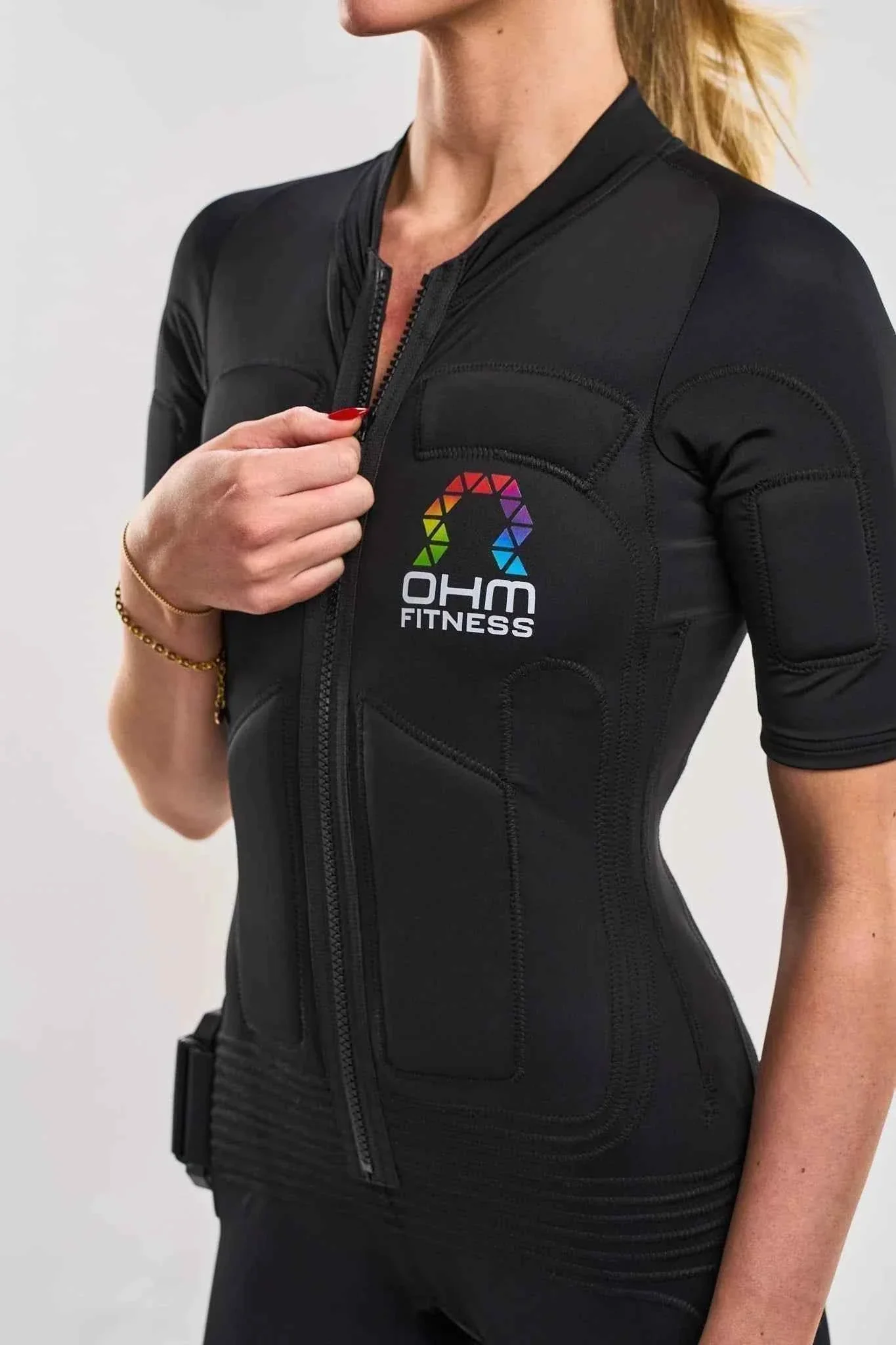
The OHM emPower Suit is a wireless WB-EMS suit with 20 integrated electro-pulse pads positioned to stimulate major muscle groups throughout the body. Through the app, you can train full-body or target specific areas and adjust stimulation intensity based on what feels appropriate for you.
The suit is made from breathable, antimicrobial material and is machine washable. It also uses a one-piece design, which keeps the setup relatively straightforward compared with EMS systems that require several separate electrode garments to be fitted around your body.
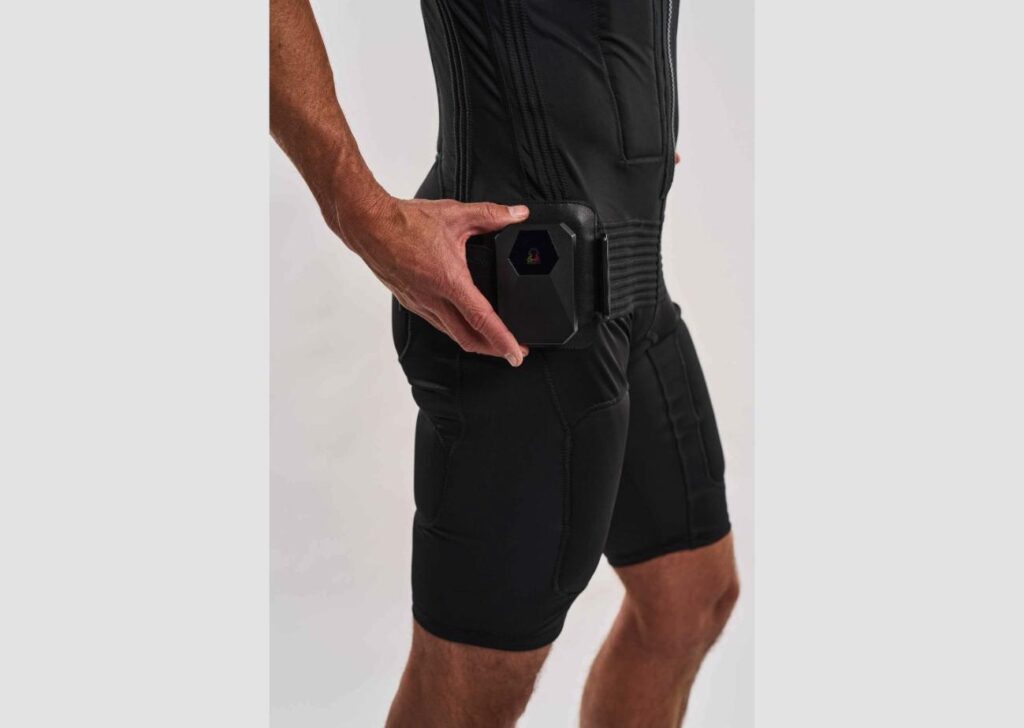
The emPower Pack attaches magnetically to the suit and communicates with the OHM app through Bluetooth. Battery life is one of the stronger parts of the system, with OHM advertising more than eight hours of continuous training power from a charge.
The part we’d think much harder about is the lifespan of the suit itself.
OHM states that the emPower Suit is engineered for 100 uses and programmed to cease operation after reaching that number. In other words, 100 sessions isn’t simply an estimated lifespan based on normal wear. The suit actually keeps track of its usage.
If you’re planning to make EMS a consistent part of your routine, do the math before purchasing. At two workouts per week, 100 uses works out to less than a year. At one workout per week, you’d get closer to two years. Either way, we’d go into the purchase knowing that the suit is ultimately something you’ll need to replace rather than assuming your $1,299 system will continue operating indefinitely as long as you take good care of it.
The OHM app is the control center for the at-home system. It connects to the emPower Pack through Bluetooth and lets you control muscle stimulation zones and intensity while choosing between freestyle training and guided workouts.
OHM also offers adaptive training programs built around goals including strength, fat loss, recovery, and performance. If you like having more structure, there are guided options and access to OHM coaches. If you already know how you want to exercise, freestyle sessions give you more room to incorporate EMS into your existing routine.
Personalized onboarding is included, which we’d take advantage of if you’re new to EMS. Having someone help you establish your initial settings is considerably better than putting on the suit for the first time and guessing how much stimulation each part of your body should receive.
The biggest issue with the app isn’t necessarily what it can do. It’s that continued at-home EMS connectivity is tied to a paid membership.
OHM currently offers a Basic plan with 100 training minutes for $49 per month, Premium with 220 minutes for $69 per month, and Unlimited for $99 per month. The first month is included with the kit.
We’d pay particular attention to those minute limits. You’re not simply paying for bonus classes or optional premium content. OHM’s terms state that its at-home memberships provide the connectivity needed to use the EMS suit, and your available training time is managed through monthly minute allocations.
That means the membership needs to be treated as part of the cost of owning OHM rather than an optional extra you can easily drop later without affecting how you use the suit.
The OHM at Home Kit currently costs $1,299, which initially looks quite competitive for an at-home WB-EMS system. It includes the emPower Suit, emPower Pack, app, waist belt, wash pouch, and resistance bands.
Where we’d be careful is comparing that $1,299 price directly with another EMS system that doesn’t require continued payments. OHM’s upfront price only tells you what it costs to get started.
The Basic membership adds $49 per month, or $588 per year, and gives you 100 EMS minutes each month. Premium costs $69 per month, while Unlimited costs $99. If you’re planning to own OHM for several years, those payments add up quickly.
There’s also the 100-use suit limit to consider. OHM separately lists an emPower Suit for $449, while an emPower Pack is listed at $849. Knowing that the garment has a defined usage lifespan makes that replacement-suit price much more relevant than it would be with a suit you only replace if it eventually wears out.
So, we’d look at OHM as a lower-entry-cost EMS system with ongoing ownership costs rather than simply calling it a $1,299 system. That doesn’t automatically make it a bad value, especially if you enjoy the OHM workouts and ecosystem. It just means you should know what you’re committing to beyond checkout.
OHM offers the at-home system in separate men’s and women’s sizing, with multiple sizes available based on measurements. We’d use the company’s size guide carefully because electrode contact matters with EMS, and getting the correct fit affects more than how comfortable the suit feels.
Once your kit arrives, we’d recommend setting it up relatively quickly. Go through the personalized onboarding, make sure the suit fits correctly, connect the emPower Pack, and try several workouts while you’re comfortably inside the return period.
That’s particularly worthwhile with OHM because you get the first month of membership included. Use that month to determine whether you actually enjoy the app, whether the monthly training-minute structure works for your routine, and whether this is something you see yourself continuing to pay for.
OHM gives you 30 days to decide whether the at-home system is right for you, and there’s currently a $49 restocking fee on returns.
We actually appreciate that the fee is relatively straightforward. Losing $49 isn’t ideal, but on a $1,299 EMS system, it’s much easier to swallow than a return policy that takes several hundred dollars from your refund. We’d still keep all of the original packaging and make the decision within those first few weeks rather than waiting until the end of the return period.
The warranty is where OHM gets more unusual.
The emPower Suit is covered against manufacturing defects for one year, but that coverage applies within the suit’s 100-use lifespan. OHM states that the suit is programmed to stop operating after 100 uses.
OHM does provide some protection if your body changes. If you need a smaller size during the one-year warranty period, you can request a free size-down exchange up to two times. The replacement retains the remaining warranty period and remaining lifespan of the original suit.
That last part is important. Exchanging for a smaller suit doesn’t restart your 100 uses. If you’ve already completed 60 sessions, for example, the replacement isn’t treated like a brand-new 100-session suit.
For us, the 100-use limit is something we’d want to be completely comfortable with before buying. It’s not a defect or hidden malfunction. It’s how OHM intentionally designed the product, so it needs to be part of your ownership calculation from day one.
OHM at Home doesn’t have an enormous independent review footprint yet, but the available feedback gives us a useful look at both sides of the experience.
Positive App Store reviewers praise how quickly they were able to get started, the effectiveness of the workouts, suit comfort, and customer support. One owner described getting the entire OHM at Home Kit running within about five minutes, while another specifically praised how responsive the company was from the time the suit was ordered.
That’s encouraging because ease of use is especially important for an at-home EMS system. If you’re buying one partly because you don’t want to travel to a studio every time you train, the last thing you need is an app that makes getting through a workout unnecessarily complicated.
Unfortunately, the app is also where one of the more serious customer complaints appears. One App Store reviewer said the at-home app wasn’t user-friendly and reported that workouts repeatedly froze while the suit’s workout timer continued counting down.
That particular complaint gets our attention because OHM charges for EMS access based on monthly training minutes. If you’re paying for a limited number of minutes, we’d want the software managing those minutes to work reliably.
The App Store currently shows a 3.8 out of 5 rating from 13 ratings. That’s still a very small sample, so we wouldn’t treat it as enough evidence to say every owner is going to experience app problems. But we also wouldn’t ignore the complaint when the app is such an important part of operating the system.
Overall, OHM has an interesting value proposition. The $1,299 starting price is considerably easier to approach than some premium at-home EMS systems, the battery life is strong, the suit is straightforward to wear, and you get both guided and freestyle training options.
But we’d be careful about buying OHM because it looks inexpensive at first glance. The monthly membership isn’t simply an optional content subscription, and the suit has a defined 100-use lifespan. Those two details change the long-term cost considerably.
If you love OHM’s training style and don’t mind treating EMS like an ongoing membership rather than a one-time equipment purchase, the at-home system could make sense. If your priority is owning your EMS system outright and being able to use it as much as you want without thinking about monthly minutes or how many sessions remain on the suit, we’d think carefully before committing.
OHM tracks muscle activation, zone intensity, and energy output in real time, giving users performance data they can follow from session to session. This is one of the most distinctly OHM features.
OHM offers structured multi-day programs built around goals like strength, fat loss, recovery, and performance rather than only providing individual workout modes.
The OHM app allows users to share workouts and scorecards with friends and family, adding an accountability/social component to the at-home system.
The rechargeable emPower Pack magnetically snaps onto the suit and provides 8+ hours of continuous training power. The magnetic attachment is more OHM-specific than simply calling the system “wireless.”
OHM includes one-on-one onboarding with an EMS expert who helps the user establish their settings when getting started at home.
Channels:
Available Sizes:
Frequency (Hz):
Charging Time:
Warranty:
Presets:
We’d recommend OHM at Home most to someone who already enjoys the OHM experience and wants the freedom to take that same style of training outside the studio. The lower starting price makes it easier to get into, and we like that you can choose between guided workouts and having more control over your own training. Where we’d hesitate is the long-term commitment. Having to maintain a membership just to connect and use the suit means you never completely own the experience outright, and the 100-use lifespan makes the suit an eventual replacement expense rather than something you can simply keep using as long as it works. For us, those are important considerations because we’d want an at-home EMS system to give us more independence over time, not another recurring cost to manage. OHM can still be a good fit if you value its training ecosystem and don’t mind paying to stay in it, but we’d go into the purchase thinking beyond the appealing $1,299 starting price and making sure the way it works long term fits what you actually want from owning EMS equipment.

Join EMS users comparing suits, sharing protocols, and posting honest results. Free to join, no sales pitch.
Protocol sharing
Suit comparisons
Safety-first advice
Learn how conductive textile EMS electrodes work, why moisture and
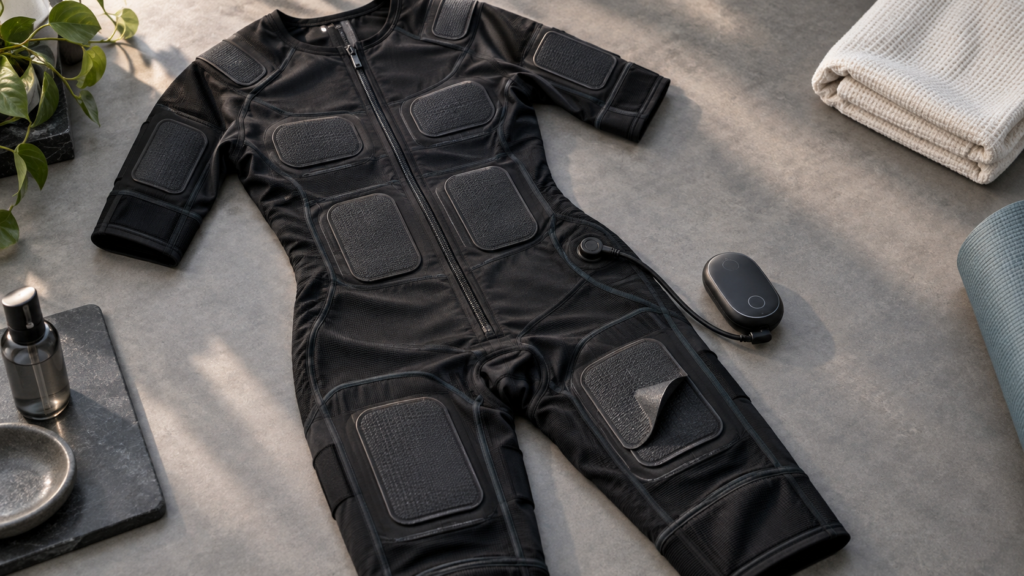
Fix patchy or sharp EMS stimulation by checking fit, moisture,
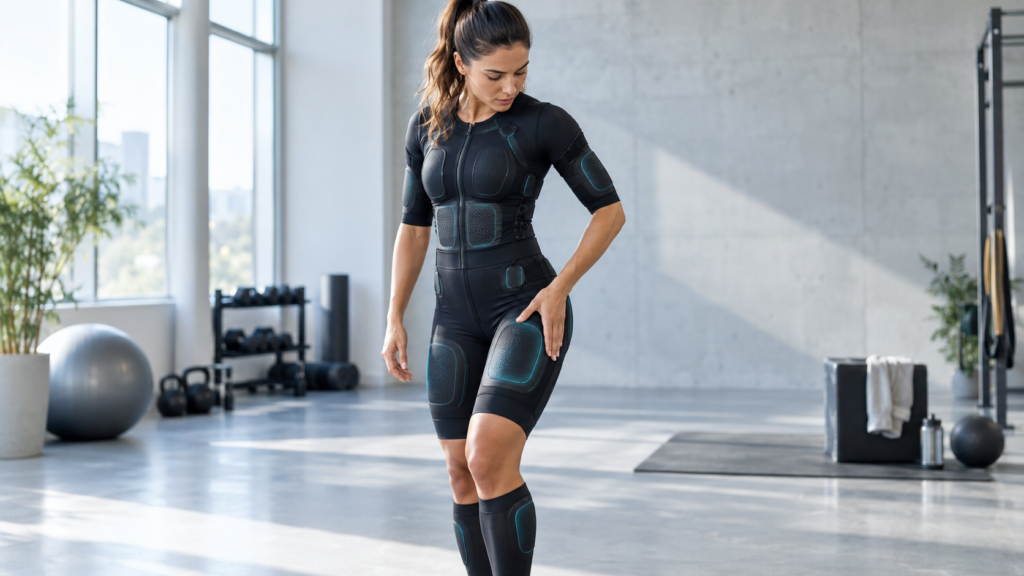
Learn how EMS electrode area and placement affect current density,
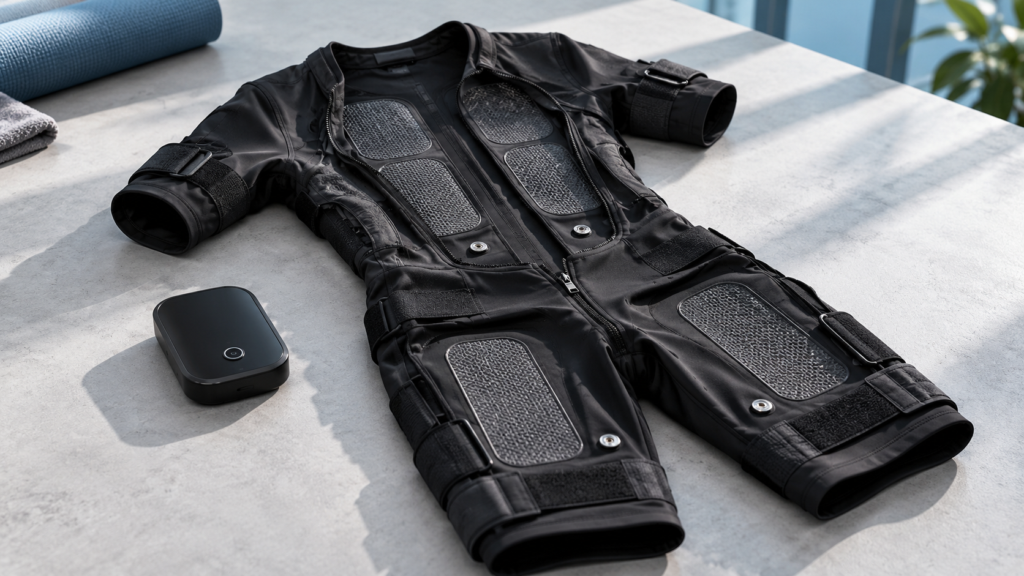
Learn what affects EMS suit lifespan and how to recognize
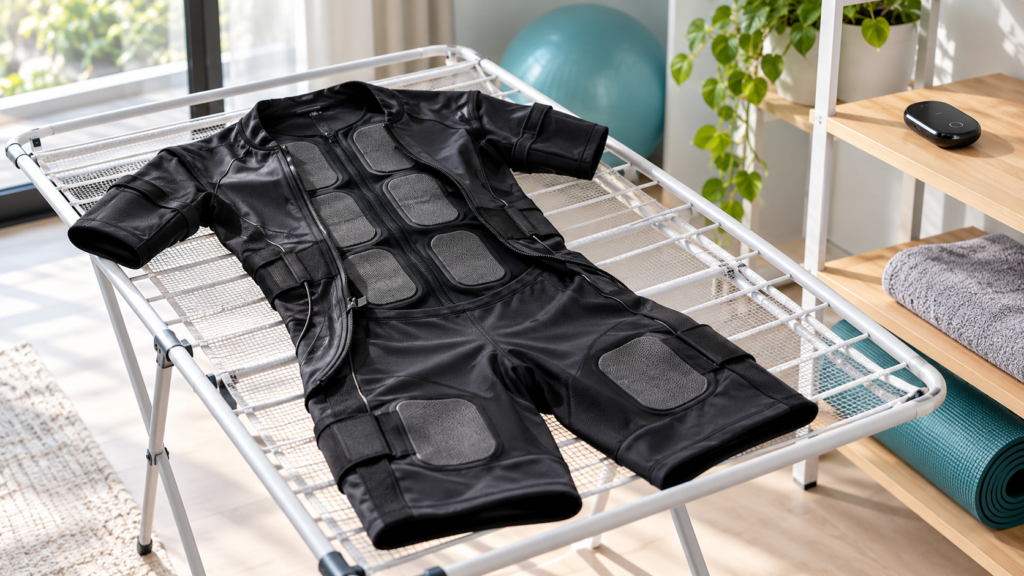
Remove EMS suit odor by using the approved wash and