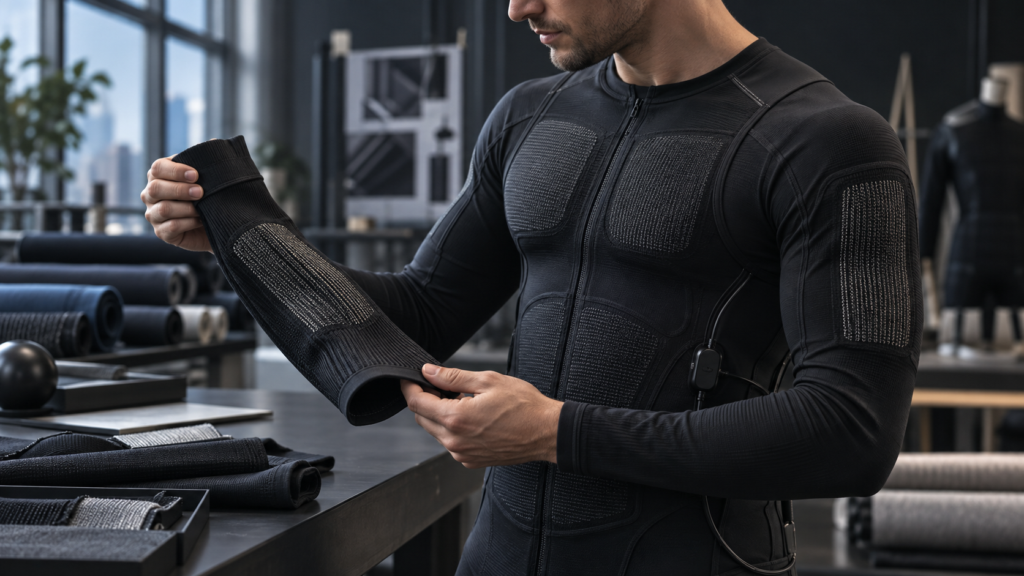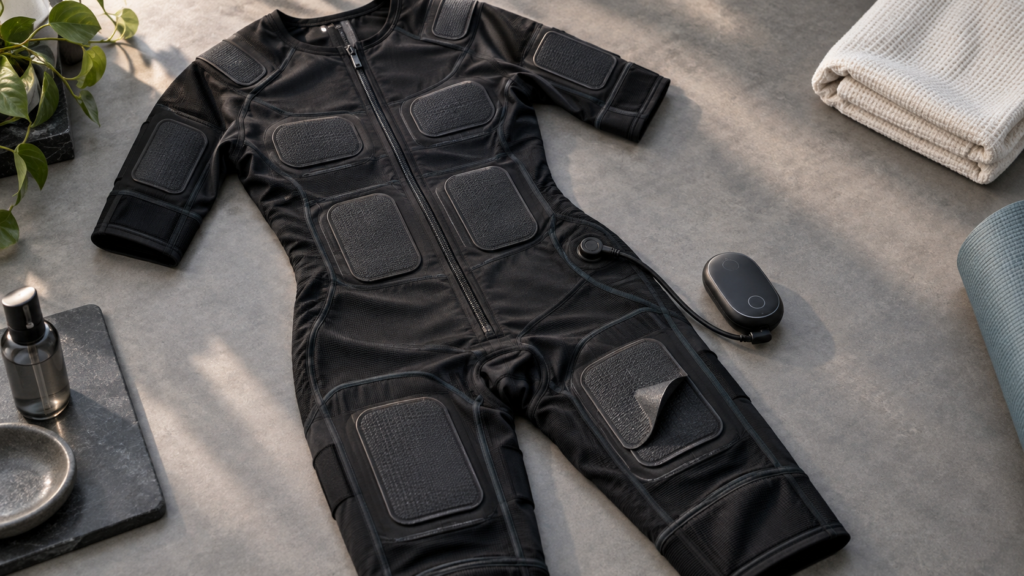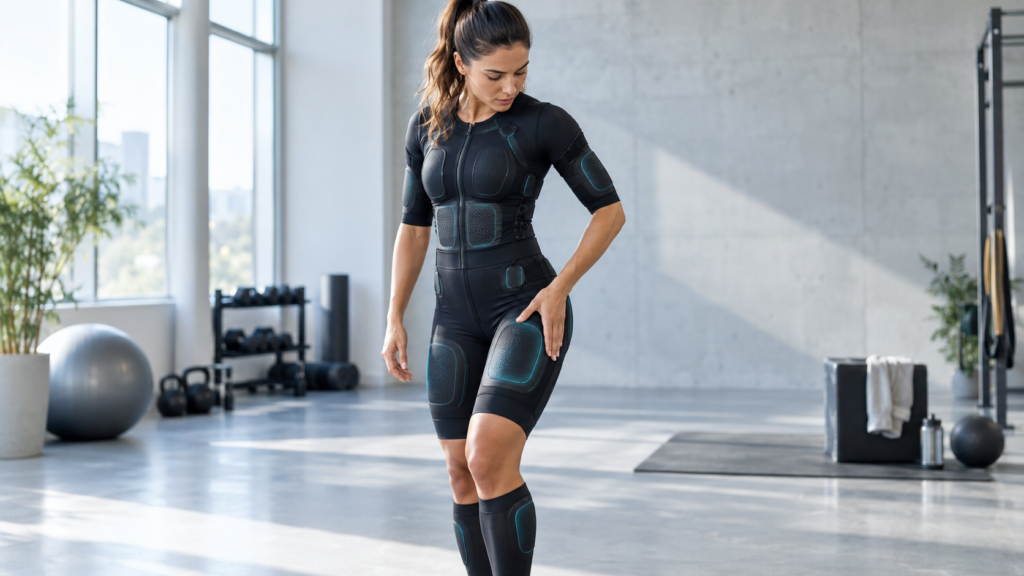
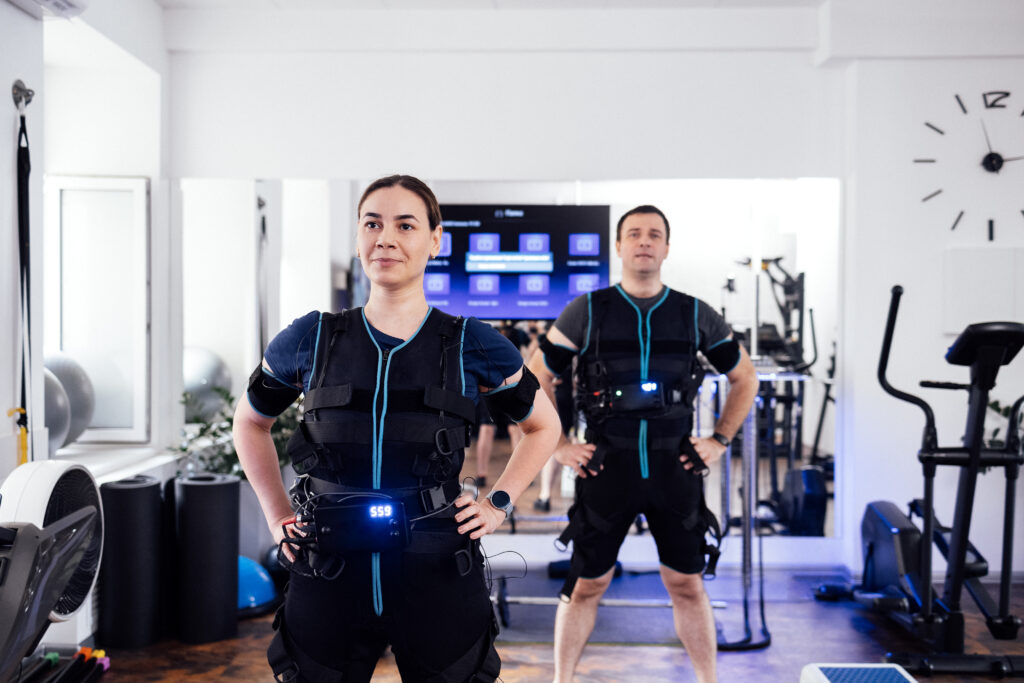
Knowing how to prepare for EMS training with an EMS training suit is one of the most practical things a new or returning user can invest time in. Unlike some forms of exercise where you can show up and go, EMS training has specific preparation requirements that affect both the quality of the electrical stimulation and your body’s capacity to handle and recover from the session. Get the preparation right, and the session works better. Get it wrong, and you risk discomfort, reduced effectiveness, or a slower recovery.
This guide walks through everything involved in how to prepare for EMS training, from the evening before to the minutes before you step into the suit.
The Evening Before: How to Prepare for EMS Training Starts the Night Before
Most people think about how to prepare for EMS training on the morning of their session. In reality, the most impactful preparation happens the night before. The single most important factor you can control is sleep. Sleep is when the majority of muscle repair and hormonal recovery processes occur, and arriving at an EMS session significantly under-slept compromises both your performance and your body’s capacity to adapt afterward. Aim for seven to nine hours.
Other evening-before habits that affect how to prepare for EMS training well include:
- Avoiding alcohol, which acts as a diuretic, impairs muscle protein synthesis, disrupts sleep quality, and can produce lingering fatigue the following day
- Staying consistently hydrated through the day and evening, rather than trying to catch up with large amounts of water right before the session
- Eating a normal, balanced dinner and avoiding going to bed significantly underfed
On the Day: Food and Hydration as Part of How to Prepare for EMS Training
On the day of your session, especially when using an EMS training suit, pre-session nutrition has two goals: having enough energy to perform effectively and avoiding the discomfort of training on a full stomach.
A balanced meal containing protein, carbohydrates, and some fat consumed two to three hours before the session is the standard recommendation. This gives the digestive system time to process the meal and ensures a steady energy supply during training.
If a full meal is not practical, a smaller, easily digested snack one hour before works well. Good options include:
- A banana with a small amount of peanut butter
- A few crackers with a protein source
- Greek yogurt with fruit
Kemmler et al. (2023) in Frontiers in Physiology emphasize that arriving well hydrated is one of the most important and modifiable factors in EMS session safety. Aim for two to three glasses of water in the two hours before training as part of how to prepare for EMS training on the day.

Clothing and Physical Preparation
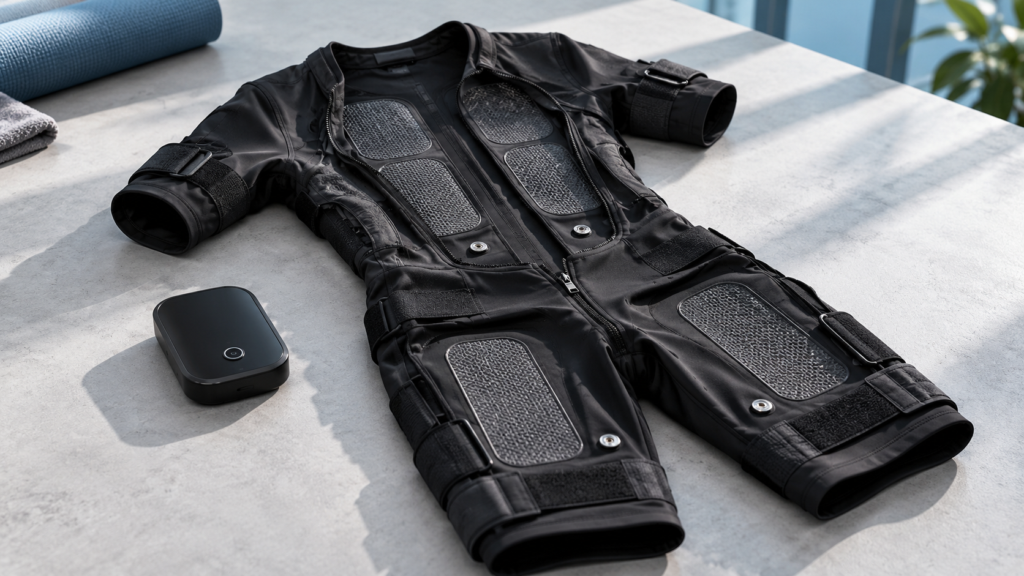
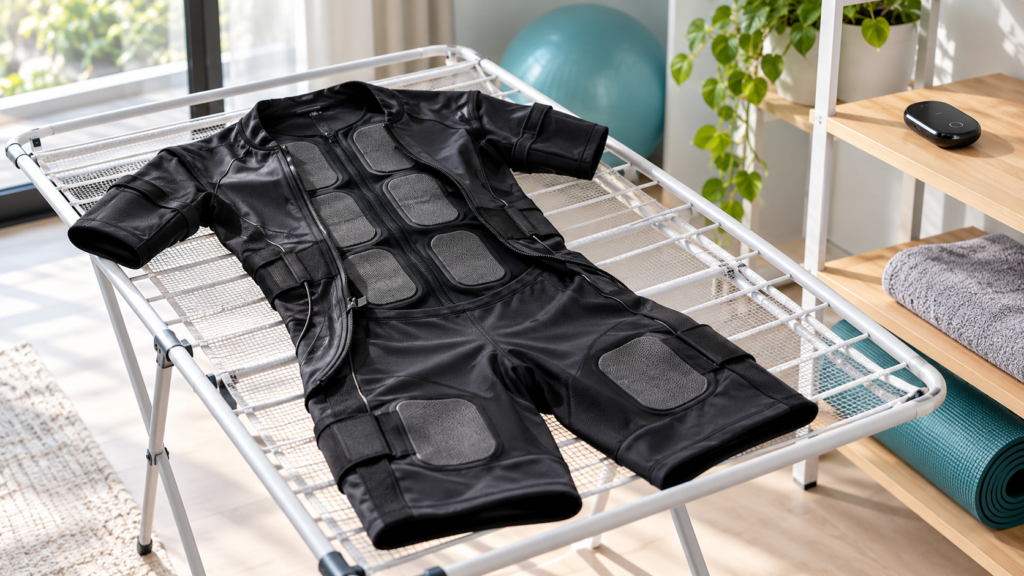
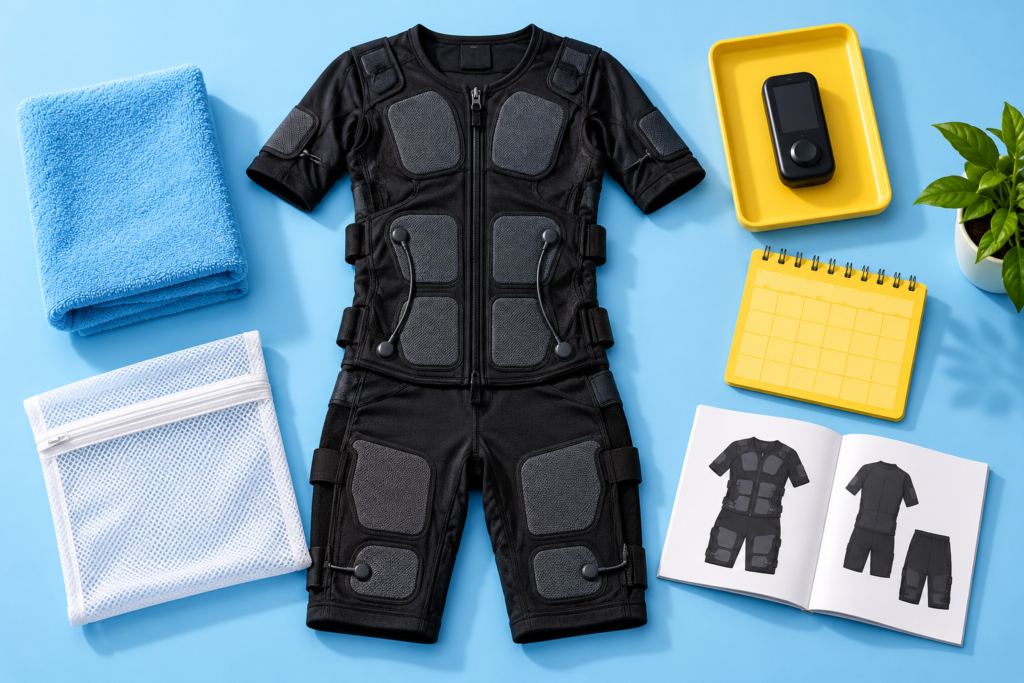
A critical and often overlooked part of how to prepare for EMS training is getting your clothing sorted before you arrive. A thin, form-fitting, moisture-wicking synthetic base layer is the standard requirement for EMS sessions. Having this ready and clean avoids any last-minute issues that might delay the start of your session.
Before the session:
- Remove all jewelry, watches, and metal accessories, as metal objects in the path of electrical current can create points of concentration that cause skin irritation
- Give yourself five to ten minutes to settle and decompress before the suit goes on if you are coming from work or another commitment
- Confirm with your studio in advance whether they provide a base layer or whether you need to bring your own
Health and Medications: A Non-Negotiable Part of How to Prepare for EMS Training
Being ready to communicate any health changes to your trainer is a critical part of how to prepare for EMS training that many people overlook. Before your first session, you will complete a health intake form. For subsequent sessions, your trainer may do a brief check-in at the start.
Disclose any of the following since your last session:
- New prescription or over-the-counter medications
- A recent illness, injury, or surgical procedure
- Significant changes in energy levels or recovery patterns
- The onset of any new health symptoms
If you are feeling unwell with an active infection, fever, or significant fatigue from illness, reschedule rather than push through. Kemmler et al. (2016) in the German Journal of Sports Medicine are explicit that EMS training during active illness places additional physiological demands on a body already under stress, which is rarely beneficial and can slow recovery.
Mental Preparation: The Final Step in How to Prepare for EMS Training
Part of how to prepare for EMS training, especially in early sessions, is having a clear and realistic mindset about what the experience will involve. The sensation of EMS stimulation is genuinely unusual and takes some adjustment. Knowing this in advance, rather than being surprised by it, makes it easier to stay relaxed during the session.
One of the most consistent tips from experienced EMS trainers: arrive ready to communicate openly. Your feedback about where intensity feels appropriate, where it feels too high or uneven, and how you are generally feeling during the workout allows your trainer to calibrate the session effectively. Staying quiet to seem more resilient produces worse and less safe sessions.

Conclusion
Knowing how to prepare for EMS training is not complicated, but it is meaningful. Sleep well, eat appropriately, hydrate consistently, wear the right clothing, disclose any health changes, and arrive ready to give your trainer honest feedback. These steps, practiced consistently across a program of EMS training, create the conditions for the best possible outcomes from every session.
Ready to find the best EMS training suit for you? Check out our brand reviews and product reviews to help inform your decision. You can also use our product comparison tool to find the option that best fits your goals and budget.
Frequently Asked Questions
- Can I exercise before an EMS session on the same day?
Light exercise, such as walking or gentle stretching, is generally fine. Intense or heavy training immediately before an EMS session, particularly training that heavily loads the same muscle groups, is not recommended as it increases the risk of excessive fatigue and soreness. - What if I forgot to eat before my EMS session?
A small, easily digested snack, such as a banana or a few crackers, can provide some quick energy if you arrive significantly underfed. Let your trainer know, as they may adjust session intensity slightly. - Should I stretch before an EMS session?
Light dynamic stretching or a brief movement warm-up is generally beneficial. Most studios incorporate a warm-up phase into the session structure, so additional stretching beforehand is useful but not typically necessary. - Is there anything specific I should do the day after an EMS session?
Avoid intense training targeting the same muscle groups within 48 hours. Light activity, such as walking, is fine and may support recovery. Prioritize hydration, eat adequate protein, and get a good night’s sleep. - Can I do EMS training if I am on my menstrual cycle?
Menstruation is not a contraindication to EMS training. Some individuals prefer to reduce intensity slightly during certain phases of their cycle if they experience increased sensitivity or discomfort. Communicate with your trainer if you want to adjust the session for any reason.