EMS Technology
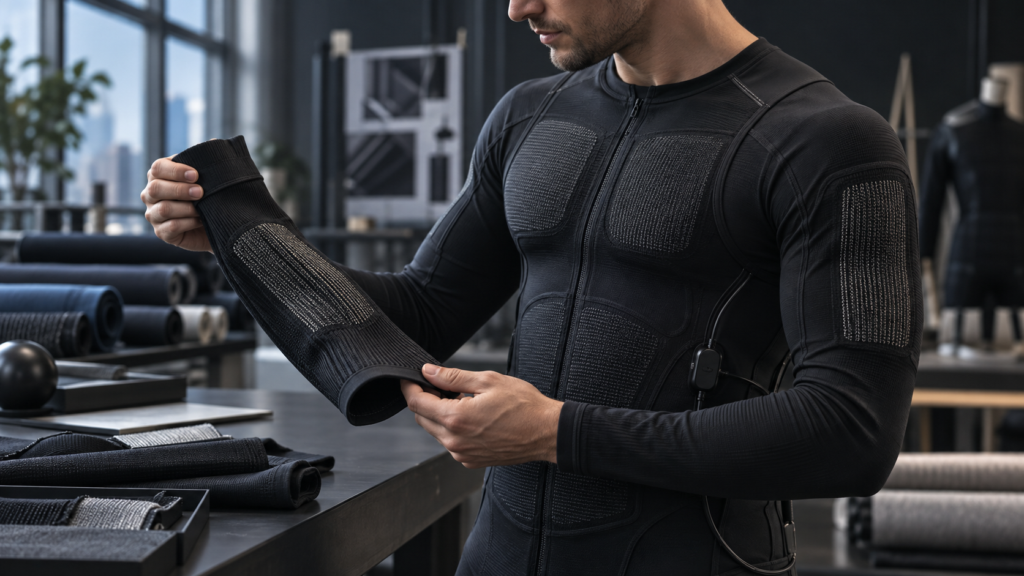
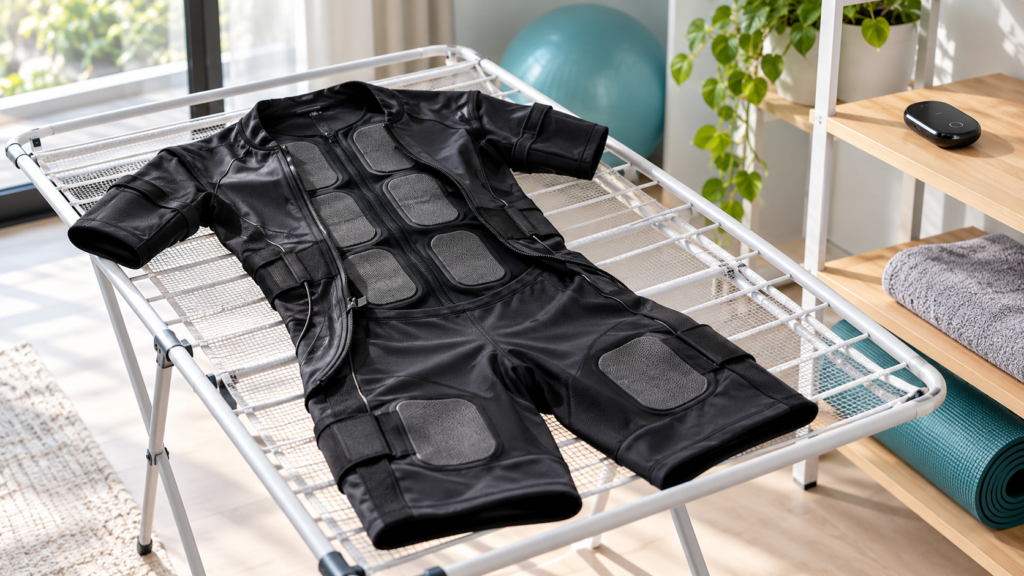
Conductive Fabric Electrodes in EMS Suits: Materials, Contact, and Wear
Learn how conductive textile EMS electrodes work, why moisture and
Includes:
BEST FOR
Low-Impact Training & Recovery
TECHNOLOGY
Wet Electrode Technology
AVERAGE PRICE
~$2,995
CONNECTIVITY
Wireless
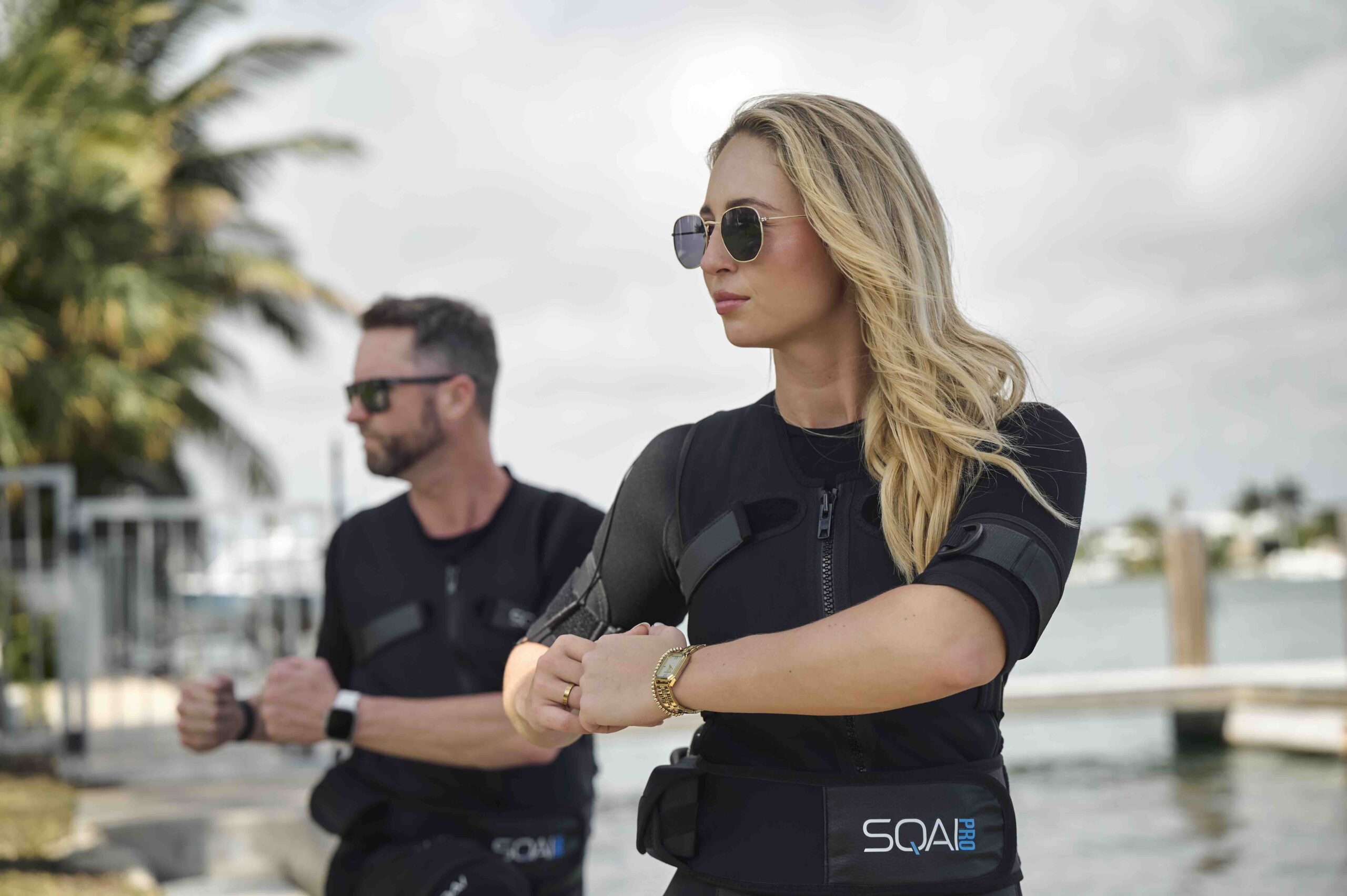
SQAI is a U.S.-based EMS brand that launched in August 2024, focusing on bringing guided EMS training into homes. The brand uses a wet EMS approach, relying on moisture and conductive clothing to help deliver stimulation effectively, while training philosophy centers around instructor-led workouts, recovery programs, and personal guidance.
Their customers have given positive feedback for the brand’s personal onboarding, user experience, and customer service. The brand continues to establish itself in the at-home EMS space with an emphasis on structured training and support for people who prefer more guidance throughout their EMS journey.
Editor's Take
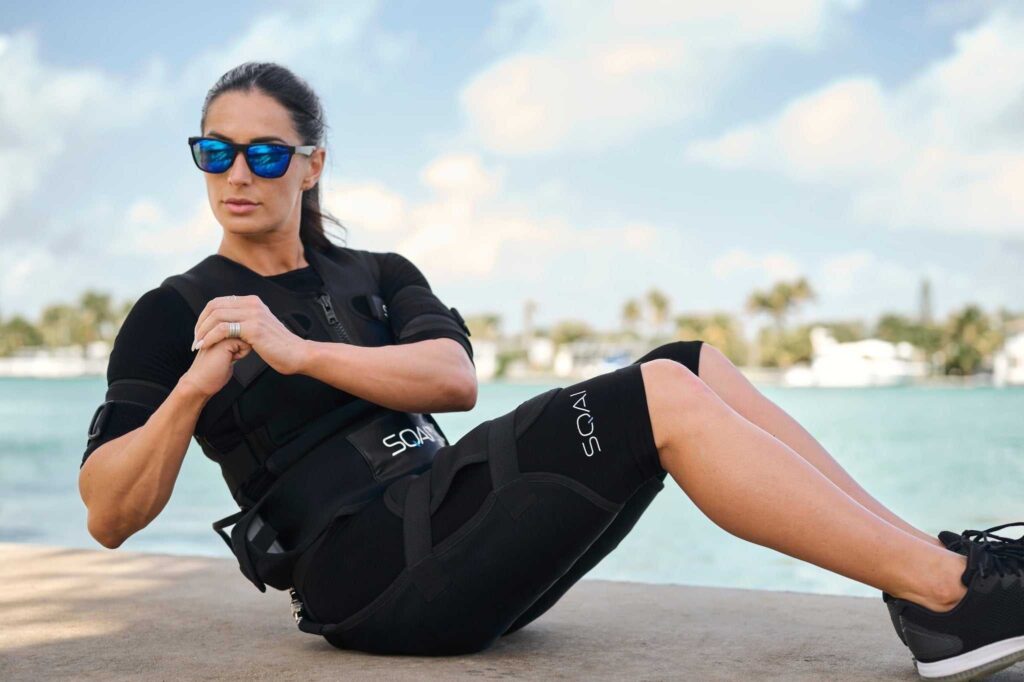
SQAI launched in August 2024 and has already started building a positive reputation within the EMS space. Its FDA-cleared wireless EMS suit targets multiple major muscle groups and combines at-home EMS with guided classes, manual training programs, and recovery options. There are no subscription fees, and your purchase includes two conductive base layers along with personal onboarding to help you get comfortable with the system.
You can also try SQAI at select studios before buying, which we’d seriously consider if there’s one near you. At $2,995, being able to experience the stimulation, fit, and wet setup yourself before committing is a valuable option.
There are a few things we’d want to know before spending that much, though. SQAI requires conductive base layers and thoroughly wetting the electrodes before each workout, its return policy includes a substantial restocking fee, and there’s conflicting information regarding the Power Box warranty.
In this review, we’ll go through the suit, app and training experience, price, returns, warranty, and what customers are saying so you can decide whether SQAI fits the way you actually want to use EMS.
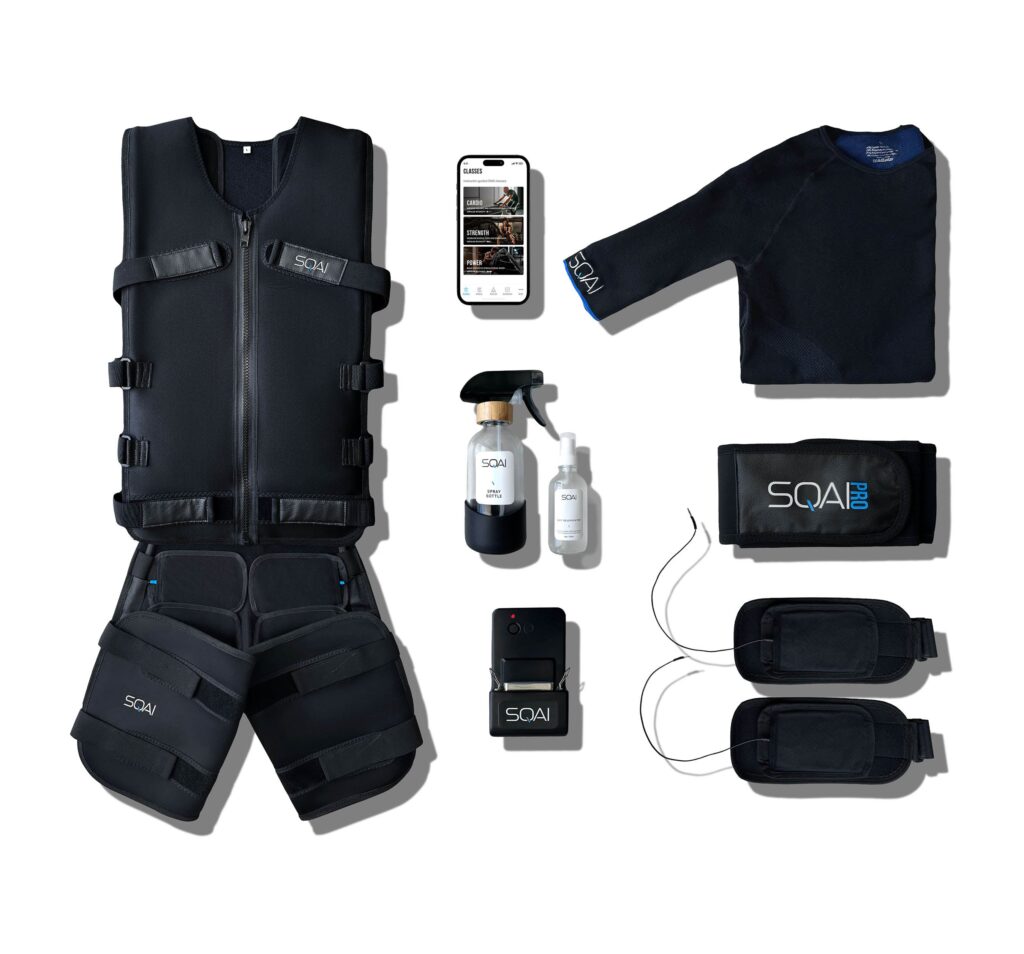
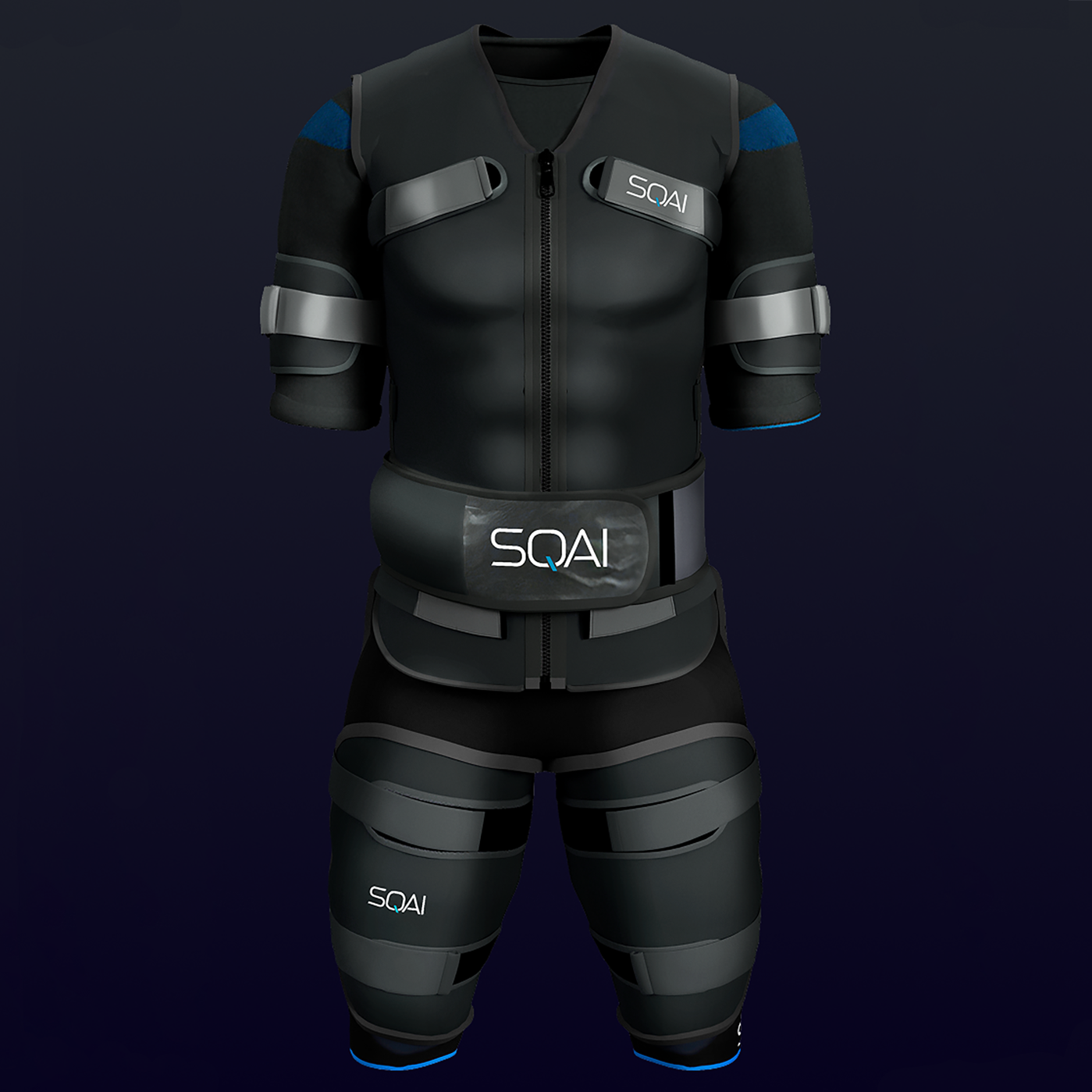
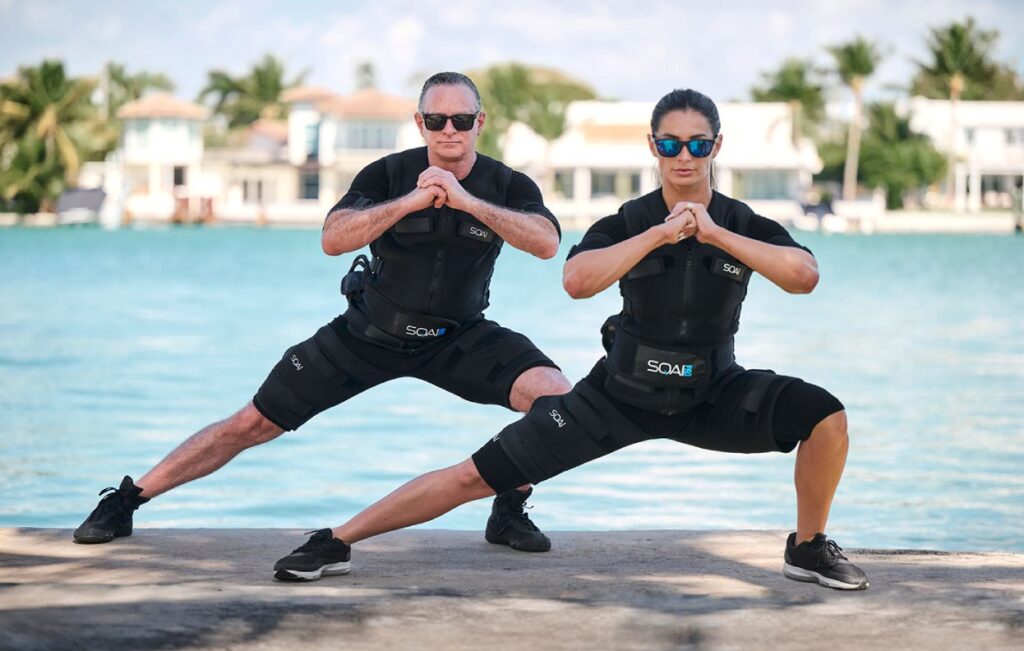
The SQAI Power Suit is a wireless WB-EMS system designed for at-home workouts. It contains 18 electrodes positioned around major muscle groups, including the chest, upper and lower back, abdominals/core, glutes, quadriceps, hamstrings, and arms.
Through the app, you can control the overall stimulation level while also adjusting individual areas. So, if your glutes can comfortably handle more stimulation than your arms, you can increase one without forcing the other to match.
Instead of connecting to a stationary EMS machine, SQAI uses a compact Bluetooth Power Box that attaches to the suit. SQAI estimates approximately six workouts per charge. Just remember to turn the Power Box off when you’re finished because it doesn’t automatically shut itself down after training.
The preparation is where we’d pay closer attention. SQAI is a wet EMS system, so you’ll need to wear one of the supplied conductive base layers underneath the suit. The electrodes also need to be thoroughly moistened before exercising. SQAI recommends around 10 sprays per electrode and approximately half of the supplied water bottle across the entire suit.
Don’t skimp on the water just to get started faster. If the electrodes aren’t wet enough, the stimulation can become uncomfortable. It’s an extra preparation step you’ll have to account for every time you train, so we’d think about whether that bothers you now rather than after spending nearly $3,000.
SQAI makes the most sense for someone who likes having guidance rather than figuring out every EMS workout independently.
The app provides instructor-led workouts covering strength, cardio, power, and different movement and difficulty levels. If you don’t want to follow a class, there are also manual programs for strength, endurance, bodybuilding, abs, glutes, and pelvic floor training.
That gives you a nice middle ground. You can follow along when you want someone else structuring the session or switch to a manual program when you already know what you want to work on.
SQAI isn’t limited to workouts either. There are recovery-oriented programs including restorative massage, back massage, and lymphatic/recovery stimulation. That’s one of the more appealing parts of the system if you want your EMS purchase to cover more than strength and conditioning.
There are no subscription fees for the app, classes, or programs.
SQAI recommends allowing approximately 48 hours between EMS training sessions. That’s worth remembering if the large workout library makes you want to use the suit every day. WB-EMS isn’t intended to be an everyday training method, so having more programs doesn’t necessarily mean you should be doing more EMS sessions.
The SQAI Power Suit costs $2,995. That includes the custom-sized WB-EMS suit, Power Box, two conductive base layers, SQAI app, classes, training programs, personal onboarding, and accompanying accessories. There are no subscription fees after purchasing.
We like that SQAI includes the content rather than charging you every month to continue accessing the guided experience, especially considering how much you’re already paying upfront.
There’s also a Partner Suit for $1,995. It’s designed for a second person in the household who can share the Power Box from the original system. That could make more financial sense for couples who both want EMS rather than purchasing two complete $2,995 setups.
The conductive base layers are something to remember when considering long-term ownership costs. Replacement base layers cost approximately $59. They’re not a major expense compared with the system itself, but they are something you’ll potentially need to replace over time.
At $2,995, we’d also take advantage of SQAI’s in-person trial option if there’s a participating studio nearby. Reading about wet EMS and actually preparing, wearing, and training in the suit are two different things. If you have the opportunity to find out whether you like the experience before spending the money, use it.
This is probably the section we’d read most carefully before ordering SQAI.
The advertised 30-day trial sounds reassuring, but the return policy isn’t quite as forgiving as that might initially suggest. Customers have 30 days from delivery to request a return, and SQAI must receive the product within 30 days of that request.
More importantly, returns are subject to a $450 restocking fee, and you’re responsible for return shipping. That’s roughly 15% of the original $2,995 purchase price before you’ve even paid to ship the system back. If you decide SQAI isn’t right for you, you could be out at least $450.
That’s another reason we’d strongly consider trying the suit at a participating studio first if you have the opportunity. With a return this expensive, figuring out whether you like the fit, stimulation, and preparation process before buying could save you a costly change of mind.
SQAI provides a one-year limited warranty on the suit covering manufacturer defects. Normal wear and tear isn’t included.
The Power Box warranty is where we’d want clarification before purchasing. SQAI’s FAQ states that the Power Box has a two-year warranty, while its warranty page states one year.
For a $2,995 electronic fitness system, we don’t think you should have to guess which warranty applies. We’d contact SQAI and get the Power Box coverage confirmed in writing before placing the order. Hopefully you never need it, but if something happens after that first year, you’ll be glad you know exactly where you stand.
SQAI is still a relatively young company, so there isn’t the depth of long-term customer feedback you’d get with a fitness brand that’s been around for many years. What is available, however, is largely positive.
SQAI has received a majority of five-star feedback on Trustpilot, with customer service, onboarding, convenience, and the overall workout experience coming up repeatedly.
Customer service is one of the strongest themes. Owners mention getting quick responses when they have questions and receiving useful help both during setup and after purchasing.
We think that’s particularly valuable for someone buying their first EMS system. There’s a learning curve involved in properly preparing a wet suit, finding appropriate stimulation levels, and getting comfortable with how EMS feels. Having someone available when you’re wondering whether you’re doing something correctly can make those first few sessions considerably less intimidating.
Customers also like being able to complete short EMS workouts at home instead of traveling to a studio. Several describe the workouts as more challenging than expected despite their relatively short duration, with some reporting feeling stronger after incorporating SQAI into their routines.
The fit and quality of the suit also receive positive feedback, along with the variety of training and recovery options. Some owners particularly appreciate being able to move between strength, cardio, and massage programs without needing separate systems.
Reddit feedback is positive as well, although there’s considerably less of it. Owners have mentioned liking the wireless design, instructor-led workouts, different training and massage programs, and responsive customer support.
The limited amount of independent discussion is something we’d keep in mind, though. SQAI only launched in August 2024, so there simply hasn’t been enough time to build years of owner experiences showing how the suit, electrodes, and Power Box hold up after prolonged regular use.
We didn’t uncover a pattern of serious customer complaints, which is encouraging. At this point, the bigger unknown isn’t whether current owners seem happy. Most of the feedback we’ve found suggests they are. It’s how the complete system will hold up several years down the road.
For someone who values guided workouts, personal onboarding, and having training and recovery programs together in one EMS system, SQAI has a lot going for it. We’d just make sure you’re comfortable with the wet preparation process, return costs, and confirmed Power Box warranty before spending the $2,995.
Targets multiple muscle groups simultaneously using electrical impulses to intensify workouts and improve overall muscle engagement.
Allows users to control stimulation strength across different zones for a more personalized and progressive training experience.
Delivers high-intensity muscle activation without putting stress on joints, making it suitable for recovery or reduced-impact workouts.
Marketed as a regulated EMS device, offering added confidence in safety standards and clinical positioning.
Channels:
Available Sizes:
Frequency (Hz):
Charging Time:
Warranty:
Presets:
Join EMS users comparing suits, sharing protocols, and posting honest results. Free to join, no sales pitch.
Protocol sharing
Suit comparisons
Safety-first advice
Learn how conductive textile EMS electrodes work, why moisture and
Fix patchy or sharp EMS stimulation by checking fit, moisture,
Learn how EMS electrode area and placement affect current density,
Learn what affects EMS suit lifespan and how to recognize
Remove EMS suit odor by using the approved wash and