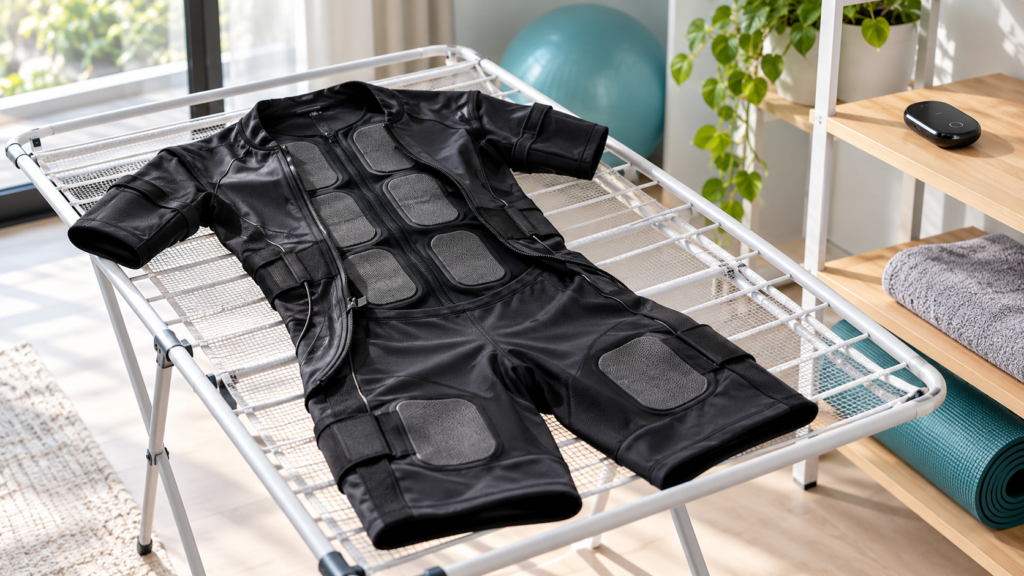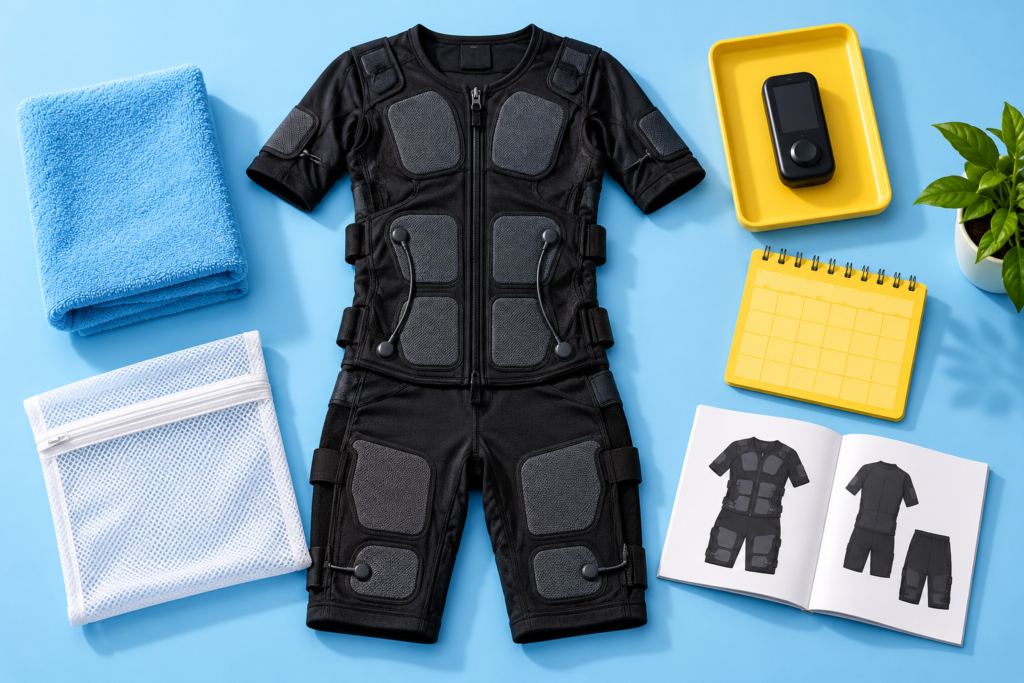
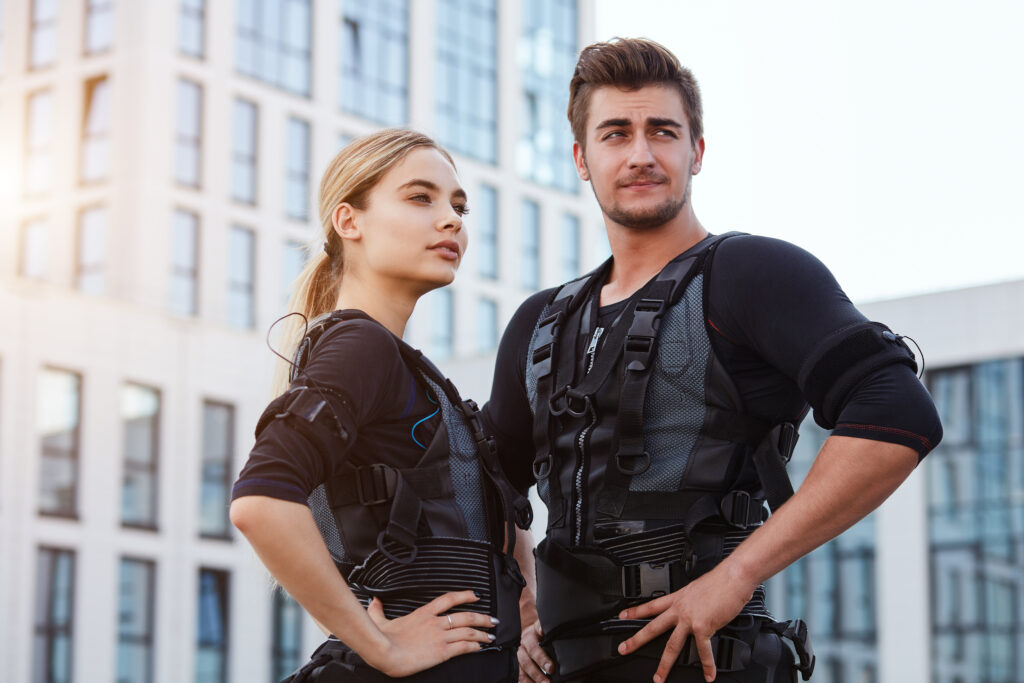
EMS has been used in elite sport and clinical rehab for decades. Here’s what the research on 20 minutes of EMS training actually shows, and what it means for your training.
Let’s be honest: EMS suits seem like a gimmick.
The skepticism is all over Reddit, and honestly? It’s fair. One Redditor called it “a waste of time and money.” Another went further: “Anything that claims to be better than exercise in every way. I’m calling BS. Deeper muscle layers and fibers that can’t be hit by exercise? That’s just not how muscles work. Sounds like a scam sales pitch.”
Understandably, the fitness industry is notorious for workout gimmicks. Remember the Shake Weight? Or the sauna suits? Many people who were truly trying to get into the best shape of their lives fell for those gimmicks, so it’s normal for others to question the legitimacy of EMS suits. So let’s get straight to what the science actually says about what’s happening inside your body during 20 minutes of EMS training, and, hopefully, by the end, you’ll have a better understanding of how it works and, ultimately, decide if it’s meant for you.
The Skeptic Has a Point. And Also Doesn’t.
One thing that Reddit skeptics got right is that EMS is not a replacement for exercise. No credible EMS brand should tell you it is.
But the “deeper muscle layers” thing? That part is actually real, and there’s now PET scan data to prove it. A 2025 study published in the European Journal of Applied Physiology used FDG-PET imaging, the same technology used to detect cancer, to measure glucose metabolism (essentially, muscle activity) during EMS.
The result: Significant metabolic activity was detected in both superficial and deep muscles, including notoriously hard-to-hit muscles like the transversus abdominis, iliopsoas, and gluteus minimus. So no, it’s not magic, but it is something.
What’s Actually Happening to Your Muscles
When you voluntarily contract a muscle, like during a squat, your nervous system recruits motor units in a polite, methodical sequence (small fibers first, larger ones only when necessary).
By delivering electrical current directly to your nerve axon fibers, EMS preferentially recruits large, fast-twitch motor units first, the high-output fibers your body normally saves for heavy lifting or sprinting. It’s like sending a group text instead of a bunch of individual Slack messages.
This is why a 2023 randomized controlled trial found that participants who combined EMS with strength training showed significantly greater contraction-induced muscle thickness in core muscles, including the rectus abdominis, external oblique, internal oblique, and gluteus medius, compared with those who did strength training alone.
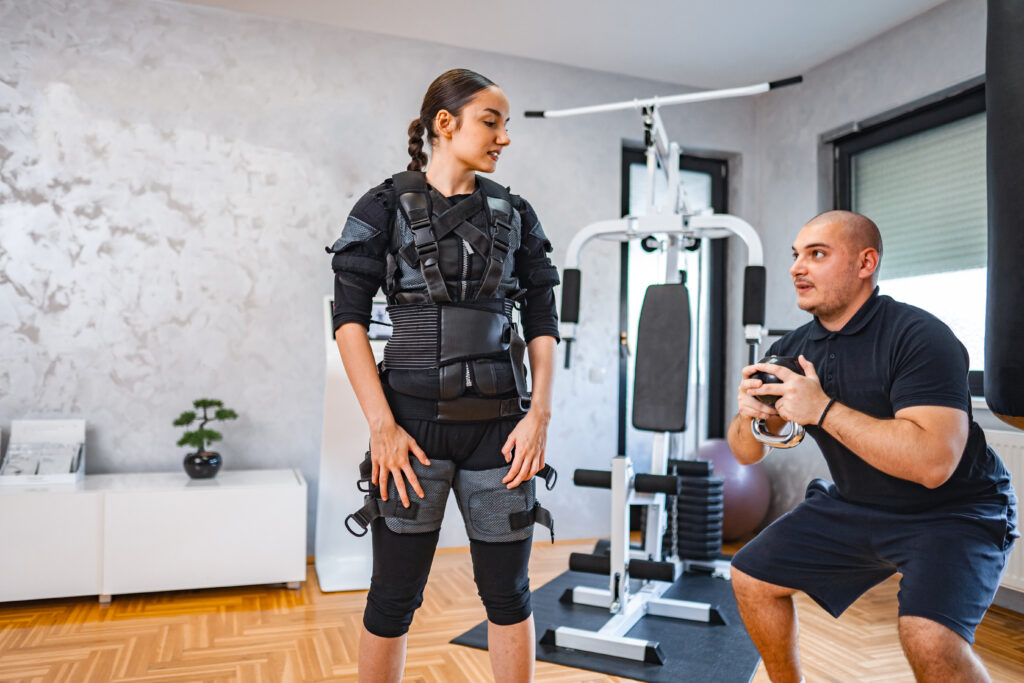
20 Minutes of EMS Training
Minutes 1–5: Your nervous system is confused (in a good way)
The electrical current begins bypassing your brain’s normal recruitment order. Motor units that typically sit on the bench are suddenly in the game. Your muscles are contracting involuntarily. It feels weird. That’s normal and the point.
Minutes 5–15: Glucose is being pulled into muscle tissue
This is where the PET data gets interesting. Glucose metabolism spikes across multiple muscle groups simultaneously, not just the ones you’d consciously target. Metabolic activity spiked across 15 different muscle regions during a single EMS session, including deep trunk stabilizers that most people never effectively train.
Minutes 15–20: Your muscles are doing a full shift. A 2023 study in PeerJ on healthy young adults found that 8 weeks of resistance training combined with daily EMS led to significant increases in muscle mass and upper-body strength, and a meaningful reduction in body fat compared with resistance training alone. No adverse effects on liver or kidney function were detected. Twenty minutes. Not two hours.
So, Why Does the Skepticism Persist?
Because many EMS products overpromise, claims like “98% muscle activation” sound impressive until you ask: 98% of what? Measured how? Compared to what baseline?
The science of EMS is real, and the results are well-documented, but they come from technology that is honest about what it does and is built to deliver. When evaluating any EMS suit, the right questions to ask are about the research behind the activation claims, the wavelengths and frequencies used, and whether the numbers cited trace back to actual studies or a marketing team’s wishful thinking.
A credible EMS suit should be able to tell you exactly how it works and why. If a brand is willing to inflate its activation claims, it is worth asking what else they are inflating.
The Bottom Line
EMS suits will not replace your training. They will make your training hit harder, recruit deeper, and get more done in the time you actually have. The 20 minutes of EMS training that activate muscles a standard gym session misses out on are not a gimmick. For anyone optimizing their performance and recovery, it is just smart science.