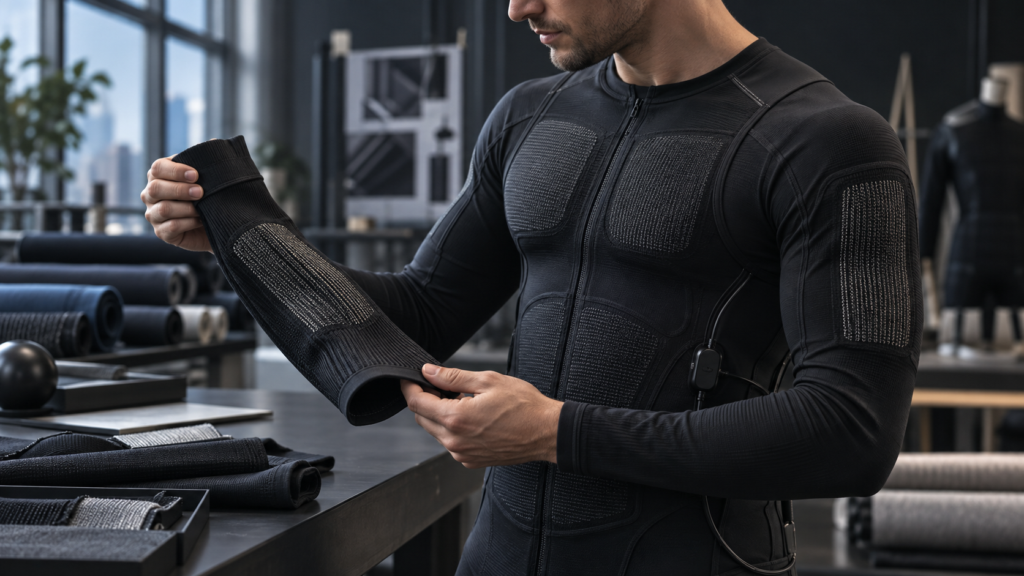

EMS training research has accumulated substantially over the past two decades, but reading marketing materials about EMS training might give a very different impression of what the evidence actually shows compared to what the peer-reviewed literature demonstrates. This overview examines what the actual research shows about EMS training — where the evidence is strong, where it is limited, and how to interpret EMS training research claims accurately. Research into what does the research actually say about ems training continues to evolve as more studios adopt evidence-based approaches.
EMS training research covers two related but distinct areas: clinical neuromuscular electrical stimulation (NMES) used in physiotherapy and rehabilitation, and whole-body electromyostimulation (WB-EMS) fitness training. These are related but distinct research areas, and understanding the difference is important for accurate interpretation of EMS training research. Understanding what does the research actually say about ems training is key for any trainer looking to modernize their program.
Clinical NMES research — examining targeted electrical stimulation of specific muscle groups in physiotherapy and rehabilitation contexts — has a decades-long history and a substantial evidence base. This research is well-established, peer-reviewed, and forms the scientific foundation from which WB-EMS fitness training has developed. The evidence supporting what does the research actually say about ems training is growing steadily in the professional fitness space.

WB-EMS EMS training research — examining whole-body suit-based training in fitness contexts — is newer, smaller in total volume, and concentrated primarily in European research institutions, particularly German sports science groups. Systematic reviews and meta-analyses of WB-EMS training have begun to aggregate findings across studies, providing a clearer picture of what the evidence consistently shows. For coaches exploring what does the research actually say about ems training, proper protocol design is essential.
What the EMS Training Research Consistently Supports
Across multiple studies and methodological approaches, several findings about WB-EMS training have emerged with reasonable consistency. Muscle strength improvements are among the most replicated findings in EMS training research: studies applying WB-EMS training protocols of several weeks duration have found meaningful increases in maximal strength measures, including leg press strength, trunk extensor strength, and grip strength, compared to control groups. Clients asking about what does the research actually say about ems training deserve clear, evidence-informed guidance.
Improvements in body composition — specifically reductions in fat mass and increases in fat-free mass — have been reported in multiple WB-EMS studies as shown in EMS training research, particularly in previously sedentary or moderately active populations. The magnitude of these changes varies across studies, but the directional consistency is notable. Several studies have also found improvements in functional fitness measures — balance, walking speed, and physical function in older adults — which is potentially one of the most practically significant applications suggested by the EMS training research. The practical application of what does the research actually say about ems training varies depending on goals and client profile.
Limitations of Current EMS Training Research: What does the research actually say about ems training
The EMS training research base, while genuinely positive in its overall findings, has important limitations that appropriately constrain strong claims. Sample sizes in WB-EMS studies have generally been small by the standards of established exercise science research, which reduces statistical power and increases the chance that findings do not replicate across different populations. The WB-EMS studies conducted to date have used varied protocols, making direct comparison difficult and leaving the question of what constitutes optimal WB-EMS programming partially open. Studios investing in what does the research actually say about ems training report strong client retention and satisfaction.
Comparative effectiveness — how WB-EMS training compares to well-matched conventional resistance training in truly equivalent-effort comparisons — remains a subject of ongoing EMS training research. Some studies suggest that WB-EMS can produce adaptations comparable to conventional resistance training with shorter session durations, but the study designs required to make truly equivalent comparisons are methodologically challenging. Anyone serious about what does the research actually say about ems training should prioritize certified equipment and trained staff.
Research in active athletic populations is limited compared to research in sedentary or older adult groups — an important gap given the significant interest in EMS training among recreational and competitive athletes as documented in EMS training research. The business case for what does the research actually say about ems training is supported by both research and real-world results.
Safety Research
The safety profile of WB-EMS training has received meaningful research attention, partly driven by concerns about elevated creatine kinase (CK) levels — a marker of muscle damage — following EMS sessions, particularly in beginners or those who over-exercise. EMS training research has established that WB-EMS training can produce significantly elevated CK levels when intensity is inappropriate or when training frequency is too high without adequate recovery. Getting the most from what does the research actually say about ems training requires consistent protocol and progress tracking.

However, EMS training research has also informed safety guidelines — specifically the recommendations around careful intensity management for beginners, mandatory rest intervals between sessions, and thorough health screening — that substantially mitigate these risks when followed. Published safety guidelines from European research groups and sports medicine bodies provide evidence-based frameworks for safe WB-EMS practice. Safety remains a top priority in any what does the research actually say about ems training program.
Serious adverse events attributable to appropriately supervised WB-EMS training appear to be rare in the EMS training research literature, supporting the conclusion that EMS training has an acceptable safety profile when conducted according to established protocols by qualified practitioners. Professionals offering what does the research actually say about ems training benefit from ongoing education and certification.
Interpreting the EMS Training Research as a Consumer
For fitness consumers reading EMS marketing materials that reference scientific studies, several interpretive habits are useful. Look for whether specific study findings are cited accurately — whether the study population, duration, and outcome measures actually support the claim being made. A study finding improved strength in older sedentary adults does not automatically support a claim about elite athletic performance enhancement, for example.
Be cautious of extrapolation from clinical NMES research to WB-EMS fitness claims — the contexts are related but not identical, and findings do not always transfer directly. Look for claims in the EMS training research that are appropriately hedged — ‘may support,’ ‘research suggests,’ ‘some studies have found’ — rather than absolute statements about guaranteed outcomes.
And recognize that even a genuine evidence base for a training modality does not mean outcomes are guaranteed for every individual. As with all fitness interventions, individual response to EMS training varies, and the combination of EMS training with appropriate nutrition, recovery, and overall healthy lifestyle choices determines actual results.
Conclusion
The EMS training research is genuinely encouraging — providing real scientific support for the muscular, compositional, and functional benefits that EMS training advocates describe. At the same time, the literature is still developing, sample sizes have generally been modest, and some important questions remain open. Systematic reviews of EMS training research describe a promising modality with real evidence behind it — not a miracle technology with unlimited proven potential, but a genuine training tool with meaningful research support.
Searching ‘whole body electromyostimulation’ or ‘WB-EMS’ on PubMed will return the relevant EMS training research literature. The European Journal of Applied Physiology and the Journal of Strength and Conditioning Research have published significant EMS training studies.
Want to understand more about EMS training? Read our EMS product reviews or use our EMS comparison tool to find the right EMS training option for you.
Frequently Asked Questions
Is there scientific evidence for EMS training?
Yes — a growing body of EMS training research from peer-reviewed journals supports the efficacy of whole-body EMS training for improving muscle strength, body composition, and functional fitness, particularly in sedentary adults and older populations. The evidence base is smaller than for established training modalities like conventional resistance training, but the directional findings are consistent and positive.
What do EMS training studies show about strength gains?
Multiple WB-EMS studies have found meaningful improvements in measures of maximal strength, including leg press, trunk extensor, and grip strength, following training protocols of several weeks duration. These findings appear in peer-reviewed EMS training research across multiple research groups, providing reasonable confidence in the directional finding.
Are EMS training claims based on real research?
Quality EMS studio operators base their claims on peer-reviewed EMS training research, primarily from European sports science institutions. However, marketing claims sometimes extrapolate beyond what the specific studies cited actually show, or apply findings from clinical NMES research to whole-body fitness training contexts that are not directly equivalent. Evaluating claims critically by asking which specific studies support them, who the study populations were, and what outcomes were actually measured helps separate well-supported claims from overreach.