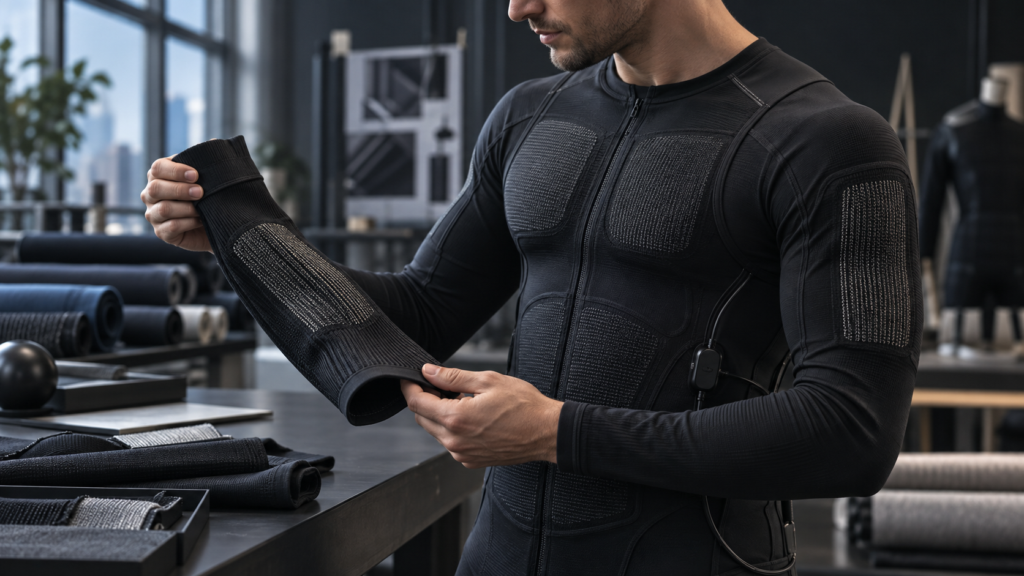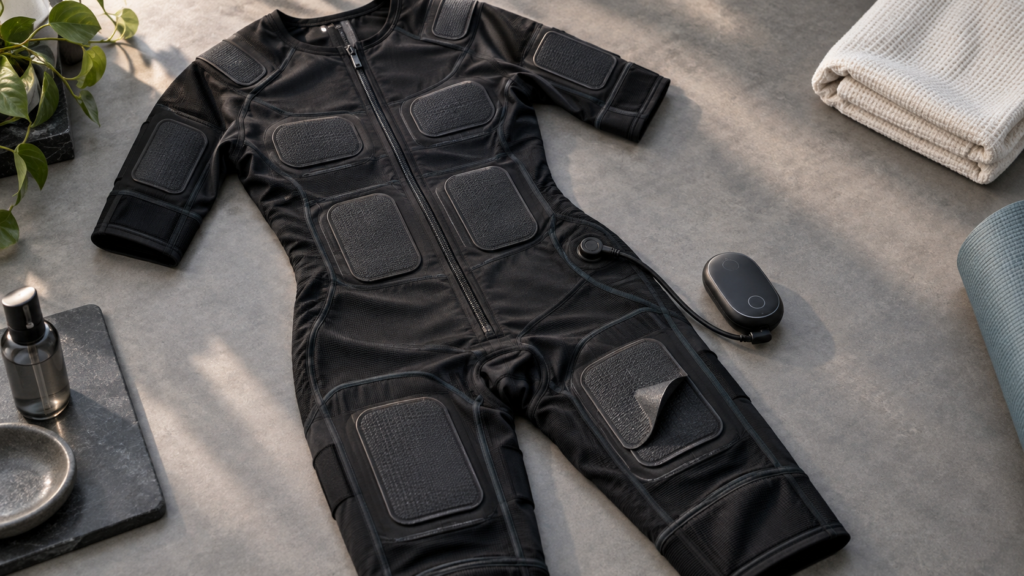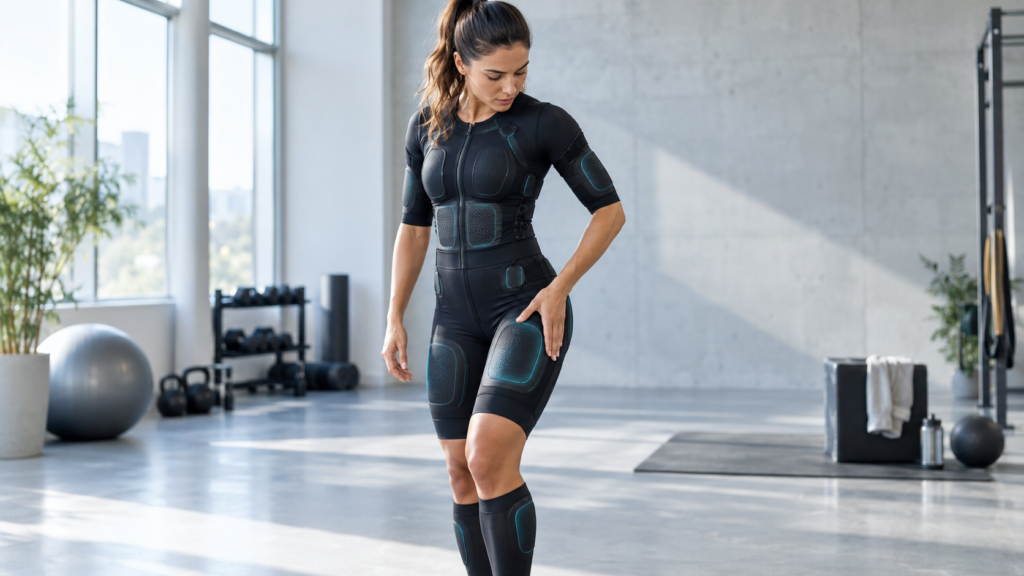
When you are wearing an EMS suit, and the session is in full swing, quite a lot is happening inside your body simultaneously, far more than is visible from the outside. Understanding what happens during an EMS workout helps you appreciate both why EMS training can be effective and why the specific guidelines around intensity, recovery, and health screening exist.
This article walks through the key physiological events that occur when you ask what happens during an EMS workout, covering your muscles, nervous system, cardiovascular system, and metabolic pathways, all in plain language that does not require a physiology degree to follow.
What Happens During an EMS Workout: The Nervous System Gets Two Signals at Once
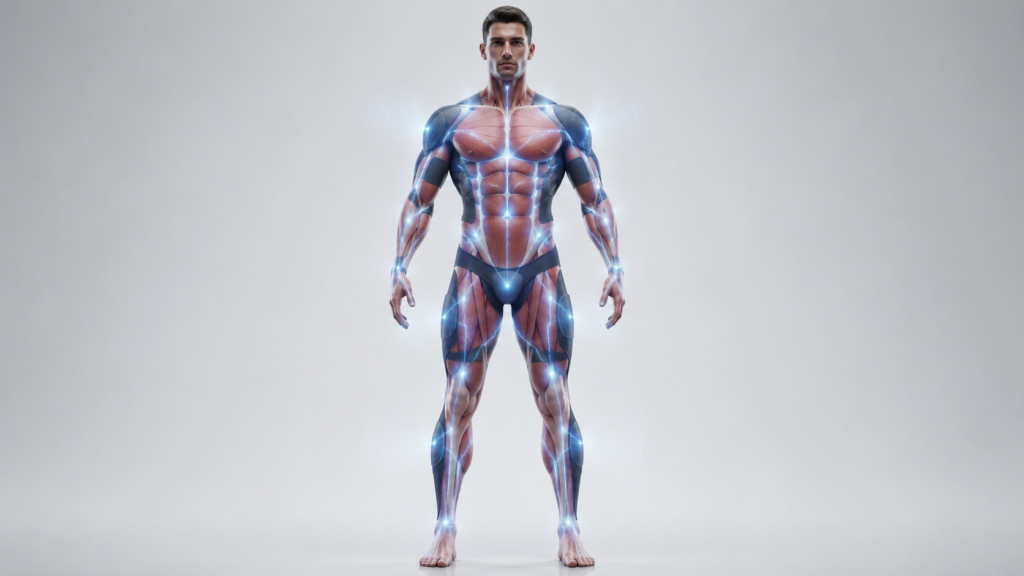
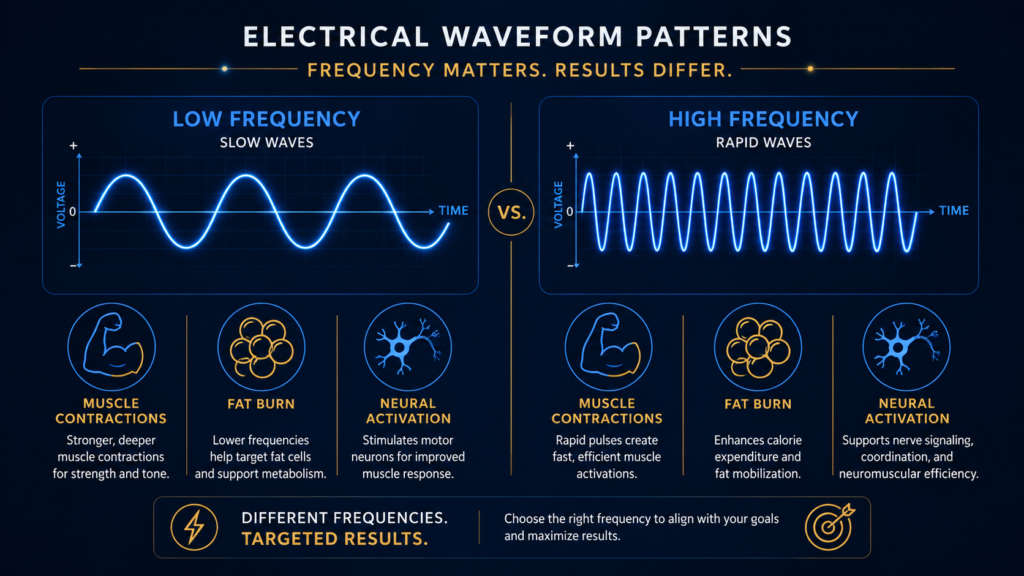
The most fundamental answer to what happens during an EMS workout starts with the nervous system. Your muscles are receiving two sources of activation signal simultaneously: voluntary signals from your motor cortex and motor neurons, and external electrical impulses from the EMS suit.
Your voluntary signals are the normal pathways through which you initiate movement, the neural commands that travel from your brain down the spinal cord and out to the muscles when you squat or hold a plank. The EMS suit’s electrical impulses take a shorter route, traveling through the skin directly to the motor neurons at the muscle site, bypassing the need for your brain to initiate that activation.
The result is that a greater number of motor units are recruited within each muscle than would be the case with voluntary effort alone at the same exercise intensity. Gregory and Bickel (2005) in Physical Therapy document this broader motor unit recruitment as the fundamental mechanism by which EMS amplifies the training stimulus of a session.
What Happens During an EMS Workout: Muscles Contract Harder and More Broadly
At the muscle level, what happens during an EMS workout is a higher-than-usual workload relative to the physical demands of the exercises being performed. During a bodyweight squat with EMS active, the quadriceps, glutes, hamstrings, and core are contracting not only to perform the movement but also in direct response to the electrical stimulation, producing a stronger and more comprehensive contraction than the movement alone would generate.
At the microscopic level, more actin-myosin cross-bridge cycling occurs, meaning more of the fundamental units of muscle contraction are being activated. This results in greater energy expenditure within the muscle, greater metabolic byproduct accumulation, and greater microscopic disruption to the muscle fiber proteins.
This microscopic disruption, which is present in all forms of resistance exercise, is the biological signal that triggers muscle repair and adaptation. The muscle fibers are rebuilt slightly stronger and more resilient during the recovery period following each session. The breadth of this effect is what distinguishes what happens during an EMS workout from a conventional gym session: the suit stimulates the chest, back, core, arms, glutes, and legs all at once rather than the sequentially targeted muscle groups of a typical training session.
What Happens During an EMS Workout: The Cardiovascular System Rises to Meet the Demand
As the muscles contract more intensively and broadly than during typical exercise at the same movement difficulty, the cardiovascular system must respond. Heart rate increases to deliver more oxygenated blood to the active muscles, cardiac output rises, and blood pressure increases transiently. These are all normal physiological responses to exercise.
The cardiovascular demands of what happens during an EMS workout are real, even if the session does not look intensely cardiovascular from the outside. Kemmler et al. (2023) in Frontiers in Physiology note that users who are unaccustomed to exercise or who have elevated cardiovascular risk should have their heart rate and general response monitored during early sessions, and anyone with a known cardiac condition should have medical clearance before beginning EMS training.
Blood flow to the muscles is also enhanced during the active stimulation phases, which supports both nutrient delivery and metabolic waste clearance. Some EMS trainers use low-intensity recovery-focused sessions specifically to harness this increased peripheral blood flow for post-exercise recovery support.
What Happens During an EMS Workout: Energy Systems Work Harder Than They Look
The energy systems powering an EMS workout are engaged more intensively than in a comparable voluntary workout at the same exercise difficulty. The additional muscular contractions driven by EMS require ATP produced from stored glycogen, fat, and, to a lesser extent, protein.
In a typical 20 to 30-minute EMS session at moderate to high intensity, glycogen depletion in the working muscles is meaningful. This is part of why post-session nutrition, particularly carbohydrates for glycogen replenishment and protein for muscle repair, is directly relevant to EMS training recovery.
The increased metabolic demand also explains why the caloric expenditure of a well-designed EMS workout can be higher than a casual observer might expect. What happens during an EMS workout metabolically is far more demanding than the external appearance of the session suggests.
After the Session: What Happens During and After an EMS Workout Continues
The moment the EMS session ends, the recovery and adaptation phase begins. The body immediately initiates processes aimed at restoring homeostasis, managing metabolic byproduct accumulation, and beginning the cascade of cellular events that lead to muscle repair.
In the hours following a session, microscopic inflammation in the stimulated muscles is normal and expected as part of the repair process. Protein synthesis elevates in this window, particularly when amino acids are available from dietary protein, and the muscles begin adapting to the training stimulus.
This is the phase during which hydration, nutrition, and sleep have their most direct impact on outcomes. The EMS session creates the stimulus. Everything that happens in the 48 to 72 hours after is where adaptation occurs or fails to occur, depending on how well recovery is supported.
Conclusion
What happens during an EMS workout is a genuinely complex and demanding set of simultaneous physiological events: dual neural activation, comprehensive multi-group muscle contraction, cardiovascular adjustment, and elevated energy system engagement, all within a 20 to 30 minute session.
Understanding what happens during an EMS workout builds appreciation for why the EMS-specific guidelines around intensity progression, recovery time, and supportive nutrition exist. It is not excessive caution. It is appropriate to respect what EMS training actually asks of the body.
Ready to find the best EMS suit for you? Check out our brand reviews and product reviews to help inform your decision. You can also play with our product comparison tool to find the option that fits your goals and budget.
Frequently Asked Questions
Does EMS training increase heart rate significantly?
Yes. EMS training produces a meaningful increase in heart rate, particularly at moderate to high intensity. The cardiovascular demand is real, even if the movements look simple from the outside, which is why cardiovascular health screening is an important part of EMS intake.
Why do my muscles feel sore in places I did not feel working during the session?
What happens during an EMS workout includes broad stimulation across multiple muscle groups simultaneously. It is not unusual to feel soreness in muscles that were not the primary focus of the session’s movements, particularly the back, core, and posterior chain.
Is the muscle activation from EMS real or just a surface sensation?
The muscle activation from EMS is real and physiologically meaningful. The electrical impulses penetrate through skin and tissue to stimulate actual motor neurons, causing genuine muscle fiber contractions. The soreness experienced after sessions is direct evidence of this real muscular work.
Can EMS affect internal organs?
EMS fitness suits are designed to stimulate the muscles of the trunk and limbs, not internal organs. However, individuals with certain conditions, including cardiac implants, severe systemic illness, or pregnancy, should not use EMS, partly because the electrical field produced by the suit is not entirely confined to superficial structures.
Why does the 20-minute session feel harder than a regular gym workout of the same length?
Because it is harder. What happens during an EMS workout involves simultaneous activation of all major muscle groups with an intensity that voluntary effort at the same movement difficulty does not match. The cumulative physiological load is substantially greater than a 20-minute voluntary workout of similar movement complexity.