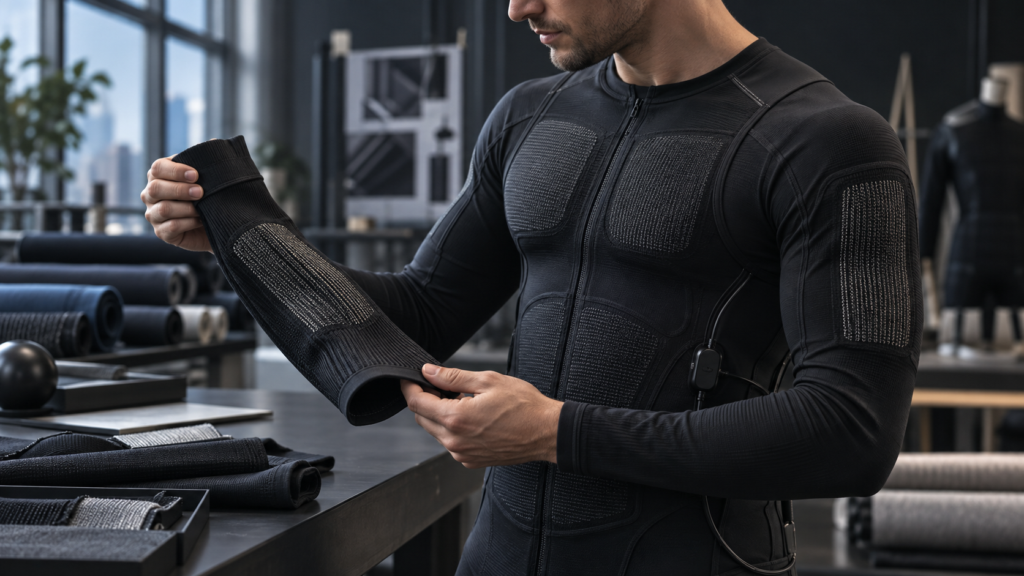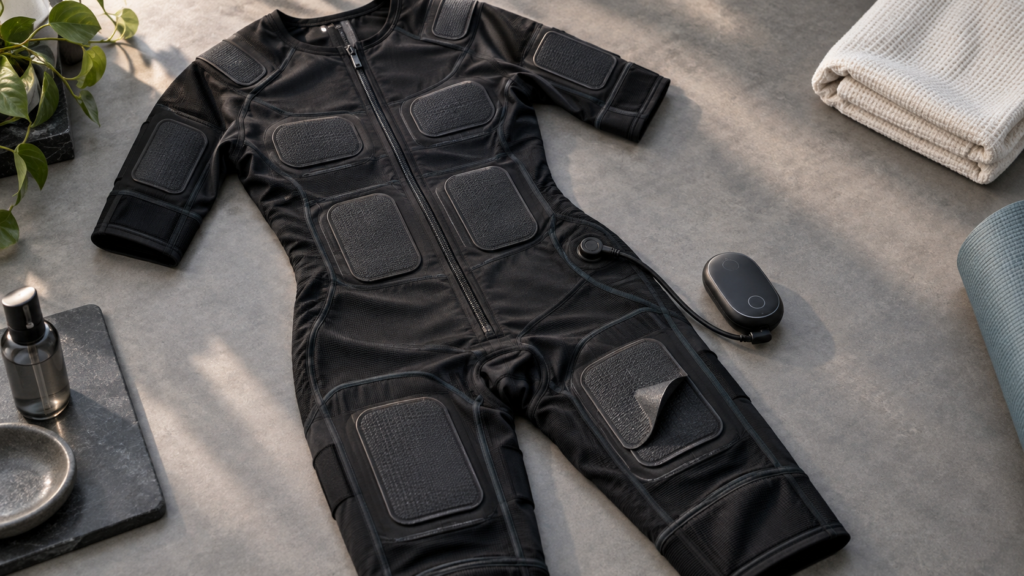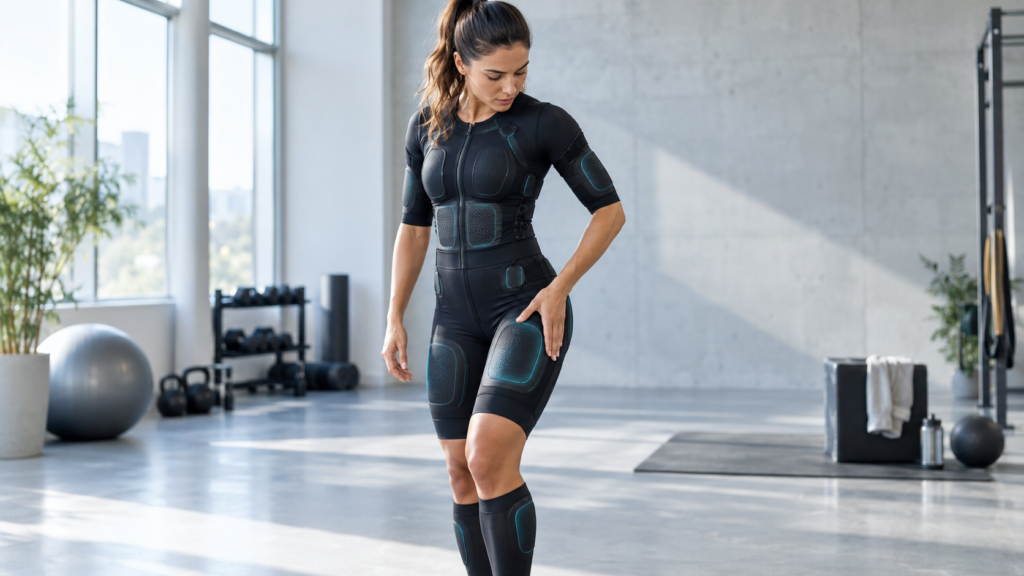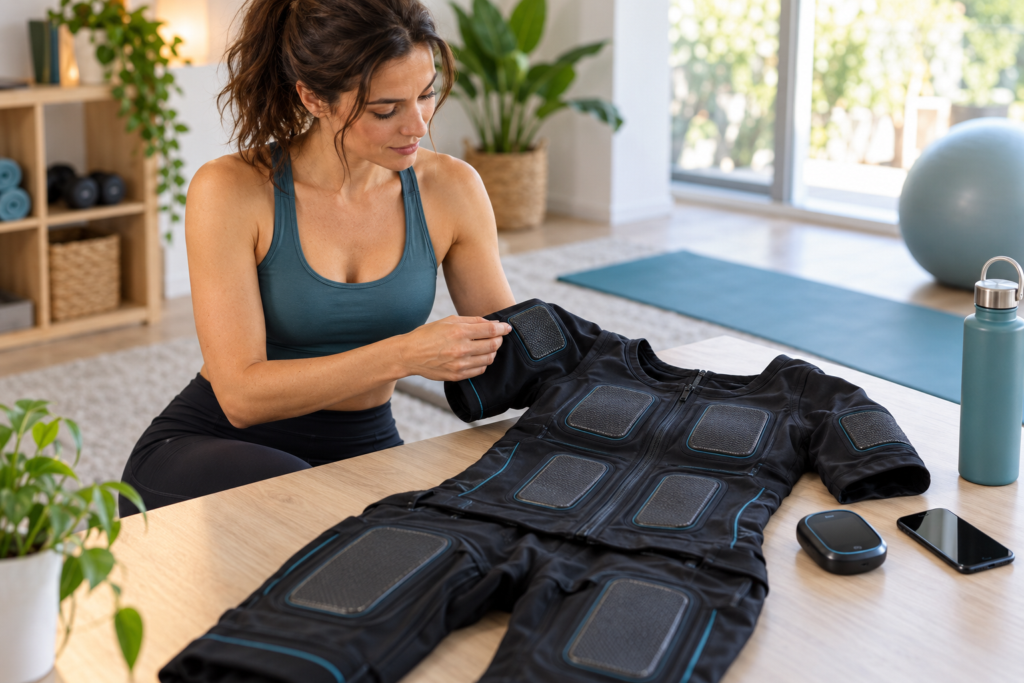

If you have looked at whole-body EMS training, you have seen two kinds of suits. Some are plugged into a machine with a bunch of cables. A wireless EMS suit skips the cords and moves with you. Both send the same little pulses through pads on your big muscles. The real difference is what your workout feels like once the power is on.
Here is the simple case for going wireless, what the research backs up, and how to stay safe.
A wireless EMS suit lets you move
The biggest problem with wired suits is the cables. They decide what your body can do. You have to stay close to the machine. You plan every move around the cords. Squats and holds are fine. But the second you want to jog, throw a few punches, do yoga, or move fast, the cords get in the way.
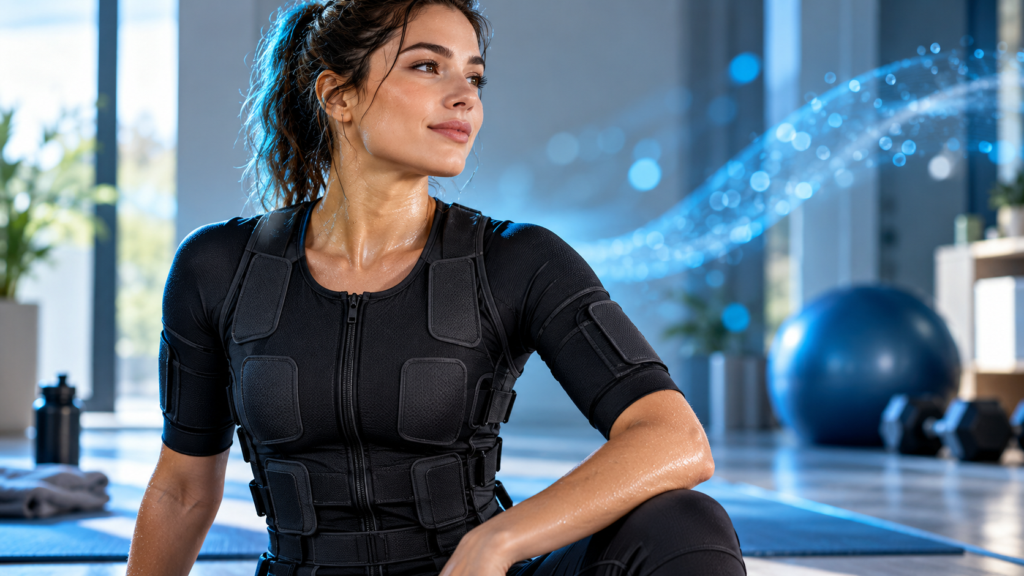
A wireless EMS suit cuts the cord. The control box sits on the suit, runs on a battery, and talks to your phone or your trainer’s tablet over Bluetooth. You are not stuck by a wall plug or in one spot. You can train in your living room, in a hotel on a trip, or outside at the park. The suit goes where you go.
That freedom is not just a nice extra. It changes what workouts you can even do. Things that were a pain in a wired suit, like running or fast full-body moves, work fine once the cables are gone.
What the research says about EMS
Before we get to the wireless part, it helps to know that whole-body EMS (WB-EMS) has real research behind it, not just hype.
A big review in the journal Frontiers in Physiology found that WB-EMS helps build muscle, cut body fat, and ease low back pain in everyday adults. Another study compared WB-EMS to hard weight training. The two gave about the same results for muscle and strength. The catch in EMS’s favor: it got there in a lot less gym time.
That time savings is the whole point. The suit works many big muscles at once, even deep ones that are hard to switch on by yourself. If you are short on time, easy on the joints, or just not into long gym sessions, that is a real reason to look at it.
Wireless does not change any of that muscle science. The pulses are the same. What it changes is how easy the suit is to actually use. A wireless EMS suit you can use anywhere is one you will stick with, and sticking with it is what gets results.
The everyday wins of a wireless EMS suit
- Train anywhere. Home, travel, outside. No machine, no wall plug, no studio booking.
- Move freely. Cardio, stretching, boxing drills, and full-body moves all work instead of fighting a cord.
- Quick setup. Dry-pad wireless suits skip the water, gels, and wiring. You suit up, warm up, and go.
- Easy to pack. A light suit and a small box fit in a bag. Wired systems with a base unit do not.
- Your schedule. You train when you want, not when the studio is open.
The part you should not skip
Wireless does not mean risk-free. Any brand that says otherwise is selling, not helping.
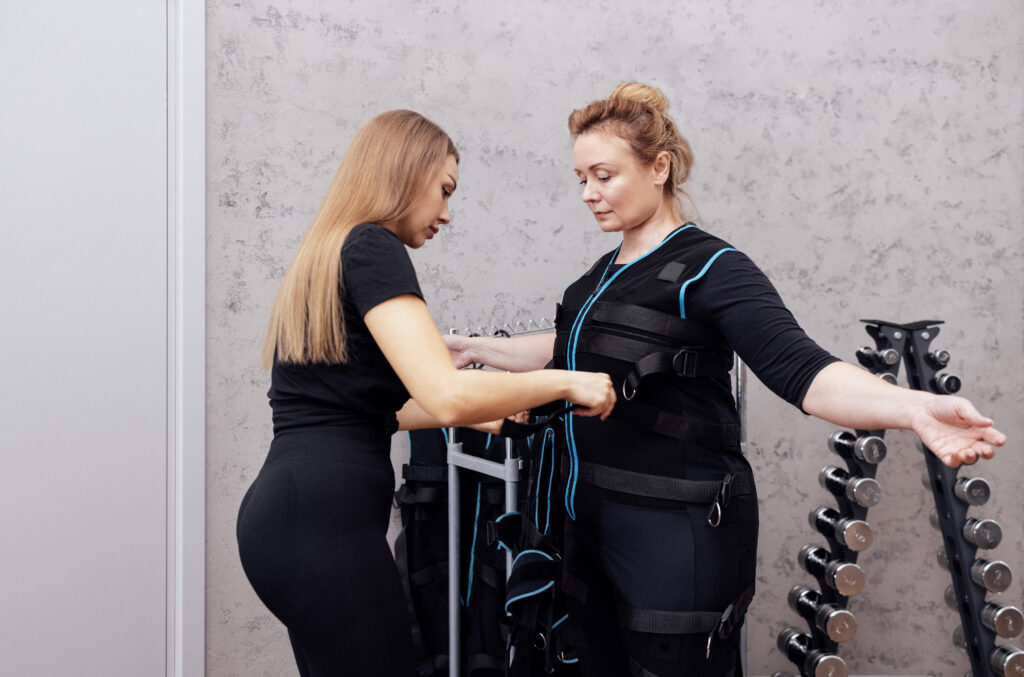
WB-EMS is strong. Because it fires all your big muscles at once, going too hard too soon is the real danger. A few people have ended up with a serious muscle injury called rhabdomyolysis (your muscle breaks down and leaks into your blood). In almost every case, it came from pushing way too hard in the very first sessions. The safety guidelines from Kemmler and his team are clear about it: do not train until you drop in the early weeks. Ease in. Give yourself about ten weeks of steady, lighter use before you go hard.
A few simple rules:
- Start light and build up slowly. A little sore is fine. “I can barely move today” is a red flag.
- Drink plenty of water. Skip a session if you are already wiped out or dehydrated.
- Keep early sessions short and spaced out.
- Check who should not use it. EMS is not for people with a pacemaker, some heart problems, or during pregnancy, plus a few other conditions. If you are not sure, ask your doctor first.
The freedom of a wireless EMS suit makes this matter more, not less. You are often training with no one watching, so the patience to start slow has to come from you.
So, is wireless right for you?
It comes down to how you want to train. Wired suits are sturdy and still common in studios, where a trainer runs the session and you stay near the machine. If you like that guided, in-person setup, wired works fine.
But if you want to train on your own time, in your own space, and actually move while you do it, a wireless EMS suit is the easier pick. You get the same muscle benefits the research points to, plus the freedom to use it at home, outside, or on the road.
A quick gut check before you buy:
- How will you use it? Mostly at home or traveling points to wireless. Studio-only sessions can go either way.
- What workouts do you want? If running, stretching, or fast moves matter to you, skip the cords.
- Will you start slow? Either way, ease in. The suit is only as safe as the way you use it.
Pick the setup that fits your life, start light, and let the results build from there.
This article is for general info and is not medical advice. Talk to a doctor before starting WB-EMS, especially if you have any health condition.