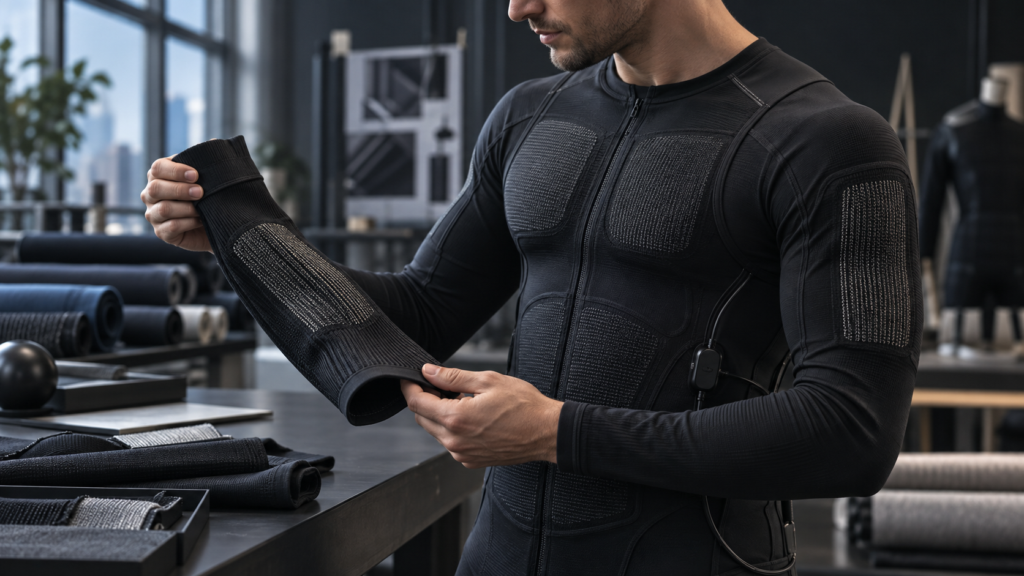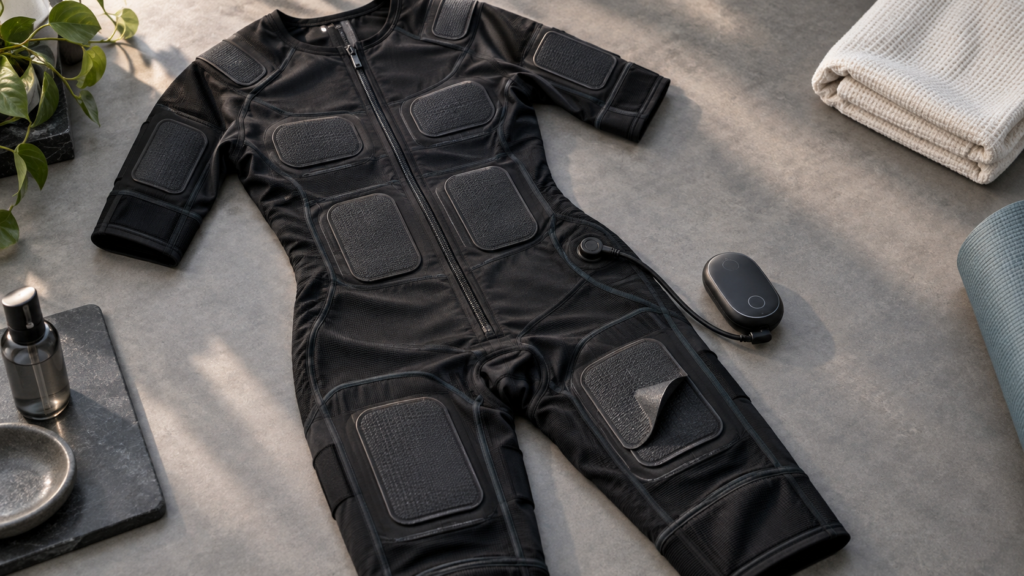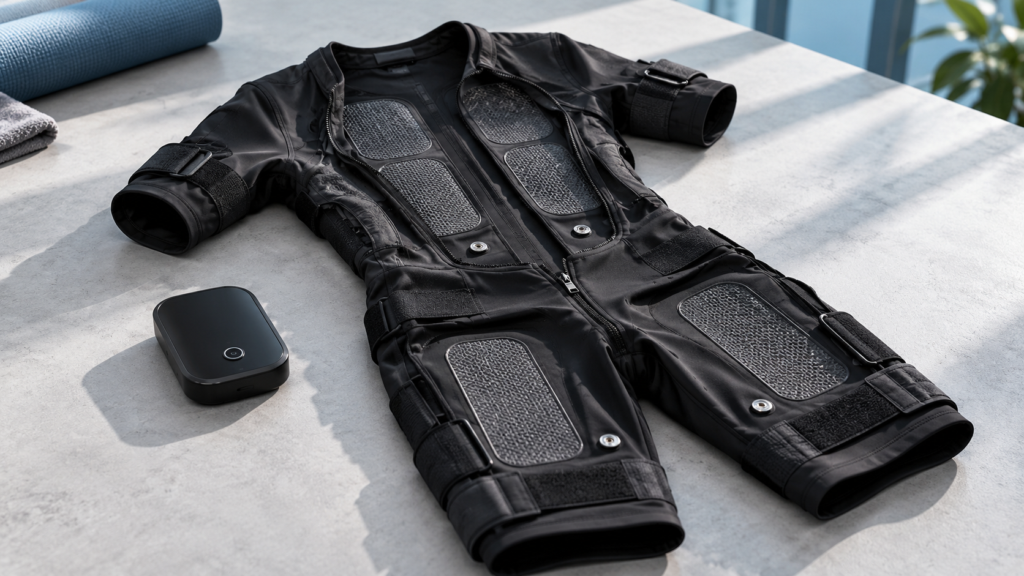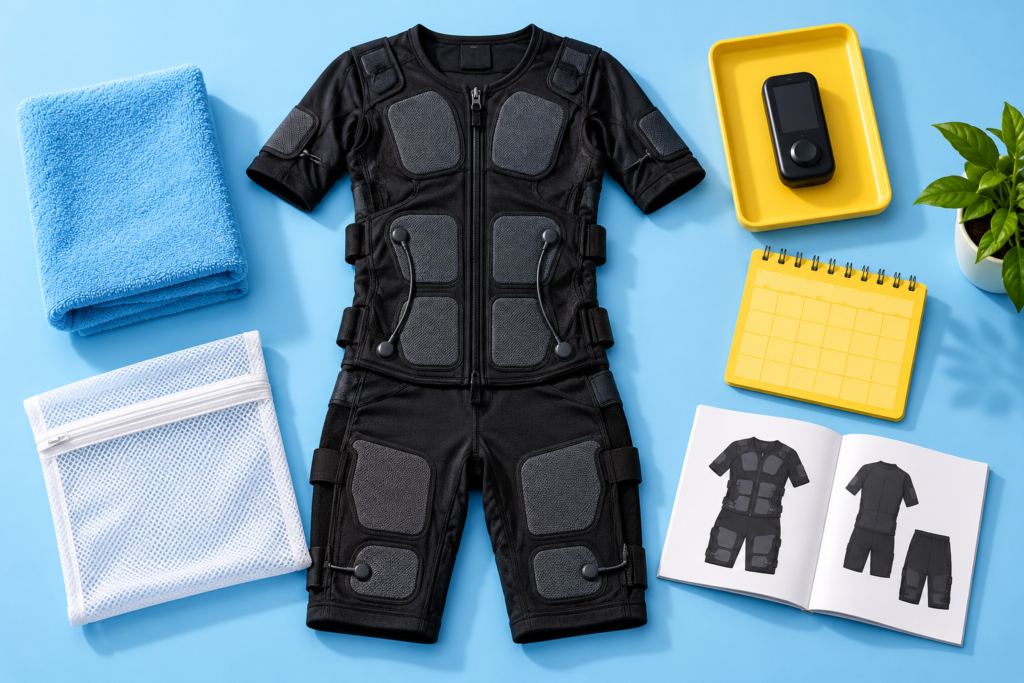

Wireless EMS suits represent a significant equipment investment — and the longevity, performance, and hygiene of that investment depend heavily on how well the equipment is maintained between and after sessions. Proper wireless EMS suit maintenance protects clients from hygiene risks, maintains stimulation quality and electrode contact, extends the functional life of the electronics, and protects the investment that professional wireless EMS equipment represents. Research into wireless ems suit maintenance and care continues to evolve as more studios adopt evidence-based approaches.
Wireless EMS hygiene differs from wired in the additional care required for the electronic components — the wireless unit, charging contacts, and any integrated electronics that must be protected from moisture, physical damage, and chemical cleaning agents that could compromise electronic integrity. The maintaining wireless EMS equipment routine must balance the hygiene requirements of a garment worn in close contact with sweating bodies against the moisture sensitivity of the electronics it incorporates. Understanding wireless ems suit maintenance and care is key for any trainer looking to modernize their program.
This guide covers the complete wireless EMS suit maintenance protocol — immediate post-session handling, garment washing procedures, electronic component care, battery maintenance, routine inspection, and preventive maintenance schedules — to help studio operators and trainers maintain their wireless EMS equipment in optimal condition throughout its service life. The international position statement on WB-EMS training specifically addresses equipment hygiene as a core safety requirement. The evidence supporting wireless ems suit maintenance and care is growing steadily in the professional fitness space.

Post-Session Cleaning Protocols
Immediate post-session handling is the most important step in wireless EMS suit maintenance. After each session, the wireless electronics module should be detached from the suit (if the design allows) before any cleaning, and stored safely while the garment is processed. This separation protects the electronics from moisture exposure during the cleaning process and allows each component to be cleaned according to its specific requirements. Understanding how to care for wireless EMS suit components separately is essential. For coaches exploring wireless ems suit maintenance and care, proper protocol design is essential.
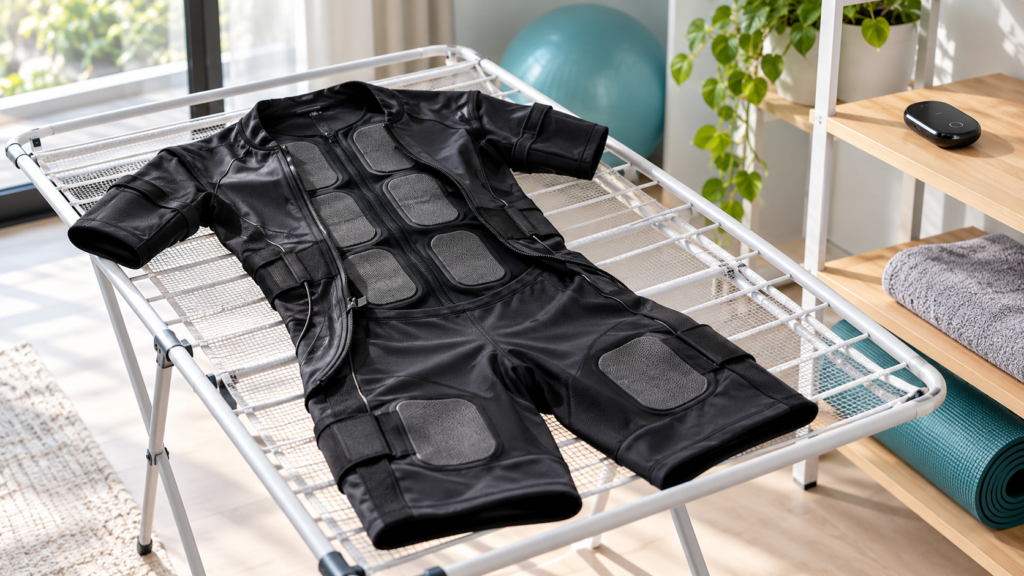
Suit garments should be aired out immediately after each session — hung to ventilate rather than folded or stored still damp from sweat. For EMS suit cleaning wireless protocols, most professional wireless EMS suit manufacturers specify hand washing or gentle machine washing in cold water with mild detergent, no fabric softener, and air drying only (no tumble drying, which can damage both the fabric and any integrated electrode materials). Follow manufacturer-specific washing instructions precisely, as deviation can void warranties and damage suit materials. Research on WB-EMS training outcomes emphasizes that equipment quality directly impacts training effectiveness, making proper care essential. Clients asking about wireless ems suit maintenance and care deserve clear, evidence-informed guidance.
Between-client hygiene for studio operations requires attention beyond full washing — which cannot be completed between back-to-back sessions. Base layers worn under the EMS suit provide a hygiene barrier that should be washed after every client. The EMS suit itself should be wiped down with appropriate antibacterial or antimicrobial solutions that are safe for the suit materials, followed by thorough ventilation before the next session. Proper wireless EMS hygiene between clients is a non-negotiable professional standard. The FDA guidance on electronic muscle stimulators highlights hygiene requirements for professional EMS equipment use. The practical application of wireless ems suit maintenance and care varies depending on goals and client profile.
Battery and Electronics Care: Wireless ems suit maintenance and care
Battery care is a specific wireless EMS suit maintenance requirement with no equivalent in wired systems. Lithium-ion and lithium-polymer batteries used in professional wireless units have specific care requirements that affect their longevity: avoiding complete discharge (maintaining partial charge during storage), avoiding extreme temperatures (both high heat and cold affect battery chemistry), and using manufacturer-specified charging equipment. Understanding these specifics is central to maintaining wireless EMS equipment properly. Studios investing in wireless ems suit maintenance and care report strong client retention and satisfaction.
Charging contacts on both the wireless unit and charging dock require periodic inspection and cleaning to maintain efficient charging. Contact points can accumulate oxidation, sweat residue, and other contamination that increases electrical resistance and reduces charging efficiency. Gentle cleaning with appropriate contact cleaner (following manufacturer specifications) maintains charging performance. This is an often-overlooked aspect of how to care for wireless EMS suit equipment that significantly impacts battery longevity. Anyone serious about wireless ems suit maintenance and care should prioritize certified equipment and trained staff.

Regular Inspection and Preventive Maintenance
A regular inspection routine for wireless EMS suit maintenance identifies developing issues before they become operational failures or safety concerns. Pre-session inspection should include: visual check of the wireless unit for physical damage, unusual appearance, or charging indicator anomalies; inspection of the suit for tears, electrode degradation, connector damage, or hygiene concerns; and confirmation that all connections seat properly. Systematic inspection is a core part of maintaining wireless EMS equipment professionally. The business case for wireless ems suit maintenance and care is supported by both research and real-world results.
Electrode integrity inspection is particularly important for EMS suit cleaning wireless maintenance. Electrode materials degrade over time through use and washing cycles — performance changes are gradual and may not be immediately obvious but affect stimulation quality and consistency. Maintaining records of suit wash counts and electrode performance observations helps identify when suit replacement is warranted. This systematic approach to wireless EMS hygiene and maintenance documentation demonstrates professional standards to clients and protects the studio’s liability position. Getting the most from wireless ems suit maintenance and care requires consistent protocol and progress tracking.
Conclusion
Proper wireless EMS suit maintenance is not merely a best practice — it is a fundamental requirement of professional EMS operation that protects client safety, maintains equipment performance, and preserves the significant investment that professional wireless EMS equipment represents. The additional care requirements of maintaining wireless EMS equipment with integrated electronics are manageable with established protocols but require consistent attention and appropriate procedure. Safety remains a top priority in any wireless ems suit maintenance and care program.
Studios that invest in developing comprehensive wireless EMS suit maintenance protocols — covering post-session handling, regular washing, electronic component care, battery management, inspection routines, and preventive servicing schedules — protect their equipment investment, maintain professional hygiene standards, and reduce the risk of equipment failures that disrupt studio operations. EMS suit cleaning wireless best practices and wireless EMS hygiene protocols should be documented and trained into all staff who handle equipment. Professionals offering wireless ems suit maintenance and care benefit from ongoing education and certification.
Frequently Asked Questions
How do you clean a wireless EMS suit?
Detach the electronic components first, then follow manufacturer-specified garment washing guidelines — typically hand washing or gentle machine washing in cold water with mild detergent, no fabric softener, and air drying only. Between sessions in studio use, antibacterial wiping with appropriate solutions followed by ventilation is the standard EMS suit cleaning wireless protocol. Always follow manufacturer-specific wireless EMS suit maintenance instructions precisely.
How should I care for the wireless EMS battery?
Avoid complete discharge during storage (maintain partial charge), use manufacturer-specified charging equipment only, avoid extreme temperature exposure (don’t leave units in hot cars), and inspect charging contacts periodically for contamination. Proper battery care is a critical component of maintaining wireless EMS equipment longevity and is central to wireless EMS suit maintenance best practices.
How often should wireless EMS suits be washed?
In professional studio use, EMS suits should be fully washed after every client visit or every 1-2 sessions at maximum. Between sessions with the same client, thorough antibacterial wiping and ventilation with base layer use is the standard wireless EMS hygiene protocol. More frequent washing than manufacturer guidelines may accelerate suit degradation, so balance hygiene requirements against suit longevity when establishing your wireless EMS suit maintenance schedule.
What should I inspect on wireless EMS equipment before each session?
Before each session, inspect: wireless unit for physical damage or unusual indicators, battery charge level, suit for tears or electrode damage, connector integrity between suit and unit, and overall wireless EMS hygiene condition. This wireless EMS suit maintenance inspection routine takes only a few minutes but prevents operational failures and safety issues during sessions.
When should wireless EMS equipment be professionally serviced?
Follow manufacturer recommendations for scheduled service intervals. Additionally, arrange professional service whenever you observe: abnormal stimulation patterns or client responses, unusual battery behavior or charging anomalies, physical damage to electronic components, or any indicator suggesting electronic malfunction. Professional servicing is a component of comprehensive maintaining wireless EMS equipment and should be part of your overall wireless EMS suit maintenance plan.