What Is an EMS Suit? A Beginner’s Best and Complete 2026 Guide
What is an EMS suit, and does it actually work? This guide explains how EMS training uses electrical muscle stimulation to activate muscles, the potential benefits, safety considerations, costs, and what to expect during your first EMS workout.
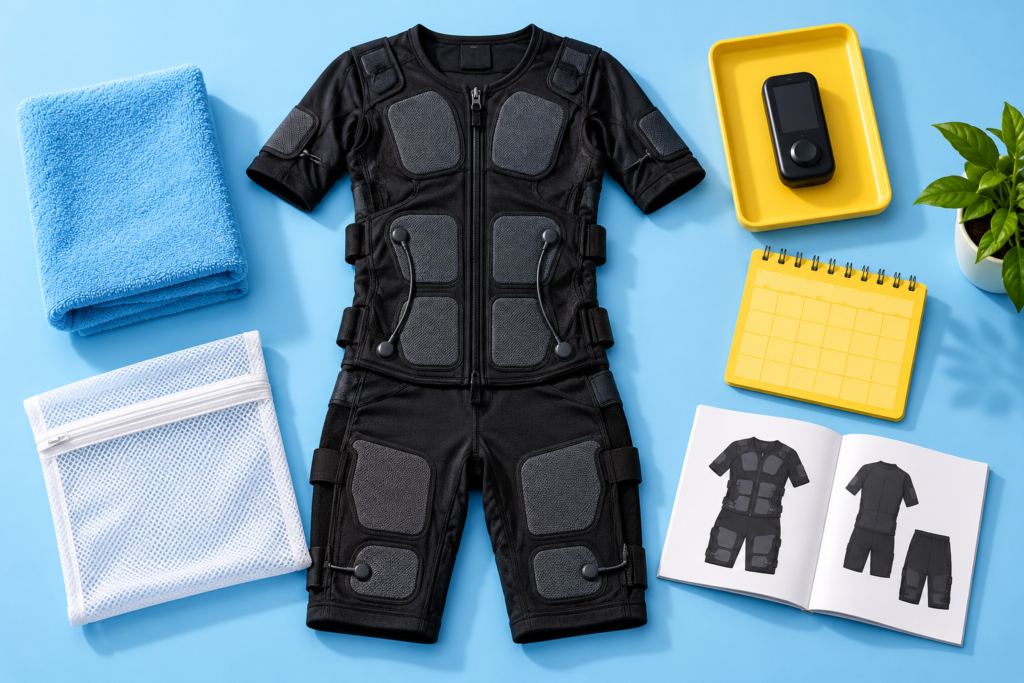
So, what is an EMS suit? An EMS suit is a wearable training outfit with built-in electrodes that provide controlled electrical signals to your muscles during a workout.
EMS technology started in clinical rehabilitation and has moved into fitness over the past two decades, driven by boutique studios and increasingly accessible home systems.
If you’re wondering, “What is an EMS suit?” how EMS training works, and whether electrical muscle stimulation is effective, this guide covers everything you need to know, including EMS suit benefits, safety considerations, costs, and what to expect during your first session.
What is an EMS Suit and How EMS Training Works Using Electrical Muscle Stimulation
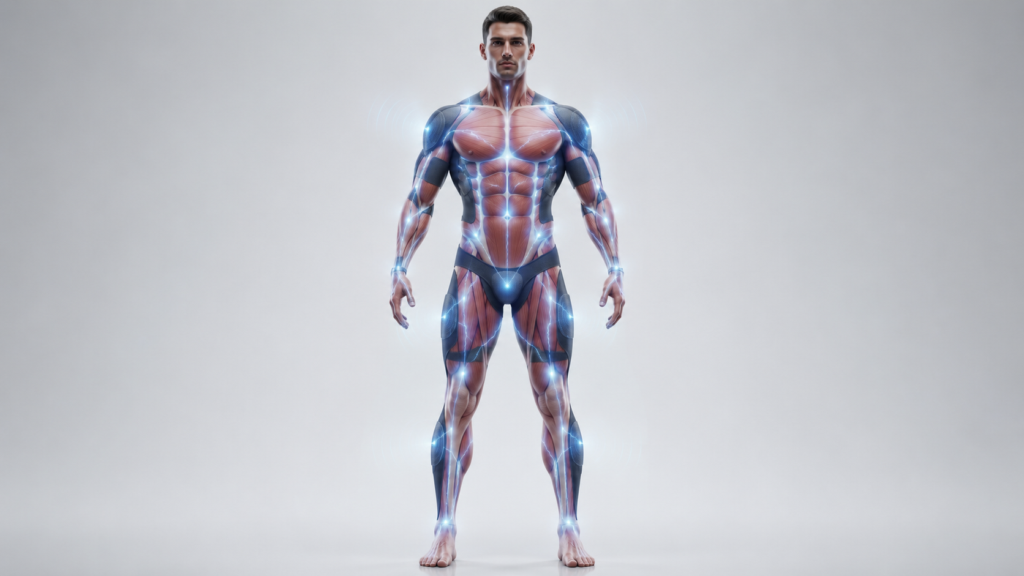
EMS stands for Electrical Muscle Stimulation. During a session, low-level electrical signals travel from a control unit through the suit and into the muscle tissue beneath. These signals make the muscles contract, helping to improve your natural movements.
The main thing to understand is that electrical stimulation can activate more muscle fibers than regular exercise alone, including deeper muscle fibers that are harder to reach through normal movement. Because of this, EMS can make your muscles work harder and feel tired more quickly, even when the exercises are low-impact.
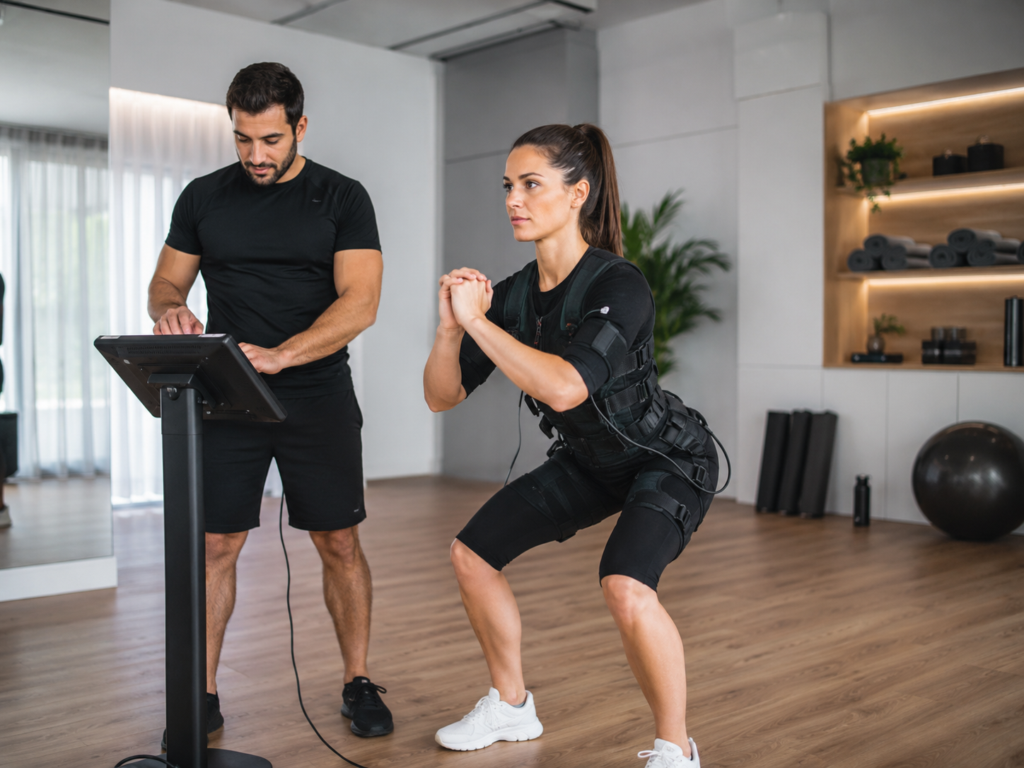
EMS does not do the work for you. It helps you get more out of your effort. You still perform movements such as squats, lunges, rows, and holds while the suit sends electrical signals that further activate your muscles.
What an EMS Suit Looks Like
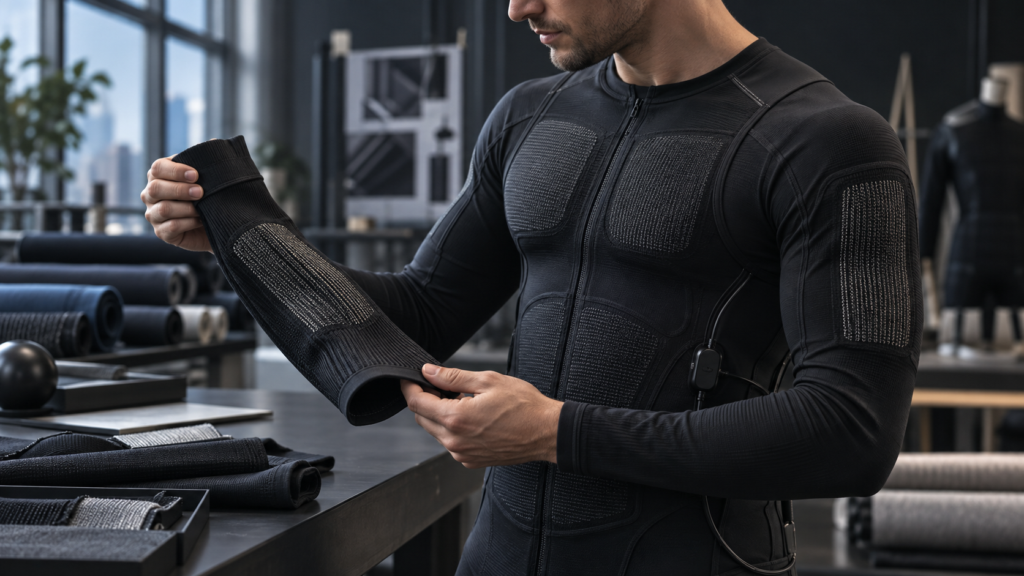
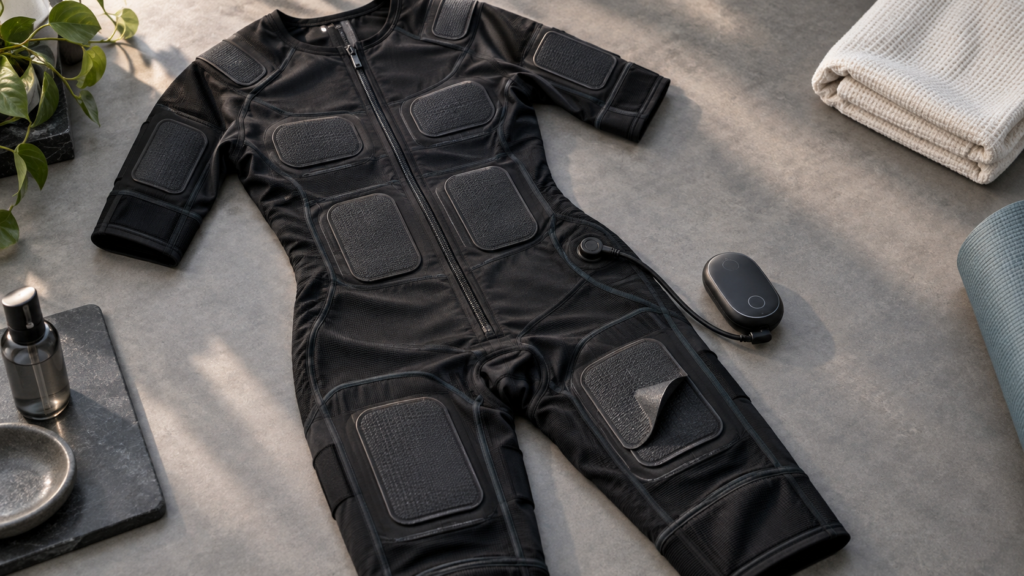
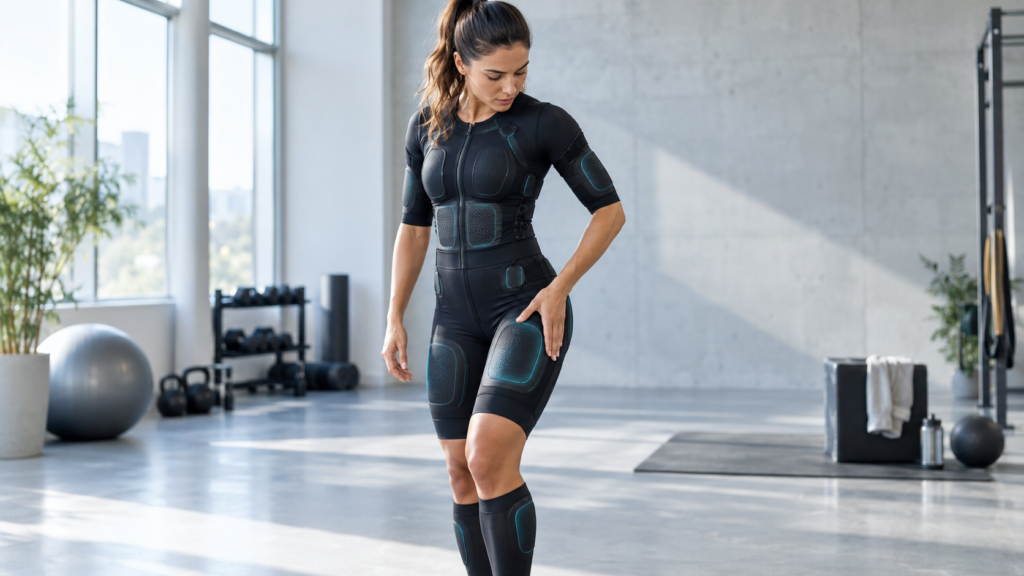
Most EMS suits share the same basic design:
A fitted vest or upper-body jacket with electrode pads at the chest, back, shoulders, and arms
Shorts or leggings with electrodes at the glutes, quads, hamstrings, and calves
Optional arm wraps or sleeves for additional coverage
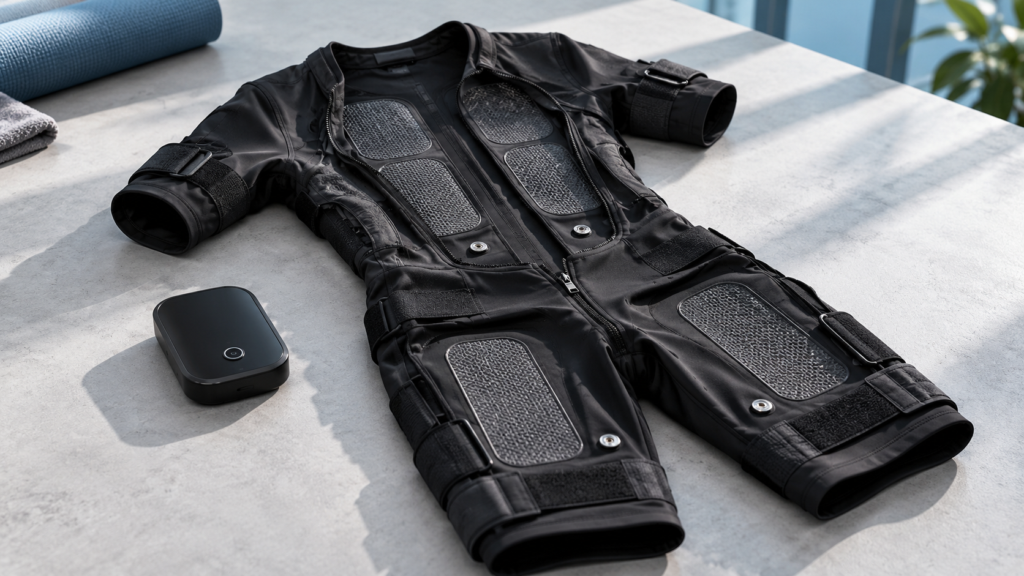
The suit connects to a control unit, either with cables or wirelessly. The control unit allows the trainer to adjust the intensity and settings for each muscle group separately.
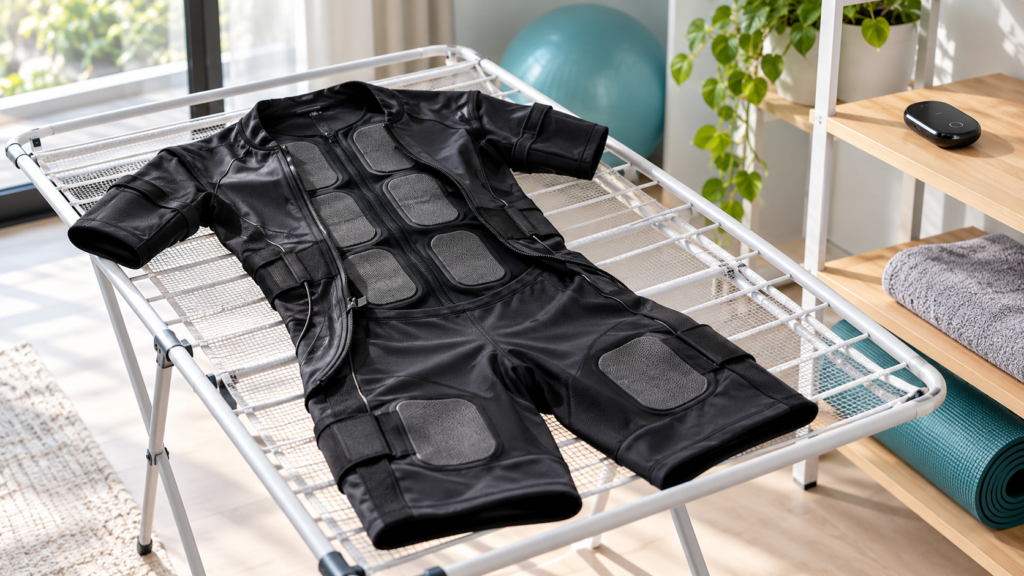
Wet vs. dry electrodes
Some EMS suits require the electrode areas to be dampened with water before use. This helps the electrical signals travel more effectively between the suit and the skin. Other suits use dry electrodes built directly into the fabric. Both types are commonly used, and each has its own advantages in terms of comfort, convenience, cleanliness, and performance.
What to wear under an EMS Suit
Most studios ask clients to wear a fitted, moisture-wicking base layer, such as compression clothing. This helps improve comfort and hygiene during the session.
What is an EMS Suit vs. TENS Unit vs. Medical EMS: What’s the Difference?
These three technologies all use electrical current but serve completely different purposes.
EMS Training Suit
TENS Unit
Medical EMS Device
Purpose
Fitness and muscle conditioning
Pain management
Therapeutic rehabilitation
Muscle Contraction
Yes: full-body, multiple groups
No. Targets nerves, not muscles
Yes, typically 1-2 muscles
Used during exercise
Yes
No
No
Setting
Fitness studio or home
Home or clinical
Clinical/physiotherapy
Supervised
Recommended
Self-directed
Yes, clinician supervised
Important: EMS fitness suits are not medical devices and are not a substitute for physiotherapy or clinical treatment. If you have a health condition, injury, or chronic pain, speak with your doctor or physiotherapist before starting EMS training.
Who Is EMS Training For?
EMS is used by a wide range of people for different reasons:
Busy professionals: Most EMS sessions last just 20 to 30 minutes, making them a convenient option for people who want an effective workout without spending hours at the gym.
Athletes and active individuals: Some athletes use EMS alongside their regular training to help activate specific muscles or support recovery.
Older adults and beginners: Because EMS workouts are generally low impact, they may be a good option for people returning to exercise after a long break or those who prefer a gentler form of training. Always speak with a healthcare professional before starting a new exercise program.
People recovering from injuries: With medical approval and professional guidance, EMS can sometimes be used as part of a recovery program. It should always be supervised by a qualified professional.
Home users: More EMS systems are now available for home use, often with wireless technology and app-based controls. While it is possible to train on your own, professional instruction is recommended before getting started.
New to EMS? Check out our EMS Training for Beginners guide to learn what to expect and how to get started safely.
Key Benefits of EMS Training
Research and real-world experience suggest that EMS training may offer several benefits when used regularly and correctly.
Time-efficient workouts: During an EMS session, multiple major muscle groups are activated at the same time. This allows you to get a full-body workout in as little as 20 minutes.
Greater muscle activation: EMS can help activate muscle fibers that may be harder to engage through regular exercise alone, including deeper muscles that support stability and movement.
Low impact on the joints: EMS workouts typically involve light to moderate movements, which means less stress on the joints than many traditional strength-training exercises.
Targeted muscle training: Trainers can adjust the intensity for different muscle groups, making it possible to focus on specific areas that need extra attention.
Post-workout recovery support: Some EMS programs use lower-intensity settings to help increase blood flow and reduce muscle soreness after exercise. Research on this benefit is still limited, but many users report positive results.
Research on EMS continues to grow, and many studies have reported improvements in muscle strength and muscle mass when EMS is used as part of a regular training program.
One of the largest reviews to date was published in Frontiers in Physiology in 2021. Led by researcher Wolfgang Kemmler and colleagues, the study analyzed 16 controlled whole-body EMS trials involving nearly 900 adults who were not competitive athletes. The researchers found that participants experienced meaningful improvements in muscle size and strength after following EMS training programs.
The review also found that EMS did not significantly reduce body fat on its own. This is an important point for anyone considering EMS primarily as a weight-loss tool. While EMS can support fitness and muscle development, it is not a substitute for a healthy diet and overall exercise routine.
Another review published in Exercise and Sport Sciences Reviews, a journal of the American College of Sports Medicine (ACSM), found that electrical muscle stimulation can help improve muscle function in both healthy individuals and certain clinical populations.
As with any training method, results depend on factors such as training frequency, program design, individual fitness level, and consistency over time.
Who Should NOT Use an EMS Suit
This is not optional reading. EMS training has clear contraindications. Do not use an EMS suit if you have any of the following:
You have a pacemaker or an implanted heart device
You have active cancer or are currently receiving cancer treatment
You have epilepsy or a history of seizures
You have metal implants or joint replacements in the areas being stimulated
You are pregnant
You have open wounds, skin infections, or rashes where the electrodes would be placed
You have uncontrolled high blood pressure
You currently have a fever or acute illness
A reputable EMS studio should ask about your medical history and complete a health screening before your first session. If a studio skips this step, consider it a warning sign.
Id like to sign up for premium membership please.
What to Expect During Your First EMS Session
Most EMS sessions follow a similar process:
Health screening: Your trainer will ask about your health history, current medications, and fitness goals. Be honest with your answers, as this information helps ensure the session is safe and tailored to your needs.
Getting fitted: The trainer will help you put on the EMS suit, make sure the electrodes are positioned correctly, and connect the suit to the control unit.
Preparing the suit: If the system uses wet electrodes, the trainer will dampen the electrode areas before the session begins.
Finding the right intensity: The stimulation starts at a very low level and is gradually increased for each muscle group. You’ll be asked for feedback throughout the process to find a comfortable and effective setting.
The workout: You’ll perform simple exercises such as squats, lunges, rows, core holds, and glute bridges while the suit delivers electrical stimulation. Most sessions last between 20 and 30 minutes.
Cool-down and review: After the workout, your trainer will discuss how the session went, make any adjustments for future sessions, and provide guidance on hydration and recovery. The trainer will adjust the program for next time and give post-session guidance on hydration and recovery.
What does EMS feel like?
Most people describe EMS as a strong tingling sensation combined with muscle contractions. As the intensity increases, the contractions become more noticeable, and your muscles may feel like they are working harder than usual. The sensation can feel unusual at first, but it should not be painful when the settings are adjusted correctly. Most people become comfortable with it after a few sessions.
After the session
It’s normal to experience muscle soreness for one to two days after an EMS workout, especially when you’re just getting started. Many EMS trainers recommend waiting 48 to 72 hours between sessions to give your muscles time to recover and adapt.
How Much Does EMS Training Cost?
The cost of EMS training varies depending on where you live and the type of service you choose.
Studio sessions: In the United States, most EMS training sessions cost between $50 and $100 per session. Many studios offer membership plans or package deals that can lower the cost per workout.
Home EMS systems: EMS suits designed for home use typically cost between $300 and $1,500 or more. Prices vary based on features, technology, and brand. Higher-end systems often include wireless connectivity and mobile apps with guided workout programs.
Before investing in a home system, it’s worth comparing features, support, and training resources to find the option that best fits your goals and budget.
Setting Realistic Expectations
EMS training can be an effective tool, but it’s not a quick fix. Like any fitness program, results take time and consistency.
Your first session: Most people are surprised by how challenging EMS feels. Even though the workout is short, it’s common to experience significant muscle fatigue afterward.
Weeks 1–4: As your body gets used to the stimulation, your trainer can gradually increase the intensity. You may start to notice better muscle engagement during workouts and less soreness between sessions.
Weeks 4–8 and beyond: With consistent training, typically one or two sessions per week, research has shown improvements in muscle strength and muscle mass. However, studies have found that EMS alone does not significantly reduce body fat. For fat loss, factors such as nutrition, daily activity, and overall lifestyle remain important, so EMS alone is unlikely to drive fat loss without supporting these habits.
Results depend on frequency, intensity progression, and what you’re doing outside of EMS sessions: nutrition, sleep, and general activity. EMS does not override a poor lifestyle; it amplifies a reasonable one.
We hope after reading this, you’re no longer wondering, “What is an EMS suit?” and understand their importance. EMS suits are quite the evolution in fitness technology, blending electrical science with functional movement in a way that is increasingly accessible to everyday users. Whether you are exploring EMS out of curiosity, looking for a time-efficient workout option, or seeking a different approach to fitness, understanding the basics is the right first step.
Used appropriately, with realistic expectations and proper professional guidance, EMS training can be a valuable addition to a well-rounded wellness routine. The key is approaching it with an informed, not oversold, perspective.
Now that you’re done asking, “What is an EMS suit?,” are you ready to find the right EMS suit? Browse our product and brand reviews, then use our comparison tool to evaluate features, pricing, and performance across top brands.
Frequently Asked Questions
What is an EMS suit? An EMS suit is a fitted training garment with built-in electrodes that deliver low-level electrical impulses to multiple muscle groups during exercise. It connects to a control unit that lets a trainer or user adjust the stimulation intensity for each muscle area.
Do I need to exercise during an EMS session, or can I just sit still? Most programs pair stimulation with active movement: squats, holds, lunges. Passive use is possible but produces less benefit. The electrical stimulation is designed to amplify your voluntary effort, not replace it.
Is EMS training suitable for complete beginners? Yes, when supervised by a qualified trainer, started at low intensity, and preceded by proper health screening. If you haven’t exercised in a long time, let your trainer know; session intensity can be adjusted accordingly.
Are there people who should not use an EMS suit? Yes. EMS is contraindicated for people with pacemakers, implanted defibrillators, epilepsy, active cancer, pregnancy, or certain implants, among other conditions. A reputable studio will screen you before your first session. See the full contraindications list above.
How is an EMS suit different from a TENS unit? TENS units target nerve signals for pain relief and don’t produce significant muscle contraction. They’re not used during exercise. An EMS training suit stimulates multiple muscle groups simultaneously during functional movement. Entirely different applications.
Can I buy an EMS suit for home use? Yes. Consumer wireless systems are available at a range of price points. Before training independently, get at least one supervised studio session so you understand correct electrode placement, appropriate intensity levels, and session structure.
How much does EMS training cost? Studio sessions typically run $50–$100 each in the US, with package discounts available. Home EMS systems range from roughly $300 to $1,500+.
How soon will I see results? Most people feel meaningful muscle fatigue after session one. Measurable changes in strength or body composition typically appear after 4–8 weeks of consistent training (1–2 sessions per week), supported by adequate nutrition and sleep.
How sore will I be after my first session? Potentially quite sore, more than the short session duration might suggest. DOMS (delayed onset muscle soreness) is common in the 24–48 hours following early sessions. It generally decreases as your body adapts over the first few weeks.
This article is for informational purposes only and does not constitute medical advice. Always consult a qualified healthcare professional before beginning a new exercise program, particularly if you have any health conditions or concerns.
Got Questions? The Community Has Answers.
Join EMS users comparing suits, sharing protocols, and posting honest results. Free to join, no sales pitch.