If you’ve seen someone training in what looks like a futuristic wetsuit and thought “that can’t be real”… same. But EMS suits have been quietly gaining serious research backing, and at this point, the data is too compelling to ignore. So let’s discuss EMS suits vs. the gym and how they actually compare to a conventional gym routine, because the answer is more nuanced than the ads make it sound.
Quick recap on what an EMS suit is
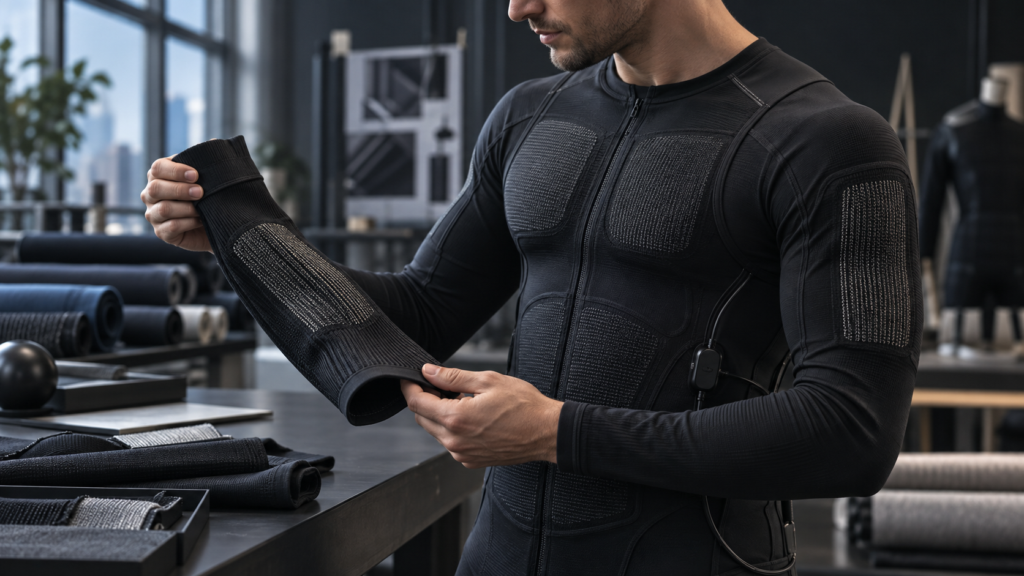
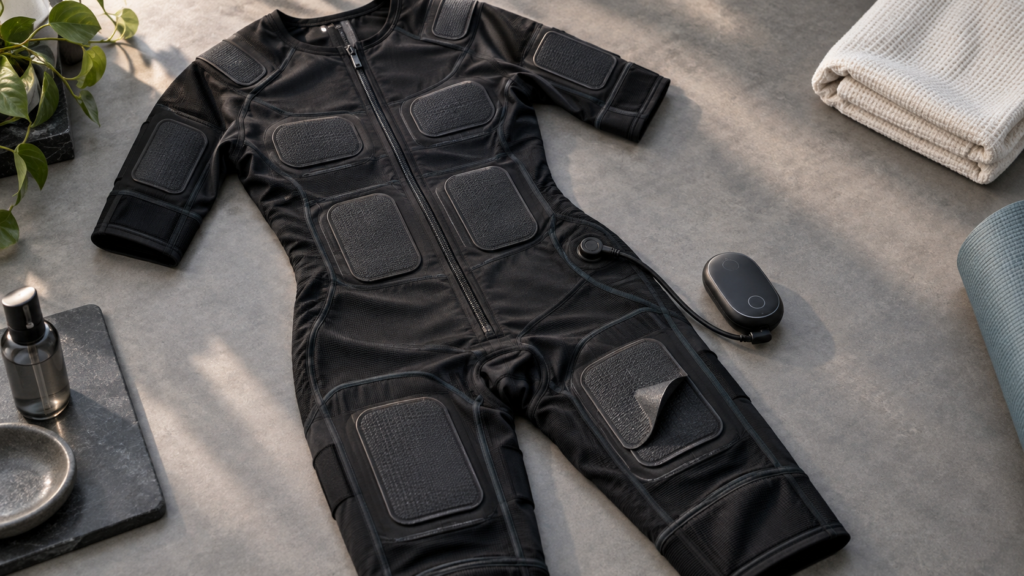
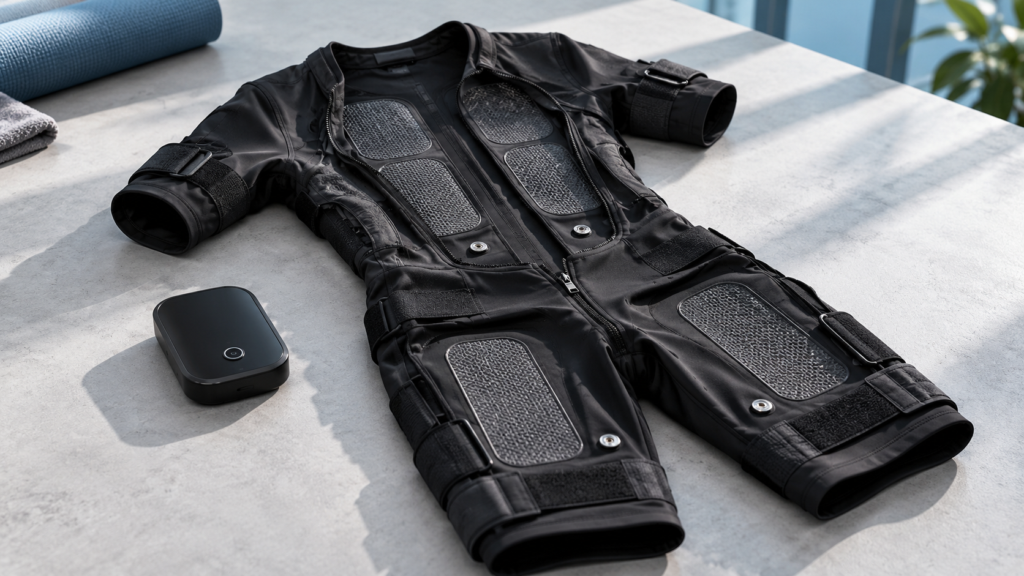
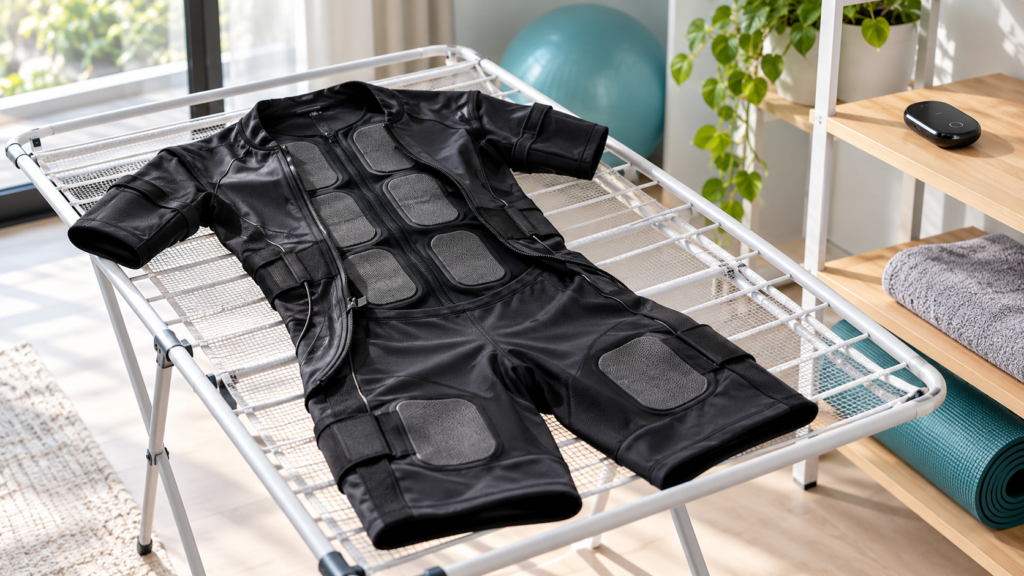
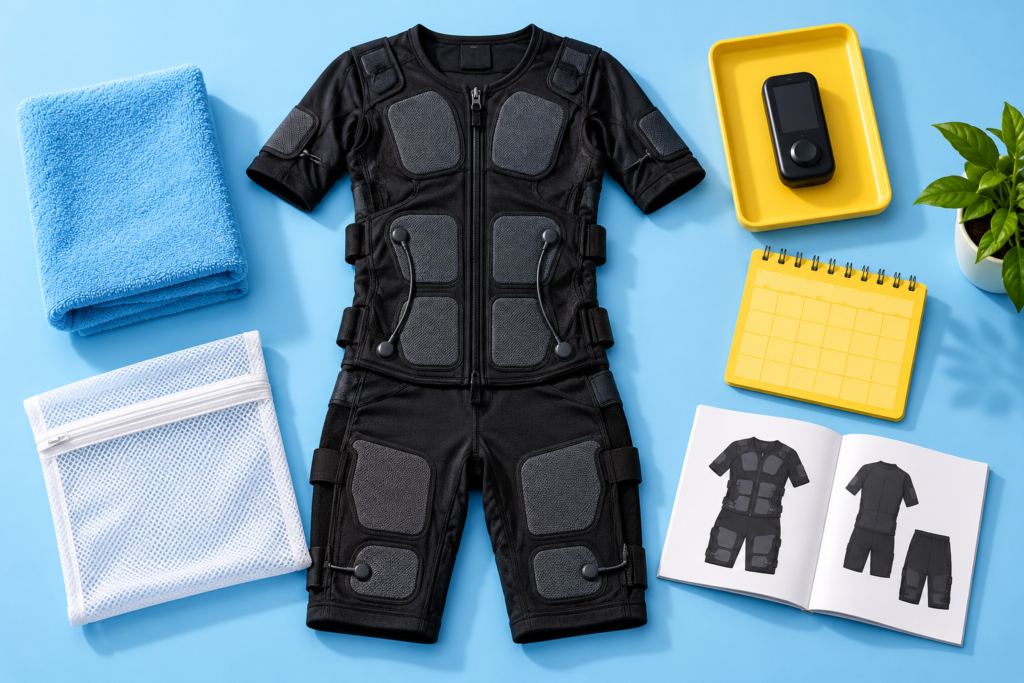
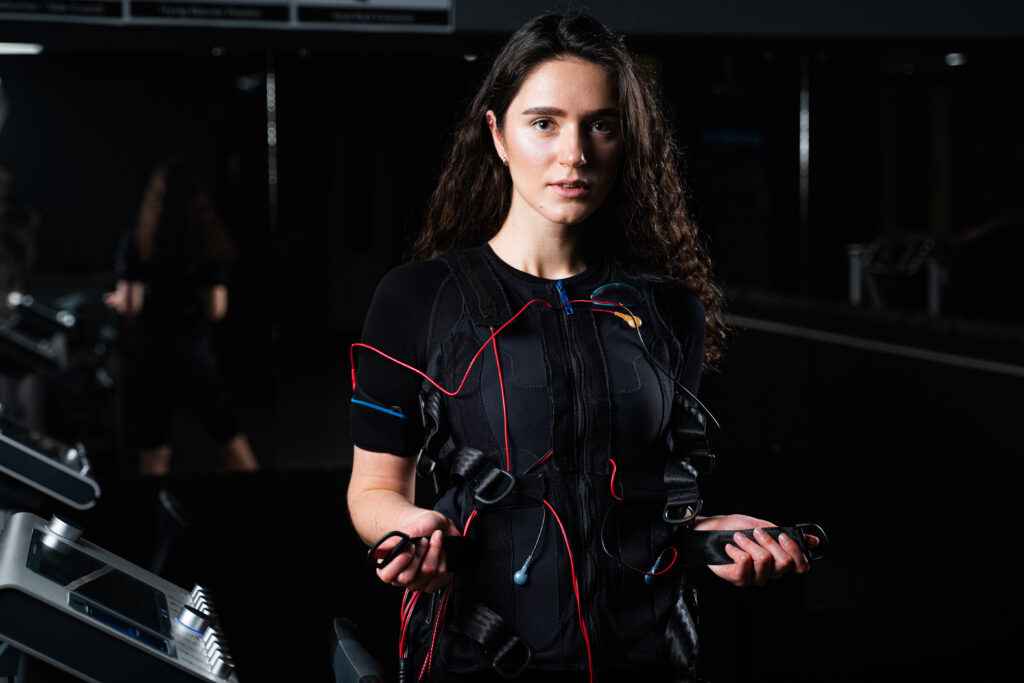
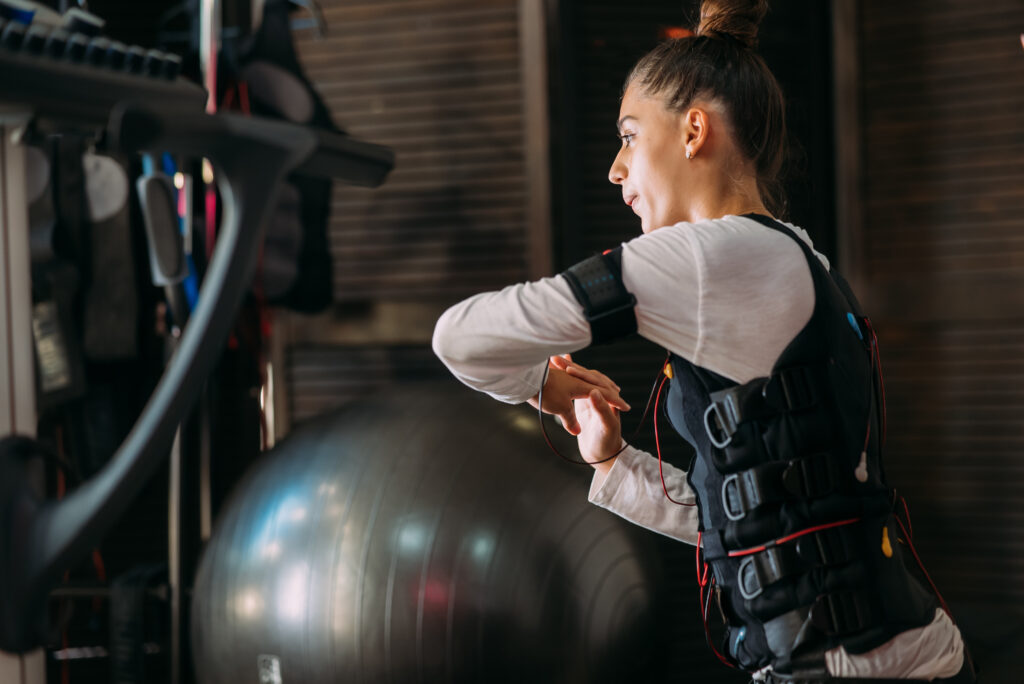
An EMS (electrical muscle stimulation) suit is a full-body garment with built-in electrodes that send low-frequency electrical impulses to your muscles while you move. Think of it as your nervous system getting a little assist. Instead of waiting for your brain to recruit muscle fibers through voluntary effort, the suit directly triggers contractions.
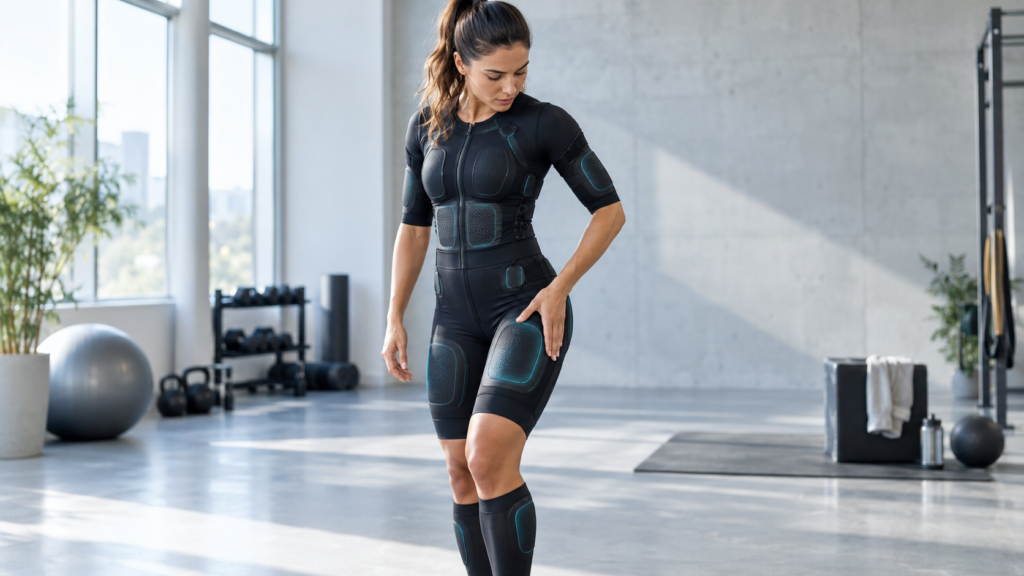
Sessions are typically 20 minutes. You’re doing real exercises (squats, lunges, planks), but the electrical stimulation amplifies every contraction. It’s not just lying there while electricity does the work. You’re still putting in effort. The suit just makes that effort hit harder. Here’s how EMS suits vs. the gym stack up when you actually look at the research.
The time comparison is actually kind of wild
Here’s where it gets interesting. A 2025 study published in PubMed followed 46 physically active adults over 20 weeks: one group doing twice-weekly 25-minute EMS sessions, another doing twice-weekly 90-minute traditional resistance training sessions. Both groups saw significant improvements in body composition and maximal strength. Comparable results, less than a third of the time.
A separate study in the Journal of Functional Morphology and Kinesiology examined sedentary women over 10 weeks: the EMS group trained just 20 minutes per week, while the traditional group averaged two 60-minute sessions per week. Squat performance went up ~35% in both groups. Curl strength improved 33 to 42% in both. No statistically significant difference between them.
So no, EMS doesn’t outperform the gym. But it largely matches it, and that’s kind of the point.
Why does that even work?
In traditional training, your nervous system recruits muscle fibers gradually, starting with the smaller ones and pulling in the heavier hitters only when the load demands it. That’s why heavy compound lifts are effective. They force your body to use more of what it’s got.
EMS bypasses some of that process. Research shows it delivers electrical impulses that cause involuntary contractions and directly activate fast-twitch muscle fibers, triggering neural adaptations similar to those seen with high-intensity voluntary exercise. Translation: it’s hitting fibers you’d normally have to work a lot harder or lift a lot more weight to access.
Where EMS actually has a leg up
Time is a real barrier
Research published in Frontiers in Public Health identifies time stress as one of the most commonly cited reasons people don’t exercise consistently, and that goes for both active and sedentary people. If 60- to 90-minute gym sessions aren’t happening for you regularly, that’s not a character flaw; it’s just life. EMS offers a legitimate alternative that isn’t just “better than nothing.”
Your joints will thank you
Traditional resistance training loads your knees, hips, spine, and shoulders, especially as the weights go up. WB-EMS has been recognized in the scientific literature for its joint-friendliness and individualized application, making it a studied option for people managing joint sensitivity, recovering from injury, or just looking for a lower-impact approach that still produces results.
It works for a wide range of people
The research on WB-EMS spans sedentary adults, older populations, athletes, and people managing chronic conditions. It’s been described in the NIH literature as a highly customizable option for people who are either unable or unmotivated to do intense resistance exercise, and honestly, that covers a lot of us on any given week.
Where the gym still wins
To be fair, traditional resistance training has decades of evidence behind it. It also does something EMS can’t fully replicate: progressive overload with increasingly heavy loads, which drives long-term gains in strength and bone density in ways that are well-documented and hard to argue with.
EMS sessions are also typically capped at once or twice a week. The contractions are intense enough that your muscles need real recovery time. If you want to train five days a week, a conventional program gives you the flexibility to do that.
And if you’re an athlete building sport-specific strength, traditional training isn’t going anywhere. EMS can complement it, but it can’t replace the specificity of a well-programmed barbell protocol.
EMS Suits vs. the Gym: So what’s the actual answer?
It depends on what your life actually looks like. If you’re someone who struggles to get consistent gym time, has joint issues, or wants to know that 20 minutes twice a week is doing something real, EMS suits are worth taking seriously. The research backs that up.
If you enjoy conventional lifting, have time for it or need high training volume to meet performance goals, stick with the gym. Or use both. A lot of people do.
The research makes it clear that EMS training isn’t a gimmick. It’s a time-efficient, scientifically supported method that produces real results for real people who don’t have 90 minutes to spend on a workout. And for a lot of people, that’s not a small thing.