Let’s do some quick math. A normal gym routine involves three to five workouts a week, each about an hour. Add the drive, the locker-room prep time, and the wait for the squat rack. That’s five to eight hours of your week.
Now here’s the pitch you’ve probably seen online: an EMS suit workout gives you the same results in about 20 minutes, once or twice a week.
Sounds too good to be true, right? So let’s break down what an EMS suit workout really is, what the science says, and the catch that the flashy ads leave out.
First, What Is an EMS Suit Workout?
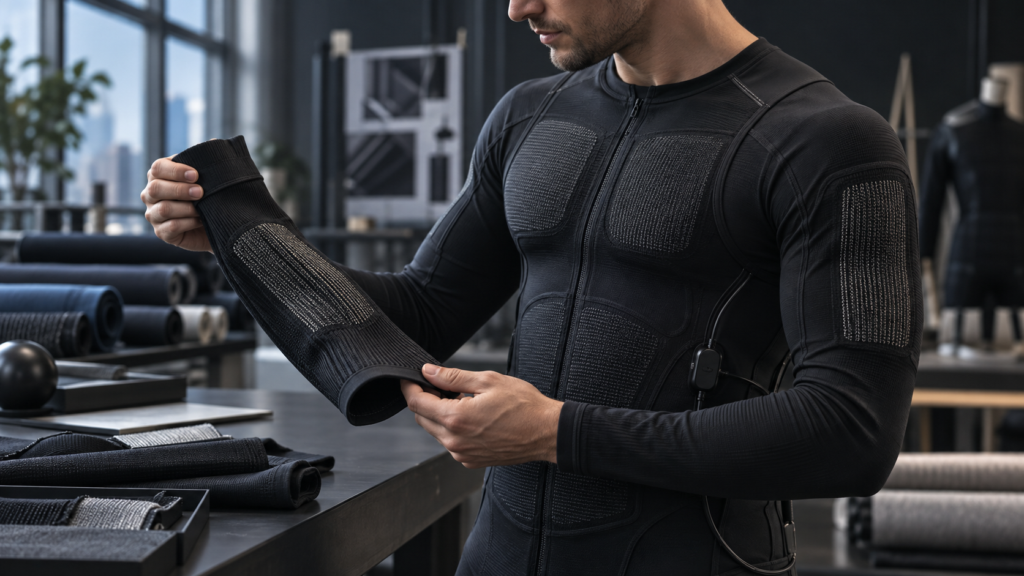
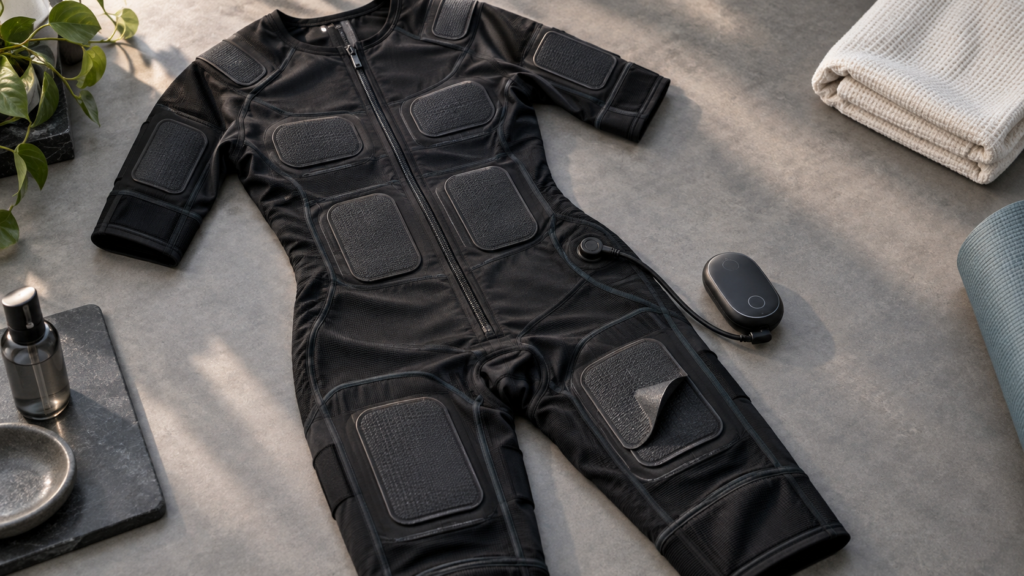
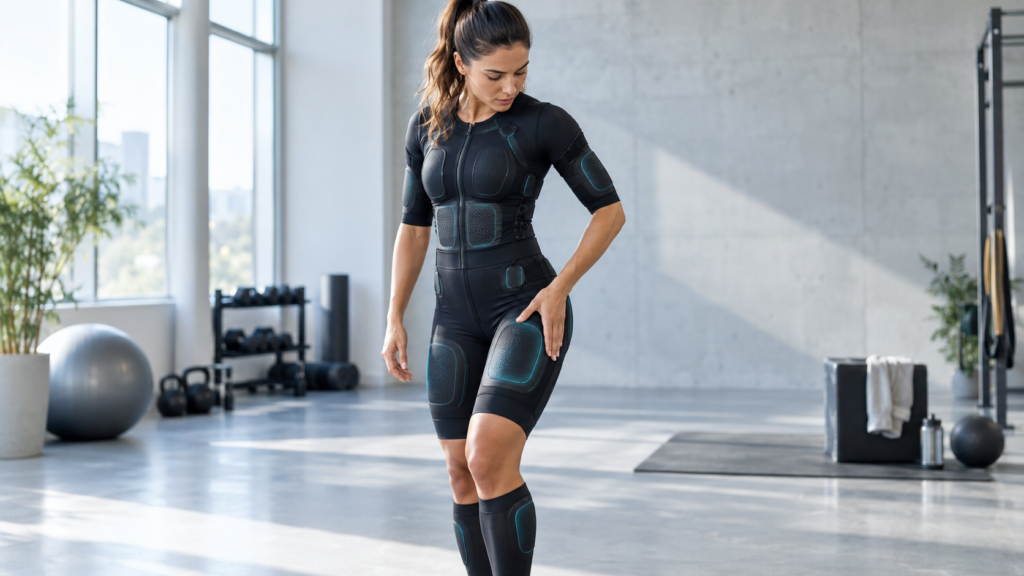
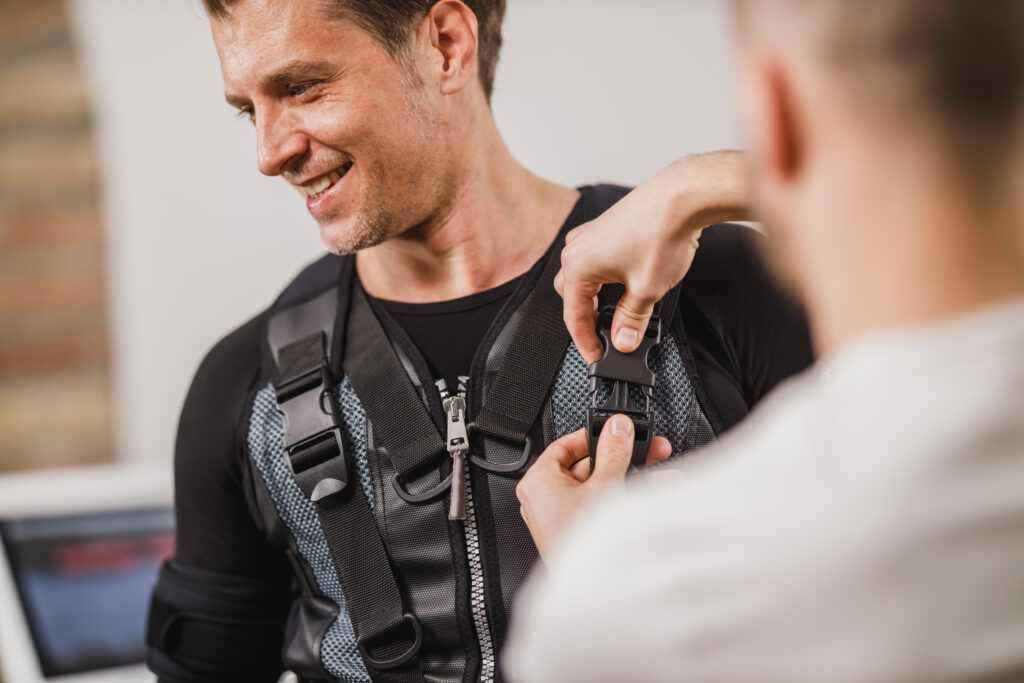
EMS stands for electrical muscle stimulation. An EMS suit looks a bit like a wetsuit, with small pads built in over your major muscles: butt, thighs, core, chest, back, and arms.
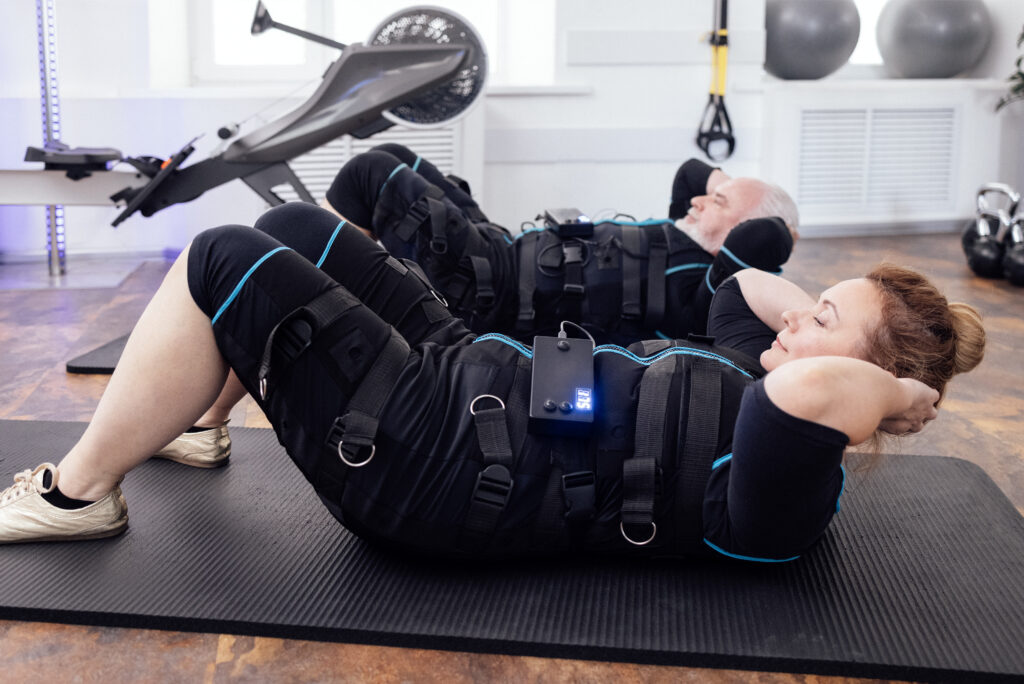
During an EMS suit workout, you do simple moves like squats, lunges, and planks. While you move, the suit sends tiny, safe electrical pulses into your muscles. Those pulses make your muscles squeeze harder than they would on their own.
Here’s why that’s not as weird as it sounds. Your muscles already work on electrical signals. Every time you move, your brain sends a signal that tells your muscles to fire. The suit just adds an extra signal on top, so more of each muscle works during every move. A regular squat suddenly feels like a squat with weight on your back. That’s the whole trick, and it’s why the workout can be so short.
The 20-Minute Claim: What Studies Show
This is the part that surprises most skeptics. The time-saving claim isn’t just marketing. Real studies have tested it head-to-head.
In a 16-week study, researchers compared EMS training to hard, fast-paced weight training in untrained men aged 30 to 50. Both groups got stronger and leaner by about the same amount. The EMS group spent way less time doing it.
A newer study compared 20 minutes of EMS per week to two 60-minute weight workouts per week. After 10 weeks, both groups improved about the same in squat strength, arm strength, and how long they could hold a plank. Same results, one sixth of the time.
And a 2025 study tested almost exactly what this headline says: 25 minutes of EMS against 90 minutes of full-body weight training, over 20 weeks.
There’s more. Research on EMS training has also linked it to more muscle, less body fat, a smaller waist, and better heart and lung fitness. One medical study even found that one 20-minute session a week helped people with long-term back pain. That’s partly because EMS reaches deep muscles around your spine that normal exercise has a hard time working.
So the headline holds up better than you’d expect. Which brings us to the part you really need to read.
Here’s the Catch
There are three, honestly. We’d rather you know them now than learn them the hard way.
Catch #1: Going too hard on day one can hurt you
This is the big one. Because EMS makes more of your muscle work at once, it can stress your muscles much more than you’re used to. The official safety guidelines for EMS training report cases where beginners cranked the power all the way up in their first session and ended up with serious muscle damage. Doctors call it rhabdomyolysis. In plain terms, the muscle breaks down faster than the body can handle, and it can land you in the hospital. It even happened to pro athletes. Being in shape does not make you ready for full-power EMS.
The fix is simple: never go all-out in your first sessions. The researchers behind the safety rules found that the body gets used to EMS fast. After a few weeks of slowly turning up the power, the muscle stress drops to the same level as normal weight training. Start low. Build up slowly. Drink plenty of water. This is a tool that punishes impatience.
Catch #2: Less time does not mean less work
Twenty minutes sounds easy until you’re in the suit. EMS workouts are short because they’re packed. Most first-timers say the session kicked their butt, and the soreness a day or two later proves it. If you’re picturing something where you sit back and let the suit do everything, that’s not this. You still squat, lunge, and plank. The suit just makes every move count more.
Catch #3: It replaces lifting, not all movement
An EMS suit workout can take the place of your weight training. The studies above back that up. But it won’t replace walks, bike rides, or playing with your kids in the yard. The smart way to use it is as your strength workout, which frees up hours for the rest of your life. It’s not a free pass to never move again.
One more thing: EMS isn’t for everyone. Skip it, or ask your doctor first, if you have a pacemaker, are pregnant, have epilepsy, or have certain heart or kidney problems.
So, is an EMS Suit Workout Worth It?
If the real reason you don’t work out is time, the math is hard to argue with. Study after study finds that 20 focused minutes of EMS gets results in the same ballpark as hours at the gym. That’s not hype. That’s repeated head-to-head science.
The catch isn’t that it doesn’t work. The catch is that it works so well, you have to respect it. Ease in slowly, follow the safety rules, and don’t treat the power dial like a video game.
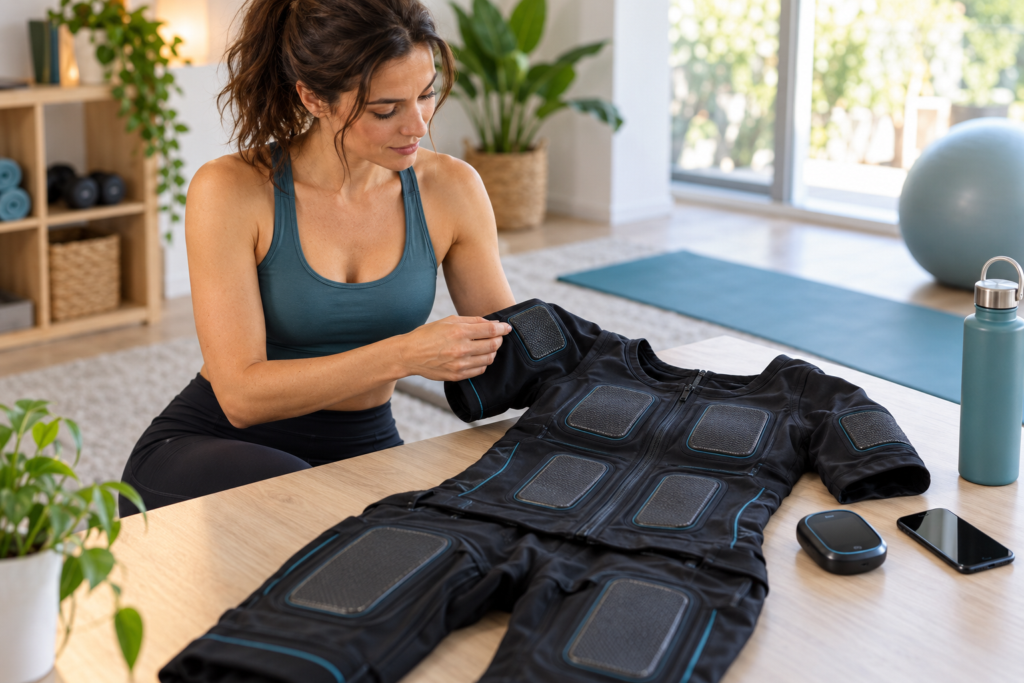
For years, trying EMS meant paying $50 to $100 per session at a studio. Wireless home systems like the TitanBody EMS suit bring the whole thing into your living room. The app guides your workouts and raises the power slowly over time, which handles Catch #1 for you.
Five hours a week, or 20 minutes. Now you know the catch. The rest is up to you.
FAQ
How long is an EMS suit workout? About 20 minutes of training, plus a few minutes to put the suit on and set your power levels. Most studies used one to two sessions per week.
Is an EMS suit workout safe for beginners? Yes, as long as you start at low power and build up slowly. Almost every injury in the research came from beginners going full power on day one, which the official safety rules say never to do.
Can an EMS suit workout replace the gym? For building strength and losing fat, studies show it matches regular weight training in far less time. For heart health and endurance, keep walking, biking, or playing outside the suit.
How fast will I see results from an EMS suit workout? Most studies ran 10 to 16 weeks with one to two sessions per week. You’ll feel the workouts right away. Expect to see real changes within a couple of months of sticking with it.