The EMS fitness industry has blown up, and now there are more suits to choose from than ever. So, how do you choose the best EMS suit for you? You’ll find hundreds of “best EMS suit” roundup articles online. But let’s be honest: brands write those articles to sell their own suits. That’s why their product almost always sits at the top of the list.
This guide will help you know what to look for and what to skip when picking an EMS suit. By the end, you’ll be able to spot the best one for you.
What an EMS Suit Actually Does (and Doesn’t Do)
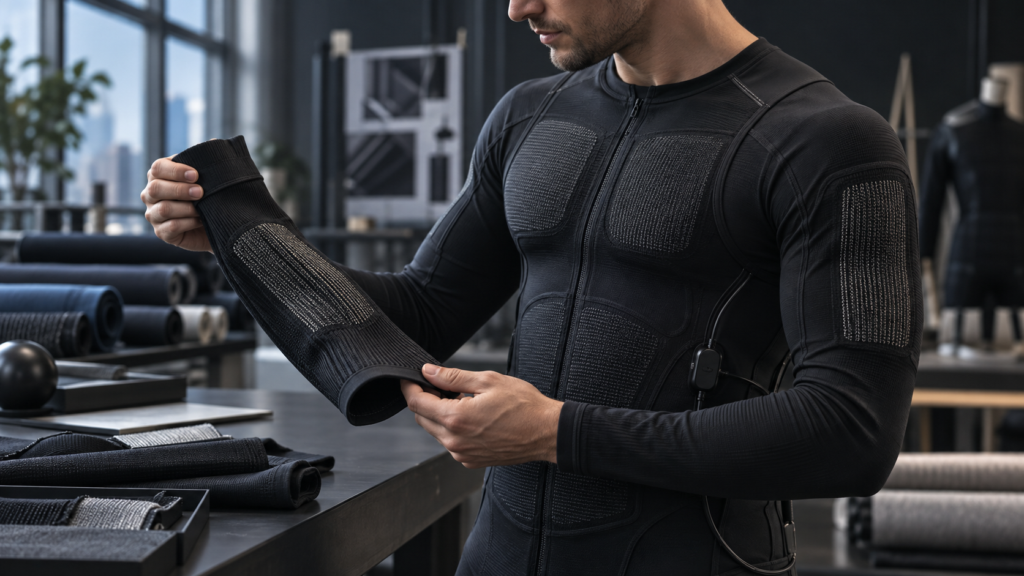
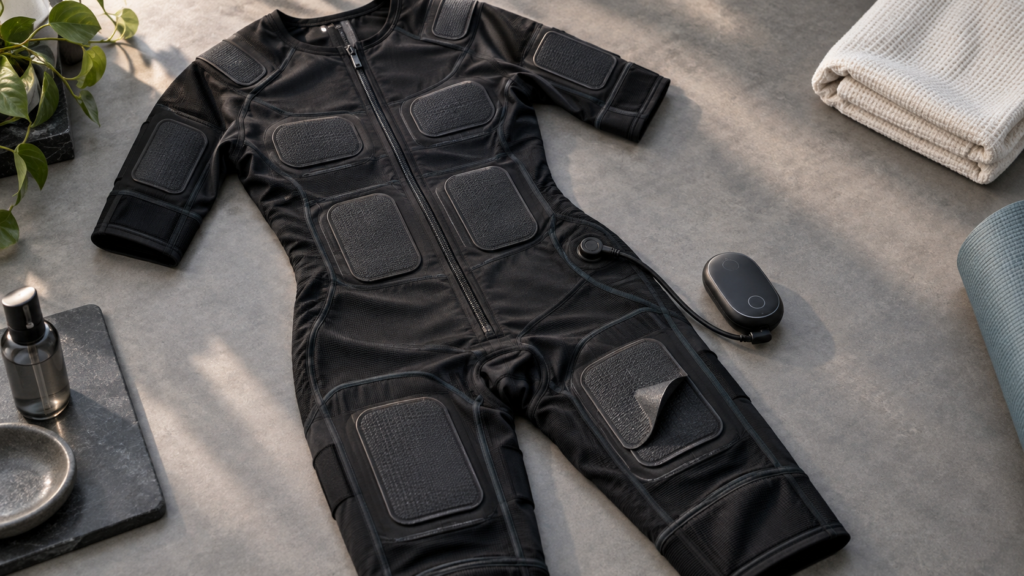
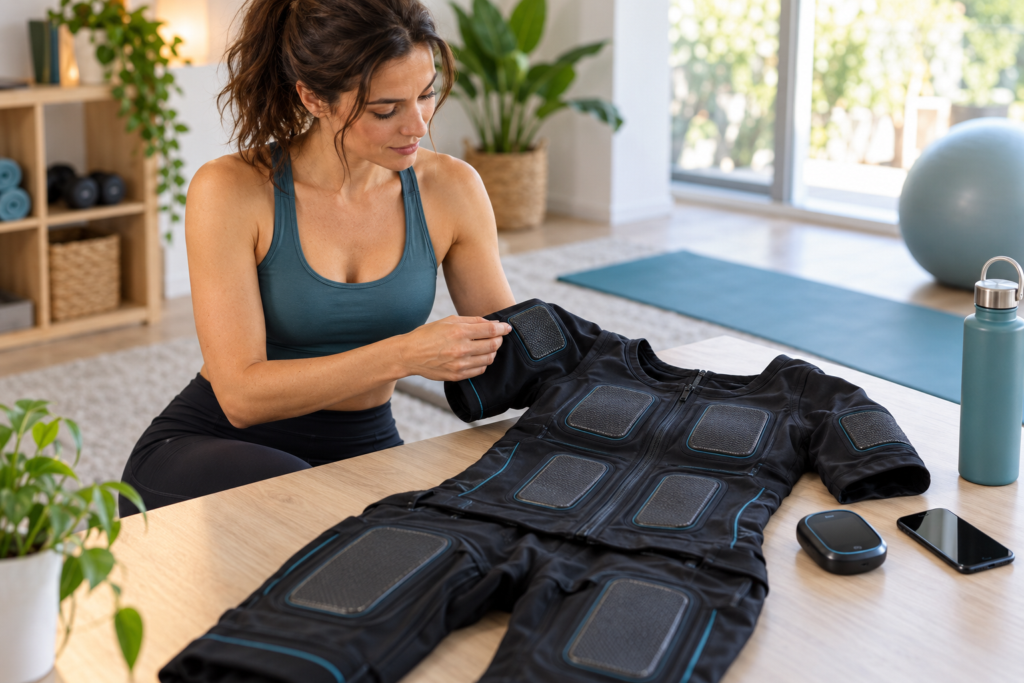
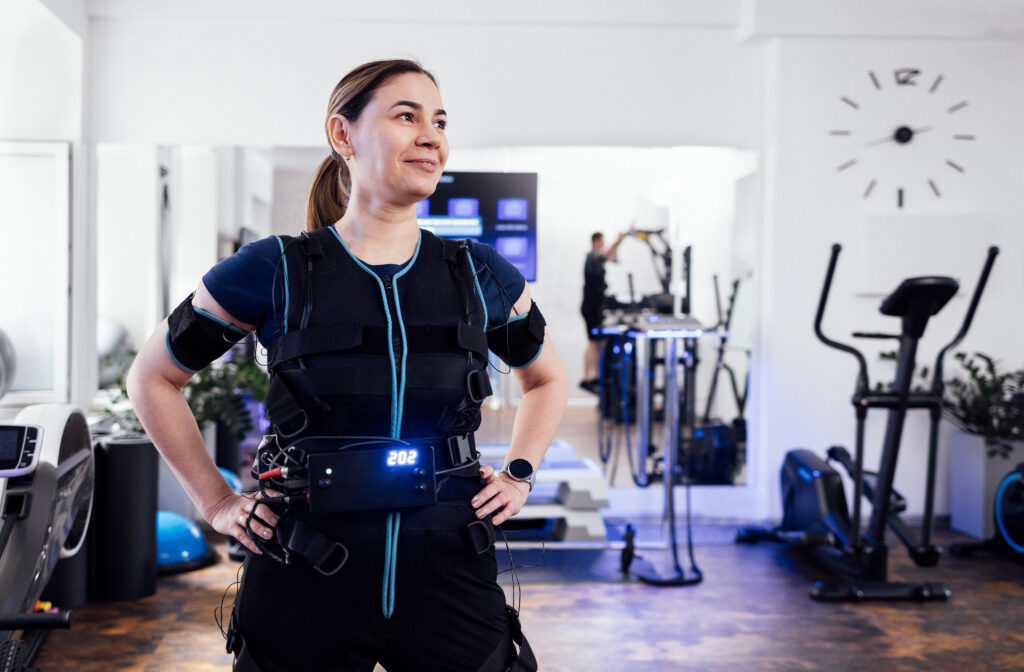
EMS stands for electrical muscle stimulation and is a piece of gear with small pads called electrodes built in. The pads sit directly against the skin and, when turned on, send gentle electrical pulses to the muscles, causing them to contract (tighten) on their own.
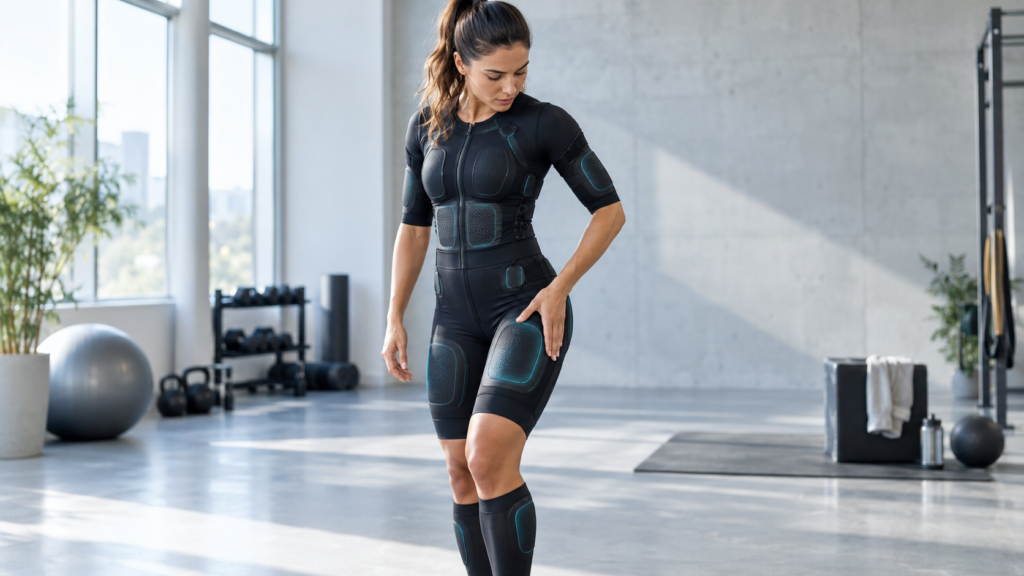
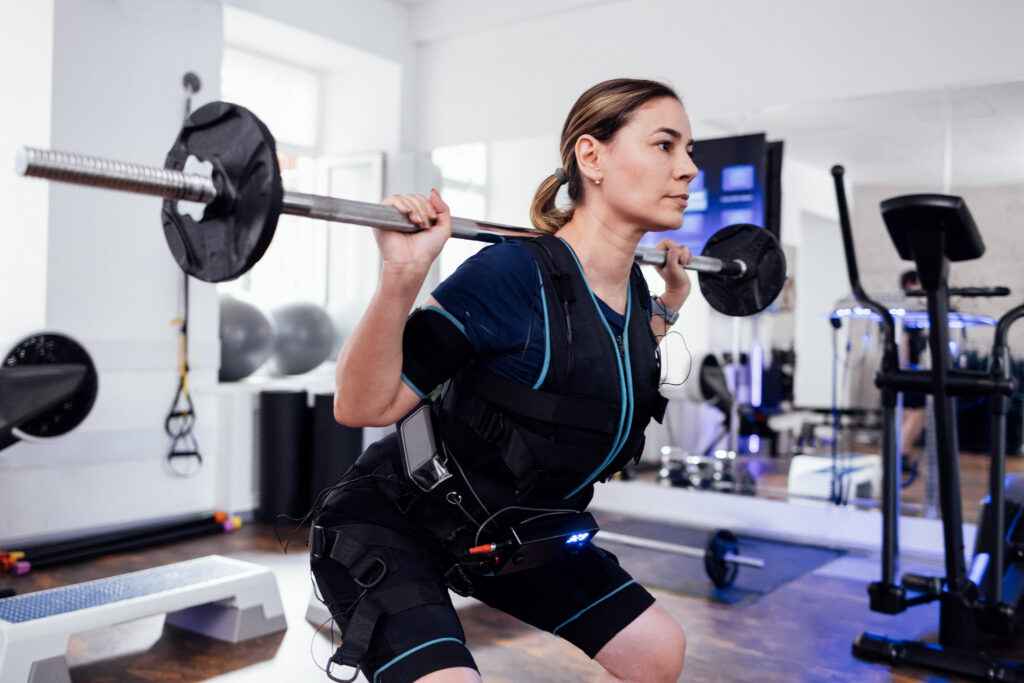
A normal workout makes you work your muscles out individually, while an EMS suit can work several muscle groups (arms, legs, back, and core) all at the same time and in the same session.
But it’s important to note that EMS suits are a tool, not magic. It will not melt fat off your body while you sit on the couch. It works best when you move during your session and use it to boost your workout. Basically, it’s a way to get more out of your effort, not a way to skip the effort.
The Specs That Actually Matter When Choosing the Best EMS Suit
This is the heart of the guide. When you shop, you’ll see a long list of features, but most of them don’t matter much. These are the ones that you need to consider.
Wired vs. Wireless
Some suits plug into a base unit through a cable, while others run on batteries and connect to your phone. Wired suits often cost less and give a steady signal. The downside is that the cable can get in your way when you move.
Wireless suits let you move freely. You can do squats, lunges, or even go for a light jog. They cost more, and you have to keep them charged. If you plan to move a lot during your sessions, wireless is worth the extra money. If you mostly train in one spot, wired is fine.
Dry vs. Wet Electrodes
The pads in your suit come in two types.
Wet electrodes need water to work. You spray or dampen the pads before each session for a strong and even contact and so the signal reaches your skin. The catch is the setup and the cleanup every time.
Dry electrodes don’t need water. You just put the suit on and go. They’re faster and easier, but it’s recommended to have a snug suit for a strong and even contact. Also, while you don’t require water, you should work up a sweat for the current to transfer comfortably and evenly into your muscles.
Number of Channels or Zones
A channel is a section of the suit you can control on its own. More channels mean you can send a stronger pulse to your legs and a softer one to your arms at the same time. This matters because your muscles are not all the same strength.
A basic suit might have a few zones. A better one lets you adjust each major muscle group on its own. If you have an old injury or one weak side, more zones help you train safely.
Intensity and Pulse Control
Look for a suit that lets you turn the pulse up or down with fine steps. A cheap suit might jump from “too soft” to “too strong” with nothing in between. A good one lets you dial it in. This keeps your sessions comfortable and lets you grow over time.
Fit and Sizing
This one gets ignored, and it shouldn’t. The pads only work when they press flat against your skin. A suit that’s too big leaves gaps, and the signal gets weak, and a suit that’s too tight is just plain uncomfortable. Check the size chart before you buy. The best EMS suit in the world won’t help you if it doesn’t fit your body.
App, Programs, and Support
Most suits now come with an app. A good app gives you ready-made programs, tracks your sessions, and walks you through each one. Some brands also offer a coach or trained staff to guide you. If you’re new to EMS, this support is worth a lot. If you’re an expert, you may care more about the hardware than the app.
Certifications and Safety: The Part You Can’t Skip
EMS sends electricity through your body, so safety is not something to ignore. Before you buy, check that the suit has the right approval for where you live.
In the United States, look for FDA clearance. In Europe, look for the CE mark. These show the device met basic safety rules. A suit without approval is a red flag.
Safety also comes down to how you use the suit. Experts who study EMS say it should be used with care and good guidance, especially when you’re starting out. Don’t crank the intensity to the max on day one. Follow the program, drink water, and give your body time to rest between sessions. If you have a health condition, a pacemaker, or you’re pregnant, talk to a doctor first.
Marketing Claims to Watch Out For
Here’s where the hoopla lives. Once you know these tricks, you can’t unsee them.
“98% muscle activation.” You’ll see big numbers like this thrown around. They sound great. But many of these stats come from the brand itself, not from a fair test. Be careful with any number that has no real study behind it.
“Replaces hours at the gym.” Some ads say 20 minutes in a suit equals hours of normal lifting. The truth is more mixed. EMS can save time, yes. But the research does not back up the wildest claims, and for people who already work out a lot, the edge gets small.
“The most advanced suit ever.” More electrodes or a flashier app do not always mean better results. A suit with fewer features that fits you well can beat a loaded suit that fits poorly. Don’t pay for specs you won’t use.
The rule of thumb is that if a claim sounds too good to be true, it usually is. The best EMS suit is the one that fits your goals and your body, not the one with the loudest ad.
Match the Suit to Your Goals: 5 Types of Users
There’s no single best EMS suit. The right pick depends on who you are and what you want. Find yourself below.
The athlete. You already train hard and want an extra edge. Focus on more channels, strong intensity control, and a wireless suit so you can move. You’ll want fine control to push specific muscle groups.
The rehab or pain user. You’re dealing with an injury, back pain, or sore joints. Look for many zones so you can go easy on weak spots, plus gentle intensity steps. Good guidance and a clear program matter a lot here. Always loop in your doctor or physical therapist.
The busy parent or pro. You have little time and want a quick, effective session at home. Dry electrodes save setup time, and a strong app with ready-made programs keeps you on track. Ease of use beats fancy features for you.
The home-gym minimalist. You want solid results without a closet full of gear. A simple wired suit with good fit and a clear app gives you the most value for your money. You don’t need every bell and whistle.
The studio or business owner. You’re buying for clients, not just yourself. Durability, easy cleaning, strong support from the brand, and suits in many sizes should top your list. Wet electrodes may be worth the upkeep for the stronger signal.
So, What’s the Best EMS Suit for You?
By now you can see the answer. The best EMS suit isn’t a single product on some ranked list. It’s the suit that matches your goals, fits your body, has the right safety approval, and gives you the control and support you need.
Use the checklist in this guide. Pick the two or three features that matter most for your situation. Then judge each suit against those, not against a brand’s marketing. That’s how you choose with confidence instead of guessing.
What the Research Says About EMS Training
Real studies have looked at how well EMS works. Here’s a fair look at what scientists have found, including the parts brands don’t love to share.
A 2024 systematic review in the German Journal of Sports Medicine looked at whole-body EMS in active young adults. It found EMS led to real gains in strength, muscle size, and lower body fat when compared to no training at all. But it also found EMS was not better than regular training for people who were already fit. That’s an honest result worth knowing before you buy.
A 2021 review and meta-analysis in Frontiers in Physiology studied EMS in non-athletic adults. It looked at how the training affected body shape and muscle strength in everyday people, which is useful if you’re a beginner or short on time.
A randomized controlled trial tested EMS on people with knee osteoarthritis. The EMS group saw a real drop in pain compared to those who got usual care. This is good news for the rehab and pain crowd.
A clinical study on chronic low back pain found EMS to be safe and time-saving, with just 20 minutes once a week showing an effect. Another point in favor of the rehab user.
A study on recreational runners found that EMS helped them keep and even improve their performance, even while they cut back on running. That fits the athlete who wants more from less time.
Finally, an international position statement in Frontiers in Physiology lays out clear rules for safe EMS use. It’s a good reminder that smart, guided training matters as much as the gear.
The takeaway is that EMS works, but it’s a tool, not a miracle. Used well, it can save time and help you reach your goals. Just don’t expect it to do the work for you.
Ready to Choose?
You now know what matters and what’s just noise. Use this guide as your checklist, compare suits on the features that fit your goals, and trust your own judgment over any roundup. That’s how you find the best EMS suit for you.