Adding wireless EMS suits to a personal training studio creates new operational realities alongside the new training possibilities. The session flow, equipment management, charging logistics, client onboarding, and session scheduling of a wireless EMS studio differ in meaningful ways from both conventional personal training and wired EMS studio operations. Understanding these operational requirements before purchase — rather than discovering them through operational friction after equipment arrives — saves significant time and avoids avoidable inefficiencies. Research into wireless EMS suits personal training studio continues to expand as more studios adopt this approach.
Personal training studios adopting wireless EMS are typically doing so to differentiate their offering in a competitive market, enable session formats that conventional training or wired EMS doesn’t support, or serve a client population that responds particularly well to the wireless EMS client experience. Each of these motivations has operational implications that should shape how the studio designs its wireless EMS workflow. Understanding wireless EMS suits personal training studio is key for any trainer looking to modernize their offering.

This article covers the key operational considerations for personal training studios deploying wireless EMS suits — from equipment management and charging logistics to client flow and session scheduling. The evidence supporting wireless EMS suits personal training studio is growing steadily in the professional fitness space.
Equipment Management and Charging
Battery management is the operational variable that most distinguishes wireless from wired EMS studio management. Every session requires a fully charged wireless unit; a session that begins with a partially discharged unit risks stimulation cutoff mid-session — an experience that is professionally embarrassing and potentially disruptive to the client experience. Establishing a reliable charging protocol from day one is essential: specific charging stations, a rotation system ensuring units are charged between sessions, and a battery status check as part of every session setup routine. [source] For coaches exploring wireless EMS suits personal training studio, proper protocol design is essential.
Studios running multiple sessions daily across a busy schedule need sufficient wireless units to maintain session capacity without waiting for charging. The number of units required depends on session duration, charging time, and daily session volume; a studio running back-to-back sessions from opening to close with 60-minute session slots (including setup and transition) and 2-hour charge times needs at least three units per concurrent session station to maintain uninterrupted operation. Clients asking about wireless EMS suits personal training studio deserve clear, evidence-informed guidance.
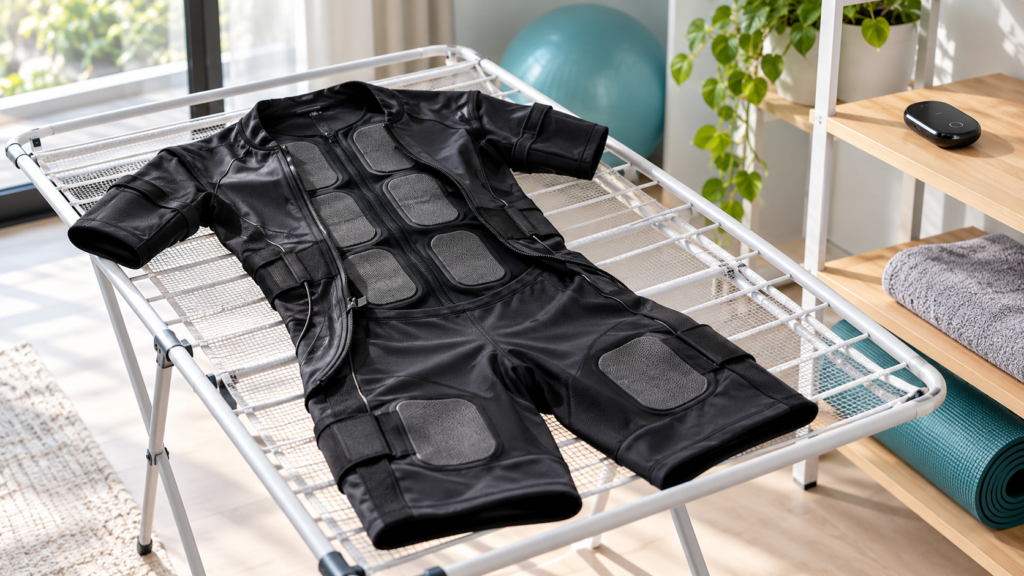
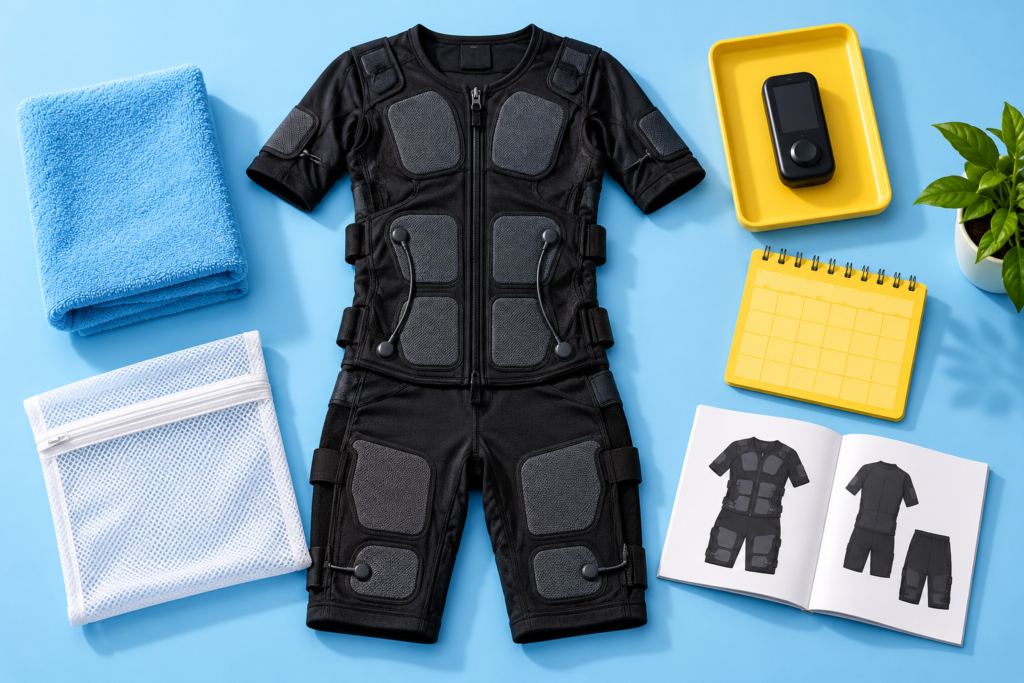
Hygiene management — suit cleaning, electrode care, and base layer protocols — applies to wireless EMS as to wired, with the additional requirement of appropriate care for the wireless electronics module. Manufacturer guidance on moisture exposure limits for the electronics module, appropriate cleaning methods that don’t compromise the electronics, and storage conditions between sessions should be incorporated into the studio’s standard hygiene protocols. The practical application of wireless EMS suits personal training studio varies depending on goals and client profile.
Session Flow and Client Experience: Wireless EMS suits personal training studio
Client onboarding for wireless EMS follows the same health screening and informed consent requirements as wired EMS. First-session clients require comprehensive contraindication screening, informed consent, and a conservative-intensity introduction session regardless of the delivery technology. The wireless suit’s client experience difference — no cable, greater movement freedom — should be explained to clients as a session design advantage rather than left to be discovered incidentally. [source] Studios investing in wireless EMS suits personal training studio report strong client retention and satisfaction.
Session setup time in wireless EMS is generally comparable to wired, with cable connection steps replaced by battery check and wireless pairing confirmation. In studios where setup efficiency is commercially important (back-to-back sessions with minimal turnaround time), establishing a streamlined setup routine — specific procedural sequence, materials staged before the client arrives, pairing confirmation protocol — minimizes transition time and ensures consistent session start quality. Anyone serious about wireless EMS suits personal training studio should prioritize certified equipment and trained staff.
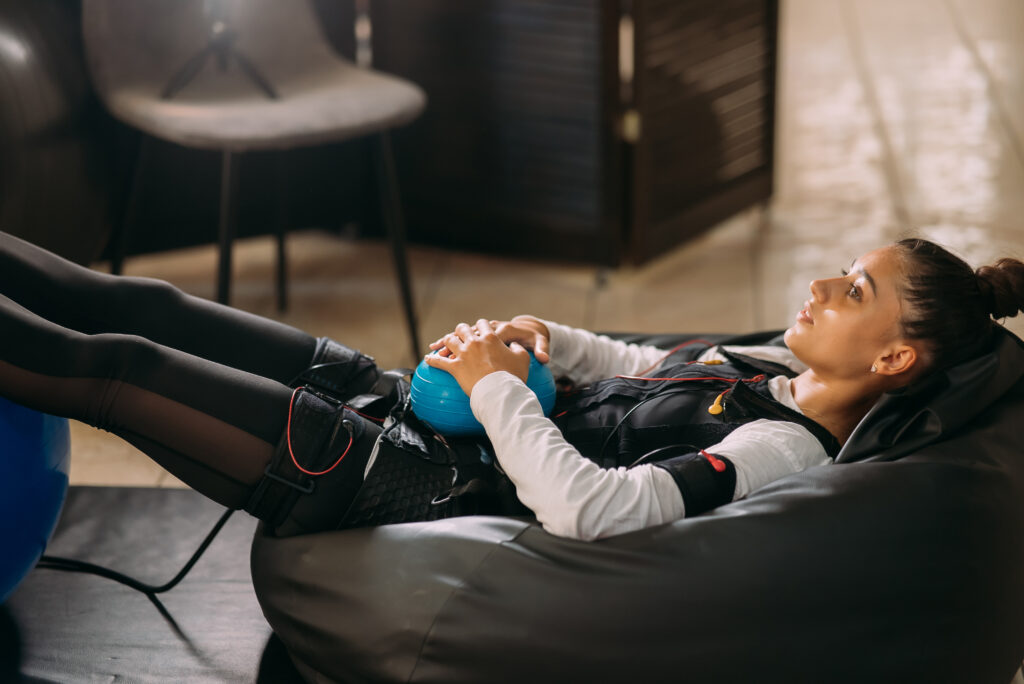
The greater movement freedom of wireless EMS can enable a more dynamic, engaging session experience for clients accustomed to conventional personal training — more varied exercise vocabulary, less constraint on movement range, and sessions that feel more like enhanced personal training than specialized medical technology. Trainers who design wireless EMS sessions to take advantage of this freedom (rather than simply replicating wired EMS session formats without the cable) deliver the most distinctive and compelling wireless EMS client experience. The business case for wireless EMS suits personal training studio is supported by both research and real-world results.
Scheduling and Business Model Considerations
Wireless EMS session scheduling follows the same twice-weekly frequency guideline as wired EMS, for the same physiological recovery reasons. Studios should design their scheduling systems to enforce this minimum inter-session interval for clients, communicate it clearly in client onboarding, and design package structures that reflect twice-weekly session frequency as the standard ongoing program. [source] Getting the most from wireless EMS suits personal training studio requires consistent protocol and progress tracking.
Group wireless EMS sessions — one trainer simultaneously managing two or more clients in a shared session — are a business model possibility that wireless architecture enables more practically than wired. A trainer managing multiple wirelessly connected clients via a single control application, all performing the same protocol simultaneously in a group setting, can dramatically improve revenue per trainer hour relative to individual sessions. Session design and safety monitoring for group wireless EMS require additional attention to ensure each client is appropriately monitored. Safety remains a top priority in any wireless EMS suits personal training studio program.
Mobile wireless EMS service — taking equipment to client locations (homes, offices, sports facilities) rather than operating from a fixed studio — is a business model that wireless architecture specifically enables. Mobile EMS requires attention to equipment transport (protecting wireless units from damage during transport), setup in non-specialist environments, and session safety management without the purpose-designed studio environment’s support infrastructure. Professionals offering wireless EMS suits personal training studio benefit from ongoing education and certification.
Conclusion
Wireless EMS studio operations require thoughtful attention to battery management, equipment maintenance, session flow design, and the business model possibilities the technology enables. Studios that establish excellent operational systems for these requirements from the outset deliver consistently professional wireless EMS sessions — and capture the commercial advantages of the technology without the operational friction that under-prepared adoption creates. [source]
The operational investment in excellent wireless EMS management pays dividends through client experience consistency, equipment reliability, and the studio’s ability to confidently offer the more expansive session formats and business model structures that wireless EMS enables.
Frequently Asked Questions
How do I manage wireless EMS battery charging for multiple sessions per day?
Establish a rotation system with sufficient wireless units to maintain session capacity while others charge. Calculate units needed based on session duration, charge time, and daily session volume. A dedicated charging station with clear protocols, a battery status confirmation in every session setup routine, and slightly more units than minimum theoretical need provides operational buffer.
Can I run group sessions with wireless EMS?
Yes — wireless EMS enables group session formats where multiple clients train simultaneously under one trainer’s management via a single control application. Group wireless EMS requires attentive monitoring of each client’s individual response and movement quality, appropriate session design for simultaneous multi-client management, and clear protocols for individual intensity adjustments during the shared session.
How long does wireless EMS session setup take?
Wireless EMS setup is generally comparable to wired — battery check and wireless pairing replace cable connection steps. In a streamlined operation with staged materials and efficient procedures, setup from client arrival to session start typically takes 5 to 10 minutes. Establishing a consistent, practiced setup routine minimizes transition time between sessions.
Can wireless EMS be used for mobile personal training?
Yes — mobile wireless EMS training is one of the most distinctive business model possibilities of wireless technology. Taking equipment to client locations requires careful transport (protecting electronics), setup protocols for non-specialist environments, and attention to session safety without the purpose-built studio environment. Mobile EMS premium pricing typically more than compensates for the additional operational investment.
How often should wireless EMS clients train?
Twice-weekly sessions is the evidence-supported standard frequency for wireless EMS conditioning, with adequate recovery (minimum 48 hours) between sessions. This applies to wireless EMS for the same physiological reasons as wired — the cumulative muscular stimulus of WB-EMS requires recovery time for optimal adaptation. Session packages and scheduling systems should be designed around this standard.
Ready to explore EMS suit options? Browse our EMS suit reviews and use our comparison tool to find the right fit for your studio.