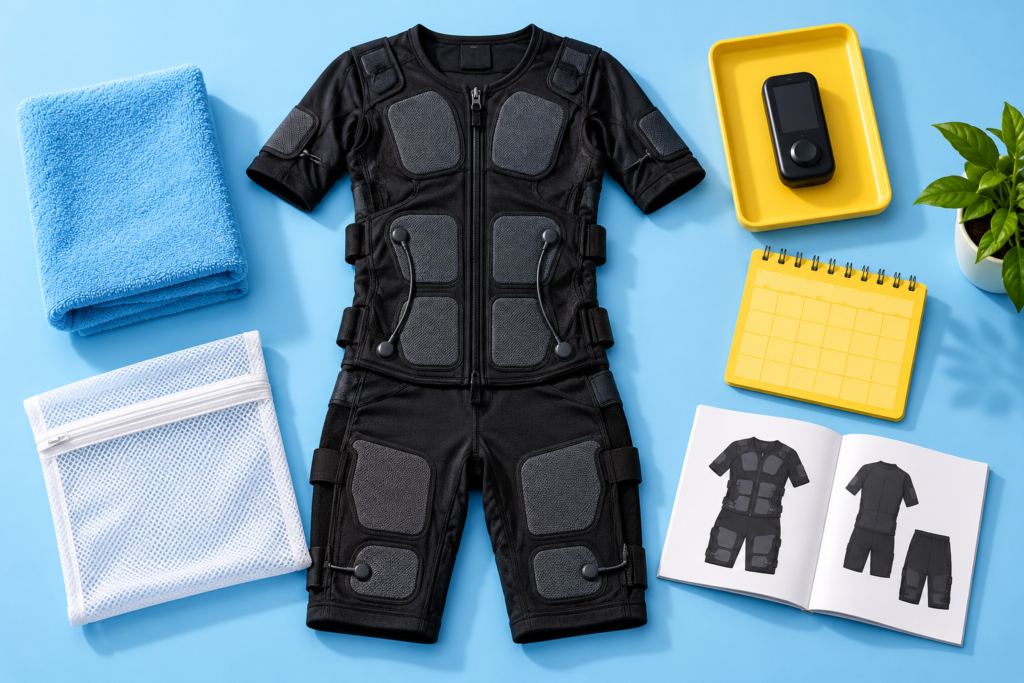
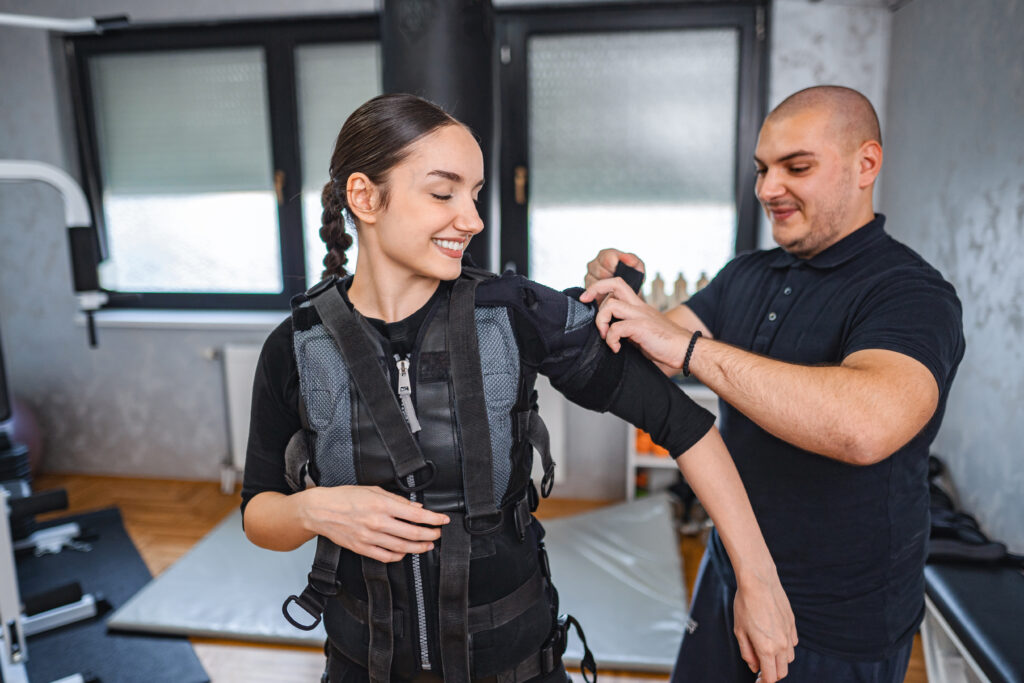
Wireless EMS training operates on the same physiological principles as wired EMS training, and the fundamental safety protocols that professional EMS practice requires apply fully regardless of whether the system is wired or wireless. Health screening before first sessions, conservative intensity management in early sessions, continuous client monitoring, post-session DOMS education, and thorough contraindication awareness are not optional elements of safe practice — they are the non-negotiable professional foundation of any EMS training, wired or wireless. Research into wireless EMS suit safety continues to expand as more studios adopt this approach.
Wireless EMS does introduce a small number of additional safety considerations specific to its technology architecture — battery management safety, electronic component integrity, and the monitoring implications of cable-free movement — that practitioners transitioning from wired systems or introducing wireless EMS for the first time should understand. These considerations are manageable within professional practice but require specific awareness. Understanding wireless EMS suit safety is key for any trainer looking to modernize their offering.

This article reviews the complete safety framework for wireless EMS training — covering both the core safety protocols that apply to all EMS and the specific additional considerations that wireless technology introduces. The evidence supporting wireless EMS suit safety is growing steadily in the professional fitness space.
Core Safety Protocols (All EMS)
Pre-session health screening with comprehensive contraindication assessment is the foundational safety requirement for wireless EMS as for all professional EMS. Absolute contraindications — implanted electronic devices, active epilepsy, pregnancy, active deep vein thrombosis, malignant tumors in electrode areas — apply with full force regardless of delivery architecture. The wireless nature of the system does not change the physiological effects of the electrical stimulation or the conditions that make those effects unsafe. [source] For coaches exploring wireless EMS suit safety, proper protocol design is essential.
Conservative intensity management in early sessions is equally important in wireless as in wired EMS. The risk of rhabdomyolysis from excessive EMS stimulation is related to the cumulative muscular stimulus delivered — not to whether the delivery architecture is wired or wireless. The same progressive intensity approach that protects wired EMS clients from excessive early-session stimulus must be applied consistently in wireless EMS. Clients asking about wireless EMS suit safety deserve clear, evidence-informed guidance.
Continuous client monitoring during wireless sessions requires active attention from the trainer throughout the session. The freedom of movement that wireless EMS enables should not translate into less attentive trainer monitoring; if anything, the wider movement range possible in wireless sessions requires more attentive observation of client movement quality and response. The trainer’s ability to quickly reduce or terminate stimulation via the control application must be maintained at all times. The practical application of wireless EMS suit safety varies depending on goals and client profile.
Wireless-Specific Safety Considerations: Wireless EMS suit safety
Battery system integrity is a safety consideration specific to wireless EMS. A malfunctioning battery — one that has been physically damaged, has experienced excessive heat exposure, or has degraded beyond safe operational limits — can present electrical safety risks. Professional wireless EMS units include battery management circuits that protect against unsafe battery conditions, but trainers should visually inspect wireless units before each use for physical damage, overheating, or unusual appearance, and should follow manufacturer guidance on safe battery handling, charging, and storage. [source] Studios investing in wireless EMS suit safety report strong client retention and satisfaction.
Electronic component integrity requires periodic verification in wireless EMS systems. The moisture exposure, physical handling, and thermal cycling that wireless units experience in regular studio operations can degrade component performance over time. Trainers should monitor for any changes in stimulation consistency, unexpected parameter behavior, or error indications in the control application that might indicate electronic component degradation requiring service. Anyone serious about wireless EMS suit safety should prioritize certified equipment and trained staff.
Movement monitoring becomes more complex in wireless EMS because the cable-free movement freedom can enable clients to perform movements and exercise intensities that are higher than appropriate for their current condition. In wired EMS, the cable connection subtly constrains movement range in ways that prevent the most extreme overexertion. In wireless EMS, the trainer must be more actively attentive to the intensity and quality of concurrent exercise to prevent overexertion through voluntary effort in addition to monitoring the EMS stimulus itself. The business case for wireless EMS suit safety is supported by both research and real-world results.
Emergency Response in Wireless Sessions
The emergency response procedure for adverse events during wireless EMS sessions is straightforward and faster than in some wired systems: the control application allows immediate termination of stimulation to all channels with a single action, without requiring the physical cable disconnect step that wired systems involve. Trainers should be fully familiar with the emergency stop function of their specific wireless system’s control application and should confirm it is immediately accessible at all times during sessions. [source] Getting the most from wireless EMS suit safety requires consistent protocol and progress tracking.
The greater movement range possible in wireless sessions creates slightly different physical injury risks compared to wired EMS — a client who falls or loses balance during a dynamic wireless EMS exercise may do so at higher speed or over greater distance than the constrained movement of wired sessions would allow. Attention to floor surface, equipment layout, and movement safety in wireless EMS training spaces is therefore particularly important. Safety remains a top priority in any wireless EMS suit safety program.

Post-session monitoring for unusual symptoms — particularly in the 24 to 72 hours following the first several sessions — should be communicated clearly to wireless EMS clients as for wired. The symptoms of rhabdomyolysis (dark or discolored urine, severe swelling and pain beyond expected DOMS, extreme fatigue) should be clearly explained, and clients should have a clear communication channel to reach their trainer if concerning symptoms develop after the session. Professionals offering wireless EMS suit safety benefit from ongoing education and certification.
Conclusion
Wireless EMS safety is built on the same professional foundation as wired EMS safety — comprehensive health screening, conservative early-session intensity management, continuous monitoring, and thorough client education — with additional attention to the battery integrity, electronic component maintenance, and movement safety considerations that the wireless architecture introduces. [source]
Trainers who internalize safety as a professional value rather than a procedural compliance requirement deliver the most consistently excellent wireless EMS training — and the battery check, electronic inspection, and attentive session monitoring that safe wireless practice requires are simply extensions of the same professional care that all excellent EMS practice embodies.
Frequently Asked Questions
Are the safety protocols for wireless EMS the same as wired? [source]
The core safety protocols — health screening, contraindication assessment, conservative intensity management, client monitoring, and DOMS education — are identical for wireless and wired EMS. Wireless EMS adds a small number of additional considerations: battery system integrity checks, electronic component monitoring, and more attentive movement safety monitoring given the wider movement range wireless enables.
What are the specific safety checks for wireless EMS?
Wireless-specific safety checks include: visual inspection of the wireless unit before each session for physical damage, overheating, or unusual appearance; verification that battery charge is sufficient for the full session; confirmation of electronic component integrity (no unusual stimulation behavior or error indications); and awareness of movement safety given the cable-free freedom of motion.
How do I stop wireless EMS stimulation in an emergency?
Professional wireless EMS control applications provide an immediate emergency stop function that terminates stimulation across all channels with a single action. Trainers should be fully familiar with this function’s location in their specific system’s application and should keep the control device immediately accessible throughout every session.
Is wireless EMS safe for movement-intensive exercises?
Wireless EMS is appropriate for movement-intensive exercises with appropriate trainer supervision and intensity management. The greater movement freedom requires more active trainer attention to concurrent exercise intensity and quality, as well as attention to the physical safety of the training environment (floor surfaces, equipment layout, adequate space for the movements planned).
Can wireless EMS units overheat?
Professional wireless EMS units include thermal management protections that prevent unsafe overheating. However, trainers should visually inspect units before use and should not use units that show signs of physical damage or unusual warmth. Following manufacturer storage and charging guidance reduces thermal risk. Charging units in excessively hot environments (vehicles in direct sunlight, confined spaces) should be avoided.
Ready to explore EMS suit options? Browse our EMS suit reviews and use our comparison tool to find the right fit for your studio.