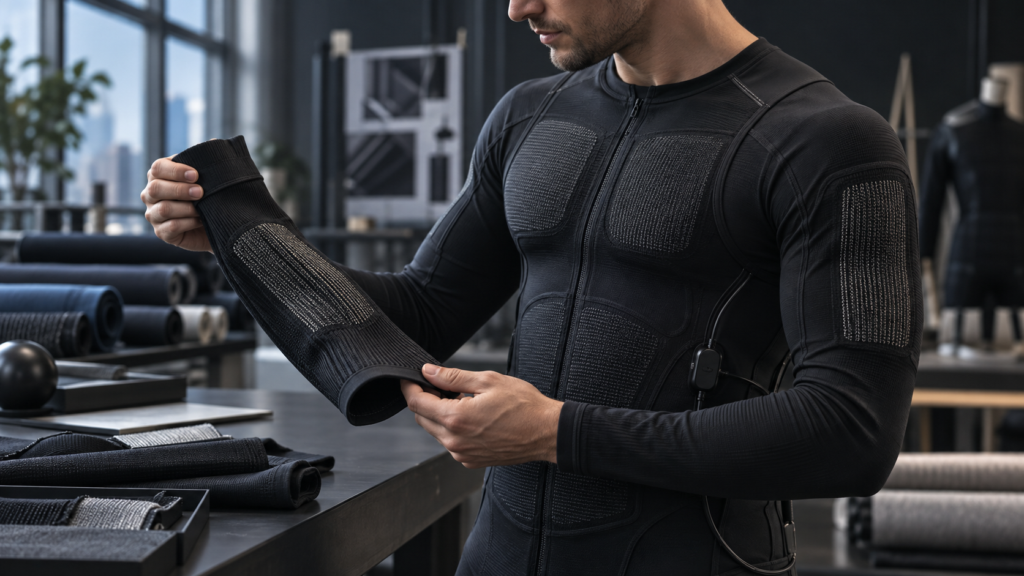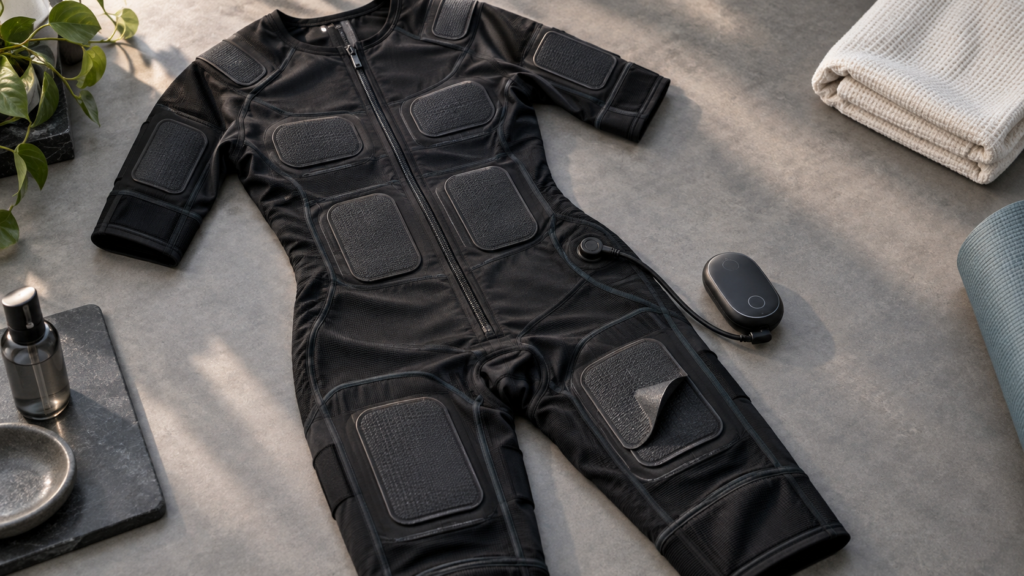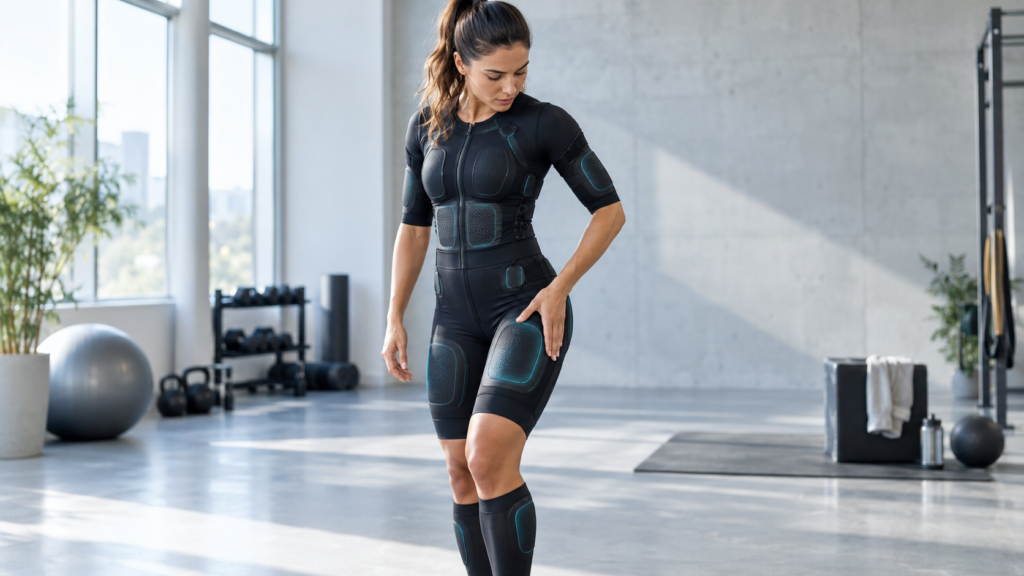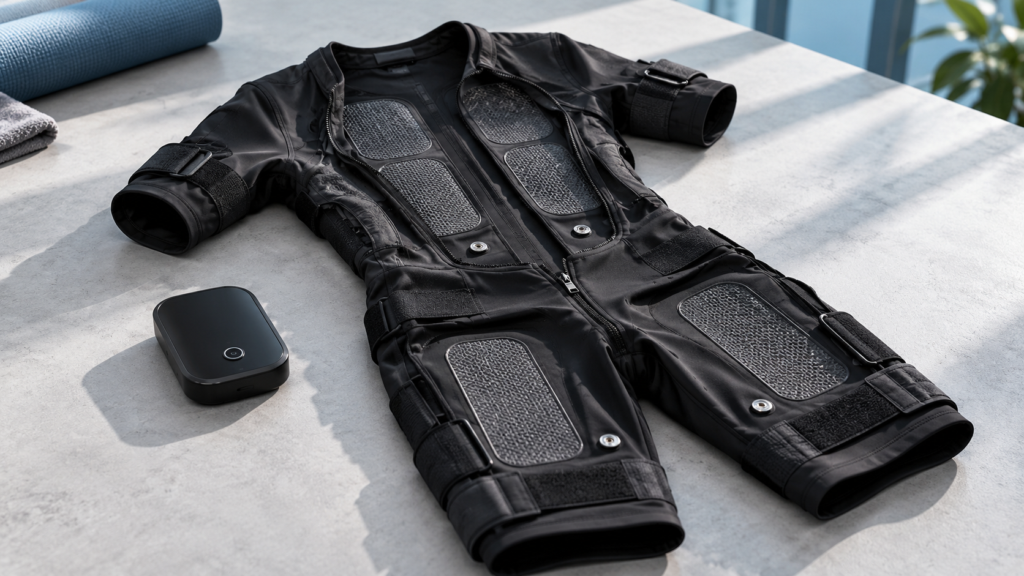
Sports performance training with wireless EMS combines whole-body electrical muscle stimulation’s documented benefits for strength, power, and neuromuscular activation with the movement freedom that allows sport-specific training patterns — creating a training tool that professional coaches and athletes are integrating into preparation and recovery protocols in ways that wired systems could not accommodate. The ability to perform sport-specific movement patterns (sprint mechanics, change of direction, throwing patterns, jump training) with EMS active during the movement itself, rather than in separate conditioning sessions, is a genuinely new training dimension that wireless architecture enables. Research into wireless EMS sports performance continues to expand as more studios adopt this approach.
The physiological rationale for EMS in sports performance is well-supported: EMS training has been shown to increase muscle strength and power output, improve neuromuscular activation patterns, and enhance recovery from high-intensity training — all outcomes directly relevant to athletic performance. The wireless delivery of these benefits during sport-specific movements rather than in isolated conditioning exercises adds a specificity dimension that trained athletes and performance coaches find particularly relevant. Understanding wireless EMS sports performance is key for any trainer looking to modernize their offering.

This article examines how wireless EMS is being integrated into sports performance training — the specific applications, the evidence that supports them, the protocol design principles that athletic EMS requires, and the practical considerations for coaches and trainers incorporating wireless EMS into athletic preparation programs. The evidence supporting wireless EMS sports performance is growing steadily in the professional fitness space.
Strength and Power Development Applications
Wireless EMS’s most researched sports performance application is strength and power development — the domain where the wired EMS evidence base is strongest and where the wireless format adds sport-specific movement capability. Research on EMS for strength and power in athletic populations has found improvements in maximum strength, rate of force development, and vertical jump height that are meaningful for performance-focused applications. [source] For coaches exploring wireless EMS sports performance, proper protocol design is essential.
The wireless format allows strength and power EMS work to be performed in sport-specific positions and movement patterns rather than in the constrained positions that cable management requires. A sprinter working hip drive mechanics, a basketball player performing approach jump patterns, or a martial artist working hip and core rotation can perform these sport-specific movements with EMS active — combining the neuromuscular activation benefits of EMS with the specificity of relevant athletic movement. Clients asking about wireless EMS sports performance deserve clear, evidence-informed guidance.
Rate of force development — the speed at which an athlete can generate maximum force, which is directly relevant to explosive athletic actions — is a training quality that EMS protocols using specific high-frequency parameters may specifically enhance. Protocols designed for power development using higher frequencies and explosive concurrent movements (jump squats, rapid punching combinations, explosive step patterns) combine the neuromuscular training stimulus of EMS with the voluntary explosive effort that develops athletic power expression. The practical application of wireless EMS sports performance varies depending on goals and client profile.
Recovery and Regeneration Applications: Wireless EMS sports performance
Athletic recovery is one of the most practically valuable wireless EMS applications in sports performance contexts. Low-frequency EMS applied to primary working muscles after intense training or competition drives circulation, promotes metabolic waste clearance, and may reduce the inflammatory response and muscle damage that contribute to post-exercise soreness and performance decrements. The wireless format enables recovery EMS to be delivered in flexible settings — training facilities, hotel rooms during travel, outdoor recovery sessions — without requiring the fixed studio environment of wired systems. [source] Studios investing in wireless EMS sports performance report strong client retention and satisfaction.
Recovery wireless EMS protocols use the lowest frequencies (5 to 15 Hz) at very low intensities, producing gentle rhythmic contractions in fatigued muscles without adding meaningful training stimulus. The protocol is passive or near-passive — the athlete is resting, not exercising — and the session duration is typically shorter than training sessions (10 to 15 minutes targeting primary fatigued muscle groups). The athlete’s experience is of gentle, rhythmic muscle movement in muscles that are too sore for active recovery exercise. Anyone serious about wireless EMS sports performance should prioritize certified equipment and trained staff.
Elite sports teams and individual performance programs increasingly incorporate EMS recovery into their daily preparation protocols — timing recovery EMS sessions on the afternoon of heavy training days, on competition days after events, or as part of the morning preparation routine on high training load days. The wireless format makes this flexible scheduling practically achievable in the varied environments of professional sports preparation. The business case for wireless EMS sports performance is supported by both research and real-world results.
Integration with Athletic Training Programs
Wireless EMS integration into athletic training programs requires coordination with the athlete’s broader training periodization — ensuring EMS sessions contribute to the planned training stimulus at the appropriate time in the training cycle rather than adding unplanned fatigue. EMS training sessions add significant neuromuscular and metabolic load; scheduling them during periods of high conventional training load without accounting for the cumulative stress can compromise recovery and adaptation. [source] Getting the most from wireless EMS sports performance requires consistent protocol and progress tracking.

Performance coaches incorporating wireless EMS should develop specific protocols for each phase of the athletic calendar: development-phase protocols with higher-intensity EMS sessions targeting strength and power, competition-phase protocols with lower-intensity maintenance EMS and recovery emphasis, and transition-phase protocols focusing on active recovery and tissue quality maintenance. This periodized approach to EMS within athletic training mirrors the periodization principles that govern all professional sports preparation. Safety remains a top priority in any wireless EMS sports performance program.
Monitoring athlete response to EMS integration — through performance benchmarks, subjective wellness measures, and objective readiness indicators — allows coaches to calibrate EMS load in real time relative to the athlete’s actual recovery status rather than following a rigid schedule. Athletes who are showing signs of accumulated fatigue should have EMS sessions reduced in intensity or frequency regardless of the planned protocol; athletes who are recovering well and performing can accommodate higher EMS training loads. Professionals offering wireless EMS sports performance benefit from ongoing education and certification.
Conclusion
Wireless EMS for sports performance adds a cable-free dimension to the documented performance and recovery benefits of EMS training — enabling sport-specific movement patterns during stimulation, flexible recovery protocol scheduling in varied environments, and integration into athletic preparation programs with a naturalness that wired systems cannot match. [source]
Coaches and athletes who incorporate wireless EMS thoughtfully — with clear protocol design, appropriate periodization, and attentive monitoring of training response — access genuine performance and recovery benefits that complement the athletic development programs EMS is integrated into.
Frequently Asked Questions
Does EMS improve sports performance? [source]
Research supports EMS training’s contribution to strength, power, and neuromuscular activation improvements that are relevant to athletic performance. EMS has been shown to increase maximum strength, rate of force development, and vertical jump height in trained athletic populations. Integration into sports preparation programs should be done with appropriate periodization and performance monitoring.
Can athletes use wireless EMS during sport-specific training?
Yes — wireless EMS enables EMS activation during sport-specific movement patterns, allowing athletes to combine EMS’s neuromuscular stimulation with relevant athletic movements. This specificity is one of the primary advantages of wireless EMS in sports performance contexts relative to wired systems that constrain movement to cable-compatible patterns.
How is EMS used for athletic recovery?
Recovery EMS uses low frequencies (5 to 15 Hz) at very low intensities applied to fatigued muscle groups after training or competition, promoting circulation and metabolic recovery without adding training load. Sessions are passive (no concurrent exercise), typically 10 to 15 minutes targeting primary fatigued muscles, and can be scheduled flexibly with wireless EMS in varied training environments.
How does wireless EMS fit into an athlete’s training schedule?
EMS should be integrated with the athlete’s broader training periodization — higher-intensity EMS sessions during development phases when the athlete can accommodate additional training stress, lower-intensity recovery EMS during competition phases, and transition-phase protocols focusing on recovery. EMS load should be managed as part of total training load, not added independently of the athlete’s recovery status.
Is wireless EMS used by professional athletes?
Wireless EMS is used in professional sports preparation contexts — particularly in European football, athletics, and other sports where EMS has been established in high-performance training culture for longer. Adoption in North American professional sports is growing. Most professional applications involve certified sports performance specialists who design and supervise EMS protocols within the athlete’s comprehensive preparation program.
Ready to explore EMS suit options? Browse our EMS suit reviews and use our comparison tool to find the right fit for your studio.