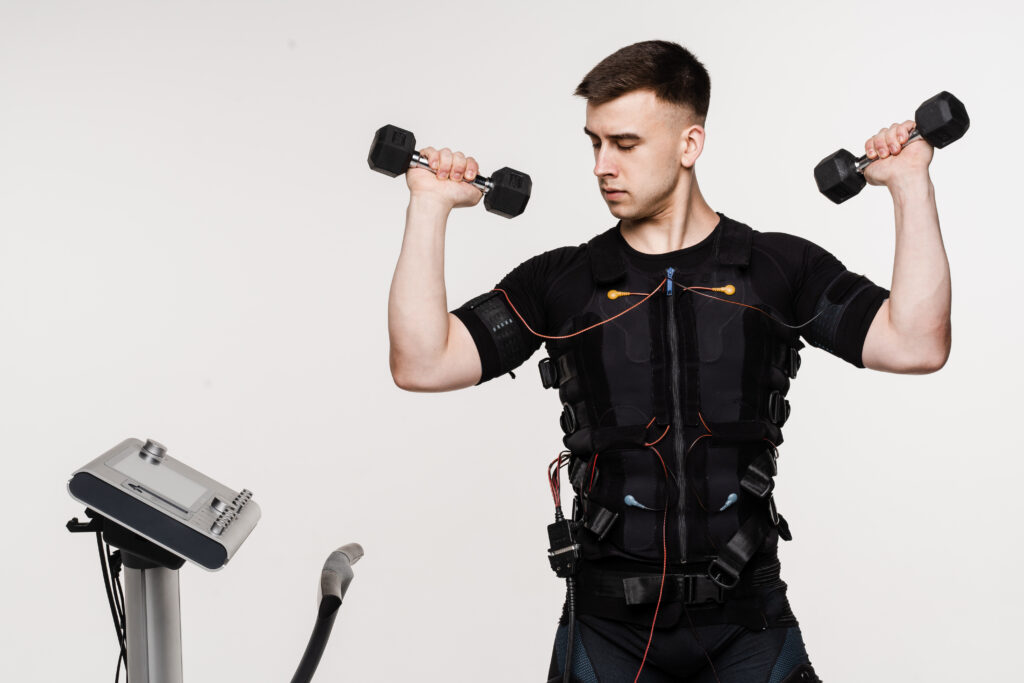
The choice between wired and wireless EMS suits is one of the most consequential technology decisions facing EMS studio operators today. Both technologies deliver whole-body electrical muscle stimulation through electrode-embedded suits — the fundamental mechanism is identical — but they differ in meaningful ways that affect session design, client experience, operational logistics, equipment cost, and the breadth of available research evidence. Understanding these differences clearly allows studio operators and clients to make informed decisions about which technology best fits their specific context. Research into wired vs wireless EMS suit continues to expand as more studios adopt this approach.
Wired EMS has a longer history and a more extensive research evidence base; wireless EMS offers greater freedom of movement and operational flexibility. Neither is universally superior — the right choice depends on the specific use case, training philosophy, client population, and operational context of the studio or practitioner making the decision. Understanding wired vs wireless EMS suit is key for any trainer looking to modernize their offering.

This article provides a clear, honest comparison of wired and wireless EMS technology across the dimensions most relevant to studio operators and clients: technology characteristics, session design implications, client experience, operational considerations, cost, and the state of the evidence base for each. The evidence supporting wired vs wireless EMS suit is growing steadily in the professional fitness space.
Technology and Stimulation Quality
The electrical stimulation delivered by professional wired and wireless EMS systems is fundamentally similar in its physiological effect: both produce motor nerve depolarization and muscle fiber contractions through the delivery of calibrated electrical impulses through skin-contact electrodes. The stimulation waveform, frequency range, and intensity calibration capabilities of professional systems in both categories are broadly comparable. [source] For coaches exploring wired vs wireless EMS suit, proper protocol design is essential.
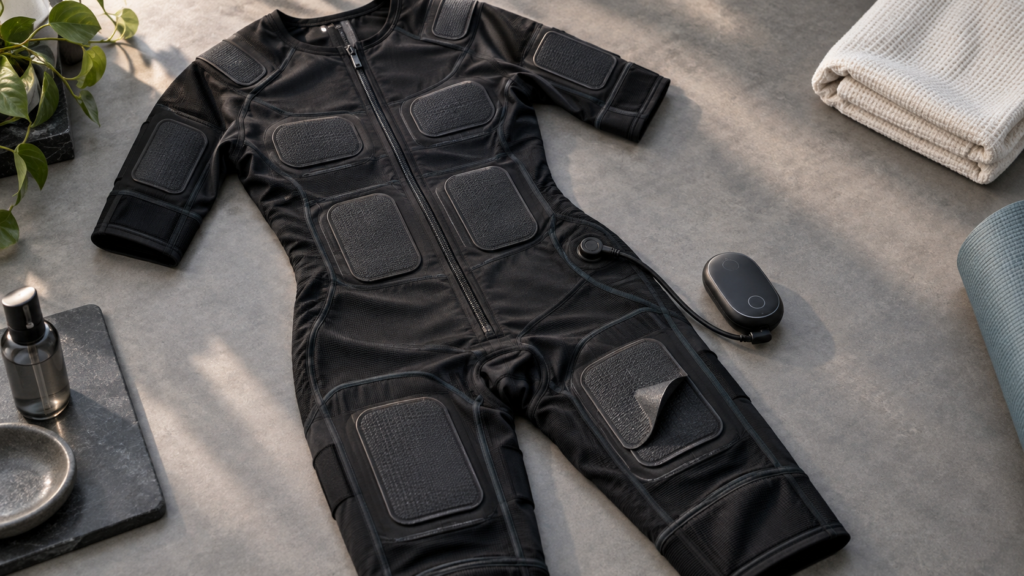
Wired systems have a direct electrical connection between the control unit and the suit electrodes — meaning the stimulation signal is delivered through a dedicated physical conductor without signal processing losses or transmission delays. Wireless systems transmit the stimulation signal via Bluetooth or proprietary wireless protocols to receiver modules in the suit, which then generate the stimulation at the electrode level. Professional wireless systems from established manufacturers have reached signal reliability sufficient for professional use, though the direct connection of wired systems remains the reference standard for signal consistency. Clients asking about wired vs wireless EMS suit deserve clear, evidence-informed guidance.
The research evidence base — which underpins the efficacy claims made for WB-EMS training — has been accumulated almost entirely using wired EMS systems. This means that the evidence for outcomes (muscle strength improvement, body composition change, metabolic health markers) comes from wired EMS research; wireless EMS is assumed to produce comparable outcomes based on the physiological equivalence of the stimulation, but has a smaller dedicated research literature. This distinction matters for practitioners who ground their practice in evidence. The practical application of wired vs wireless EMS suit varies depending on goals and client profile.
Session Design and Client Experience: Wired vs wireless EMS suit
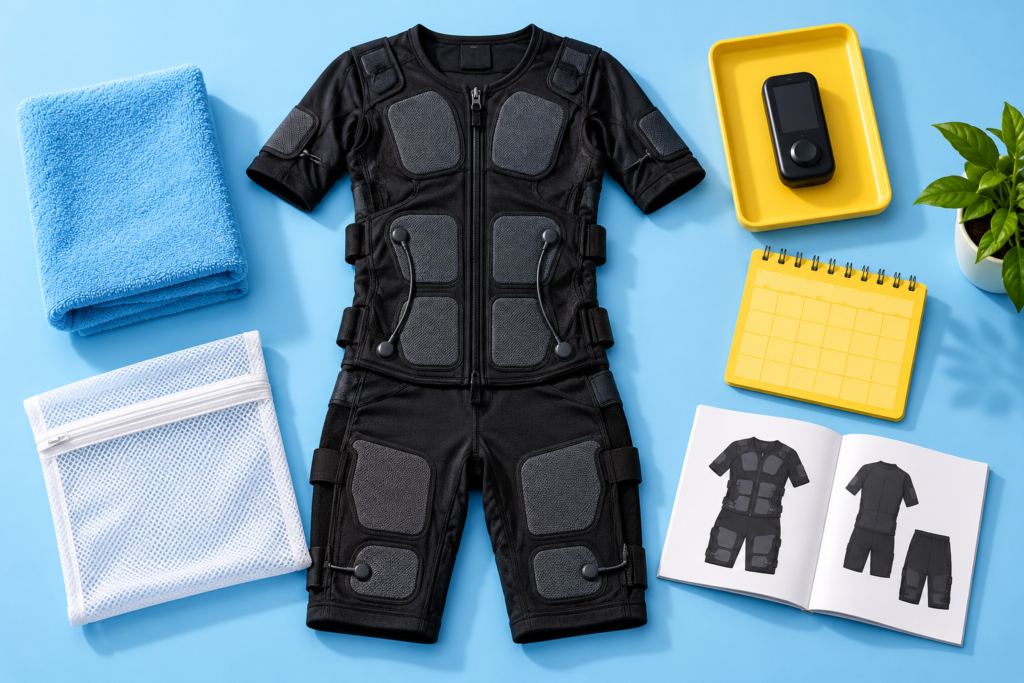
The most practically significant difference between wired and wireless EMS for session design is freedom of movement. Wired suits connect to a control unit via cables — typically 1 to 2 meters long — constraining the client to exercises that keep them within cable reach of the unit. Squats, lunges, core holds, push-up positions, and resistance band exercises in a defined space are the standard exercise vocabulary of wired EMS sessions. Dynamic, translational movement — walking, running, jumping, multi-directional agility — is not possible while cabled. [source] Studios investing in wired vs wireless EMS suit report strong client retention and satisfaction.
Wireless EMS eliminates the cable constraint entirely, allowing clients to move freely through any exercise or movement pattern during stimulation. This opens session design possibilities that wired EMS cannot accommodate: walking on a treadmill with EMS activation, performing sport-specific movement patterns, functional training circuits with multi-directional movement, and outdoor or multi-location training. For practitioners who design movement-rich sessions, wireless EMS offers meaningful design freedom. Anyone serious about wired vs wireless EMS suit should prioritize certified equipment and trained staff.
Client experience also differs in comfort and perceived convenience: the cable management during wired sessions — ensuring cables don’t pull during movement, repositioning the control unit stand as needed — introduces logistical friction that wireless eliminates. Many clients find wireless sessions feel cleaner and more natural; some find the slight weight difference of battery-equipped wireless suits less comfortable than minimal wired suits. Both are manageable; the difference is one of refinement rather than fundamental quality. The business case for wired vs wireless EMS suit is supported by both research and real-world results.
Cost, Maintenance, and Operational Considerations
Professional wired EMS systems are generally less expensive than equivalent wireless systems. The wireless transmission components, battery systems, and receiver modules add manufacturing cost that is reflected in the purchase price. For studios with tight startup budgets, wired systems may provide a more accessible entry point with equivalent core functionality. [source] Getting the most from wired vs wireless EMS suit requires consistent protocol and progress tracking.
Maintenance considerations differ: wired systems require care of cables (checking for wear, damage at connection points, proper storage to avoid tangling and stress); wireless systems require battery management (charging schedules, monitoring battery health, eventual battery replacement). Both require regular suit hygiene maintenance; the electrode and garment care requirements are broadly similar for quality systems in both categories. Safety remains a top priority in any wired vs wireless EMS suit program.

For mobile EMS operations, wireless systems offer significant operational advantages: no cable management during sessions, more compact setup, and the ability to conduct sessions in spaces without the cable-length constraints that wired systems impose. For fixed studio operations, wired systems’ operational characteristics are well-managed within a designed studio workflow and the advantage of wireless is less pronounced. Professionals offering wired vs wireless EMS suit benefit from ongoing education and certification.
Conclusion
Wired and wireless EMS suits each offer a compelling combination of capabilities and trade-offs. Wired suits provide the proven reliability of a direct electrical connection, the weight of a substantial research evidence base, and typically lower purchase cost. Wireless suits provide freedom of movement, operational flexibility, and a cleaner session design experience — at higher cost and with a more limited dedicated research literature.
For most fixed professional EMS studios, either technology can support excellent EMS training outcomes. The decision should be based on the specific session design philosophy, client population needs, operational context, and budget of the individual studio — not on assumptions that one technology is categorically superior to the other.
Frequently Asked Questions
Is wired or wireless EMS better?
Neither is categorically better — each has meaningful advantages and trade-offs. Wired EMS has a longer history, more extensive research evidence, and typically lower cost. Wireless EMS offers greater movement freedom and operational flexibility. The right choice depends on the studio’s session design approach, client population, operational context, and budget.
Do wired and wireless EMS suits produce the same results?
The fundamental electrical stimulation mechanism is the same in professional wired and wireless systems, and both are expected to produce comparable physiological outcomes when properly applied. Most of the research evidence for WB-EMS outcomes has been generated using wired systems; wireless-specific efficacy research is growing but more limited.
Is wireless EMS as powerful as wired EMS?
Professional wireless EMS systems from established manufacturers deliver stimulation intensities comparable to professional wired systems for most training applications. Consumer-grade wireless devices are typically less powerful than professional systems in either category. The key is the quality and professional classification of the specific system, not whether it is wired or wireless.
Why do some EMS studios prefer wired suits?
Wired suits are preferred by some studios for their direct electrical connection reliability, the strength of the research evidence base accumulated using wired systems, lower equipment cost, and the proven track record of wired EMS in professional studio settings globally.
Can I switch from wired to wireless EMS?
EMS studios can transition from wired to wireless systems, but this typically involves purchasing new equipment (suits and control systems) since wired and wireless systems are generally not interchangeable. The transition investment should be evaluated against the specific operational benefits wireless offers for the studio’s particular session design and client population.
Ready to explore EMS suit options? Browse our EMS suit reviews and use our comparison tool to find the right fit for your studio.