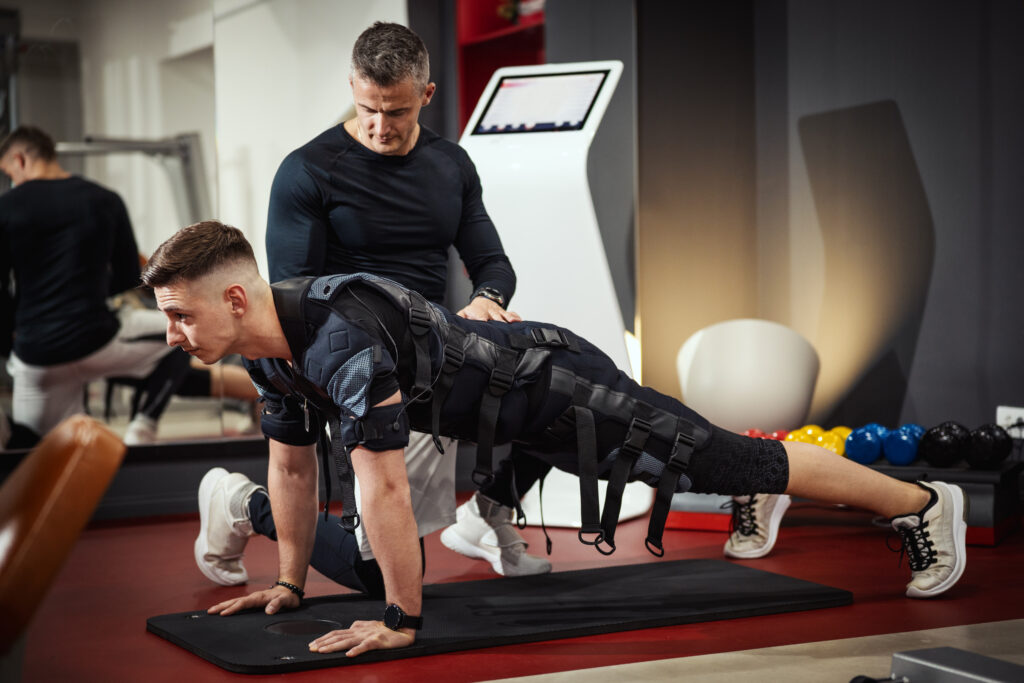
Professional sports organizations operate at the frontier of athletic performance technology. When a legitimate tool offers even a marginal performance or recovery advantage, elite teams and their performance staff have both the resources and the motivation to explore it. EMS training has been part of the professional sports conversation for longer than many casual sports fans might expect — with roots in European professional sport that predate the technology’s current broader awareness. Research into professional sports EMS continues to expand as more studios adopt this approach.
Understanding how professional sports teams approach EMS training — what they use it for, how it integrates with their performance programs, and what their experience suggests about the technology’s real-world applications — provides useful context for athletes and coaches at every level who are evaluating EMS for their own programs. Elite adoption does not guarantee effectiveness, but it does reflect judgment calls made by sophisticated performance professionals with access to the best available evidence and expert consultants. Understanding professional sports EMS is key for any trainer looking to modernize their offering.

This article examines what is publicly known about EMS adoption in professional sports, the common applications reported by professional performance staff, and what the professional sports experience suggests about where EMS technology offers genuine versus overstated value. The evidence supporting professional sports EMS is growing steadily in the professional fitness space.
EMS in European Professional Sport
EMS training’s adoption in professional sports has been most advanced in European professional football (soccer) and cycling — sports with long traditions of sports science integration and significant investment in performance technology. Several top-tier European football clubs have been reported to use EMS for both recovery protocols and supplementary conditioning, with the technology integrated into comprehensive player performance management systems. [source] For coaches exploring professional sports EMS, proper protocol design is essential.
Professional cycling teams have used EMS recovery devices particularly during Grand Tour events — multi-day races where the cumulative physical demand across three weeks of racing is extreme and the recovery quality between stages directly influences rider performance and health. The portability of EMS recovery devices makes them practical tools in the team bus and hotel room contexts where stage race recovery occurs. Clients asking about professional sports EMS deserve clear, evidence-informed guidance.
Rugby union and rugby league — sports with extremely high physical demands and dense playing schedules — have also reported EMS adoption, primarily for recovery between training sessions and matches. The physical contact demands of rugby create particularly acute recovery needs, and performance teams at elite clubs have been among the early adopters of EMS recovery technology in team sport contexts. The practical application of professional sports EMS varies depending on goals and client profile.
EMS in North American Professional Sport: Professional sports EMS
In North American professional sports, EMS technology has been adopted across multiple leagues, though public information about specific team programs is limited due to the competitive intelligence sensitivity of performance technology decisions. Individual professional athletes across the NFL, NBA, MLB, and NHL have publicly discussed EMS training as part of their personal performance and recovery programs. [source] Studios investing in professional sports EMS report strong client retention and satisfaction.
The NFL’s physical demands — high-intensity, high-contact team sport with a demanding weekly schedule across a long season — create natural applications for EMS recovery technology. The sport’s combination of explosive physical demands (for conditioning EMS) and recovery-intensive weekly schedule (for recovery EMS) has driven interest among NFL strength and conditioning departments. Anyone serious about professional sports EMS should prioritize certified equipment and trained staff.
NBA players and teams have shown interest in EMS given the league’s condensed schedule — teams may play four games in five days during parts of the season — and the high training volume of individual skill development that NBA players maintain year-round. Recovery EMS for lower-body maintenance has been reported as a technology explored within some NBA performance programs. The business case for professional sports EMS is supported by both research and real-world results.
What Professional Sport Experience Tells Us
The professional sports experience with EMS, filtered through the available public information, suggests several consistent patterns. EMS recovery applications have been adopted more broadly and with greater confidence than EMS conditioning applications — professional performance staff appear to view EMS recovery as a practical and relatively low-risk tool, while EMS conditioning is approached with more specificity about when and how it adds value within comprehensive training programs. [source] Getting the most from professional sports EMS requires consistent protocol and progress tracking.

The best-evidenced professional applications are those that align with the strongest research evidence: recovery between sessions and matches, targeted activation for specific muscle groups relevant to injury prevention, and supplementary conditioning during specific training phases rather than as an always-on, every-session tool. Safety remains a top priority in any professional sports EMS program.
Professional adoption does not mean universal adoption, and not every team or athlete who has evaluated EMS has concluded it provides sufficient value to maintain in their program. The sports technology landscape is littered with tools that attracted professional attention before evidence and practical experience revealed limitations. EMS’s evidence base is stronger than many sports technologies, but professional program staff evaluate it with the same critical lens as any other performance investment. Professionals offering professional sports EMS benefit from ongoing education and certification.
Conclusion
EMS training has earned genuine attention and adoption at professional sport levels across multiple disciplines and countries — a meaningful indicator of the technology’s perceived value when evaluated by sophisticated performance professionals with resources to explore multiple options. The most consistently adopted applications are recovery-focused, with selective conditioning applications in specific training phases.
For coaches and athletes at lower competition levels, the professional sports experience with EMS offers useful signal: the technology is worth considering seriously, its recovery applications are its most broadly adopted, and integration within a comprehensive performance program is more consistently valuable than EMS used as a standalone intervention.
Frequently Asked Questions
Do professional athletes use EMS training?
Yes — various professional athletes across multiple sports and leagues have publicly reported using EMS training, and multiple professional sports organizations have integrated EMS technology into their performance programs. The specific applications vary, with recovery EMS being more broadly adopted than conditioning EMS in professional contexts.
Which professional sports use EMS most commonly?
EMS recovery technology has been most publicly reported in European professional football (soccer), professional cycling, rugby, and various North American professional sports including the NFL and NBA. The technology’s adoption spans team and individual sports across multiple countries and competition levels.
Does professional use of EMS mean it definitely works?
Professional adoption indicates that experienced performance professionals have judged EMS to offer sufficient value to include in elite programs — but it does not guarantee effectiveness for every athlete or application. Professional teams have significant resources and incentives to critically evaluate performance technology, making their adoption meaningful, though not conclusive evidence on its own.
Is EMS a secret training tool used only by elite athletes?
No — EMS training technology has become increasingly accessible to athletes at all competition levels, from recreational to professional. While elite programs were early adopters with access to professional-grade equipment, modern EMS suits and devices have become available to a much broader population of athletes and coaches.
What EMS applications are most used in professional sports?
Based on available public information, recovery-focused EMS applications are the most broadly adopted in professional sports — used between training sessions and competitions to support muscle recovery. Conditioning applications are used more selectively, typically in specific training phases and for targeted physical development goals rather than as daily training tools.
Ready to explore EMS suit options? Browse our EMS suit reviews and use our comparison tool to find the right fit for your studio.