Wireless EMS suits produce the same electrically driven muscle contractions as wired systems — the physiology is identical. What differs is the engineering that delivers the electrical stimulus without a cable: miniaturized stimulation electronics, battery power, wireless communication, and control software that together replicate the functionality of a wired system’s tethered control unit in a mobile, cable-free architecture. Research into how wireless EMS suits work continues to expand as more studios adopt this approach.
Understanding how wireless EMS suits actually work — not just that they work without a cable, but the specific technical components and their functions — is valuable for anyone evaluating wireless EMS technology professionally, whether as a studio operator, a practitioner, or an informed consumer. It clarifies what makes wireless EMS more expensive, what operational requirements the technology creates, and what the meaningful technical quality differences between systems are. Understanding how wireless EMS suits work is key for any trainer looking to modernize their offering.

This article explains wireless EMS technology in accessible detail — the stimulation electronics, battery system, wireless communication, and control software that together constitute a professional wireless EMS system. The evidence supporting how wireless EMS suits work is growing steadily in the professional fitness space.
The Stimulation Electronics
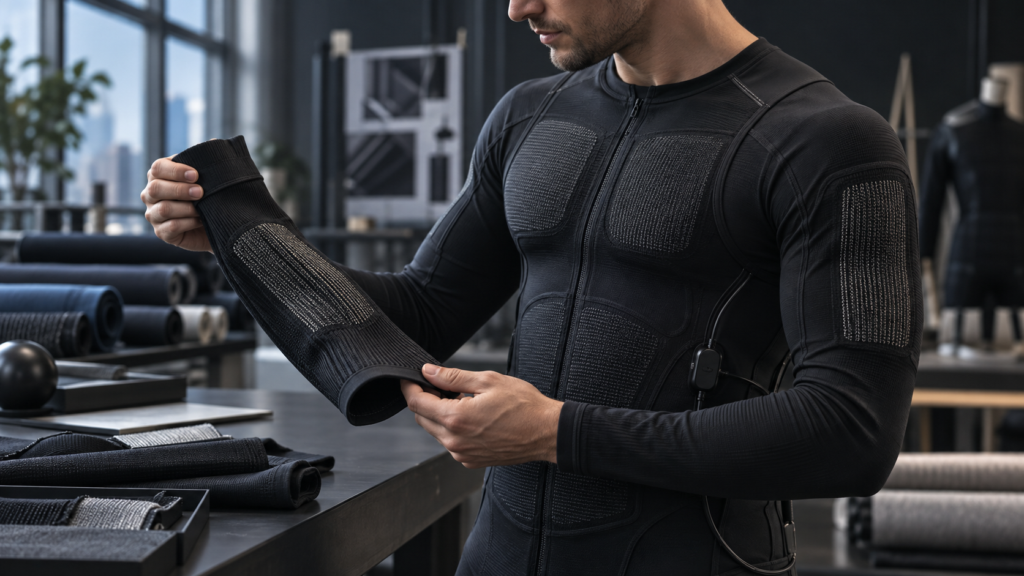
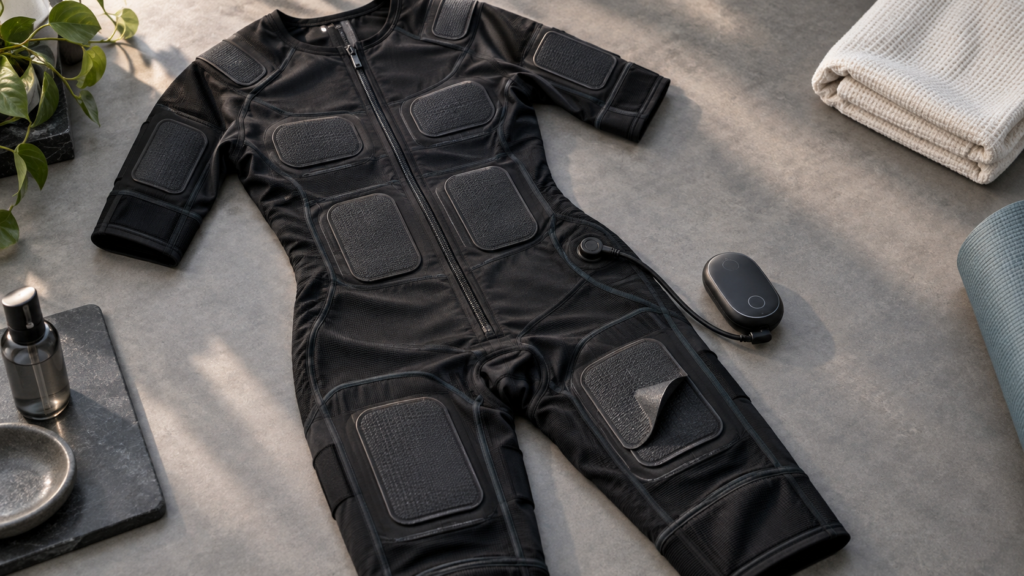
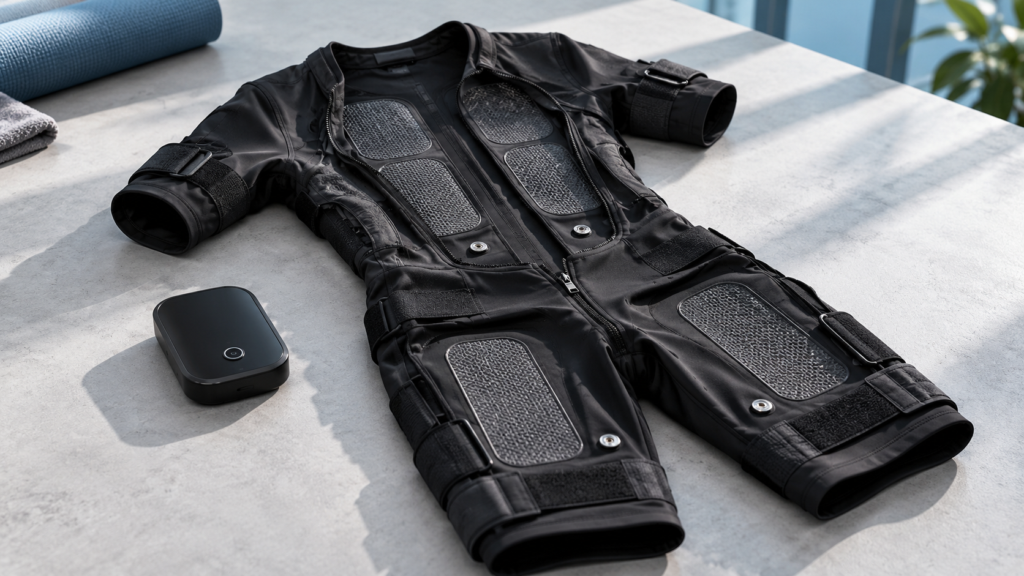
The core function of any EMS system — wired or wireless — is generating and delivering precisely controlled electrical current through electrode areas to target muscle groups. In a wired system, this is accomplished by a standalone control unit that delivers current through cables. In a wireless system, the electronics that generate and deliver this current must be miniaturized into a form factor that can be worn on the body — either integrated directly into the garment or housed in a compact unit worn on the body and connected to the suit’s electrodes by very short integrated connections. [source] For coaches exploring how wireless EMS suits work, proper protocol design is essential.
The miniaturized stimulation electronics must accomplish everything the wired control unit does: generating the specified waveform at the specified frequency and pulse width, delivering independently controlled current to each channel at the programmed intensity, managing the timing of stimulation cycles (on and off periods), and implementing safety limits that prevent current delivery outside safe parameters. These functions in a wearable form factor require sophisticated low-power electronic design that represents significant engineering investment. Clients asking about how wireless EMS suits work deserve clear, evidence-informed guidance.
Waveform quality — the precision of the electrical waveform that drives muscle contractions — is a critical technical quality dimension in wireless systems, as in wired. The ability to deliver precisely specified biphasic waveforms with consistent parameters across all channels and throughout the session, despite the power and thermal management constraints of battery-powered miniaturized electronics, is what separates professional wireless EMS systems from lower-quality alternatives. The practical application of how wireless EMS suits work varies depending on goals and client profile.
Battery Technology and Power Management: How wireless EMS suits work
Battery power is what makes wireless EMS mobile — and battery technology is one of the primary constraints on wireless EMS design. The battery must store sufficient energy to power all channels of stimulation at working intensities for a full session (typically 20 to 25 minutes), be rechargeable to full capacity rapidly enough to support multiple daily sessions, be compact and lightweight enough to be worn comfortably during training, and have sufficient cycle life to remain reliable across hundreds of charge-discharge cycles. [source] Studios investing in how wireless EMS suits work report strong client retention and satisfaction.
Lithium-ion and lithium-polymer battery technology provides the energy density necessary for wireless EMS applications — the same battery chemistry found in smartphones and professional wearable electronics. Battery management circuits that prevent overcharging, deep discharge, and thermal overloading are essential safety components of wireless EMS battery systems. Professional systems include these protections; lower-quality systems may not. Anyone serious about how wireless EMS suits work should prioritize certified equipment and trained staff.
Battery capacity and session endurance vary across professional wireless systems. Manufacturers publish rated session endurance; real-world performance depends on stimulation intensity levels used during the session (higher intensities draw more current and reduce endurance). Studios should confirm that the rated battery endurance comfortably covers their actual session duration and intensity levels, with margin for battery degradation over the operational life of the unit. The business case for how wireless EMS suits work is supported by both research and real-world results.
Wireless Communication and Control
The wireless link between the control application and the suit’s electronics must transmit parameter commands (frequency, intensity per channel, timing) in real time with sufficient reliability and low enough latency that trainer adjustments during the session are immediately reflected in the stimulation. Bluetooth Low Energy (BLE) is the most common wireless protocol used in professional EMS systems, offering the combination of range, data rate, and power efficiency appropriate for the application. [source] Getting the most from how wireless EMS suits work requires consistent protocol and progress tracking.
Control application software — running on a tablet or smartphone — provides the trainer interface for parameter management, client record keeping, and session programming. The quality of this software significantly affects the daily operational experience of professional EMS use: the clarity and responsiveness of the intensity controls, the ease of client record management, the reliability of the wireless connection status display, and the depth of session programming and data export capabilities all reflect the development investment behind the control application. Safety remains a top priority in any how wireless EMS suits work program.

Security and data management are software quality dimensions that matter in professional EMS operations: client health data stored in the control application is sensitive personal information requiring appropriate protection. Professional wireless EMS systems should implement appropriate data protection in their control software; operators should confirm the data management practices of their chosen system comply with applicable data protection regulations. Professionals offering how wireless EMS suits work benefit from ongoing education and certification.
Conclusion
The technology that makes wireless EMS suits work without cables — miniaturized stimulation electronics, battery power management, wireless communication, and control software — represents significant engineering complexity that explains both the premium cost of professional wireless systems and the quality differences between well-engineered professional systems and lower-quality alternatives. [source]
Understanding the technology helps practitioners evaluate wireless EMS systems more accurately — assessing stimulation quality, battery performance, signal reliability, and software capability as the substantive technical dimensions that determine professional system quality, rather than focusing on aesthetic features or marketing claims.
Frequently Asked Questions
What electronics are inside a wireless EMS suit? [source]
Professional wireless EMS suits contain miniaturized stimulation electronics (generating and delivering precisely controlled electrical current to electrode channels), a battery system (powering the electronics through the session), wireless communication components (receiving parameter commands from the control app), and safety circuits (preventing out-of-range current delivery). These electronics are housed in a compact wearable unit integrated with or worn alongside the suit.
What wireless protocol do EMS suits use?
Most professional wireless EMS systems use Bluetooth Low Energy (BLE) for communication between the control application and the stimulation unit. BLE provides suitable range (typically 10 to 30 meters), sufficient data rate for parameter transmission, and low power consumption appropriate for battery-powered wearable electronics.
How long does a wireless EMS battery take to charge?
Charge times vary by system and battery capacity, but professional wireless EMS units typically charge to full in 1 to 3 hours. Studios with high session volumes typically use multiple units in rotation — some in use, others charging — to ensure sufficient charged units are always available.
Can wireless EMS signal be disrupted?
Wireless EMS communication can potentially be disrupted by interference from other wireless devices operating in the same frequency band in dense electronic environments. Professional systems are engineered to minimize this risk. In practice, most professional wireless EMS operators report reliable signal performance, but awareness of the theoretical risk and attention to operating environment is appropriate.
Is wireless EMS software important?
Yes — the control application software significantly affects the daily professional experience of wireless EMS operation. Well-designed software provides clear, responsive intensity controls, reliable wireless connection management, efficient client record keeping, and useful session data management. Software quality is a meaningful dimension to evaluate alongside stimulation quality when comparing wireless EMS systems.
Ready to explore EMS suit options? Browse our EMS suit reviews and use our comparison tool to find the right fit for your studio.