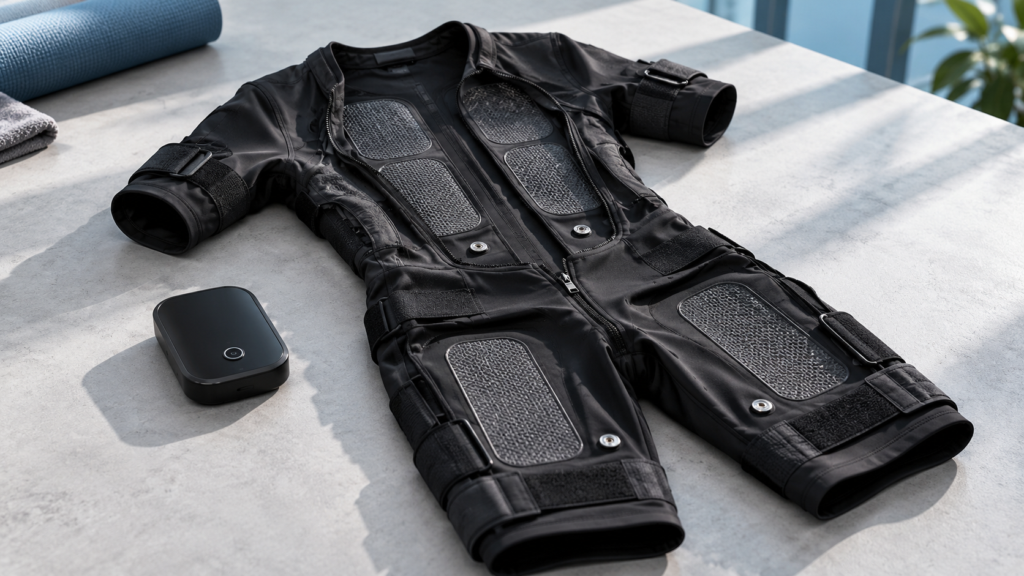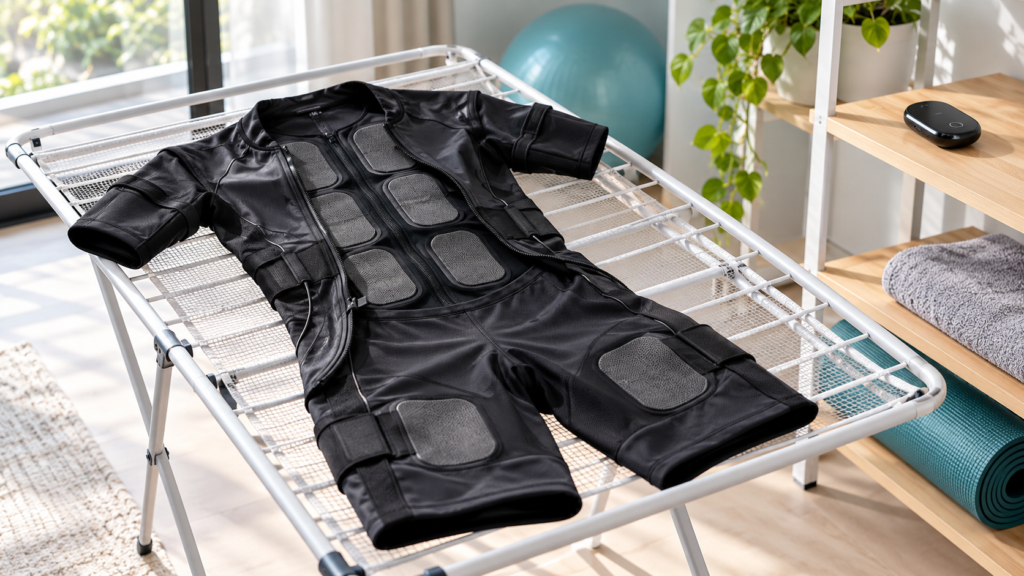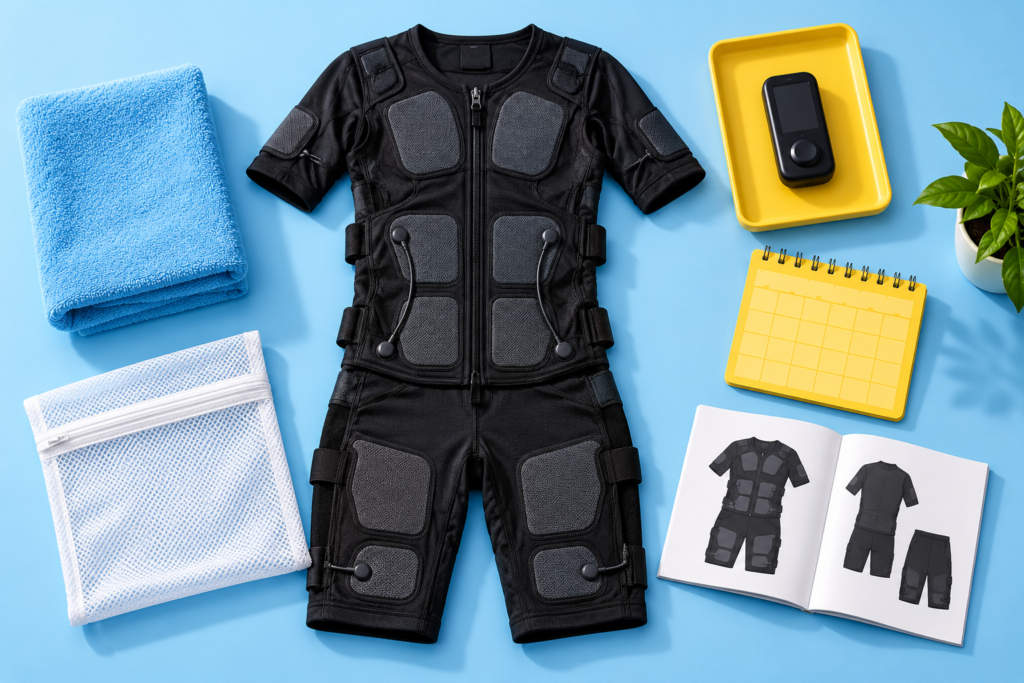
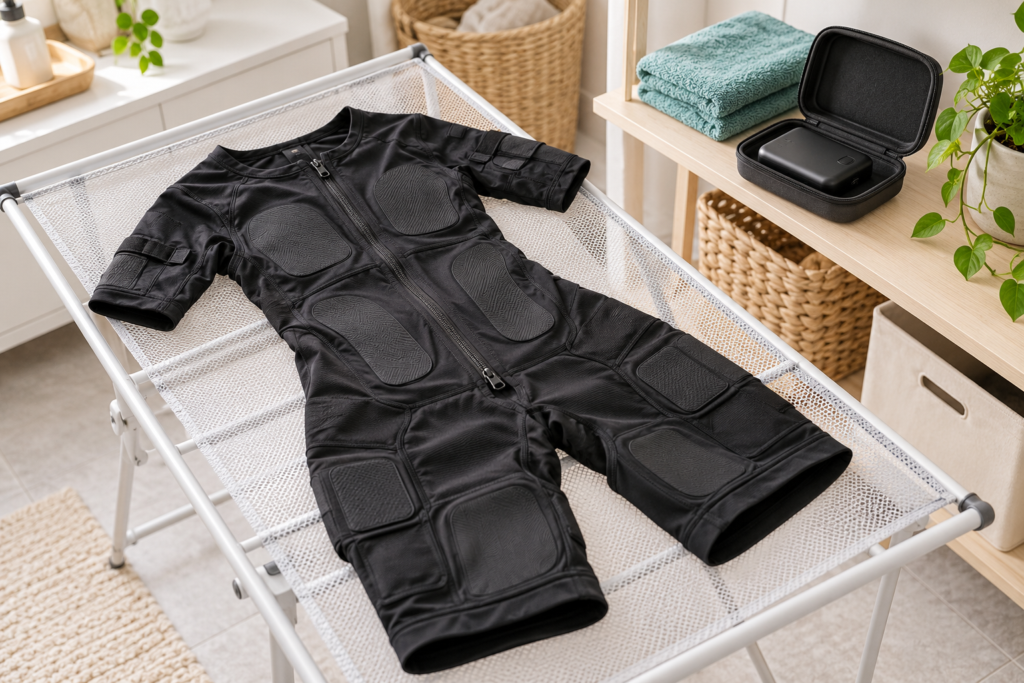
Drying an EMS suit is not the same as drying an ordinary workout shirt. Your suit combines clothing with electrodes, connections, and electrical pathways. Its care requirements depend on how those parts are made and assembled.
Research on conductive textile electrodes identifies durability and skin contact as important challenges. However, a general textile study cannot tell you how to dry your particular suit.
Start with the care label and the manufacturer’s instructions for your exact model. If they require air drying, do not substitute a dryer because the garment feels durable. If the label and manual appear to conflict, ask the manufacturer before proceeding.
Start after use or washing
Do not leave a wet or sweat-soaked suit compressed in a gym bag. PEPPER’s storage and maintenance instructions warn against leaving its suit packed while wet because mildew and bacteria may develop.
After your session, remove the garment carefully and follow its cleaning requirements. You do not necessarily need to wash every suit after every workout.
For example, Wiemspro’s care guidance discusses hand washing, removing accumulated mineral salts, and drying in a ventilated area. Your own suit may have different requirements.
Once the approved cleaning step is complete, arrange the garment for drying rather than leaving it bundled up.
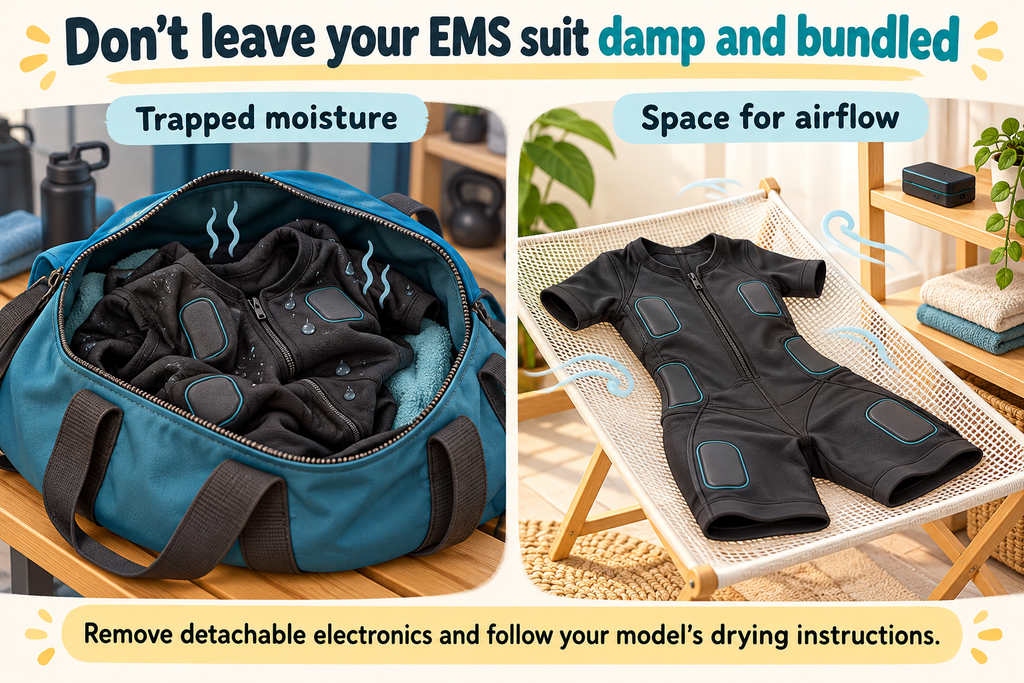
Remove detachable electronics as instructed
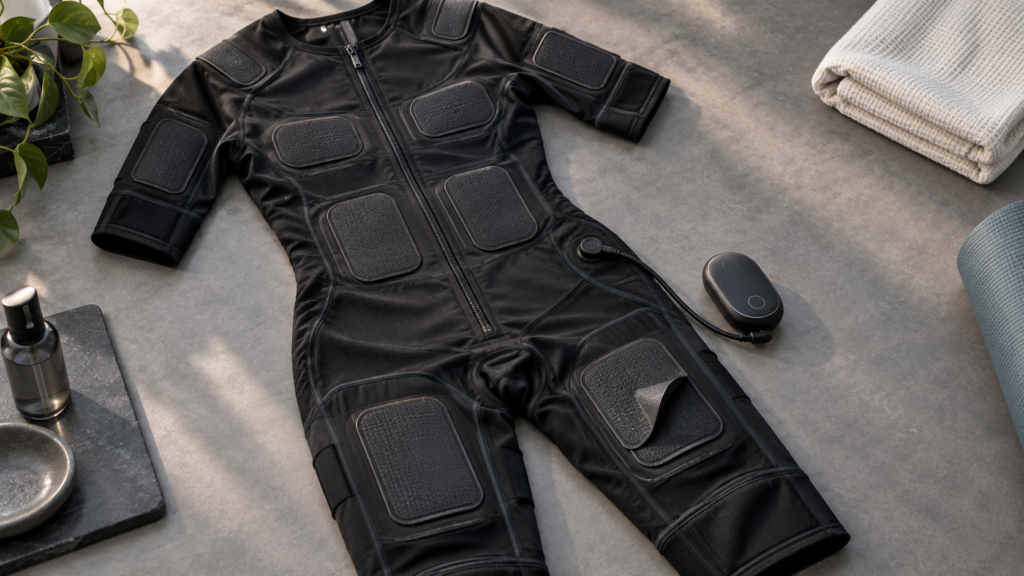
Turn the system off and remove the controller, power box, battery, or detachable cables according to the manual. Check pockets and attachment points so you do not accidentally leave removable electronics with the garment.
Do not pull out wiring or components that are built into the suit. “Remove the electronics” means removing the parts the manufacturer designed you to detach.
Clean the controller separately
Follow the controller’s own cleaning instructions. A washable suit does not automatically mean its power box is washable.
For example, PEPPER specifies cleaning its power box with a soft, dry cloth.
If liquid enters a controller or charging port, stop using it and contact the manufacturer for instructions before charging or powering it on. Do not assume that a dry exterior means the inside is ready for use.
Avoid forceful wringing
Do not twist the suit aggressively to squeeze out water unless its manufacturer explicitly permits that method.
An EMS garment may contain conductive panels, seams, and connections that need different handling from ordinary sportswear. Follow the stated method for removing excess water rather than improvising.
Check whether spinning is allowed
Machine washing and spin drying are separate permissions. A suit can allow one while restricting the other.
For example, eaglefit’s cleaning FAQ specifies a delicate wash at a maximum of 30°C in the supplied laundry bag, without spinning.
If your instructions permit gentle pressing, a towel method, or a particular spin setting, follow those directions. If they do not explain how to remove excess water, ask the manufacturer.
Arrange the suit without stretching it
Gently straighten the garment so sleeves, legs, straps, and overlapping panels are not unnecessarily bunched together.
Do not pull on electrode panels, connector bases, or wiring to reshape the suit. Avoid stretching a wet garment to force it back into position.
Follow the care instructions for zippers and hook-and-loop closures. Keep exposed hooks from catching on delicate fabric while handling the suit.
Provide airflow
Use a clean, ventilated location that meets the manufacturer’s instructions. Wiemspro recommends a ventilated drying area, while PEPPER specifies keeping its suit in a cool, dry, well-ventilated environment.
Arrange the garment so overlapping fabric does not unnecessarily block airflow.
Hang or lay flat according to the label
Do not assume every EMS suit should hang from its shoulders. Follow the drying position specified for your garment.
If hanging is permitted, support the suit without pulling on its electrical connections. If flat drying is required, use the surface or arrangement recommended by the manufacturer.
There is no single drying position that suits every garment construction.
Avoid unapproved heat
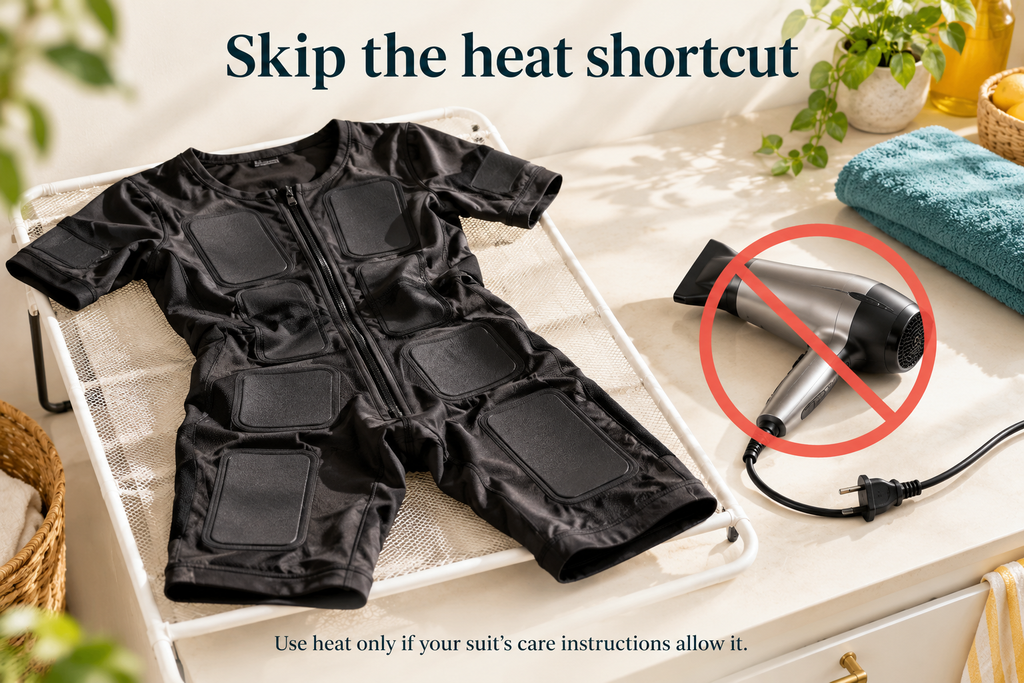
Do not use a heat source to speed up drying unless the instructions for your exact suit allow it.
PEPPER explicitly requires air drying and prohibits putting its suit in a dryer. Its manual also includes a prohibition on ironing.
Unless your manufacturer permits them, avoid using:
- A tumble dryer.
- A radiator or space heater.
- A hair dryer or heat gun.
- An iron or garment steamer.
- Direct sunlight as a drying method.
- A hot vehicle.
These methods introduce conditions that may fall outside the garment’s approved care instructions. A fabric that tolerates warmth does not establish that its electrodes, connections, or other components tolerate the same exposure.
Protect connectors while drying
Keep contacts and connectors away from standing water, dirt, and objects that could damage them. Position covers and flaps as the manufacturer directs.
Do not insert objects into ports or scrape contacts to remove residue. Use only the cleaning method approved for that component.
For example, PEPPER permits carefully wiping exposed connector pins with a dry cloth to remove visible dust or particles. That instruction concerns exposed pins, not cleaning inside every type of charging port.
If residue remains or a contact looks damaged, contact support before using the system.
Check more than the outer fabric
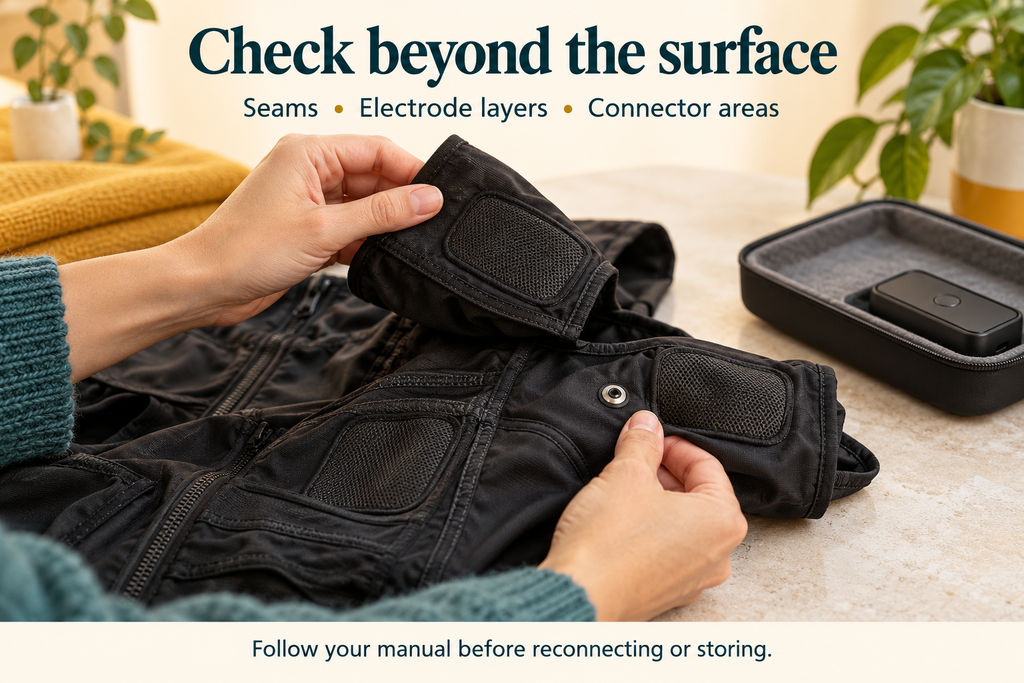
The outside can appear dry while thicker or overlapping areas still hold moisture.
Check accessible seams, cuffs, electrode layers, padded sections, and the fabric around connector attachments. Do not open sealed components or dismantle the garment to inspect them.
Follow any drying time specified by the manufacturer. A stated time should not replace checking whether the garment has actually dried.
If you are unsure whether moisture remains near an electrical connection, allow more drying time within the approved method or ask the manufacturer for guidance.
What if drying takes too long?
High humidity, limited airflow, and overlapping fabric can make drying slower.
Improve ordinary room ventilation or adjust the garment’s position within the permitted drying method. Separate overlapping sections where you can do so without stretching the suit or stressing its connections.
Do not compensate by adding unapproved heat.
If the suit remains unusually wet, develops a persistent odor, or appears to have water inside a sealed component, contact the manufacturer before using it again.
Inspect before storage or training
Once the garment is dry, check for visible changes, including:
- Peeling or separating layers.
- Electrode panels that appear distorted.
- Residue or discoloration.
- Loose seams, snaps, or contacts.
- Persistent odor.
- Areas that have become unusually stiff.
These observations do not identify the cause by themselves. They are reasons to check the manufacturer’s troubleshooting instructions or contact support.
PEPPER’s care instructions specifically call for inspecting the suit after cleaning and contacting the company if visible residue remains after repeated cleaning.
Before training, complete your model’s usual equipment and contact checks. Before storage, make sure the garment is fully dry.
Frequently asked questions
Can an EMS suit go in a tumble dryer?
Only if the exact care label and manufacturer’s instructions permit it and specify the conditions.
For example, PEPPER requires air drying and prohibits tumble drying. Do not assume another suit follows the same rules.
Can I dry an EMS suit in direct sunlight?
Use direct sunlight only if your manufacturer permits it. Otherwise, choose an approved drying location rather than using sun exposure to speed up the process.
Should I hang the suit or lay it flat?
Follow your garment’s label or manual. Different constructions may require different support and drying positions.
If the instructions do not specify a position, ask the manufacturer rather than assuming hanging or flat drying is suitable.
Can I reattach the controller while the suit is slightly damp?
Follow the instructions for the exact system. Moisture used intentionally at an electrode during training is different from moisture remaining after washing, particularly around electrical connections.
Do not treat an instruction to moisten an electrode as permission to connect electronics to a freshly washed garment.
Do I need to wash the suit after every workout?
Not necessarily. Cleaning frequency varies by manufacturer and model.
Follow the stated cleaning schedule and any instructions for sweat, odor, or visible residue. Avoid applying another brand’s washing frequency to your suit.
The practical takeaway
Remove detachable electronics as instructed, handle the garment gently, provide airflow, and avoid unapproved heat. Check the full garment rather than judging dryness from its outer surface.
The correct method is model-specific. Give the suit the time its approved drying method requires.
Once it is completely dry, follow the EMS suit storage guide to protect the garment, connectors, and electronics between sessions.