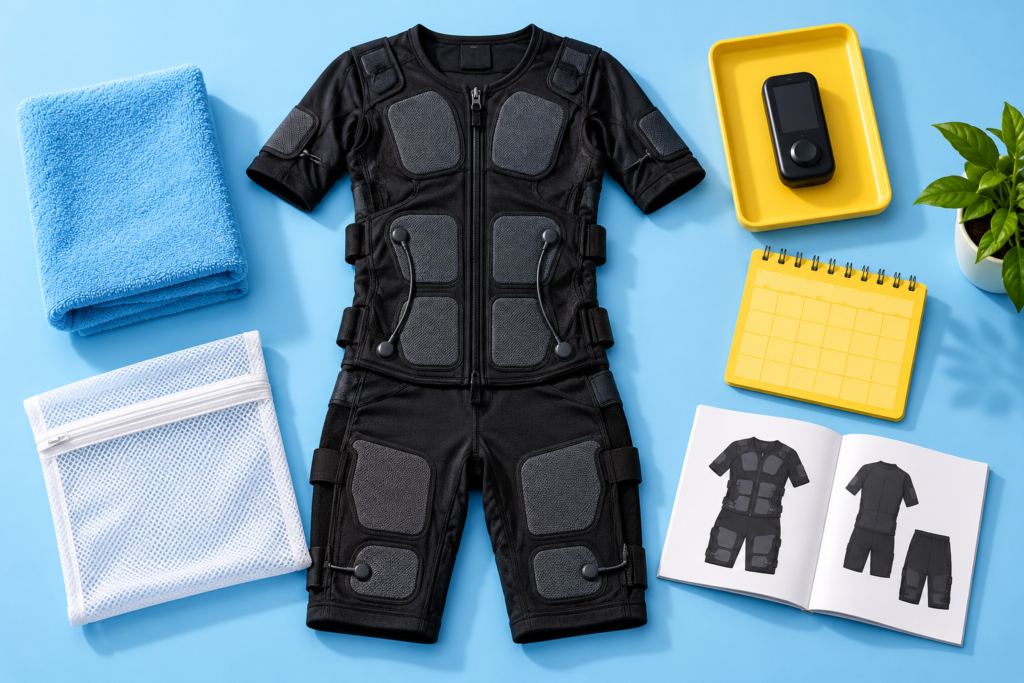

EMS training, used intelligently within a comprehensive weight management program, can be a genuinely effective tool for body composition improvement. But EMS training used in isolation — without attention to nutrition, lifestyle factors, and the broader context of energy balance — produces far less impressive results. Understanding how to structure EMS as part of a complete program is essential for people who want to use this technology effectively for weight management. Research into EMS weight management program continues to expand as more studios adopt this approach.
A comprehensive weight management program has several interconnected components: the training stimulus that builds and maintains muscle mass, the nutritional strategy that manages caloric intake and supports muscle protein synthesis, the cardiovascular conditioning that contributes to caloric expenditure and metabolic health, and the behavioral and lifestyle factors that determine long-term adherence and success. EMS has a specific and valuable role to play within this framework — but it is one component, not the entirety of the program. Understanding EMS weight management program is key for any trainer looking to modernize their offering.

This article provides practical guidance on how to integrate EMS training effectively within a comprehensive weight management program — addressing how often to train, how to pair EMS with nutrition, what additional exercise complements EMS most effectively, and how to track progress in ways that reflect genuine body composition change rather than misleading scale-focused metrics. The evidence supporting EMS weight management program is growing steadily in the professional fitness space.
Setting the Foundation: Nutrition and EMS
Nutrition is the most powerful lever in any weight management program, and EMS training does not change this fundamental truth. The caloric intake relative to caloric expenditure determines whether fat loss occurs over time, and no training program — including EMS — can override a persistent caloric surplus. Establishing an appropriate nutritional strategy before or alongside beginning EMS training is essential for the training to produce its intended body composition effects. [source] For coaches exploring EMS weight management program, proper protocol design is essential.
For fat loss alongside the muscle maintenance that EMS training supports, a moderate caloric deficit — approximately 300 to 500 kilocalories below total daily energy expenditure — provides sufficient negative energy balance for progressive fat loss while preserving the energy substrate needed for muscle protein synthesis from the EMS training stimulus. More aggressive caloric restriction impairs the muscle-building response and produces faster lean mass loss alongside fat loss. Clients asking about EMS weight management program deserve clear, evidence-informed guidance.
Protein intake is particularly important alongside EMS training for body composition goals. A minimum of 1.6 grams of protein per kilogram of body weight per day supports muscle protein synthesis in response to the resistance training stimulus EMS provides. This protein target should be maintained even during caloric restriction — distributing protein across multiple meals throughout the day maximizes its support for lean mass preservation. The practical application of EMS weight management program varies depending on goals and client profile.
Structuring EMS Training Frequency and Intensity: EMS weight management program
The evidence-supported frequency for EMS conditioning in a weight management context is twice weekly, with at least 48 to 72 hours between sessions. This frequency provides sufficient training stimulus to drive body composition adaptations while allowing adequate recovery for the neuromuscular system to repair and adapt. Beginning with once-weekly sessions and progressing to twice-weekly after four to six weeks is a conservative and appropriate approach for individuals new to EMS training. [source] Studios investing in EMS weight management program report strong client retention and satisfaction.
Session intensity should be progressed conservatively over the first four to eight weeks of EMS training, regardless of previous fitness experience. The neuromuscular demand of EMS stimulation is novel even for experienced exercisers, and starting at low intensity with gradual progression minimizes the excessive muscle soreness and CK elevation that overly aggressive early EMS training can produce. Anyone serious about EMS weight management program should prioritize certified equipment and trained staff.
Concurrent exercise during EMS sessions — squats, lunges, rows, and other functional movements performed while wearing the suit — increases the caloric expenditure and functional fitness outcomes of EMS training. The combination of electrical stimulation with purposeful movement is generally more effective for body composition than passive EMS application, and incorporating progressively challenging concurrent exercise is an important element of a well-designed EMS weight management program.
Complementary Exercise and Lifestyle Factors
EMS training at twice-weekly sessions does not occupy sufficient training volume to serve as an individual’s sole physical activity. For weight management, incorporating additional moderate-intensity cardiovascular activity on non-EMS days — walking, cycling, swimming, or other preferred activities — increases total weekly caloric expenditure and contributes to the cardiovascular health outcomes that comprehensive wellness programs target alongside body composition. [source] The business case for EMS weight management program is supported by both research and real-world results.
Non-exercise activity thermogenesis (NEAT) — the caloric expenditure from all daily movement outside formal exercise — is a powerful contributor to total daily energy expenditure and one of the most underappreciated factors in weight management. Increasing daily steps, taking stairs, and maintaining consistent daily movement complements EMS training by increasing the total daily caloric expenditure without requiring additional formal exercise time. Getting the most from EMS weight management program requires consistent protocol and progress tracking.

Sleep quality and stress management significantly influence body composition outcomes through their effects on cortisol, growth hormone, and other hormones that regulate fat storage and muscle recovery. EMS training programs that address these lifestyle factors alongside exercise and nutrition produce better body composition outcomes than those that focus exclusively on training without considering recovery and lifestyle context.
Tracking Progress Accurately
Scale weight is an unreliable short-term indicator of body composition progress during EMS training, because EMS simultaneously reduces fat and increases or maintains lean mass — producing favorable body composition changes that may not register prominently on the scale. Relying solely on scale weight as a progress indicator during EMS-based body composition programs can produce discouragement and misinterpretation of genuine progress.
More accurate progress indicators for EMS weight management programs include: body measurements (waist, hip, thigh circumference), body composition testing (DEXA scan, bioelectrical impedance), clothing fit and visual progress photos taken under consistent conditions, and performance measures (strength, endurance, functional capacity) that reflect the fitness improvements accompanying body composition change. Using multiple indicators rather than relying on any single measure provides a more complete and accurate picture of program progress.
Conclusion
EMS training is most effective for weight management when structured as a component of a comprehensive program — not as a standalone intervention. The combination of twice-weekly EMS conditioning with appropriate nutritional management, complementary cardiovascular activity, and healthy lifestyle practices produces body composition outcomes that none of these components achieves in isolation.
People who invest time in structuring this comprehensive approach — rather than expecting EMS sessions alone to transform body composition without dietary and lifestyle attention — will find that EMS is a genuinely valuable and time-efficient tool within a program that addresses all the factors that determine long-term body composition success.
Frequently Asked Questions
How often should I do EMS training for weight management?
Twice-weekly EMS conditioning sessions with at least 48-72 hours between sessions is the evidence-supported standard for body composition goals. Starting with once-weekly sessions and progressing to twice-weekly after 4-6 weeks is appropriate for new EMS users. Consistency over 8 to 12 weeks produces the most meaningful body composition results.
Should I eat differently when doing EMS training for weight loss?
Yes — nutritional strategy is essential for EMS weight management outcomes. A moderate caloric deficit (300-500 kcal/day below total expenditure) supports fat loss while preserving the energy substrate for muscle maintenance. Adequate protein intake (1.6-2.2g per kg body weight) is critical for supporting the lean mass preservation that makes EMS recomposition superior to diet-only approaches.
What exercise should I do on non-EMS days for weight management?
Moderate-intensity cardiovascular activity on non-EMS days increases total weekly caloric expenditure and cardiovascular health benefits. Walking, cycling, swimming, or other preferred activities for 30 to 60 minutes on 2 to 3 non-EMS days per week complements the resistance training stimulus of EMS sessions in a comprehensive weight management program.
Why is the scale not moving even though I’m doing EMS training?
EMS training simultaneously reduces fat and maintains or builds lean mass. Because muscle is denser than fat, body composition improvement can occur without significant scale movement. Measuring waist circumference, taking progress photos, and tracking clothing fit provides more accurate feedback on EMS body composition progress than scale weight alone.
How long before I see weight loss results from EMS training?
Meaningful body composition changes from EMS training typically appear within 8 to 12 weeks of consistent twice-weekly training combined with appropriate nutrition. Early improvements in energy levels, strength, and body measurements may occur within 4 to 6 weeks. Scale weight changes may lag behind actual body composition improvement due to simultaneous fat loss and lean mass changes.
Ready to explore EMS suit options? Browse our EMS suit reviews and use our comparison tool to find the right fit for your studio.