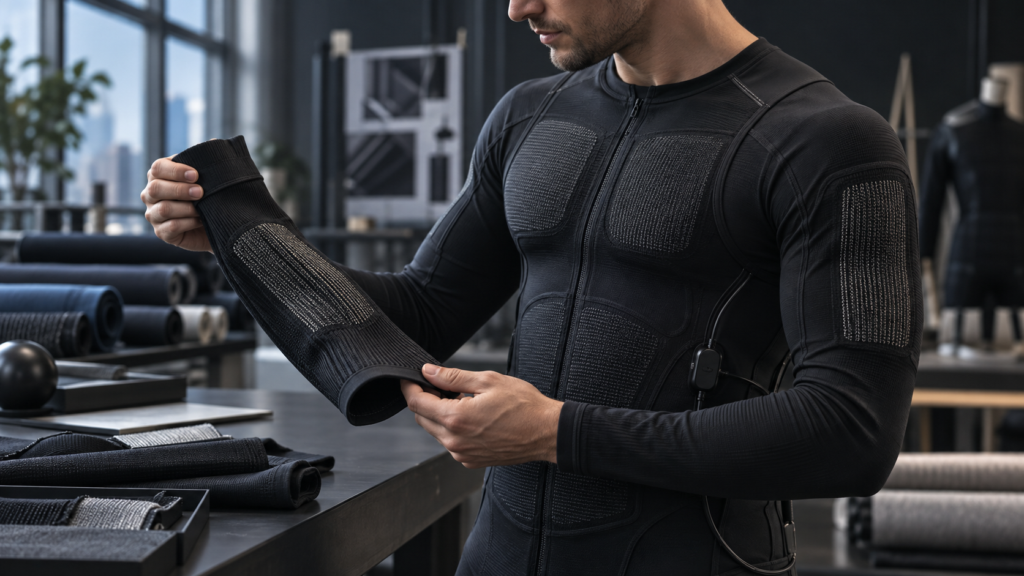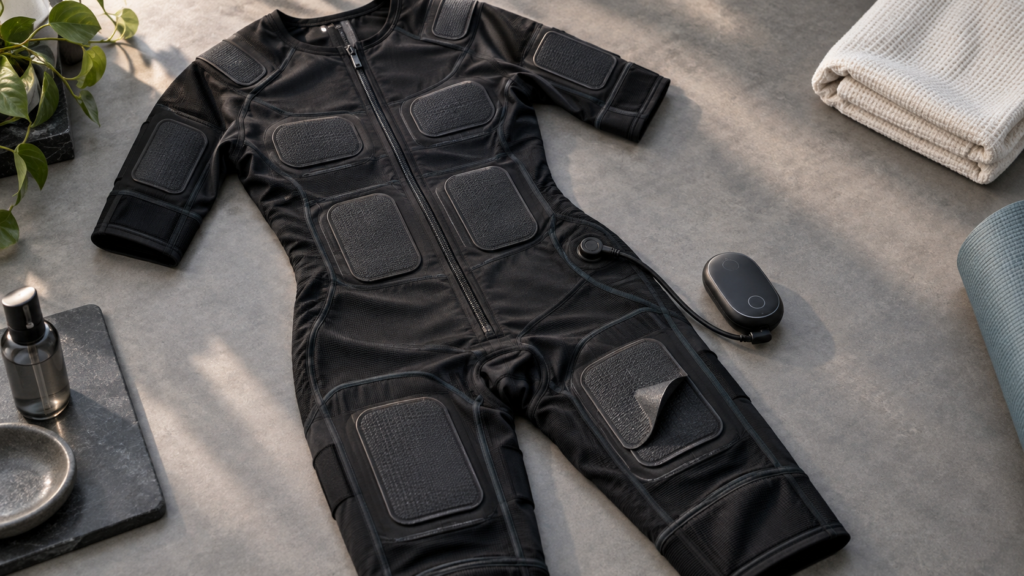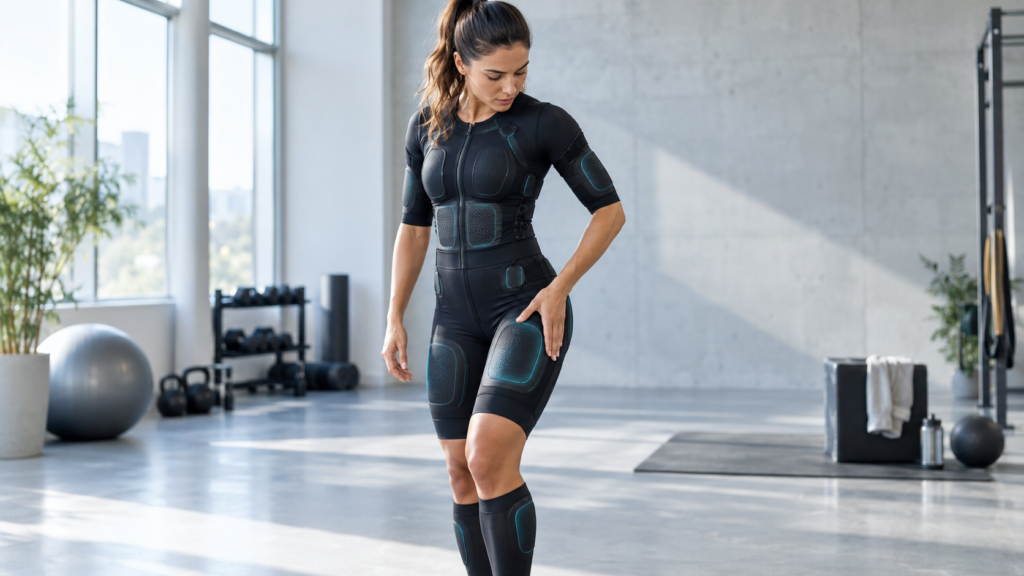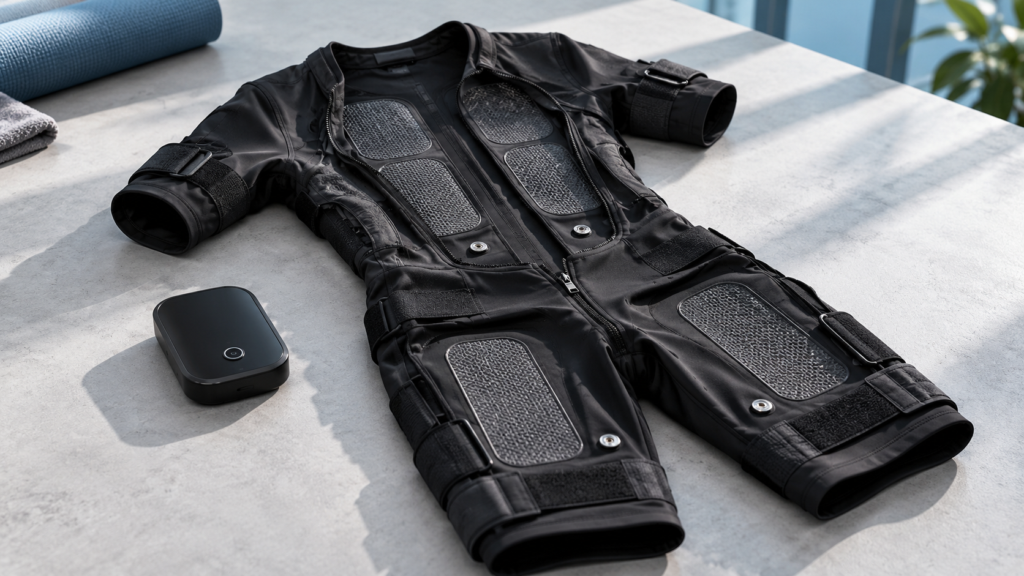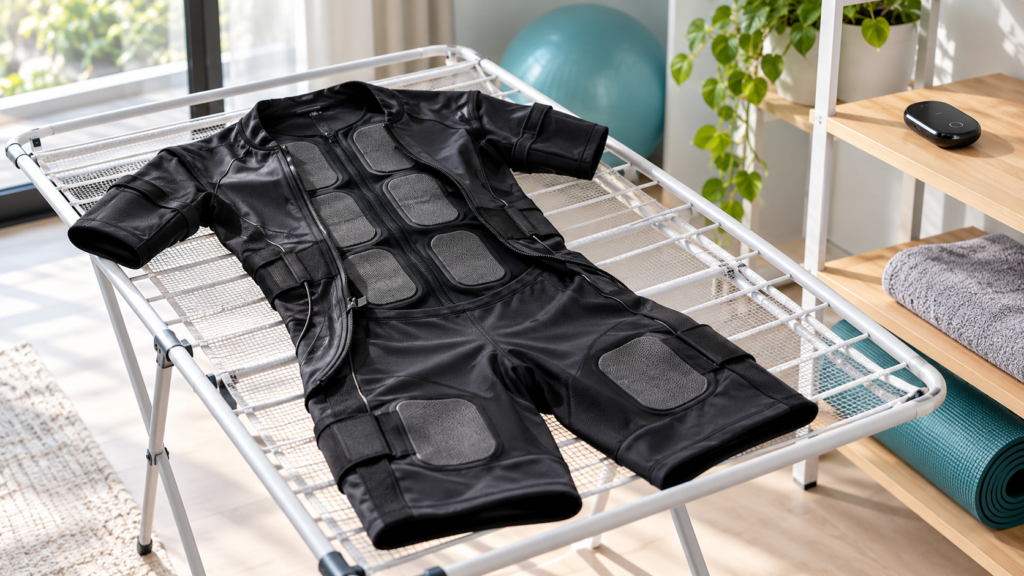

If you’ve been weighing EMS training vs. gym as your next fitness move, you’re asking the right question. Both approaches activate muscles, support physical goals, and have real science behind them. But they work differently, cost differently, and suit different lifestyles.
This isn’t a ranking. The EMS training vs. gym debate isn’t about which one wins. It’s about which one (or which combination) works best for you. Below, we break down five key areas so you can make an informed call.
How Muscle Activation Differs Between EMS and the Gym
One of the biggest questions in any EMS vs. traditional workout comparison is: do both actually work your muscles?
Yes, but through different mechanisms.
Conventional gym training:
- Relies on your nervous system, voluntarily recruiting motor units
- Uses progressive overload (gradually increasing load over time) as the main driver of adaptation
- Effectively develops strength, hypertrophy, and neuromuscular coordination across all fitness levels
- Provides mechanical loading that supports bone density and maximal strength gains
EMS training:
- Externally stimulates motor neurons, partially bypassing voluntary recruitment
- Activates a broad volume of muscle tissue simultaneously
- May engage muscle fiber types that voluntary effort at moderate intensities doesn’t fully recruit
- Does not provide the external resistance load that drives bone density improvements on its own
According to position statement guidelines on whole-body EMS training published in Frontiers in Physiology, EMS shows favorable outcomes as a supplement to training, but research is less clear about EMS as a full replacement for conventional resistance work. For long-term strength development, the gym still has stronger evidence base.
Bottom line: The EMS vs. traditional workout comparison on muscle activation isn’t really a competition. They activate muscles differently, and each has a role.

Time Efficiency: Where EMS Training Has a Clear Edge
This is one of the most compelling arguments in the EMS training vs. gym conversation, especially for busy schedules.
| Training Type | Average Session Length | Weekly Time (2x/week) |
|---|---|---|
| EMS training | 20–30 minutes | ~1 hour |
| Full-body gym session | 45–75+ minutes | 2–3 hours |
A twice-weekly EMS program can deliver whole-body muscle activation in roughly half the time of a comparable gym routine. That difference matters for people whose biggest barrier to consistency is their calendar.
The trade-off: EMS sessions sacrifice some of the load variation and progressive overload mechanisms available in a well-equipped gym. But for time-pressed individuals, that efficiency is a genuine advantage.
Cost Comparison: EMS Training vs. Gym Membership
When comparing electrical muscle stimulation versus weight training from a budget perspective, the gym wins by a wide margin.
Conventional gym membership:
- Typically $20–$80/month
- Unlimited access to equipment, cardio, classes, and more
- Even with occasional personal training, it remains far more affordable than studio EMS
Professional EMS studio sessions:
- Typically $50–$150+ per session
- One-on-one or small-group trainer attention with specialized equipment
- At 2 sessions/week, that’s $400–$1,200+ per month
Home EMS suits:
- Lower long-term cost than studio sessions
- But come without the calibration and supervision that make studio EMS safe and effective
For budget-conscious fitness, the gym offers far better value per training hour. EMS is more accurately viewed as a premium supplement, not a budget swap.
Versatility: The Gym Offers More Options
In the EMS comparison vs. gym, versatility is where conventional training has a clear structural advantage.
What a gym offers:
- Barbells, dumbbells, machines, cables, and functional equipment
- Cardio equipment and group fitness classes
- Sport-specific training and skill development
- Essentially unlimited training stimuli and phase diversity
What an EMS studio offers:
- Whole-body stimulation during a focused, guided session
- Bodyweight and lightly loaded functional movements
- A structured, consistent workout format
- Little to no cardiovascular or sport-specific conditioning
According to research on neuromuscular electrical stimulation published in Physiotherapy Canada, EMS is most effective when used purposefully and within appropriate parameters, reinforcing the idea that it’s a targeted tool, not a one-size-fits-all fitness solution.
The FDA also notes that while EMS devices have cleared uses for muscle conditioning, they are not cleared as standalone weight-loss devices, which is an important reminder when evaluating marketing claims.
If you train for specific sports, want variety, or need progressive mechanical loading, the gym is a more complete environment. If you want a structured, efficient session that covers all major muscle groups consistently, EMS does that job well.
Who Each Approach Is Best For
Here’s how the EMS training vs. gym breakdown shakes out by fitness profile:
Conventional gym training is a strong fit if you:
- Prioritize progressive strength development or athletic performance
- Train for a specific sport or competition
- Enjoy variety and self-directed workouts
- Are working within a budget
- Want access to cardio equipment or group classes
EMS training is a strong fit if you:
- Have a tight schedule and need maximum efficiency
- Prefer a guided, trainer-led environment over self-directed training
- Want low-impact options that still activate major muscle groups
- Are you supplementing an existing gym program with additional stimulus
- Value the attention and structure of a small-studio setting
Many people find that EMS training vs. gym isn’t actually an either/or choice. Using EMS once or twice a week alongside conventional gym sessions gives you the complementary benefits of both.
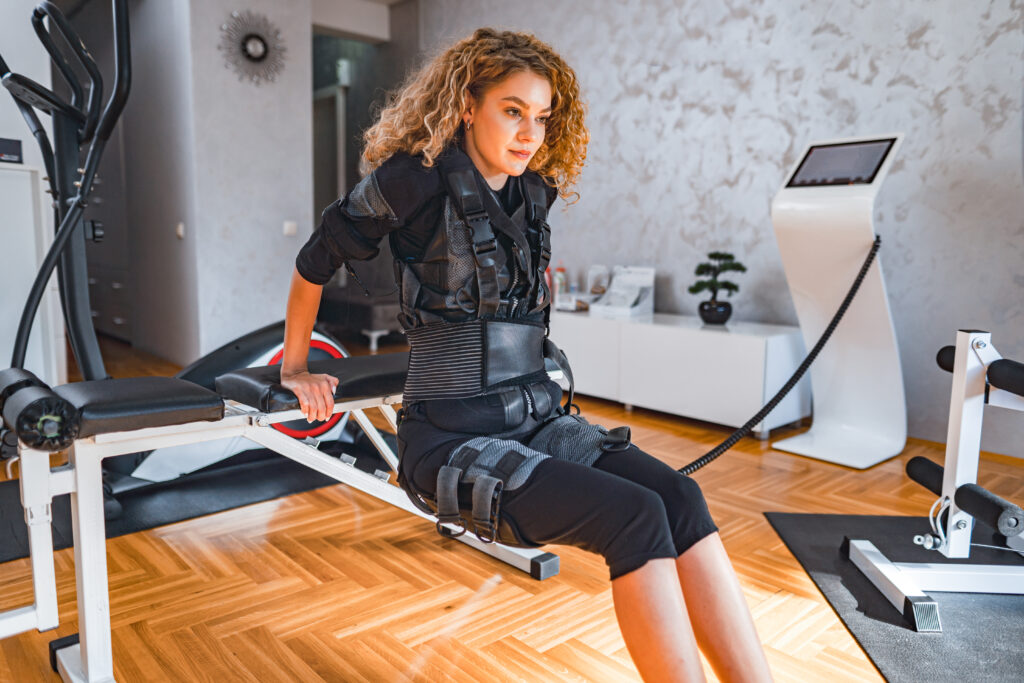
Conclusion: EMS Training vs. Gym, Different Tools, Not Competitors
The EMS training vs. gym comparison ultimately comes down to what you need from your fitness routine. EMS wins on time efficiency and guided whole-body activation. The gym wins on versatility, progressive loading options, and cost-effectiveness.
The smartest approach for most people isn’t choosing one and dismissing the other. It’s understanding how each fits into your goals, schedule, and budget. For many, the best results come from combining both.
Have you made your decision? If you’ve chosen EMS, you can head over to view our brand and product reviews and test out our product comparison shopping tool.
Frequently Asked Questions
Can EMS replace weight training for building muscle?
EMS can contribute to muscle activation and may support strength development with consistent use. However, conventional weight training provides the progressive overload and mechanical loading patterns most supported by research for long-term muscle building. Most experts recommend treating EMS vs. traditional workout as complementary, not a straight swap.
Which is better for weight loss, EMS or the gym?
Neither is a standalone weight-loss solution. Both support caloric expenditure and muscle development when paired with proper nutrition. The gym offers more calorie-burning versatility through cardio and varied training. EMS offers efficiency. In the EMS comparison vs. gym for weight management, a broader healthy lifestyle matters more than either tool alone.
Is EMS training a good option for people who dislike the gym?
It can be. The structured, trainer-led, time-efficient format suits many people who struggle with self-motivated gym training. The EMS vs. traditional workout environment is notably different, more intimate and more guided, which works well for some personalities. You’ll still need to find a quality studio and build consistency, but the format feels more approachable for a lot of people.
Can I combine EMS training and the gym?
Yes, and it’s one of the most effective approaches. Many people use EMS once or twice weekly alongside two to three conventional sessions. When planning your week, space EMS and heavy gym days apart to allow adequate recovery.
Does EMS build the same kind of strength as lifting weights?
Not exactly. EMS builds muscular strength through a different mechanism than progressive mechanical loading. Some research shows meaningful strength gains from EMS, particularly where conventional loading is limited. But maximal strength and power development, hallmarks of heavy lifting, aren’t fully replicated through electrical muscle stimulation versus weight training alone.