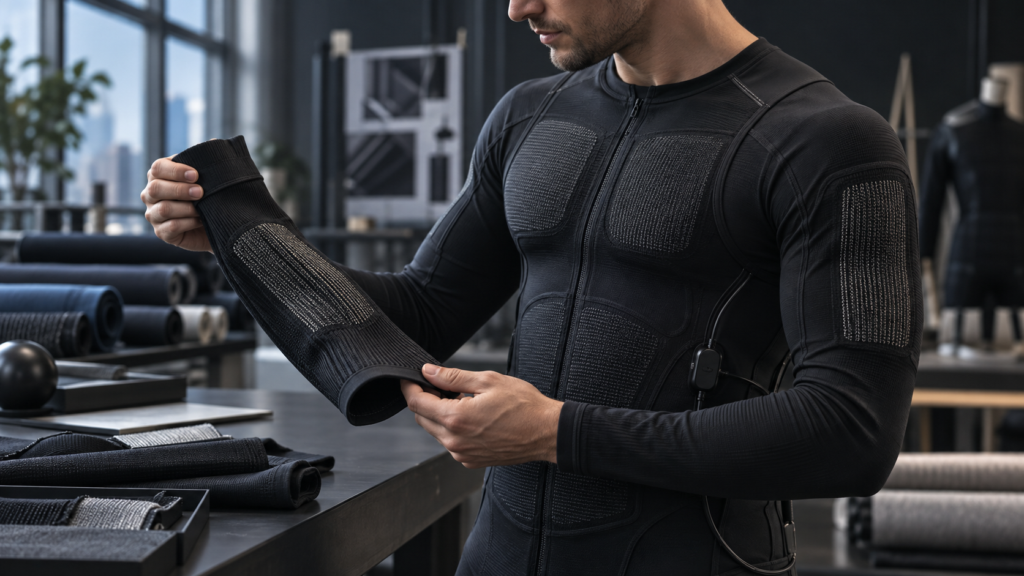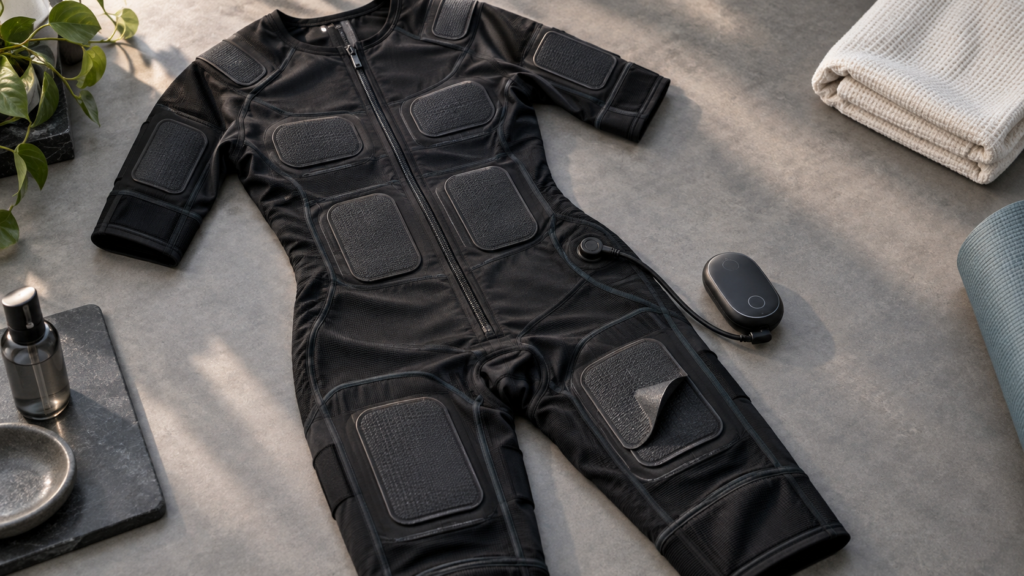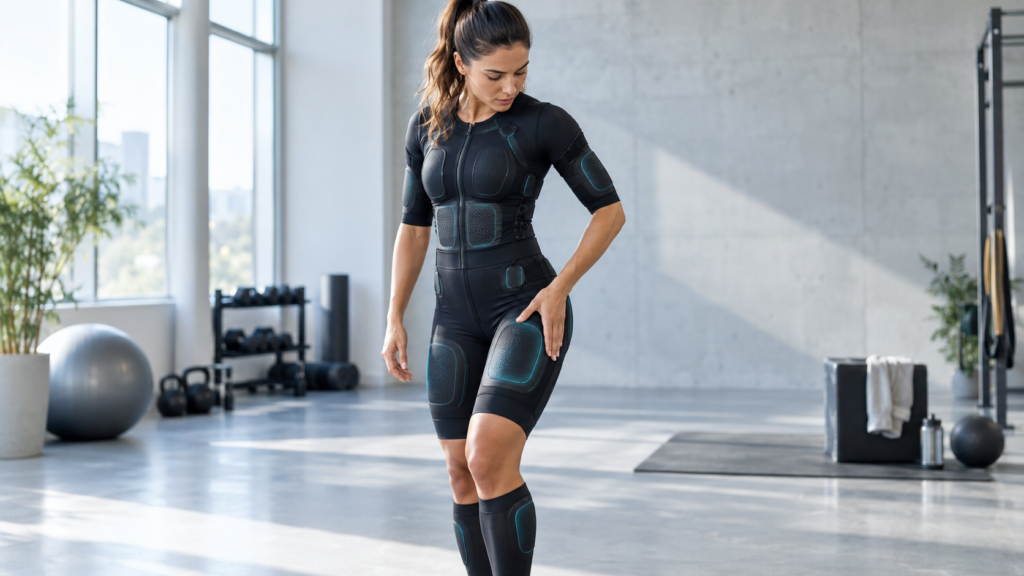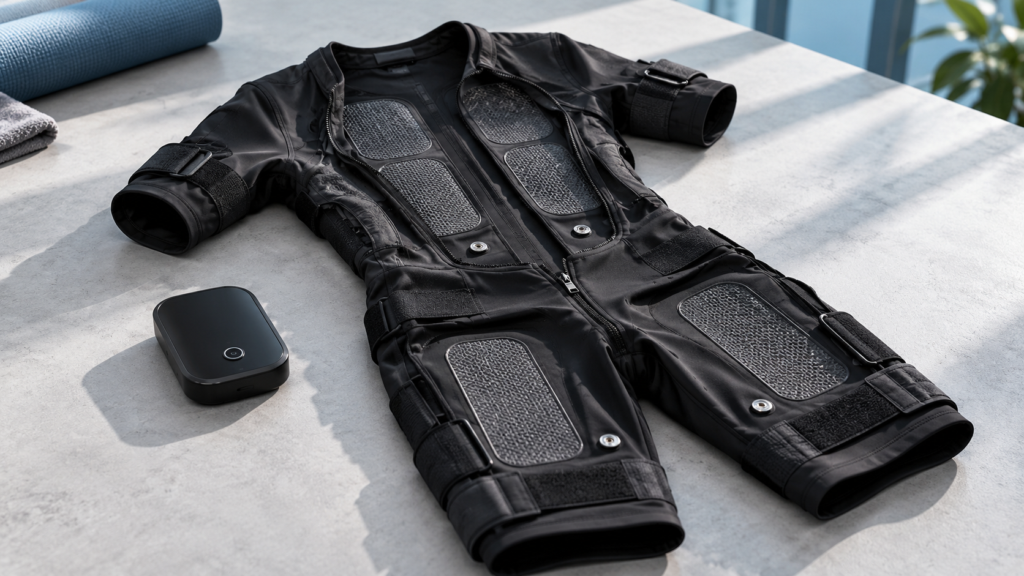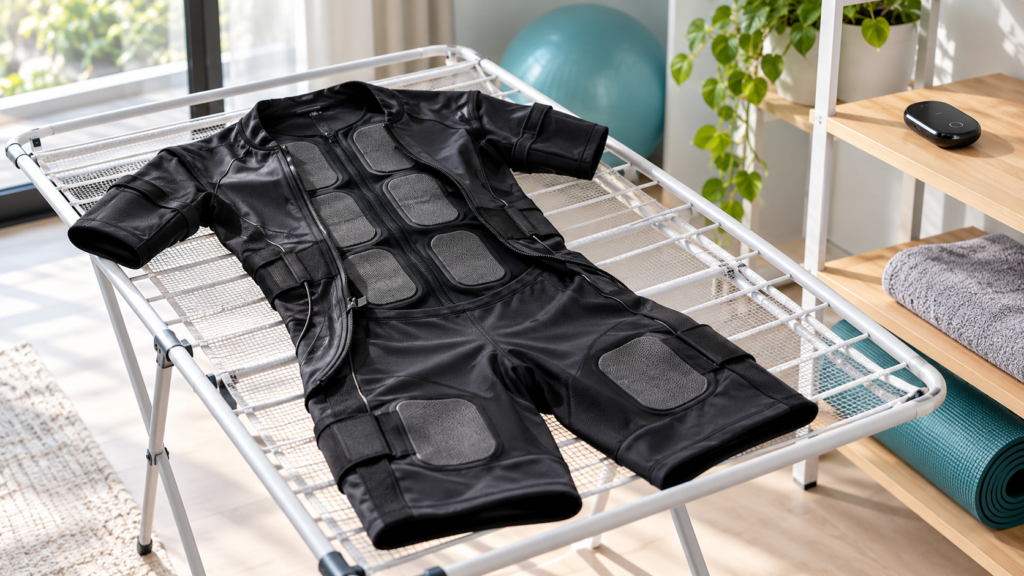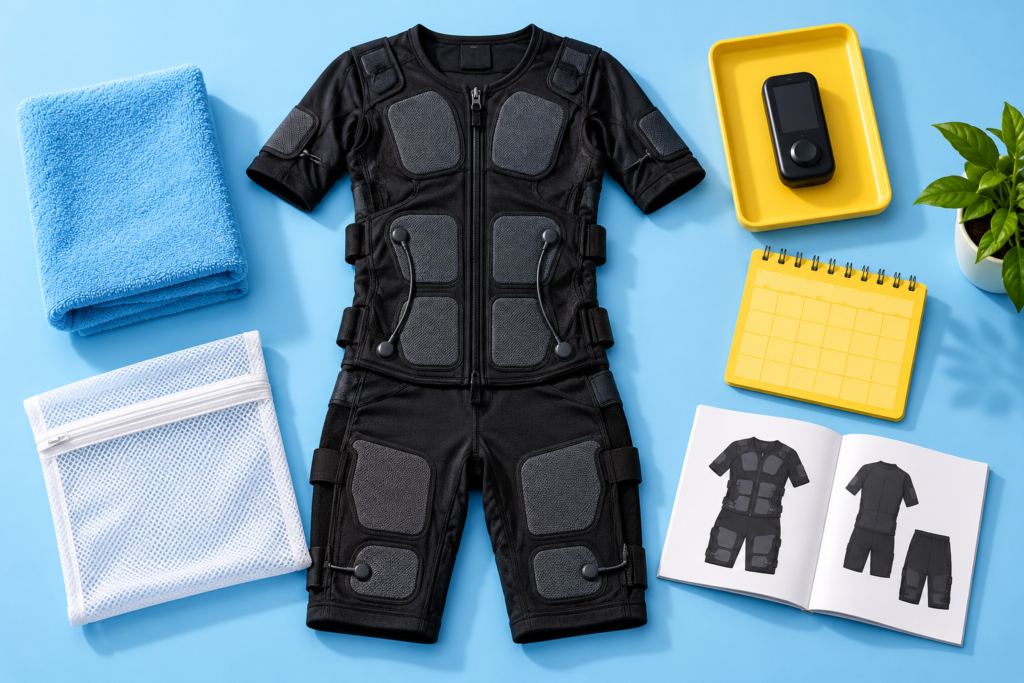

EMS suit fit is not an aesthetic concern — it is a technical requirement for effective and safe training. The electrode areas built into a wired EMS suit must align accurately with the target muscle groups for stimulation to be delivered to the intended muscles at the intended intensities. A suit that is too large displaces electrode areas away from target muscles, reducing stimulation effectiveness and potentially delivering current to non-target tissue. A suit that is too small creates localized pressure points that concentrate current delivery, producing discomfort and potentially uneven stimulation. Research into EMS suit sizing fit continues to expand as more studios adopt this approach.
Professional EMS systems are designed with multiple suit sizes — typically five to seven sizes across the adult body size range — precisely because electrode positioning is body-size-dependent. The major muscle groups that EMS targets are located at different distances from anatomical landmarks across different body sizes, and the suit must account for this variation to maintain appropriate electrode positioning across its client population. Understanding EMS suit sizing fit is key for any trainer looking to modernize their offering.

This article examines why EMS suit fit matters for training effectiveness, how professional EMS suits are sized and selected, and the fitting process that ensures optimal electrode positioning for each client. The evidence supporting EMS suit sizing fit is growing steadily in the professional fitness space.
Why Electrode Positioning Accuracy Matters
Each electrode area in a professional EMS suit is positioned to align with a specific major muscle group — the motor point or the muscle belly of the quadriceps, hamstrings, glutes, abdominals, and other target muscles. When the suit fits correctly, current delivered through each electrode area reaches the target muscle and activates it efficiently. When the suit fits incorrectly, electrode areas may be positioned over non-target tissue (bone, tendons, fat) rather than muscle belly, resulting in current that does not produce the intended muscle contraction. [source] For coaches exploring EMS suit sizing fit, proper protocol design is essential.
Poor electrode positioning from incorrect suit size typically manifests as uneven or unexpected stimulation sensations — areas that feel disproportionately intense or uncomfortable relative to other channels, areas where strong stimulation is expected but contraction is not clearly felt, or asymmetric responses between left and right sides of the body. These signals should prompt the trainer to reassess suit fit and electrode positioning before assuming intensity calibration is the issue. Clients asking about EMS suit sizing fit deserve clear, evidence-informed guidance.
Beyond effectiveness, correct electrode positioning also affects comfort. Electrode areas positioned over bony prominences, near joints, or over superficial nerves rather than muscle belly can produce disproportionate discomfort at stimulation intensities that would be well tolerated if the electrode were correctly positioned over the target muscle. Many apparent ‘intensity sensitivity’ issues in EMS training are actually electrode positioning issues that correct suit sizing resolves. The practical application of EMS suit sizing fit varies depending on goals and client profile.
EMS Suit Sizing Process: EMS suit sizing fit
Professional EMS suit manufacturers provide sizing charts based on body measurements — typically height and body circumference measurements at specific anatomical landmarks (chest, waist, hip, thigh). These measurement-based size charts account for the variation in muscle group positions across different body sizes and provide a starting point for suit selection. [source] Studios investing in EMS suit sizing fit report strong client retention and satisfaction.
Measurement-based sizing is a starting point rather than a definitive answer — the actual fit assessment occurs when the suit is donned and the trainer verifies electrode positioning by manual palpation of the target muscle groups. The trainer should confirm that each electrode area is positioned over the expected muscle belly, that the suit is in close contact with the skin throughout (no gapping or looseness that would reduce electrode conductivity), and that the client can move through the required exercise range without the suit shifting significantly. Anyone serious about EMS suit sizing fit should prioritize certified equipment and trained staff.
Body composition and build variations — muscular versus less muscular individuals of the same height and circumference, different trunk-to-leg length ratios, different torso proportions — can require size adjustments relative to what measurement-based charts suggest. Trainers who assess suit fit based on actual electrode positioning verification rather than solely on size chart recommendations produce better training outcomes for clients whose proportions don’t fit standard size assumptions. The business case for EMS suit sizing fit is supported by both research and real-world results.
Base Layer and Practical Fit Considerations
EMS training requires a moisture-wicking base layer worn under the EMS suit — a close-fitting garment (typically lycra or similar material) that protects the skin, improves hygiene, and provides a consistent interface between the suit and the client’s body. The base layer’s thickness and compression characteristics can affect suit fit and electrode contact; studios should specify appropriate base layer types and have suitable options available for clients who arrive without appropriate garments. [source] Getting the most from EMS suit sizing fit requires consistent protocol and progress tracking.
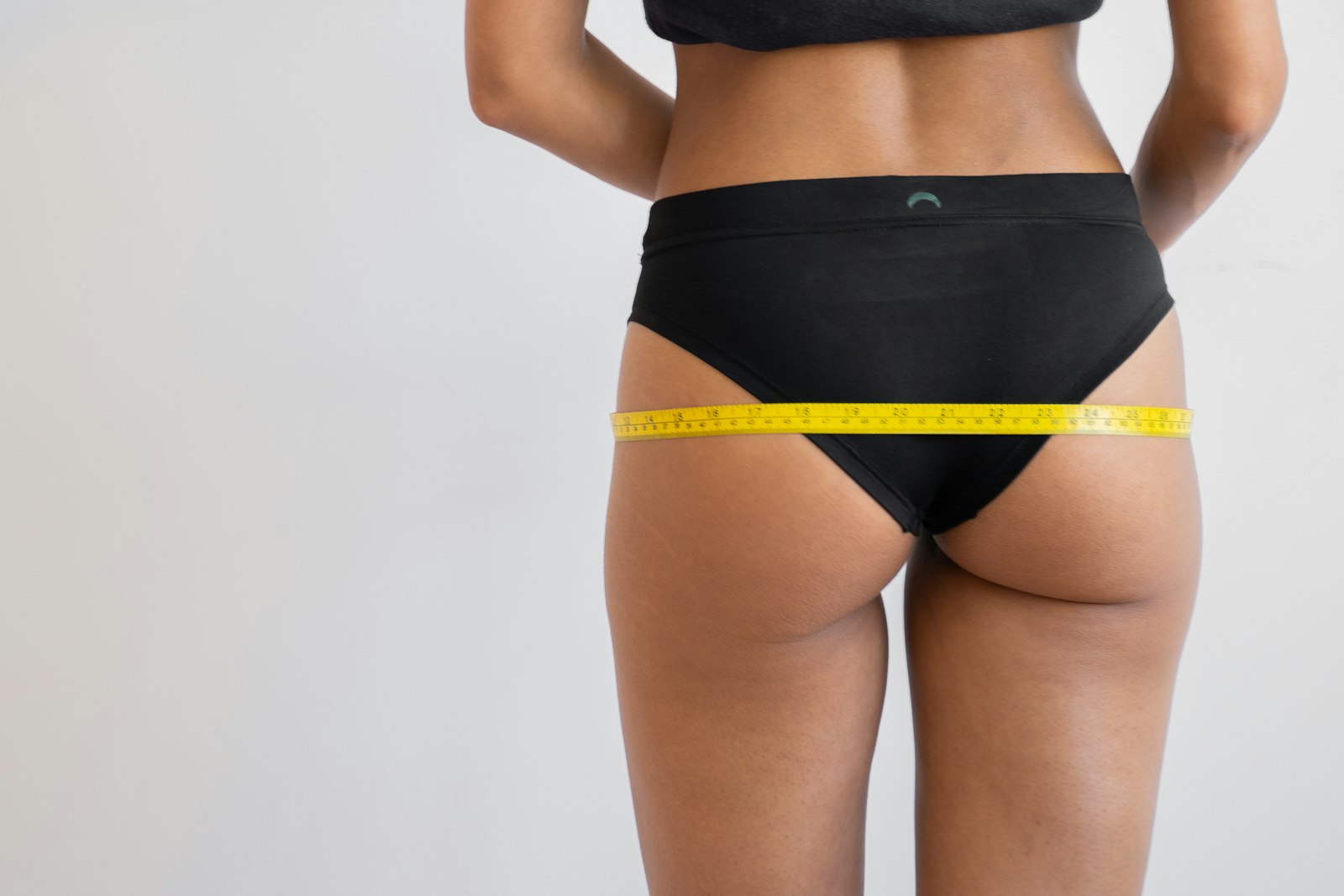
The dampening of electrode areas before donning the suit also affects effective fit: adequate, even dampening of all electrode areas maintains consistent electrical contact throughout the session. Uneven dampening — some areas well-moistened, others dry — produces inconsistent stimulation across channels that can be mistaken for suit fit issues. Trainers should develop a consistent, thorough dampening protocol as part of pre-session preparation. Safety remains a top priority in any EMS suit sizing fit program.
For clients with unusual body proportions — very tall or short clients, clients with significant muscular development, or clients with specific anatomical features that affect standard suit positioning — some manufacturers offer customization options or modular components that allow adjustment of specific electrode positions. Trainers working with clients whose fit consistently presents challenges should contact their equipment manufacturer about available customization options. Professionals offering EMS suit sizing fit benefit from ongoing education and certification.
Conclusion
EMS suit sizing and fit is a technical precision requirement — not a detail to be approximated or overlooked in the interest of getting to the training. The investment of time in proper suit sizing assessment, electrode positioning verification, and ongoing attention to fit quality across the client’s training tenure pays dividends in training effectiveness, client comfort, and the professional delivery quality that EMS clients deserve.
Trainers who develop skill in suit fitting assessment — recognizing when electrode positioning is suboptimal from client feedback and stimulation patterns, and adjusting suit selection and positioning accordingly — deliver more consistent and effective EMS training outcomes than those who rely solely on size chart selection without verification.
Frequently Asked Questions
How do I know if my EMS suit fits correctly?
A correctly fitting EMS suit places electrode areas over the target muscle groups (not over bony areas, joints, or tendons), maintains close skin contact throughout without gapping, and allows movement through the required exercise range without significant shifting. The trainer should verify electrode positioning by manual palpation after donning and monitor for any uneven or unexpected stimulation patterns that suggest mispositioning.
What happens if my EMS suit is the wrong size?
An ill-fitting suit displaces electrode areas away from target muscles, reducing stimulation effectiveness and potentially delivering current to non-target tissue. It can also create localized pressure points, uneven stimulation, and disproportionate discomfort. Many apparent intensity sensitivity or effectiveness issues in EMS training are actually suit fit problems.
How many sizes do professional EMS suits come in?
Professional EMS systems typically offer five to seven suit sizes across the adult body size range, based on height and circumference measurements. Some manufacturers offer additional specialty sizes or modular components for clients with unusual proportions. Starting size selection from the manufacturer’s measurement chart is appropriate, but electrode positioning should be verified after donning.
Do I need a base layer under my EMS suit?
Yes — a moisture-wicking, close-fitting base layer (typically lycra or similar material) is required under the EMS suit. The base layer protects the skin, maintains hygiene, and provides a consistent interface between the electrodes and the body. Studios should specify appropriate base layer requirements and have suitable options available for clients.
How often should EMS suit fit be reassessed?
Suit fit should be assessed at each session early in training as trainers learn each client’s fit characteristics. For established clients with consistent attendance and stable body composition, fit checks can be less frequent but should be revisited if the client’s weight changes significantly, if a different size suit must be used (due to availability), or if the client reports changes in stimulation sensations suggesting electrode repositioning.
Ready to explore EMS suit options? Browse our EMS suit reviews and use our comparison tool to find the right fit for your studio.