
Understanding the realistic cost of opening an EMS fitness studio is one of the most important steps in deciding whether to pursue this business model. The EMS fitness industry has grown rapidly, and with that growth has come a range of business opportunities — from fully independent studios to franchise models — each with different cost structures, risk profiles, and revenue potential. Before committing to any path, understanding what you will actually spend is essential. Research into EMS studio cost continues to expand as more studios adopt this approach.
EMS studio costs fall into three broad categories: one-time startup costs (equipment, build-out, legal and licensing fees, initial marketing); ongoing fixed costs (lease, insurance, software subscriptions, staff salaries); and variable costs (consumables, marketing, maintenance). The balance among these categories varies significantly between independent and franchise models and between different equipment choices.

This article provides a realistic breakdown of each cost category to help prospective EMS studio owners develop accurate financial projections and realistic expectations for the investment required — and the revenue needed to achieve profitability. Understanding EMS studio cost is key for any trainer looking to modernize their offering.
One-Time Startup Costs
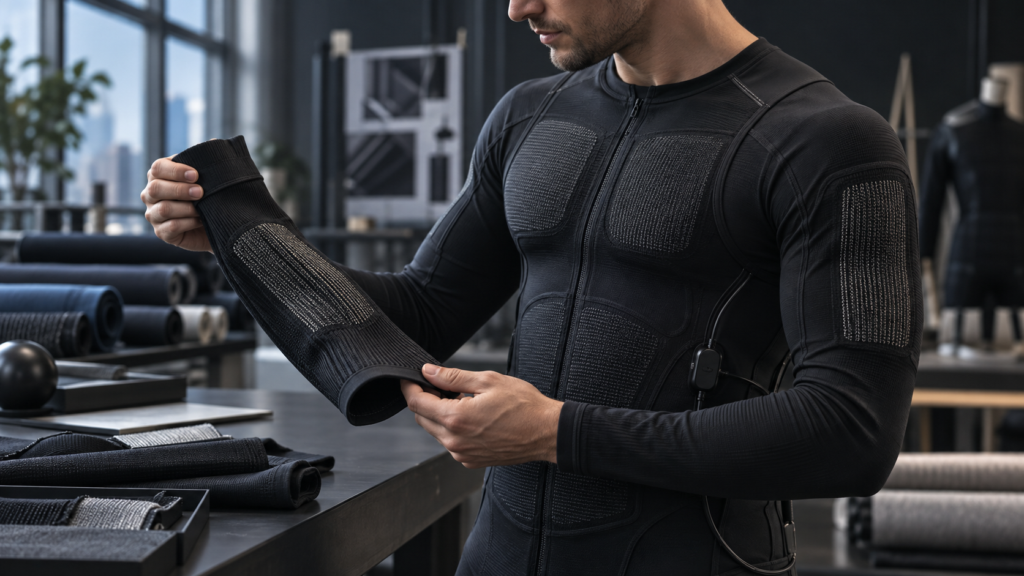
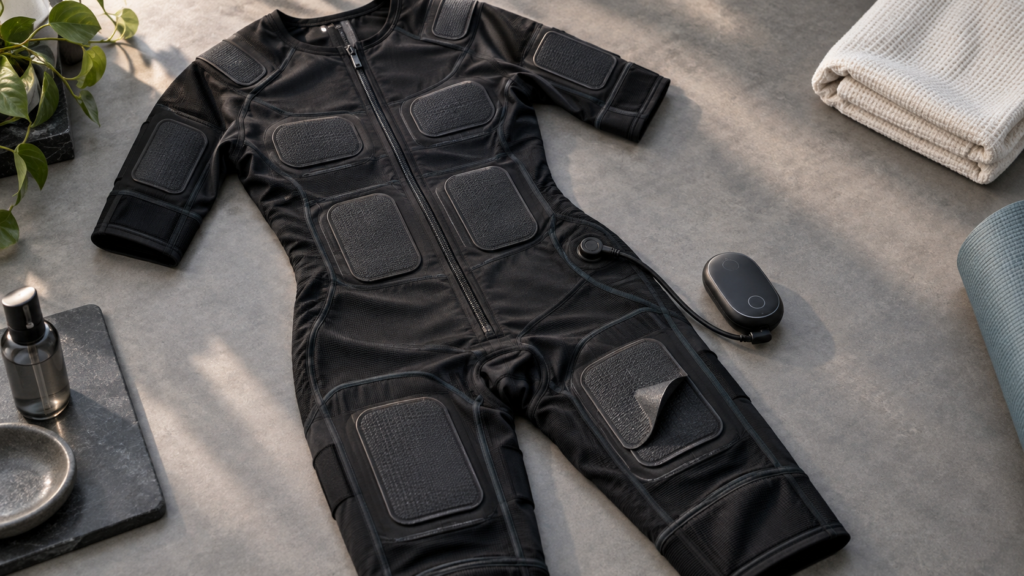
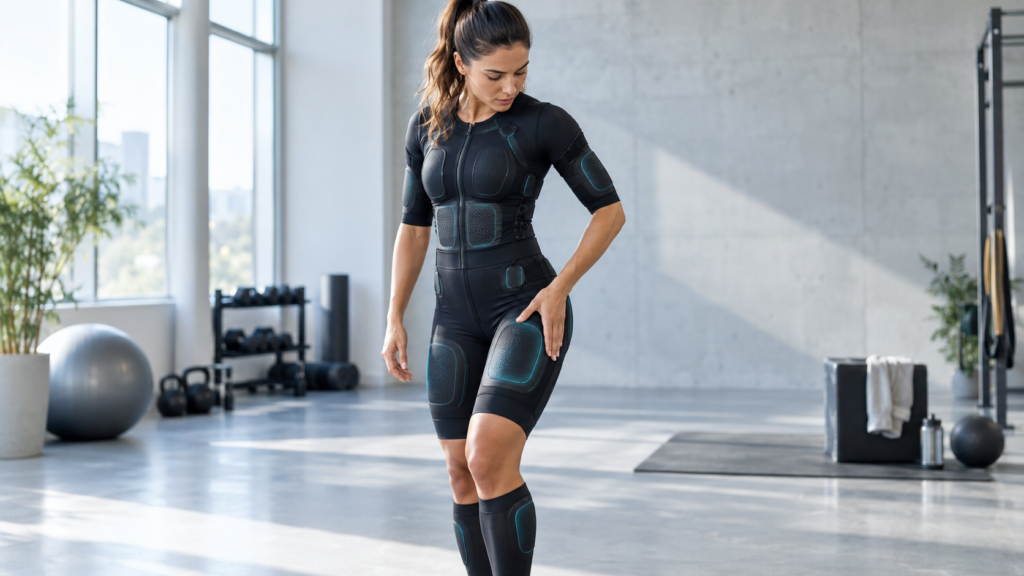
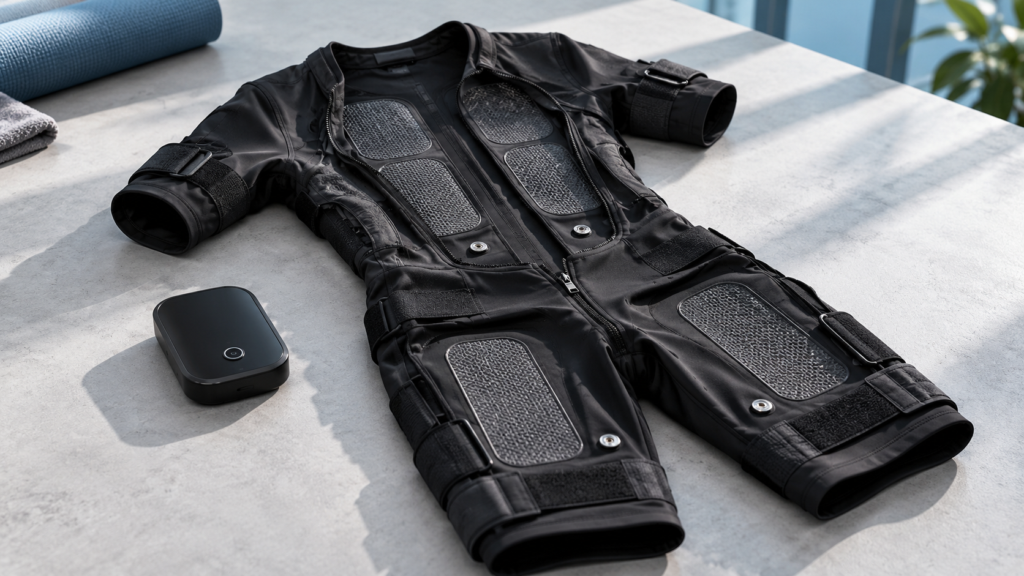
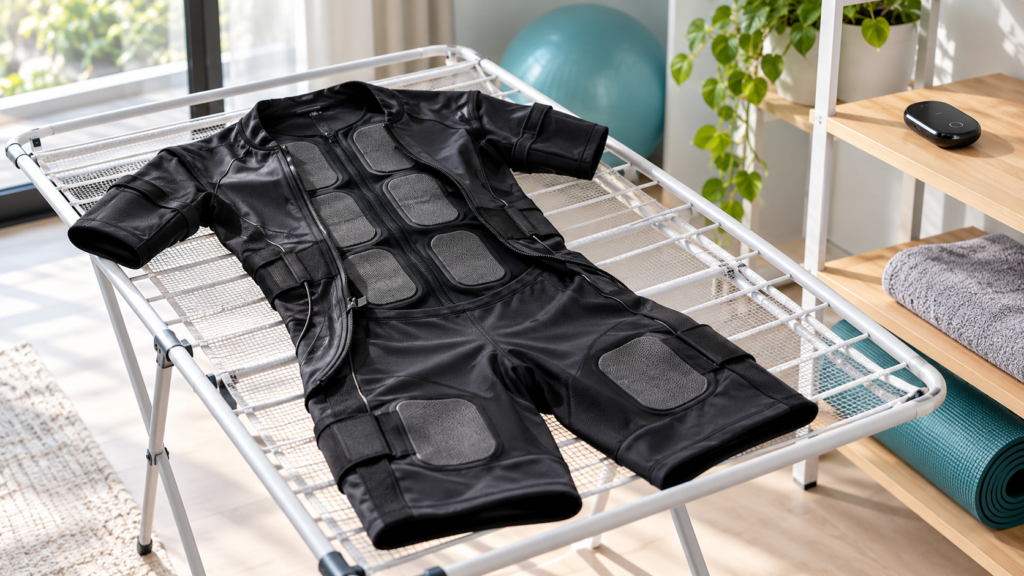
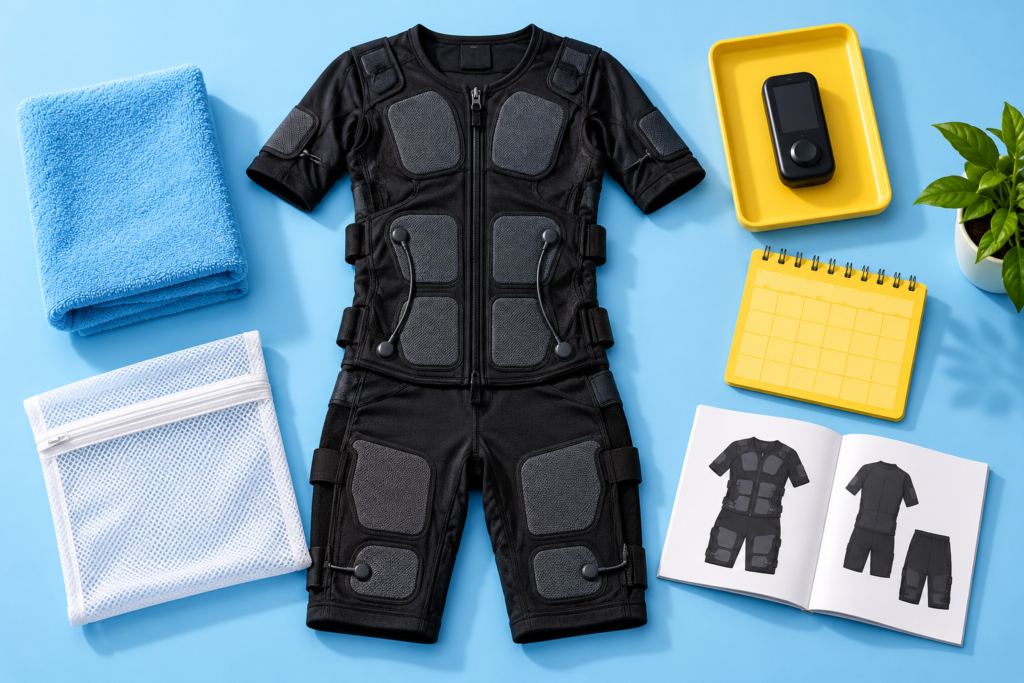
Professional WB-EMS equipment is typically the largest single startup expense. Complete professional systems — including the control unit, EMS suits in multiple sizes, electrode garments, and accessories — range from approximately $5,000 to $20,000 or more per complete client station depending on the manufacturer and configuration. A two-station studio can expect equipment costs in the range of $15,000 to $40,000 or more. Some manufacturers offer financing or leasing options that convert part of the upfront equipment cost to an ongoing monthly expense. [source] The evidence supporting EMS studio cost is growing steadily in the professional fitness space.
Studio build-out costs depend heavily on the condition of the space you lease and the level of finish you target. A minimal build-out of an existing commercial space for a basic two-station studio might cost $5,000 to $15,000. A full build-out with custom design, partitioning for changing areas, HVAC upgrades, and branded interior finishes can cost $20,000 to $50,000 or more in high-rent urban markets. For coaches exploring EMS studio cost, proper protocol design is essential.
Additional one-time startup costs include EMS certification training ($500 to $2,000+ per trainer), legal fees for business formation and document preparation ($1,000 to $3,000), initial insurance premiums (varies; typically $500 to $2,000 for initial period), first and last month deposits on lease, website development and initial marketing materials, and initial stock of consumables. Total one-time startup costs for a well-prepared two-station independent studio typically range from $30,000 to $80,000 or more depending on market, equipment choice, and build-out scope. Clients asking about EMS studio cost deserve clear, evidence-informed guidance.
Ongoing Fixed and Variable Costs: EMS studio cost
Lease cost is typically the largest ongoing fixed expense for a studio-based operation. Boutique fitness studio leases in urban markets vary enormously — from $1,000 to $2,000 per month for modest spaces in secondary markets to $5,000 to $15,000 or more per month in premium urban locations. EMS studios’ space efficiency (viable in 400 to 800 square feet) is an advantage here, but the premium locations that attract EMS’s target demographic tend to command premium rents. [source] The practical application of EMS studio cost varies depending on goals and client profile.
Staff costs — trainer salaries or per-session compensation — are the largest variable or semi-variable expense for studios beyond the solo operator. Certified EMS trainers command higher compensation than general personal trainers, reflecting their specialist certification and the higher session prices charged. Expect to budget $25 to $60 or more per training hour for certified EMS trainer compensation depending on market and experience level. Studios investing in EMS studio cost report strong client retention and satisfaction.
Ongoing fixed costs also include liability insurance ($100 to $250 per month for a small studio), software subscriptions (booking, billing, client management; $50 to $200 per month), suit cleaning supplies and consumable replacements, and equipment maintenance. Marketing costs — digital advertising, local sponsorships, social media management — vary widely based on growth stage but should be budgeted consistently even once the studio is established. Anyone serious about EMS studio cost should prioritize certified equipment and trained staff.
Revenue and Profitability Planning
Understanding the revenue side of the equation is as important as cost analysis. A two-station studio with one trainer conducting back-to-back sessions for 8 hours per day, 6 days per week would conduct approximately 96 sessions per week at maximum utilization. At $80 per session, that would represent $7,680 per week or approximately $30,000 per month in gross revenue at full utilization — but full utilization is rarely achieved, particularly early. [source] The business case for EMS studio cost is supported by both research and real-world results.
A realistic planning scenario for a new studio might target 40 to 60% utilization in the first year — approximately 40 to 60 sessions per week — generating $3,200 to $4,800 per week, or $13,000 to $20,000 per month at $80 per session. After lease, staff, insurance, and other ongoing costs, this produces a modest to break-even operating result in year one for many studio configurations. Getting the most from EMS studio cost requires consistent protocol and progress tracking.

Package pricing — selling multi-session bundles that provide upfront revenue and commit clients to an ongoing relationship — is important for cash flow management and client retention. Introductory package pricing that allows first-time clients to experience EMS at reduced cost before committing to full-price packages is a common and effective approach for building initial client volume. Safety remains a top priority in any EMS studio cost program.
Conclusion
Opening an EMS fitness studio requires a meaningful financial commitment — typically $30,000 to $80,000 in startup costs for a well-prepared two-station independent studio — and realistic expectations about the time required to reach profitability. The potential for a premium, differentiated fitness business with strong client retention makes this investment compelling for the right market and the right operator.
Accurate financial modeling — accounting for realistic utilization rates, all cost categories, and appropriate contingency — is essential before committing. Many new EMS studio owners benefit from consultation with a financial advisor experienced in boutique fitness businesses to develop projections that support informed decision-making.
Frequently Asked Questions
How much does it cost to open an EMS studio?
Total startup costs for a well-prepared two-station independent EMS studio typically range from $30,000 to $80,000 or more, depending on market, equipment choice, and build-out scope. The largest single expense is usually professional WB-EMS equipment ($15,000 to $40,000 for two stations), followed by studio build-out and initial marketing.
What is the biggest cost of running an EMS studio?
For most studios, lease (in high-demand urban markets) and staff compensation are the largest ongoing expenses. Equipment is the largest one-time cost. Managing the balance between lease cost and the accessibility of location for the target client demographic is one of the key financial trade-offs in EMS studio planning.
How long does it take for an EMS studio to become profitable?
Profitability timelines vary significantly based on startup investment, market conditions, pricing, and client acquisition success. Many EMS studio operators target break-even at 12 to 18 months, with meaningful profitability building through year two and three as client retention compounds. Studios with lower upfront costs (mobile operations, lower-cost markets) may reach profitability faster.
Can I start an EMS business with a small budget?
Starting with a mobile EMS operation — taking equipment to clients rather than operating from a studio — significantly reduces startup costs by eliminating lease, build-out, and much of the equipment quantity required. A solo mobile operator with one EMS system and a vehicle can start for $10,000 to $25,000, making it accessible for lower-budget entrepreneurs.
Is an EMS studio more profitable than a conventional gym?
EMS studios typically operate with higher revenue per session ($80 to $150) and lower space requirements than conventional gyms, making the unit economics favorable at much lower client volumes. However, the higher equipment cost and certified staff requirement create different cost structures. EMS studios’ boutique positioning generally supports stronger margins per client than volume-based conventional gym models.
Ready to explore EMS suit options? Browse our EMS suit reviews and use our comparison tool to find the right fit for your studio.