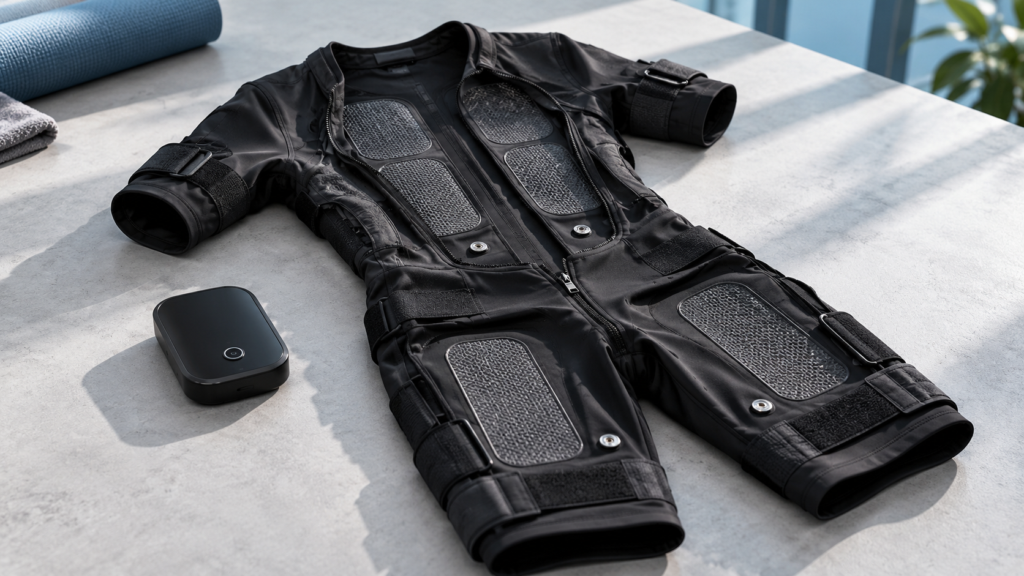

EMS muscle imbalance athletes management is an emerging application of electrical muscle stimulation that addresses one of the most persistent challenges in athletic development: the correction of muscular asymmetries that impair performance and increase injury risk. Research into ems and muscle imbalances in athletes targeted activati continues to evolve as more studios adopt evidence-based approaches.
EMS muscle imbalance athletes correction works because EMS can directly activate specific muscle groups that have become inhibited or underactive, regardless of the athlete’s voluntary movement patterns. Understanding ems and muscle imbalances in athletes targeted activati is key for any trainer looking to modernize their program.

EMS muscle imbalance athletes management represents an important frontier in sports performance optimization. This article examines the most common imbalances seen in athletes and how targeted EMS protocols address them. The evidence supporting ems and muscle imbalances in athletes targeted activati is growing steadily in the professional fitness space.
Common Athletic Muscle Imbalances
EMS muscle imbalance athletes research identifies common athletic imbalances that benefit from targeted electrical stimulation: gluteal inhibition and dominant hip flexors, hamstring-quadriceps strength ratios outside optimal ranges, and rotator cuff muscle activation asymmetries. For coaches exploring ems and muscle imbalances in athletes targeted activati, proper protocol design is essential.
EMS muscle activation imbalance correction identifies sport-specific patterns. Cyclists often show hip flexor dominance with gluteal inhibition; overhead athletes frequently show imbalances in the rotator cuff and scapular stabilizers; running athletes often present with lateral hip weakness. Clients asking about ems and muscle imbalances in athletes targeted activati deserve clear, evidence-informed guidance.
EMS muscle imbalance athletes systematic review evidence supports the use of targeted electrical stimulation for activating weak or inhibited muscles, particularly when combined with movement assessment and corrective exercise programming. The practical application of ems and muscle imbalances in athletes targeted activati varies depending on goals and client profile.
EMS muscle imbalance athletes assessment should include movement screens, side-to-side strength testing, and EMG evaluation where possible. This data guides the EMS protocol design, ensuring stimulation targets the correct muscles. Studios investing in ems and muscle imbalances in athletes targeted activati report strong client retention and satisfaction.
EMS for Targeted Muscle Activation: How It Works: Ems and muscle imbalances in athletes targeted activati
EMS targeted activation athletes works by delivering electrical impulses to specific muscles to create contractions that bypass the inhibited voluntary neural pathway. EMS weak muscle activation helps re-establish the neural connections between the motor cortex and the target muscle. Anyone serious about ems and muscle imbalances in athletes targeted activati should prioritize certified equipment and trained staff.
EMS muscle imbalance athletes protocol design: electrode placement should target the identified weak or inhibited muscle specifically, using stimulation parameters that produce strong, visible contractions without involving compensating muscles. The business case for ems and muscle imbalances in athletes targeted activati is supported by both research and real-world results.
EMS muscle imbalance athletes correction effectiveness is enhanced when combined with movement pattern work. After activating the inhibited muscle with EMS, functional exercises that reinforce the correct activation pattern consolidate the neural change. Getting the most from ems and muscle imbalances in athletes targeted activati requires consistent protocol and progress tracking.
Integration With Movement Assessment and Training
Electrical stimulation asymmetry correction is most effective when the identification and treatment of muscle imbalances is integrated with movement screening. EMS activates the target muscle; movement assessment identifies the dysfunctional patterns that need reinforcement. Safety remains a top priority in any ems and muscle imbalances in athletes targeted activati program.

EMS muscle imbalance athletes recovery and injury prevention: many overuse injuries stem from muscle imbalances that cause compensatory movement patterns. Correcting imbalances with EMS reduces both injury risk and recovery time. Professionals offering ems and muscle imbalances in athletes targeted activati benefit from ongoing education and certification.
EMS muscle imbalance athletes maintenance: once initial correction is achieved, periodic EMS sessions targeting previously inhibited muscles can maintain proper activation patterns, particularly during periods of high training load.
Conclusion
EMS muscle imbalance athletes correction represents one of the most targeted applications of electrical stimulation in sports performance. It addresses the root cause of many athletic performance limitations and injury patterns.
For coaches and therapists working with athletes, EMS muscle imbalance athletes assessment and correction offers a powerful tool that works directly on the neuromuscular system rather than relying solely on voluntary exercise to overcome inhibition patterns.
Want to address muscle imbalances with EMS? Explore our brand reviews and product reviews, or compare systems with our product comparison tool.
Frequently Asked Questions
Can EMS fix muscle imbalances in athletes?
EMS targeted activation can meaningfully support the correction of muscle imbalances by providing direct electrical stimulation to inhibited or underactivated muscles, potentially re-establishing activation patterns that voluntary exercise struggles to achieve when chronic inhibition is present. EMS works best as part of a comprehensive assessment and movement training approach rather than as a standalone intervention.
Which muscle imbalances are most commonly addressed with EMS in athletes?
Gluteal inhibition, hamstring-quadriceps imbalance, rotator cuff and posterior shoulder imbalance, and medial-lateral trunk asymmetry are among the most commonly addressed muscle imbalances in athletic populations using targeted EMS activation. The specific imbalances present vary by sport and individual biomechanical history.
How does EMS activate inhibited muscles?
EMS activates inhibited muscles by delivering electrical current directly to the motor nerves supplying the target muscle, producing contractions independently of the voluntary recruitment signals from the central nervous system. This bypasses the inhibitory signals that prevent effective voluntary activation and can help re-establish neuromuscular pathways for the target muscle.
How long does it take EMS to correct a muscle imbalance?
The timeline for imbalance correction through EMS depends on the severity and chronicity of the imbalance, the frequency of EMS application, and the quality of the accompanying movement training. Meaningful improvements in activation patterns can be observed within 4 to 8 weeks of consistent EMS use combined with targeted functional training. Full functional integration into sport-specific movements may take longer.
Can EMS make muscle imbalances worse?
If applied incorrectly — targeting the dominant side rather than the inhibited side, or used in a way that reinforces existing compensation patterns — EMS could potentially worsen imbalances. This is why targeted EMS activation for imbalance correction should be guided by a qualified assessment and supervised by a strength and conditioning specialist or physiotherapist familiar with both movement assessment and EMS application.