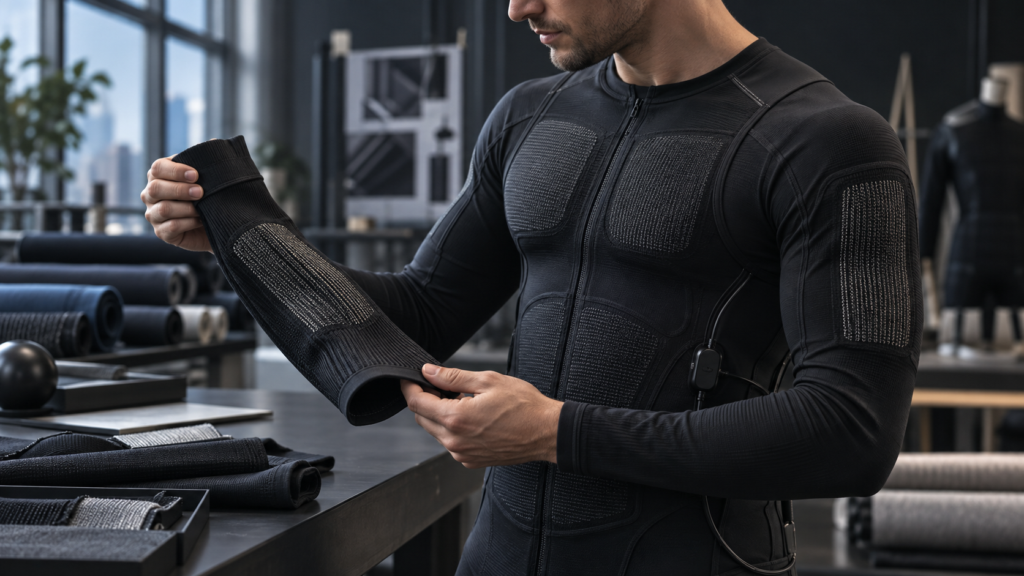

EMS muscle hypertrophy research investigates whether electrical muscle stimulation can drive meaningful increases in muscle size. The question is important for fitness consumers who want to know if EMS training alone can produce muscle growth comparable to conventional resistance training. Research into ems and muscle hypertrophy what current studies suggest continues to evolve as more studios adopt evidence-based approaches.
EMS muscle hypertrophy research findings suggest that EMS training can produce modest muscle growth, particularly in less-trained individuals, but that the magnitude is generally lower than what conventional progressive resistance training achieves. Understanding ems and muscle hypertrophy what current studies suggest is key for any trainer looking to modernize their program.
This article reviews the EMS muscle hypertrophy research evidence, the proposed mechanisms, limitations of current studies, and practical implications for training consumers. The evidence supporting ems and muscle hypertrophy what current studies suggest is growing steadily in the professional fitness space.
Proposed Mechanisms: How EMS Might Drive Hypertrophy
EMS muscle growth studies propose several mechanisms: direct muscle protein synthesis stimulation, increased metabolic stress, neural adaptations, and mechanical tension generated by EMS-induced contractions. For coaches exploring ems and muscle hypertrophy what current studies suggest, proper protocol design is essential.
Electrical stimulation muscle building mechanism research: the hypertrophic stimulus from EMS comes primarily from the force generated during contractions, which creates mechanical tension in muscle fibers — the primary driver of muscle protein synthesis. Clients asking about ems and muscle hypertrophy what current studies suggest deserve clear, evidence-informed guidance.

EMS muscle hypertrophy research metabolic stress component: the metabolic stress created during EMS sessions — accumulation of metabolites, cell swelling — is a known secondary hypertrophic stimulus that may contribute to EMS muscle growth. The practical application of ems and muscle hypertrophy what current studies suggest varies depending on goals and client profile.
EMS muscle hypertrophy research neural adaptations: initial strength gains from EMS training are primarily neural, improving motor unit recruitment efficiency before significant hypertrophy occurs. This is consistent with EMS muscle hypertrophy research findings that strength improvements precede size changes. Studios investing in ems and muscle hypertrophy what current studies suggest report strong client retention and satisfaction.
What Studies Have Found: Ems and muscle hypertrophy what current studies suggest
EMS muscle hypertrophy research systematic reviews have found that WB-EMS training produces significant improvements in muscle strength and lean mass compared to control groups, particularly in sedentary or moderately active populations. Anyone serious about ems and muscle hypertrophy what current studies suggest should prioritize certified equipment and trained staff.
EMS hypertrophy evidence for body composition changes includes multiple studies showing increases in lean body mass of 1-3 kg over 12-16 week WB-EMS programs in various populations. The business case for ems and muscle hypertrophy what current studies suggest is supported by both research and real-world results.
WB-EMS muscle mass research in older adults is particularly encouraging. EMS muscle hypertrophy research in this population shows EMS is effective at attenuating age-related muscle loss (sarcopenia). Getting the most from ems and muscle hypertrophy what current studies suggest requires consistent protocol and progress tracking.
EMS muscle hypertrophy research in athletic populations is less consistent. Already-trained individuals show smaller hypertrophic responses, likely because their training status requires progressively higher stimuli. Safety remains a top priority in any ems and muscle hypertrophy what current studies suggest program.
Limitations of the Current Evidence
EMS muscle hypertrophy research limitations: most studies are relatively short (8-16 weeks), use diverse populations, and measure different outcomes. The heterogeneity makes meta-analysis challenging and limits definitive conclusions. Professionals offering ems and muscle hypertrophy what current studies suggest benefit from ongoing education and certification.
Variability in the EMS protocols used across studies — different frequencies, intensities, session durations, and exercise activities performed during stimulation — makes direct comparison of results difficult and leaves the question of optimal hypertrophy-focused EMS parameters largely unanswered.
Blinding in EMS research is inherently challenging: participants obviously know whether they are receiving EMS stimulation, making true double-blind designs impossible. This methodological limitation is shared across all EMS research and does not uniquely undermine hypertrophy studies, but it is worth noting when evaluating the evidence quality.

Most EMS hypertrophy studies have not directly compared WB-EMS training to equivalently effortful conventional resistance training. Without these direct comparisons, the relative efficiency of EMS for muscle development compared to conventional lifting remains uncertain.
Practical Implications for EMS Training Consumers
EMS muscle hypertrophy research practical implications: EMS training produces best hypertrophic results when combined with conventional training rather than used alone.
EMS muscle growth studies consistently show that the combination of EMS and conventional resistance training produces superior hypertrophic outcomes compared to either alone — the evidence strongly supports EMS as a supplementary tool.
For older adults concerned about sarcopenia, the evidence for meaningful muscle-preserving and modest muscle-building effects from WB-EMS is particularly encouraging — suggesting that EMS may be a practical and effective tool for addressing age-related muscle loss in individuals for whom heavy resistance training is less accessible or appropriate.
Conclusion
EMS muscle hypertrophy research conclusion: EMS training can drive meaningful muscle growth, particularly in sedentary or moderately active individuals, and has clear evidence for effectiveness in attenuating muscle loss in older adults.
EMS muscle hypertrophy research supports EMS as a genuine hypertrophic stimulus, especially when combined with conventional training and appropriate nutritional support.
Ready to build muscle with EMS training? Explore our brand reviews and product reviews, or compare options with our product comparison tool.
Frequently Asked Questions
Can EMS training build muscle without lifting weights?
Research suggests EMS training can produce modest muscle hypertrophy in some populations without conventional external loading, particularly in less-trained and older adults. However, the hypertrophic stimulus from EMS alone is generally considered less potent than progressive resistance training, and combining both approaches is likely more effective than either alone for dedicated muscle-building goals.
How long does it take to see muscle changes from EMS training?
Most research studying EMS-induced hypertrophic changes has found measurable differences after 6 to 16 weeks of consistent training. Individual variation is significant — how quickly someone responds to EMS depends on their training history, age, nutrition, sleep, and genetic factors.
Is EMS better than weights for muscle building?
Current evidence does not support EMS as superior to progressive resistance training for maximizing muscle hypertrophy. Resistance training, particularly at progressive higher loads, produces a more potent hypertrophic stimulus. EMS may offer comparable or complementary benefits in specific populations or as a supplement to conventional training.
Does EMS activate muscles differently than voluntary exercise?
Yes. EMS stimulates muscles via direct electrical activation, bypassing the voluntary central nervous system recruitment pathway. This can result in different motor unit recruitment patterns — in some cases activating higher-threshold motor units at lower perceived exertion levels than voluntary exercise at comparable intensities.
Will EMS training help if I am already quite muscular?
Research generally shows smaller hypertrophic effects from EMS in already-trained populations compared to sedentary or less-trained individuals. This is consistent with the principle that more highly conditioned individuals require greater novel stimuli for further adaptation. EMS may still offer supplementary benefits for well-trained individuals in terms of motor unit activation, recovery support, and muscle maintenance.