EMS training began as a manual process: a trainer with a control unit, a client in a suit, and a series of pre-designed program options selected based on experience and client feedback. That model still exists, and in well-run studios with skilled trainers it remains highly effective. But the way EMS training programs are designed, delivered, monitored, and refined is changing rapidly — driven by the integration of artificial intelligence and connected application platforms into the EMS training ecosystem. Research into AI EMS training apps continues to evolve as more studios adopt evidence-based approaches.
This technology evolution is not just about adding digital features to an existing product. It is about fundamentally changing what is possible in terms of session personalization, program adaptation, data-driven decision-making, and the consistency of quality across a training program. For EMS training consumers and operators, understanding how AI and app integration are changing the landscape helps set appropriate expectations and informs decisions about which technologies and studios to invest in. Understanding AI EMS training apps is key for any trainer looking to modernize their program.
From Manual Programs to Adaptive Systems
Traditional EMS program design has relied heavily on the knowledge and judgment of individual trainers — selecting from available pre-set programs, adjusting intensity based on client feedback, and advancing through training phases based on experience and observation. This trainer-dependent model is effective when the trainer is highly skilled and attentive, but it has inherent limitations: it does not systematically learn from accumulated session data, it can be inconsistent across different trainers, and it does not optimize dynamically for individual physiological responses in real time. [source] The evidence supporting AI EMS training apps is growing steadily in the professional fitness space.
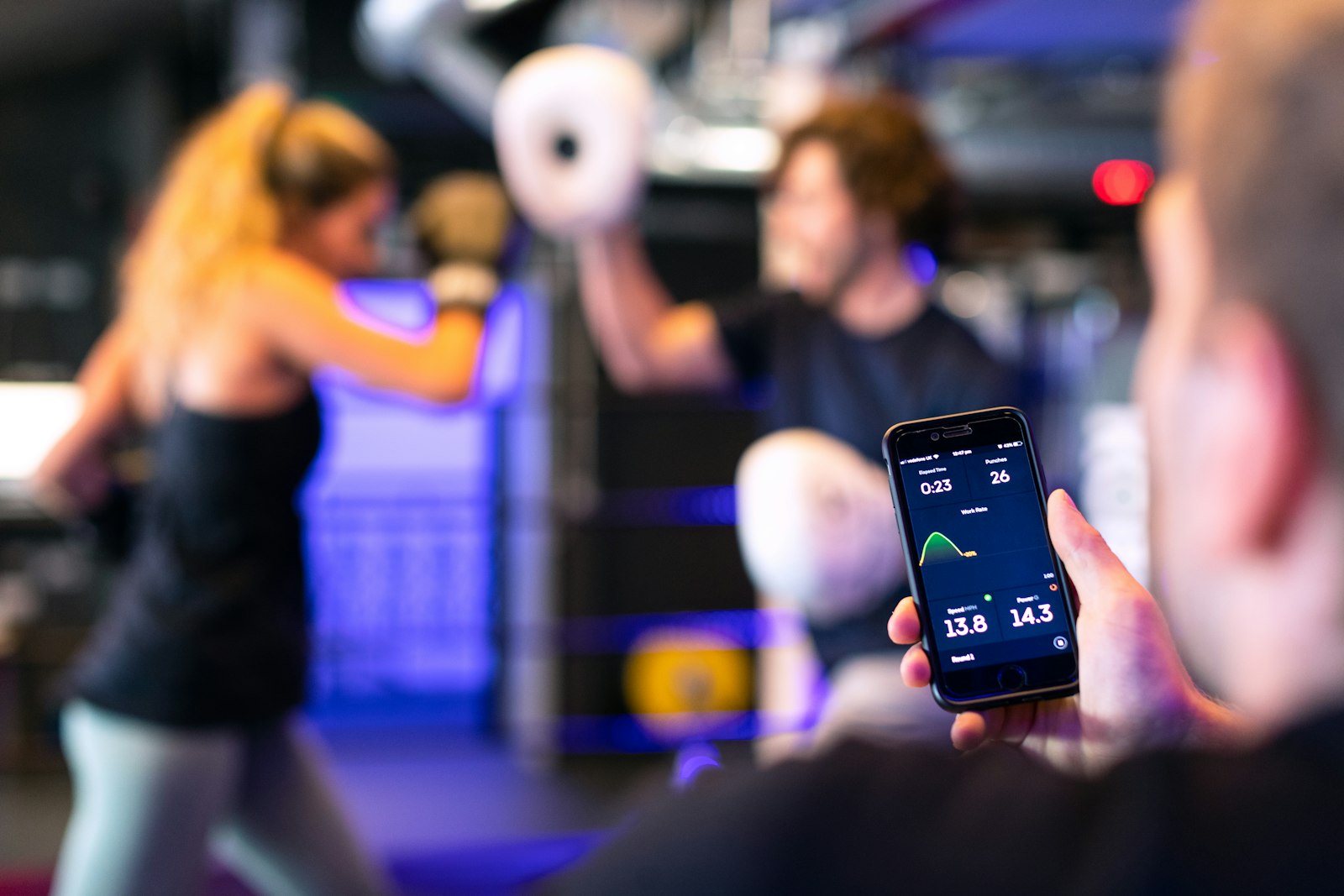
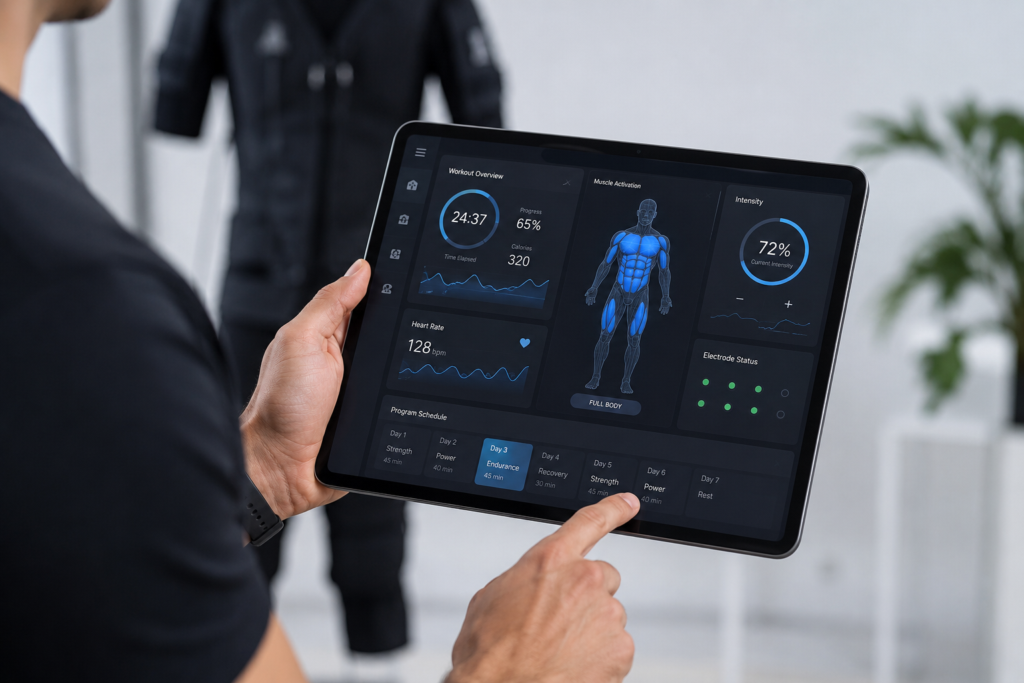
AI-assisted EMS program systems address these limitations by analyzing accumulated data from each client’s training history — including session intensity levels, progress metrics, feedback patterns, and where available, biometric responses — to generate and continuously refine a personalized training program. Rather than following a fixed phase-based structure, an AI-driven program adapts to the individual’s actual progress, adjusting the rate of intensity progression, the balance between muscle groups, and the recovery periods based on how the data indicates they are responding. For coaches exploring AI EMS training apps, proper protocol design is essential.
This shift from static program templates to adaptive, data-informed program generation represents a meaningful quality improvement in EMS training delivery — particularly for users with training histories long enough to generate the data that makes meaningful personalization possible. Clients asking about AI EMS training apps deserve clear, evidence-informed guidance.
App Ecosystems: What They Offer EMS Trainers and Clients: AI EMS training apps
Modern EMS companion apps have evolved far beyond simple remote controls for the stimulation device. Comprehensive EMS training apps now offer session scheduling and booking management, detailed session records including time, intensity settings, and trainer notes, progress tracking dashboards showing performance trends over weeks and months, communication tools between clients and trainers, homework and lifestyle guidance modules, and integration pathways to health wearables and broader fitness platforms. [source] The practical application of AI EMS training apps varies depending on goals and client profile.
For trainers, these app ecosystems reduce administrative burden — automated session records, progress reports, and communication tools — while providing richer data to inform training decisions. For clients, they create greater transparency into their training program, a clearer picture of their progress, and a stronger connection to the training process outside of the 30-minute session window. Studios investing in AI EMS training apps report strong client retention and satisfaction.
The best EMS training apps also serve an educational function, providing clients with content that contextualizes their training — explaining the physiology behind their session, offering nutrition and recovery guidance, and helping them understand what the data from their sessions means. This educational layer increases client engagement and improves the quality of the overall training experience. Anyone serious about AI EMS training apps should prioritize certified equipment and trained staff.
AI in Session Monitoring and Safety
One of the most consequential applications of AI in EMS training is in the domain of session monitoring and safety. Current EMS systems rely primarily on the user or trainer’s subjective assessment of intensity appropriateness — a system that works well when the assessor is experienced and attentive but that can miss subtle signs of over-stimulation or inadequate recovery. The business case for AI EMS training apps is supported by both research and real-world results.
AI-driven monitoring systems can analyze patterns in session data — unusual responses to specific intensity levels, deviations from established individual response curves, or signs of cumulative fatigue — and flag these for trainer review or automatically adjust stimulation parameters to maintain safe and appropriate intensity levels. Getting the most from AI EMS training apps requires consistent protocol and progress tracking.
For home users in particular, AI-driven safety monitoring addresses one of the primary concerns about unsupervised EMS use — the absence of professional oversight. A system that monitors the user’s response in real time and intervenes when parameters approach unsafe ranges provides a meaningful safety backstop that a pre-set program without monitoring cannot offer. Safety remains a top priority in any AI EMS training apps program.
Challenges in AI-EMS Integration
The integration of AI into EMS training is not without challenges. Data quality is fundamental: AI personalization systems are only as good as the data they learn from, and EMS session data is still relatively sparse compared to the large datasets available to AI systems in other domains. Building the data infrastructure — collecting consistent, well-structured training data across large numbers of users and sessions — is a prerequisite for effective AI personalization that most EMS platforms are still working to establish. Professionals offering AI EMS training apps benefit from ongoing education and certification.
User trust and transparency are also important considerations. Fitness consumers who are asked to rely on AI-driven training recommendations need to understand enough about how those recommendations are generated to trust them appropriately. Systems that operate as complete black boxes — providing recommendations without any explanatory context — may face adoption barriers even if the underlying algorithms are sound.
Finally, the regulatory implications of AI in EMS training — particularly for systems that make health-related assessments or adjustments — are an evolving area that manufacturers and regulators are navigating together. As AI systems become more sophisticated in their health monitoring and intervention capabilities, the regulatory classification and requirements for those systems may change.
Conclusion
AI and app integration are making EMS training smarter, more personalized, and more data-informed — changing the experience from a series of individually managed sessions into an adaptive, continuously learning training system. For consumers, this means progressively more tailored programs, better progress visibility, and improved safety monitoring. For operators, it means more efficient training delivery, stronger client relationships, and better data for business decisions.
The technology is still developing, and the best AI-EMS integrations of five years from now will likely exceed what is currently available. But the direction of travel is clear — toward training systems that learn, adapt, and improve in ways that static, manually programmed EMS systems cannot.
Frequently Asked Questions
Do I need a smartphone to use an EMS suit?
Most modern wireless EMS suits require a companion smartphone or tablet app for control and program management. Some wired studio systems use dedicated tablets or control units rather than consumer smartphones. Check the specific requirements of any EMS system you are considering.
Can an EMS app replace a human trainer?
Not fully. AI-powered EMS apps can deliver structured programs, track progress, and provide guidance, but they cannot observe movement quality, respond to the full range of a client’s non-verbal feedback, or provide the motivational and relational aspects of a skilled human trainer. Apps and AI are most effective as tools that support and augment trainer-client relationships rather than replace them.
Is my EMS training data private?
Privacy practices vary by EMS platform and manufacturer. Users should review the privacy policy of any EMS app or platform they use to understand how their session data, biometric information, and personal details are collected, stored, and used. Look for clear data minimization policies and the ability to delete your data upon request.
What does AI personalization actually do differently from a standard EMS program?
A standard EMS program follows a pre-designed progression that is the same for all users in a given fitness category. AI personalization analyzes each individual’s data — their specific response patterns, progress rate, and recovery signals — to generate program parameters tailored to their unique physiology and progress, adapting those parameters over time as more data is collected.
How can I tell if an EMS studio or device has good app integration?
Look for apps that offer comprehensive session logging, progress tracking, trainer communication features, and ideally wearable health platform integration. The quality of the UX and the regularity of app updates are also useful indicators of the manufacturer’s ongoing investment in the digital training experience.