Client experience is one of the dimensions where wireless EMS offers a genuinely distinctive advantage over both wired EMS and conventional personal training — a training experience that many clients describe as unlike anything else: intensely effective, surprisingly brief, and completely free of the aesthetic associations of traditional gym exercise. The absence of a cable removes one of the sensory cues that some clients find clinical or unfamiliar about wired EMS, creating a session that feels more like enhanced personal training than specialized medical technology. Research into wireless EMS client experience continues to expand as more studios adopt this approach.
But the quality of the wireless EMS client experience is not determined solely by the technology — it is co-created by the trainer’s skill, attentiveness, communication quality, and ability to design sessions that match the client’s goals and engagement preferences. The best wireless EMS client experiences are the product of excellent technology in the hands of excellent practitioners who understand both the training science and the human experience of the technology.
This article examines what creates exceptional wireless EMS client experiences — from the first session impression through the ongoing training relationship — and how trainers can consistently deliver the quality that builds client loyalty and generates referrals.
First Impressions and Onboarding
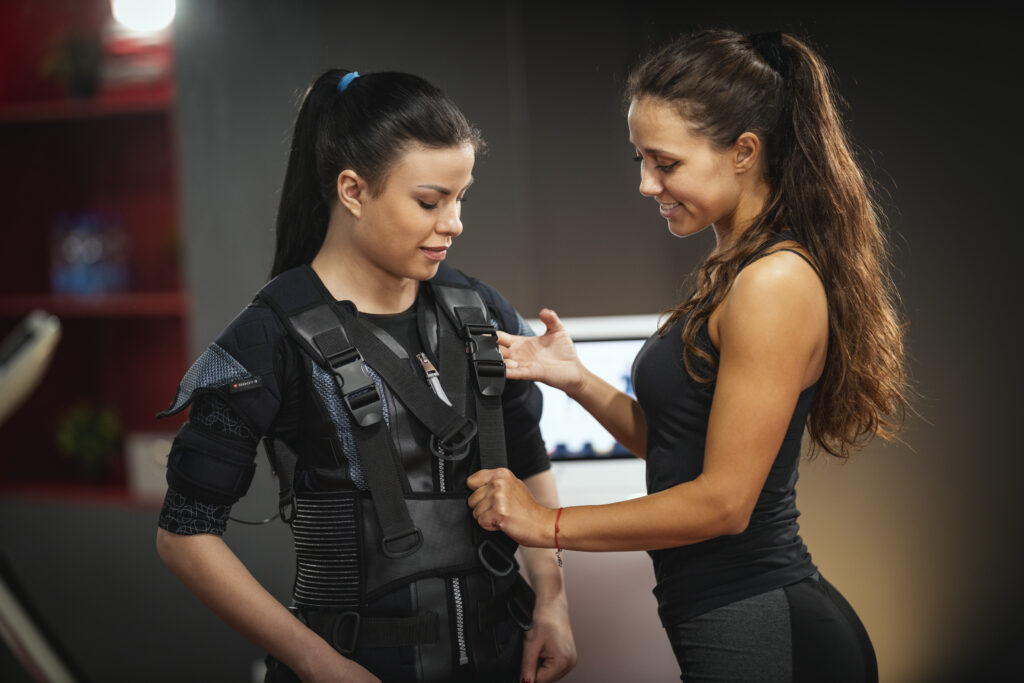
The first wireless EMS session creates the client’s foundational impression of the technology and the practitioner — an impression that shapes their engagement, their expectations, and their likelihood of continuing beyond the initial experience. The first session deserves particular care in every dimension: the pre-session screening and consent process (professional and thorough), the equipment explanation (clear, confident, demystifying), the session itself (appropriately conservative intensity, attentive monitoring, continuous communication), and the post-session debrief (DOMS education, next session scheduling, any questions addressed). [source] Understanding wireless EMS client experience is key for any trainer looking to modernize their offering.
Clients who arrive for their first wireless EMS session often have a mixture of curiosity and mild uncertainty about what to expect — they may have done online research, heard about EMS from a friend, or seen advertising. The trainer’s role in the first session is to replace uncertainty with clarity and mild concern with well-founded confidence: explaining what the EMS sensation feels like before it happens, starting at intensities well below discomfort, and framing each intensity increase as a collaborative exploration rather than an imposed experience. The evidence supporting wireless EMS client experience is growing steadily in the professional fitness space.
The moment of first stimulation — when a client feels whole-body EMS activation for the first time — is the most memorable moment of the wireless EMS introduction. Preparing clients for this experience verbally before delivering it, starting at intensities that produce a noticeable but clearly manageable sensation, and immediately asking for feedback creates the communication pattern that makes first-session EMS safe and builds the client’s confidence in both the technology and the trainer. For coaches exploring wireless EMS client experience, proper protocol design is essential.
Session Quality and Engagement: Wireless EMS client experience
Session quality in wireless EMS is determined by the same factors that determine quality in any personal training relationship: the trainer’s attentiveness to the client’s individual responses, the progressiveness and purpose of the training design, the quality of communication throughout the session, and the feeling that every session serves the client’s specific goals rather than executing a generic template. [source] Clients asking about wireless EMS client experience deserve clear, evidence-informed guidance.
Wireless EMS’s cable-free freedom enables trainers to design sessions with more movement variety, more dynamic exercise patterns, and more of the training conversation and movement coaching that characterize premium personal training. Using this freedom intentionally — designing wireless EMS sessions that feel like excellent personal training with an additional physiological dimension — creates experiences that clients value highly and that differentiate wireless EMS from both conventional training and the more static wired EMS experience. The practical application of wireless EMS client experience varies depending on goals and client profile.
Progress communication is a powerful client experience driver that is often underleveraged in EMS training. Clients who understand that their increasing intensity tolerances reflect genuine physiological adaptation, that their improved DOMS recovery reflects growing conditioning, and that their session designs are progressively evolving in response to their development feel a sense of purposeful progress that motivates continued engagement. Trainers who communicate this progress narrative actively — referencing previous sessions, acknowledging improvements, explaining the why behind protocol changes — create a more engaging and retaining client experience. Studios investing in wireless EMS client experience report strong client retention and satisfaction.
Building Long-Term Client Relationships
Client retention in wireless EMS, as in all personal training, is ultimately a function of relationship quality, outcome delivery, and the experience of value over time. Clients who achieve their goals, feel genuinely understood and cared for by their trainer, and experience sessions as consistently high-quality and progressive will remain engaged clients for years — recommending the service to peers and serving as the referral base that sustains the business. [source] Anyone serious about wireless EMS client experience should prioritize certified equipment and trained staff.

Regular outcome assessments — body composition measurements, functional performance tests, or simple standardized strength and endurance benchmarks — provide the objective evidence of progress that supports clients’ continued investment in EMS training. Without regular assessment, progress can feel invisible to clients who are experiencing it but not measuring it; with regular assessment, the evidence of improvement reinforces the motivation that keeps clients engaged.
The wireless EMS client community — when studios create it deliberately through events, challenges, referral programs, and social connection opportunities — multiplies the individual client’s experience by embedding it in a social context that adds motivation, accountability, and belonging to the training relationship. Clients who are part of a community are more retained than those who have only a dyadic trainer-client relationship, and community creation is a differentiating business investment that wireless EMS studios in particular can leverage.
Conclusion
Wireless EMS client experience at its best is the product of excellent technology, professional expertise, genuine client attentiveness, and deliberate experience design that makes every session feel worthwhile and every training relationship feel valued. The cable-free freedom and distinctive first-session impression of wireless EMS create a strong foundation; the trainer’s skill and care build the ongoing relationship that converts first-session curiosity into long-term client loyalty. [source]
Studios and trainers who invest in client experience quality — in onboarding design, session quality consistency, progress communication, and community creation — capture the full commercial value of wireless EMS’s distinctive appeal and build the referral-generating client base that sustainable EMS businesses require.
Frequently Asked Questions
What do clients think about wireless EMS training?
Clients who experience well-delivered wireless EMS consistently describe it as unlike conventional training: intensely effective despite brief sessions, surprisingly engaging, and — for those who have experienced wired EMS — more natural and movement-free. The first-session experience is typically the strongest impression point; clients who have a positive, well-managed first session are highly likely to continue.
How should I explain wireless EMS to a new client?
Explain: that the suit delivers gentle electrical impulses to major muscle groups simultaneously; that the EMS drives strong muscle contractions in addition to the client’s own voluntary effort; that the session is brief (20 minutes) and whole-body; that the sensation is unusual but manageable; that you’ll start at very low intensity and increase gradually with their feedback. Frame it as enhanced personal training, not medical technology.
How do I improve client retention in wireless EMS?
Retention drivers include: genuine goal achievement over time; consistent session quality that feels purposeful and progressive; regular outcome assessments that make progress visible; active progress communication that helps clients understand and value their development; and community creation that embeds the individual training relationship in a motivating social context.
Does wireless EMS feel different from wired?
The fundamental EMS sensation — muscle contractions driven by electrical impulse — is the same in wireless and wired systems. The experience context differs: no cable, greater movement freedom, and a session that can be more dynamic and movement-rich. Many clients who have experienced both describe wireless sessions as feeling more natural and less clinical, though training effectiveness depends on protocol quality rather than cable presence.
How do I handle clients who are nervous about EMS?
Address nervousness directly and professionally: explain exactly what will happen before it does, start at very low intensity to demonstrate that the sensation is manageable, maintain constant communication throughout the introduction, and normalize the unusual sensation with confident, matter-of-fact framing. Most clients who arrive nervous leave their first session with confidence; the trainer’s calm competence is the primary reassurance.
Ready to explore EMS suit options? Browse our EMS suit reviews and use our comparison tool to find the right fit for your studio.