
The professional wireless EMS market includes systems that span a wide range of quality and capability — from fully certified medical-grade devices designed for professional studio and clinical use to consumer-grade products that share the wireless EMS category name but lack the technical specifications, safety systems, and professional support infrastructure that serious training application requires. Knowing which features distinguish professional-grade wireless EMS systems from lower-quality alternatives is essential for making a sound equipment investment. Research into wireless EMS suit features continues to expand as more studios adopt this approach.
The features that matter most in professional wireless EMS are not always the most prominently marketed. Battery life and app design attract marketing attention; stimulation quality, electrode materials, safety system implementation, and manufacturer support infrastructure are less visible but more professionally significant. This article identifies the specific features — and the evaluation questions that reveal their quality — that matter most in professional wireless EMS selection. Understanding wireless EMS suit features is key for any trainer looking to modernize their offering.

Whether evaluating a first wireless EMS system or assessing an upgrade from an existing system, the feature framework presented here provides a practical guide to separating genuinely professional systems from lower-quality alternatives that may not serve professional training needs reliably. The evidence supporting wireless EMS suit features is growing steadily in the professional fitness space.
Stimulation Quality and Technical Specifications
Stimulation quality — the precision and consistency of current delivery — is the most fundamentally important technical feature of any EMS system, wireless or wired. Request full technical specifications from manufacturers under consideration: frequency range (Hz), pulse width range (microseconds), maximum current output per channel, number of independently controllable channels, and waveform type. Compare these specifications against professional and research standards; systems with narrow frequency or pulse width ranges, insufficient channel count, or limited current output will constrain protocol design and training effectiveness. [source] For coaches exploring wireless EMS suit features, proper protocol design is essential.
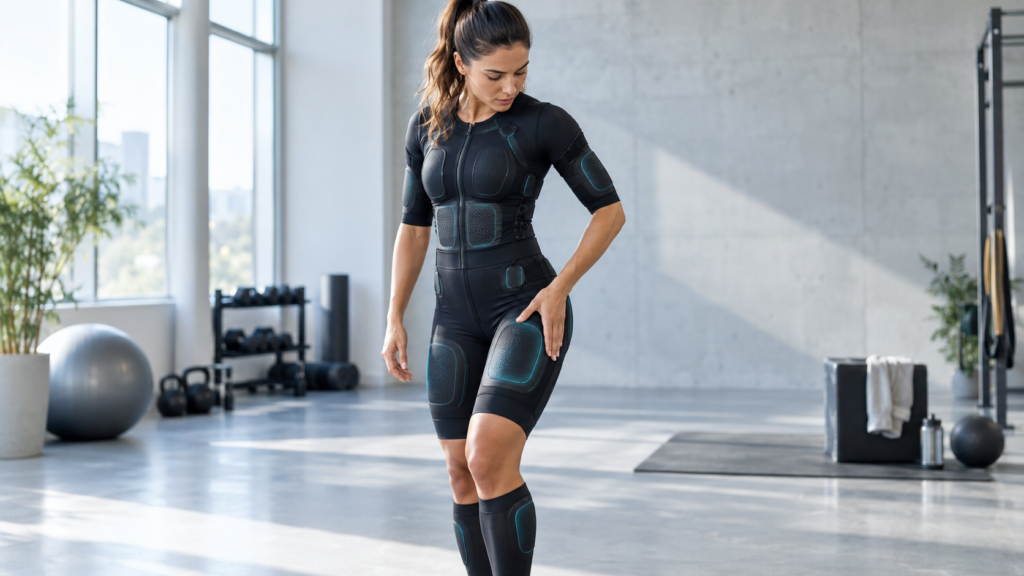
Channel independence is a particularly important specification in wireless systems. Professional WB-EMS requires independent intensity control of each muscle group area — the ability to set different intensities for quads versus glutes versus core versus upper body, responding to individual client needs and session design requirements. Wireless systems with limited channel independence (grouping muscle areas that should be independently adjustable) restrict protocol customization in ways that experienced practitioners will find limiting. Clients asking about wireless EMS suit features deserve clear, evidence-informed guidance.
Stimulation consistency throughout the session — maintaining specified parameters despite battery discharge, thermal changes, and the electronic variability inherent in battery-powered operation — is a professional-grade quality indicator that is less easy to verify from specifications alone. Request demonstrations with sessions run from full battery through discharge, and seek references from experienced operators about their assessment of stimulation consistency over session duration and battery lifetime. The practical application of wireless EMS suit features varies depending on goals and client profile.
Battery and Hardware Quality: Wireless EMS suit features
Battery capacity and session endurance are the most immediately practically significant hardware features in wireless EMS. Verify that the manufacturer’s rated session endurance comfortably exceeds your actual session duration (with at least 20 to 30 percent margin for real-world intensity variation and battery degradation over time). Ask manufacturers about rated battery cycle life — the number of charge-discharge cycles before capacity degrades to a specified percentage of original — and the expected timeline and cost of battery replacement. [source] Studios investing in wireless EMS suit features report strong client retention and satisfaction.
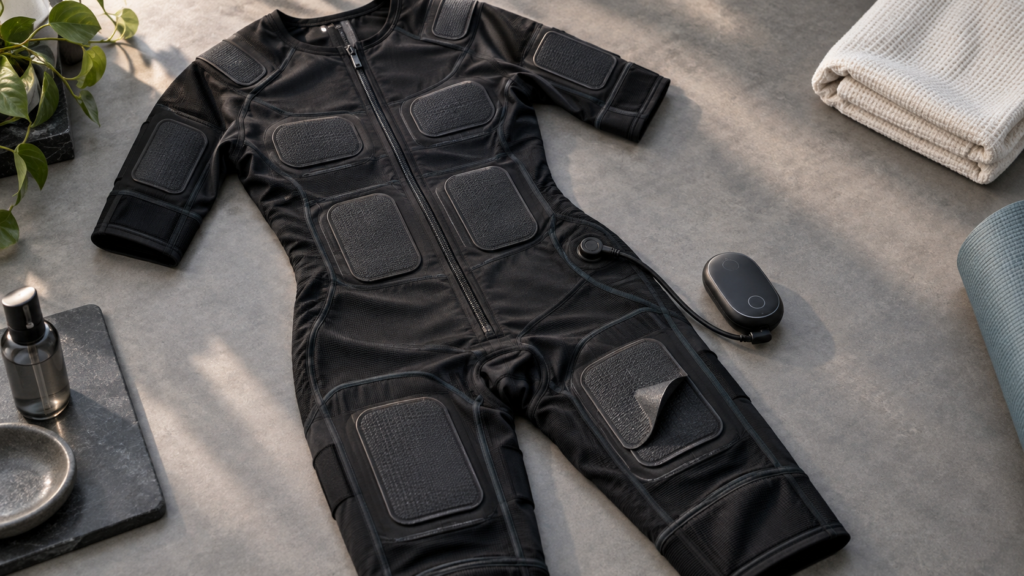
Physical durability of the wireless unit is a commercial studio quality requirement that consumer-grade systems often don’t meet. The wireless unit will be donned, used during exercise producing sweat and movement stress, removed, cleaned, and recharged multiple times per day in a high-volume studio. IP-rated moisture resistance (specifying the level of water ingress protection), impact resistance, and housing material quality all affect the operational lifespan of the wireless unit under real studio use conditions. Anyone serious about wireless EMS suit features should prioritize certified equipment and trained staff.
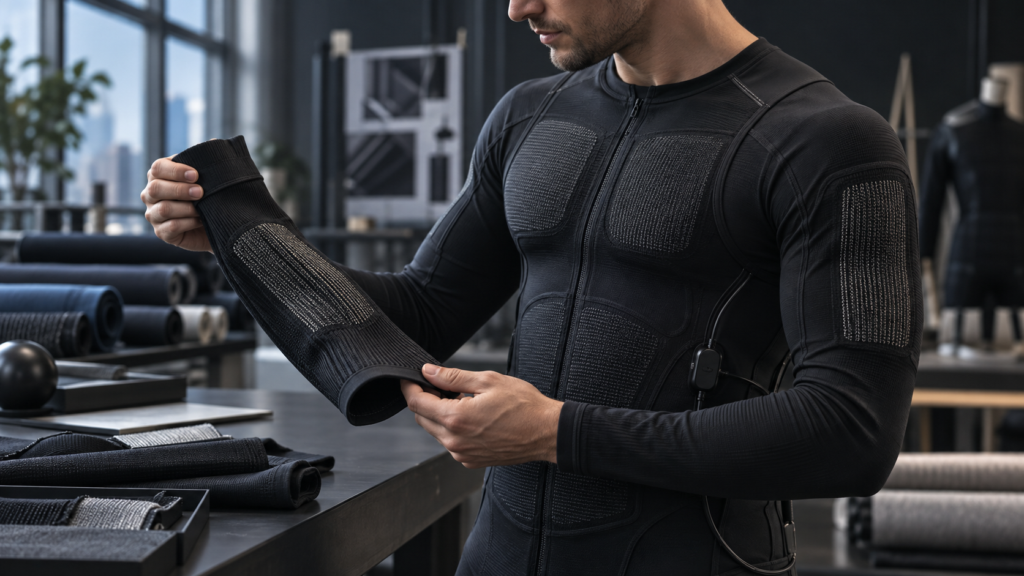
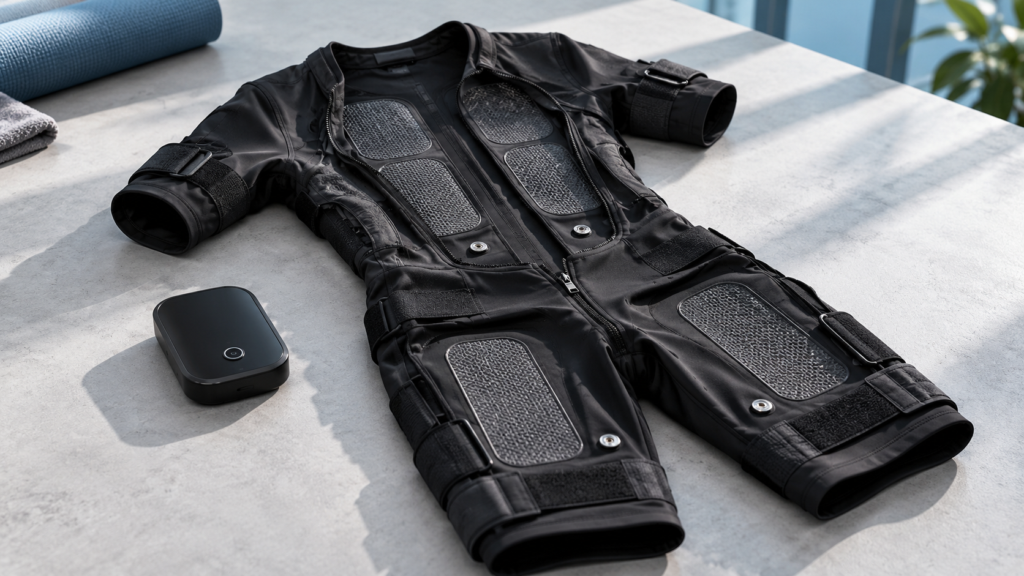
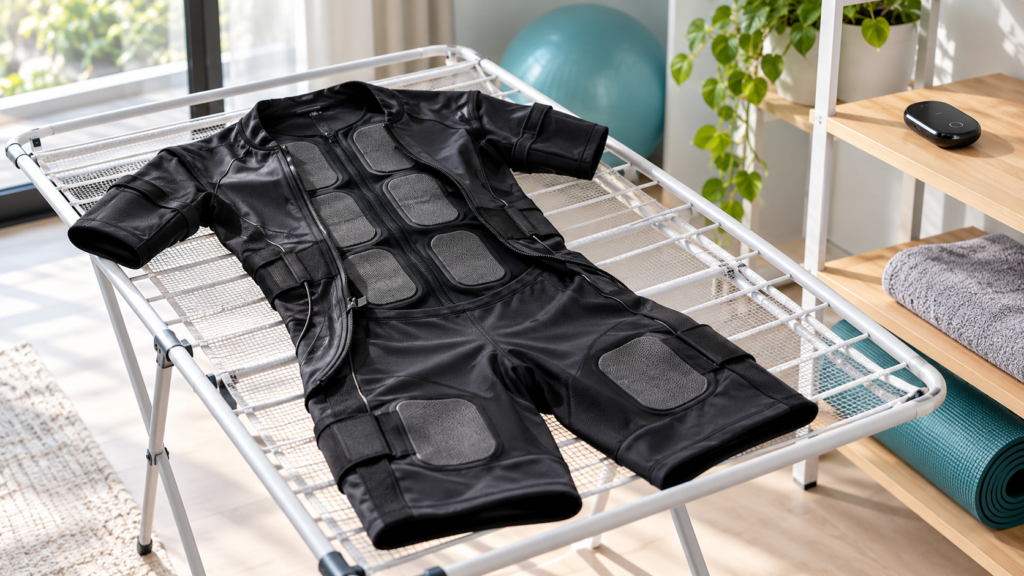
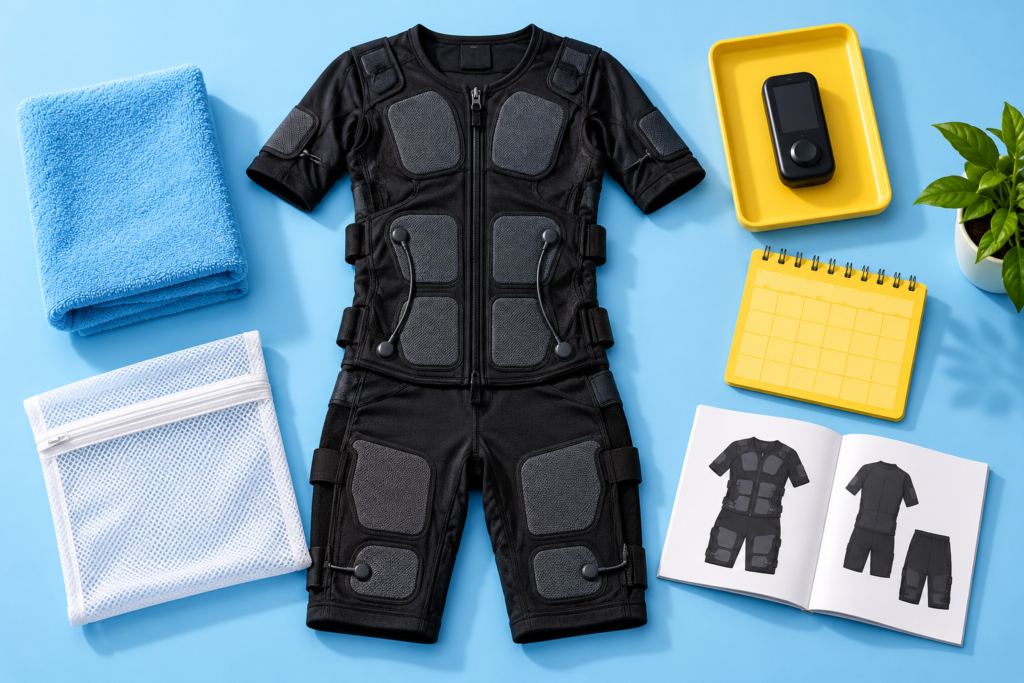
Suit and electrode material quality in wireless systems must match the standards discussed for wired systems: conductive material conductivity consistency across varying moisture conditions, hygiene resistance, physical durability under regular use and cleaning, and accurate positioning across body sizes. The wireless architecture does not change these electrode quality requirements; lower-quality electrode materials in a wireless system produce the same positioning and conductivity problems as they do in wired systems. The business case for wireless EMS suit features is supported by both research and real-world results.
Software, Safety, and Support
Control application quality significantly affects daily professional experience with wireless EMS. Evaluate: the clarity and responsiveness of intensity controls during active sessions; the ease of client record creation and management; the depth of session programming capabilities; the reliability of wireless connection status display; and the quality of session data export and reporting. Request a full demonstration of the application with a complete simulated session workflow, not just a marketing overview. [source] Getting the most from wireless EMS suit features requires consistent protocol and progress tracking.
Safety system implementation is a critical professional quality indicator that marketing materials rarely highlight. Ask manufacturers specifically: what are the safety limits implemented in the stimulation electronics, and how are they enforced? What happens if wireless communication is disrupted during a session — does stimulation stop, continue at last parameters, or default to a safe state? How is emergency stop implemented in the control application, and what is the expected response time? Professional systems have clear, robust answers to these questions; lower-quality systems may not. Safety remains a top priority in any wireless EMS suit features program.

Manufacturer training, certification, and ongoing support infrastructure matter as much for wireless EMS as for wired. Evaluate the certification program depth and professional credibility, the availability and quality of ongoing technical support, and the manufacturer’s track record of software updates and equipment service. A wireless EMS system is an ongoing relationship with a manufacturer, not a one-time purchase — the quality of that relationship over the equipment’s operational life is a meaningful selection criterion. Professionals offering wireless EMS suit features benefit from ongoing education and certification.
Conclusion
Professional wireless EMS system selection requires looking beyond battery life and app aesthetics to the stimulation quality, electrode materials, safety system implementation, and manufacturer support that determine real-world professional performance. The investment in thorough evaluation — requesting full technical specifications, conducting comprehensive demonstrations, speaking with experienced operators, and verifying regulatory compliance — is amply justified by the scale of the investment and the professional dependence on reliable system performance. [source]
The right professional wireless EMS system is the one that meets the actual technical and operational requirements of professional training practice — not necessarily the one with the most sophisticated marketing or the most prominently featured app.
Frequently Asked Questions
What should I look for in a professional wireless EMS suit? [source]
Prioritize: stimulation quality and full technical specifications (frequency, pulse width, channel count, current output); battery capacity and real-world session endurance; physical durability and moisture resistance; electrode material quality; control application capability; safety system implementation; regulatory compliance; and manufacturer certification and support infrastructure.
How many channels should a professional wireless EMS system have?
Professional WB-EMS systems should offer 14 to 20 or more independently controllable channels, covering all major muscle groups with individual intensity control. Systems with fewer channels or limited channel independence restrict protocol customization in ways that professional training quality requires.
Is regulatory certification important for wireless EMS equipment?
Yes — regulatory certification (CE marking as Class IIa medical device in the EU, or equivalent in other markets) is a baseline professional quality indicator. Uncertified EMS equipment lacks the independent technical assessment that certification requires. Verify certification directly with the relevant regulatory body rather than accepting marketing claims.
What safety features should wireless EMS have?
Professional wireless EMS should implement: current output safety limits enforced in electronics (not just software); defined safe behavior on wireless communication disruption; clear emergency stop function with immediate response; battery safety management circuits; and thermal protection for the electronics. Ask manufacturers specifically about each of these features.
How important is the wireless EMS app?
The control app is the primary professional interface for wireless EMS operation — quality matters significantly for daily practice. Evaluate it on intensity control clarity and responsiveness, client record management, session programming depth, wireless connection reliability display, and data export capability. A poorly designed app creates friction in every session; a well-designed app supports smooth, professional operation.
Ready to explore EMS suit options? Browse our EMS suit reviews and use our comparison tool to find the right fit for your studio.