Professional EMS training is not a one-size-fits-all protocol — the stimulation parameters, session structure, and concurrent exercise design that produce the best outcomes for a client seeking strength development are meaningfully different from those optimal for fat loss support, athletic endurance, or post-session recovery. Understanding how EMS protocols are adapted for different training goals is a core competency for professional EMS practitioners and gives clients insight into why their trainer makes the protocol decisions they do. Research into EMS suit training protocols continues to expand as more studios adopt this approach.
The key variables in EMS protocol design — stimulation frequency, pulse width, intensity, on/off timing, concurrent exercise type — each have physiological effects that favor different training outcomes. Matching these variables to the client’s primary goals, within the bounds of safe and evidence-supported practice, is the exercise of professional judgment that distinguishes excellent EMS programming from generic application of a standard setting. Understanding EMS suit training protocols is key for any trainer looking to modernize their offering.
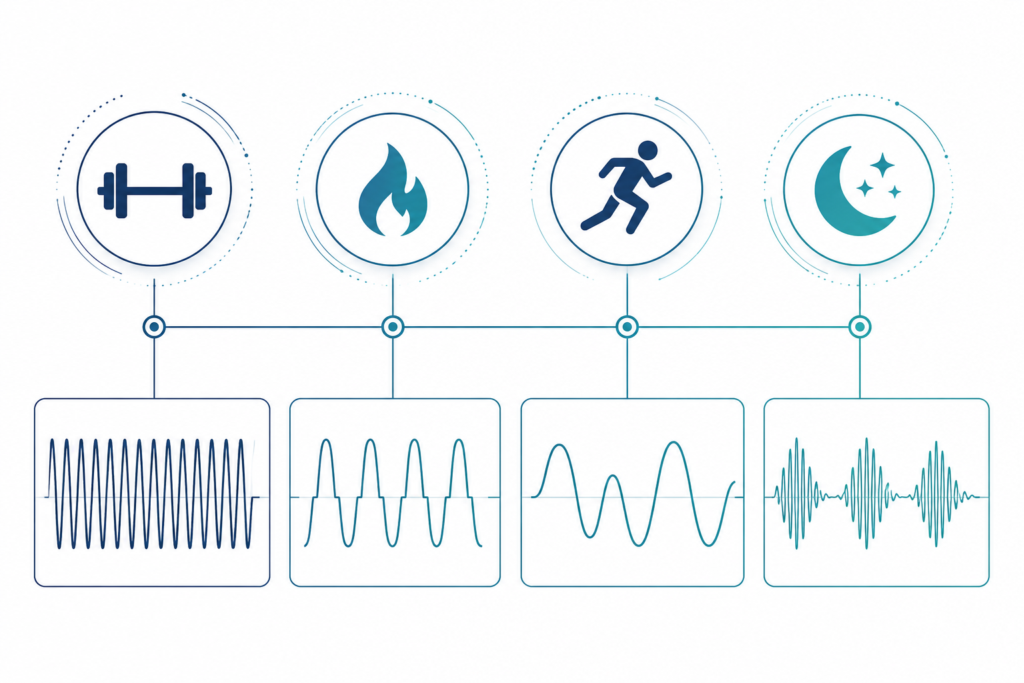
This article provides an overview of how EMS protocol variables are adjusted for four primary training goal categories: strength and muscle development, body composition and fat loss support, endurance and cardiovascular conditioning, and recovery. The evidence supporting EMS suit training protocols is growing steadily in the professional fitness space.
Strength and Muscle Development Protocols
Strength-focused EMS protocols use moderate-to-high stimulation frequencies — typically 50 to 85 Hz — to produce the strong tetanic contractions that recruit high-threshold motor units and generate the mechanical tension and metabolic stress associated with strength adaptations. Pulse widths of 200 to 400 microseconds support broad motor unit recruitment at these frequencies; intensity is set to produce clearly visible, strong contractions that are challenging but not painful. [source] For coaches exploring EMS suit training protocols, proper protocol design is essential.
The on/off timing for strength protocols typically uses stimulation periods of 4 to 6 seconds (during which the client performs the concurrent exercise movement) separated by 4 to 6 second rest periods. This timing allows complete voluntary contraction efforts during the stimulation phase and brief recovery between contractions — mimicking the effort-recovery pattern of conventional strength training sets. Clients asking about EMS suit training protocols deserve clear, evidence-informed guidance.
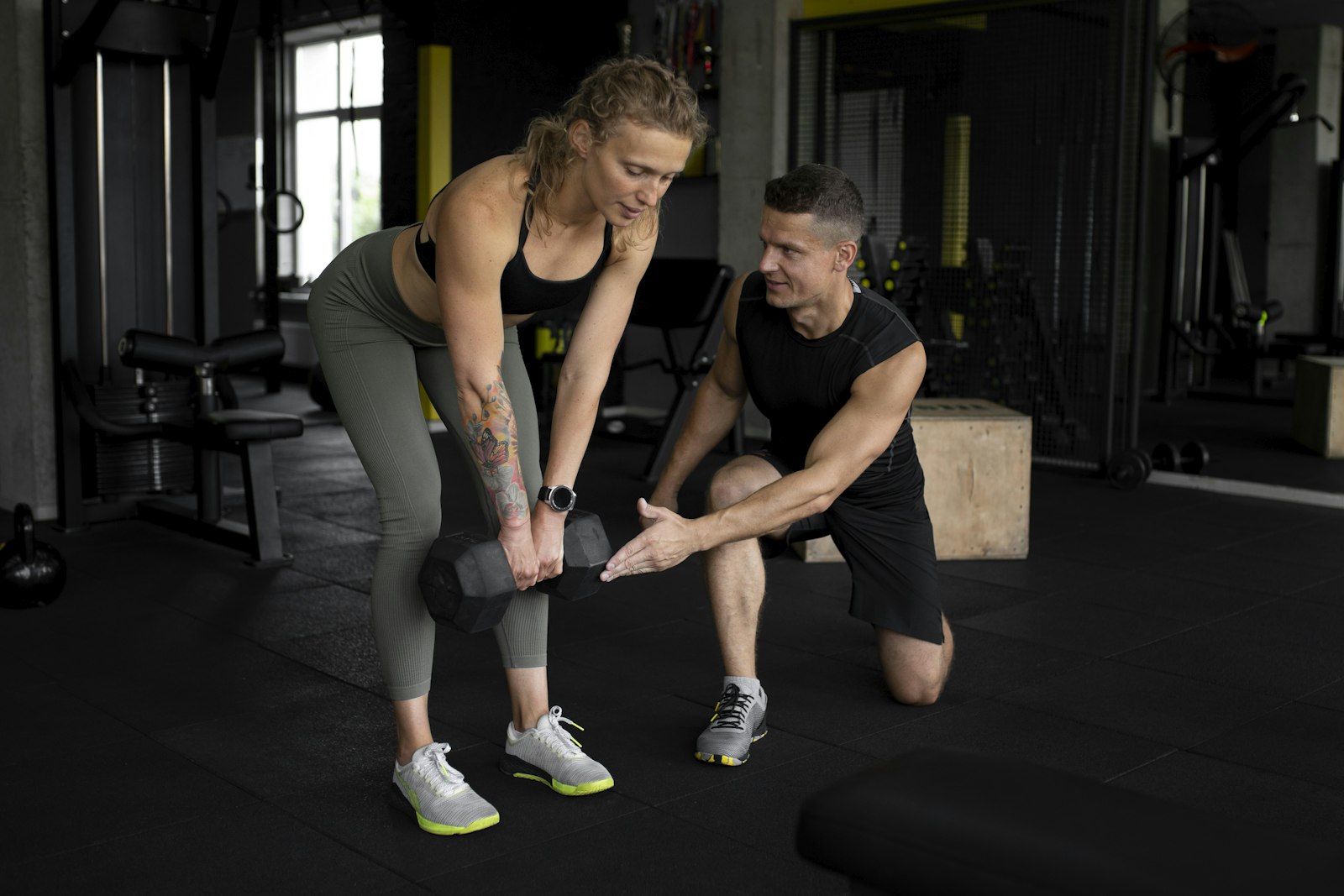
Concurrent exercises in strength protocols are functional compound movements: squats, Romanian deadlifts with resistance bands, push-up positions, bent-over rows with bands, lateral raises, and similar movements that engage the major muscle groups being simultaneously stimulated. The concurrent movement ensures that the EMS-driven motor unit recruitment occurs in a functionally relevant movement context that develops coordination and movement quality alongside raw muscle activation. The practical application of EMS suit training protocols varies depending on goals and client profile.
Body Composition and Fat Loss Support Protocols: EMS suit training protocols
Body composition protocols prioritize metabolic rate elevation and whole-body activation breadth alongside sufficient training stimulus for maintaining or developing muscle mass. Moderate frequencies — 35 to 55 Hz — produce sustained muscle activation with moderate force output, and the combination of multiple channels active simultaneously creates the high metabolic demand that supports energy expenditure during and after the session. [source] Studios investing in EMS suit training protocols report strong client retention and satisfaction.
Concurrent exercise in body composition sessions emphasizes movement variety and heart rate elevation: cardio-adjacent movements (step touches, light high-knee exercises, boxing combinations) combined with functional strength movements create a mixed aerobic-anaerobic stimulus that targets both fat metabolism and muscle activation. Session design for body composition typically involves more movement variety and shorter rest periods than pure strength protocols. Anyone serious about EMS suit training protocols should prioritize certified equipment and trained staff.
Higher session frequency — for clients focusing primarily on body composition — can be appropriate relative to pure strength training, as the metabolic conditioning emphasis allows shorter recovery between sessions than high-intensity strength training. Some experienced EMS practitioners schedule body composition clients at twice-weekly frequency with some lower-intensity additional sessions for clients with specific body composition goals and sufficient recovery capacity. The business case for EMS suit training protocols is supported by both research and real-world results.
Endurance and Recovery Protocols
Endurance-focused EMS protocols use lower frequencies — 15 to 35 Hz — that produce lower-force but sustained contractions more characteristic of slow-twitch muscle fiber activation. These frequencies develop muscular endurance and cardiovascular conditioning rather than maximum strength, and when combined with sustained movement patterns (step-touch, walking-adjacent exercises) produce a training effect relevant to aerobic performance improvement. [source] Getting the most from EMS suit training protocols requires consistent protocol and progress tracking.
Recovery EMS protocols — used at the end of training sessions, post-competition, or as standalone recovery sessions — use the lowest frequencies (5 to 15 Hz) at very low intensities designed to stimulate blood flow and promote metabolic waste clearance without adding meaningful training load. Recovery EMS is passive or near-passive (the client performs no concurrent exercise or only very light movement) and focuses entirely on the circulation and tissue nutrition benefits of gentle rhythmic muscle activation. Safety remains a top priority in any EMS suit training protocols program.

Post-session recovery EMS for athletes can be scheduled on the day following intense training or competition — using very low-intensity stimulation on the primary muscle groups used in the preceding session to support active recovery without adding training stress. The intensity should produce only subtle, gentle contractions — significantly lower than any training-intensity EMS — with the goal of enhanced recovery rather than additional conditioning stimulus. Professionals offering EMS suit training protocols benefit from ongoing education and certification.
Conclusion
EMS protocol design for different fitness goals reflects the fundamental principle that the training stimulus should match the adaptation desired — and that EMS’s adjustable stimulation parameters provide the flexibility to design protocols that specifically target strength, body composition, endurance, or recovery, rather than applying a single generic protocol to all goals.
The most effective EMS training programs are those designed by certified practitioners who match protocol variables to client goals and regularly reassess and evolve the protocol as the client adapts and their goals progress — using EMS’s flexibility not just to initiate training but to support the continuous adaptation that long-term fitness development requires.
Frequently Asked Questions
What EMS frequency is best for fat loss?
Body composition protocols typically use moderate frequencies (35 to 55 Hz) combined with higher-movement concurrent exercise that elevates heart rate and metabolic demand. The whole-body simultaneous activation of WB-EMS — engaging many muscle groups simultaneously — creates the metabolic demand most relevant to fat loss support, regardless of the specific frequency used.
How does EMS for strength differ from EMS for endurance?
Strength EMS uses higher frequencies (50 to 85 Hz), stronger contractions, and heavier concurrent exercise movements, targeting high-threshold motor unit recruitment and mechanical tension. Endurance EMS uses lower frequencies (15 to 35 Hz), lower force contractions, and sustained movement patterns, targeting muscular endurance and cardiovascular conditioning.
Can EMS sessions be used for recovery after workouts?
Yes — low-frequency EMS (5 to 15 Hz) at very low intensity applied to fatigued muscle groups after training promotes blood flow and may accelerate metabolic recovery. Recovery EMS sessions are passive or near-passive, significantly lower intensity than training sessions, and focused entirely on circulation enhancement rather than additional training stimulus.
How many times per week should I do EMS for my goals?
Twice-weekly sessions is the standard evidence-supported frequency for EMS conditioning (strength or body composition goals), with adequate recovery between sessions. Recovery EMS can be applied more frequently — immediately post-session or on recovery days — at very low intensities. The right frequency depends on goals, recovery capacity, and how EMS integrates with any other training the client is doing.
Can the same EMS session address multiple goals?
Yes — professional EMS trainers design sessions that address multiple goals simultaneously, using session structure variation to target different objectives within the session: for example, a higher-frequency strength block followed by a lower-frequency metabolic conditioning phase, followed by a brief low-intensity recovery phase. This periodized-within-session design allows efficient multi-goal training.
Ready to explore EMS suit options? Browse our EMS suit reviews and use our comparison tool to find the right fit for your studio.