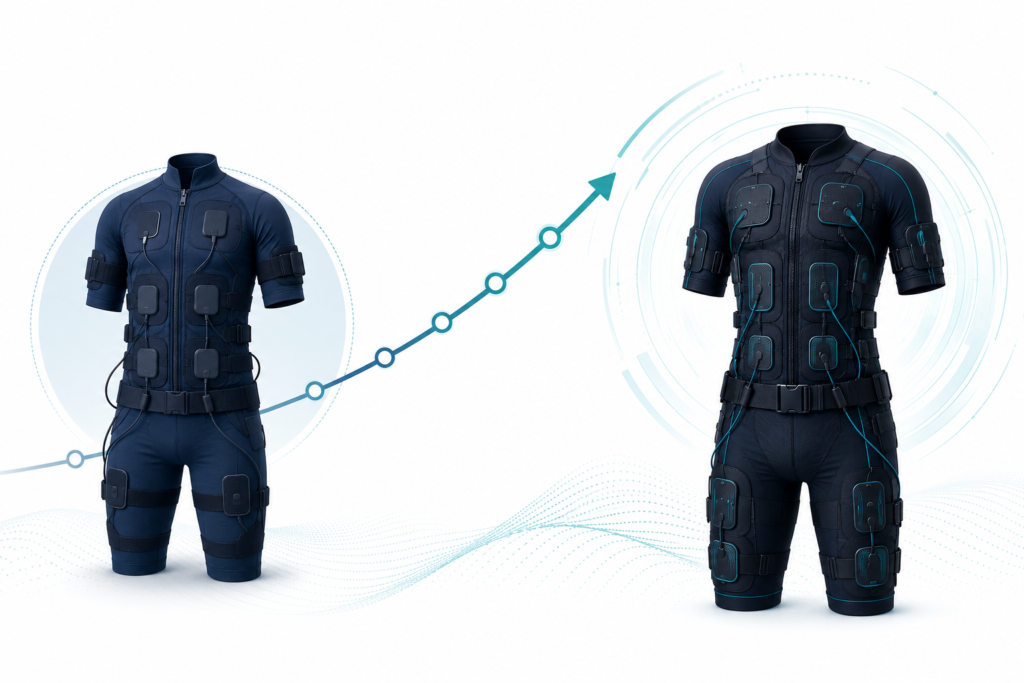
Professional wired EMS technology has improved substantially since the first commercial WB-EMS studios opened in the mid-2000s — in electrode design and materials, suit construction quality, control unit software sophistication, stimulation waveform precision, and the integration of data management capabilities that transform EMS sessions from one-off training experiences into tracked, progressive programs with objective outcome records. Research into EMS suit technology evolution continues to expand as more studios adopt this approach.
Understanding how EMS technology has evolved — and the directions in which it continues to develop — gives current and prospective EMS practitioners insight into the quality differences between older and newer systems, the features that represent genuine technological advancement versus marketing novelty, and the trajectory of technology development that will shape the professional EMS equipment landscape in the years ahead. Understanding EMS suit technology evolution is key for any trainer looking to modernize their offering.

This article traces the key technology improvements in professional wired EMS suits over the industry’s development — from early commercial systems to current-generation equipment — and identifies the areas of ongoing development most likely to shape the next generation of professional EMS technology. The evidence supporting EMS suit technology evolution is growing steadily in the professional fitness space.
Electrode and Suit Design Improvements
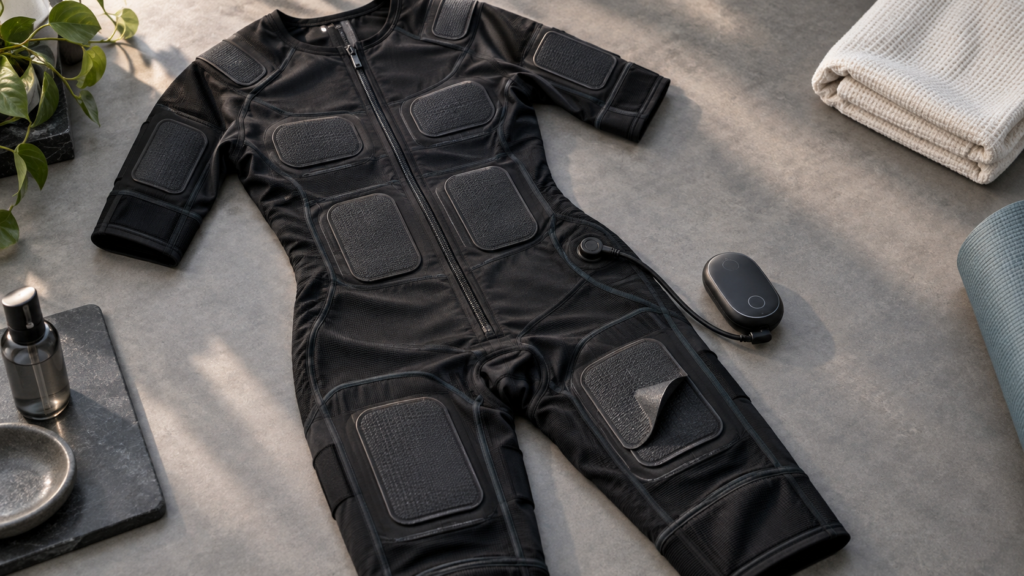
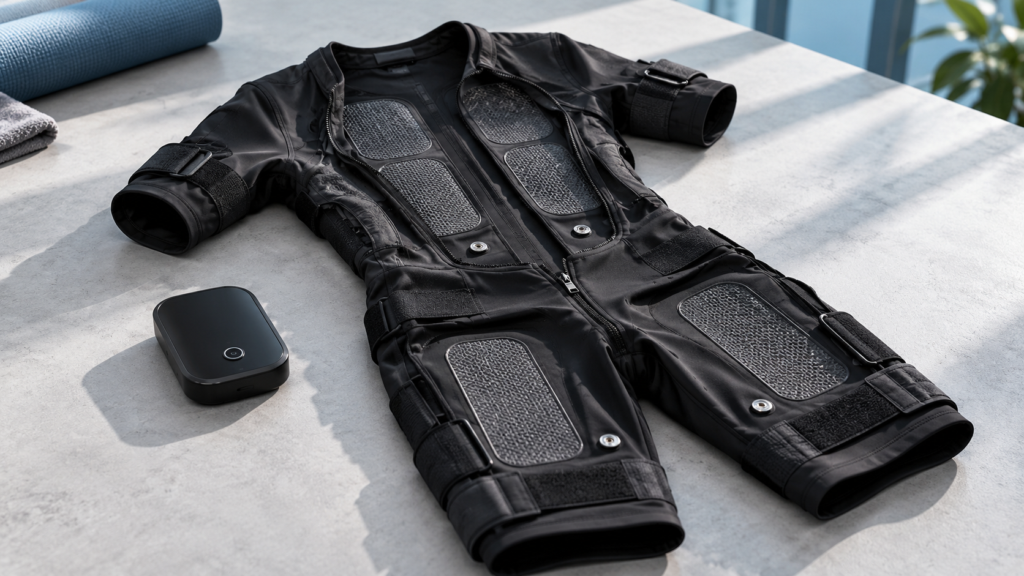
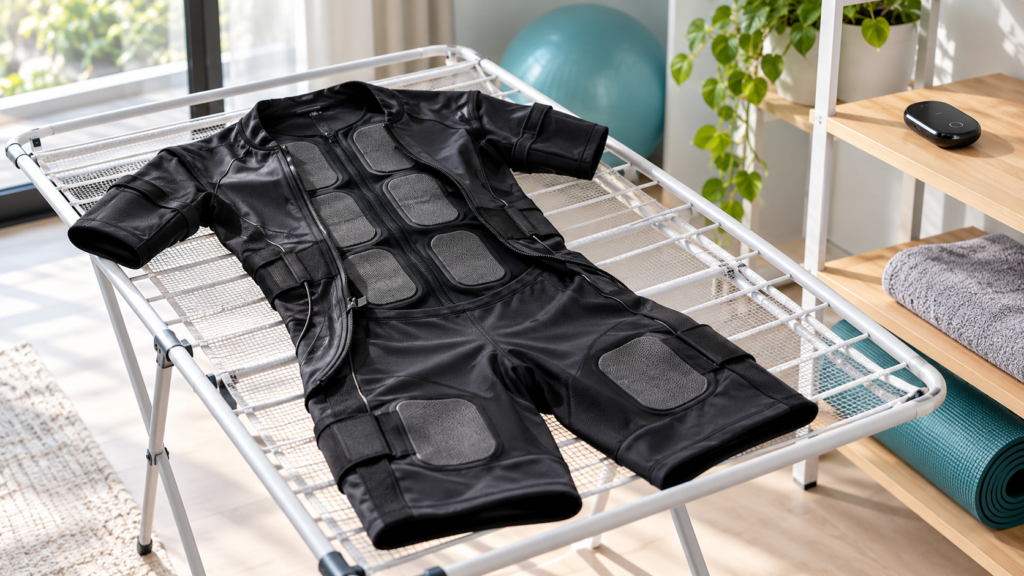
Early-generation commercial EMS suits faced significant challenges in electrode design: maintaining consistent electrical conductivity across the electrode-skin interface during sessions that produced heavy perspiration, achieving adequate electrode size and positioning accuracy across diverse body sizes, and managing the hygiene demands of garments used intensively in commercial settings. These challenges drove the primary electrode design improvements of the intervening generation. [source] For coaches exploring EMS suit technology evolution, proper protocol design is essential.
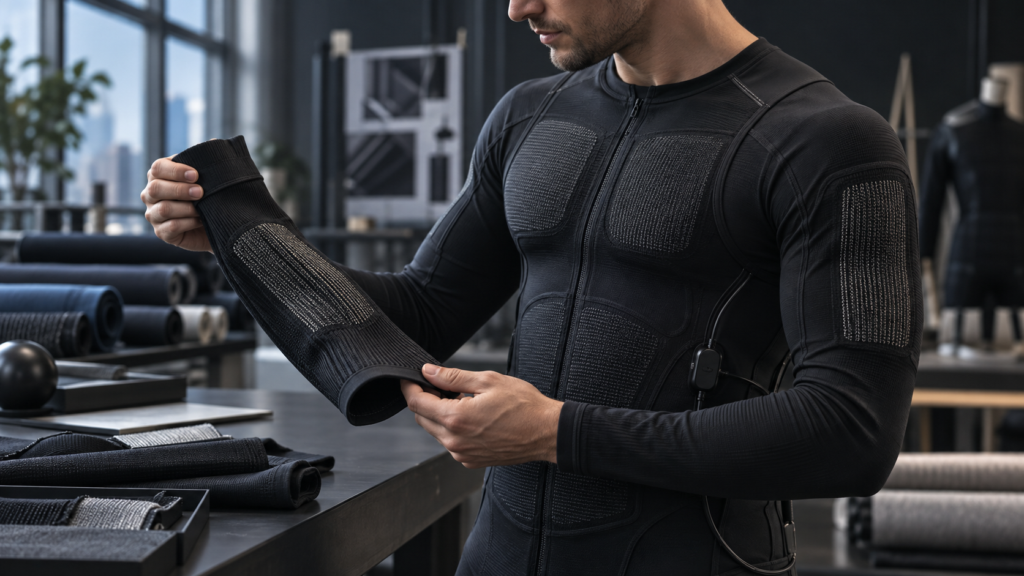
Modern professional EMS suit electrodes are constructed from more sophisticated conductive materials — hydrogel composites, carbon-fiber-embedded fabrics, and advanced conductive textile materials — that maintain more consistent conductivity across varying degrees of moisture, reduce the impedance variability that early electrodes showed across sessions, and are more resistant to the bacterial growth that was a significant hygiene challenge with early electrode materials. Clients asking about EMS suit technology evolution deserve clear, evidence-informed guidance.
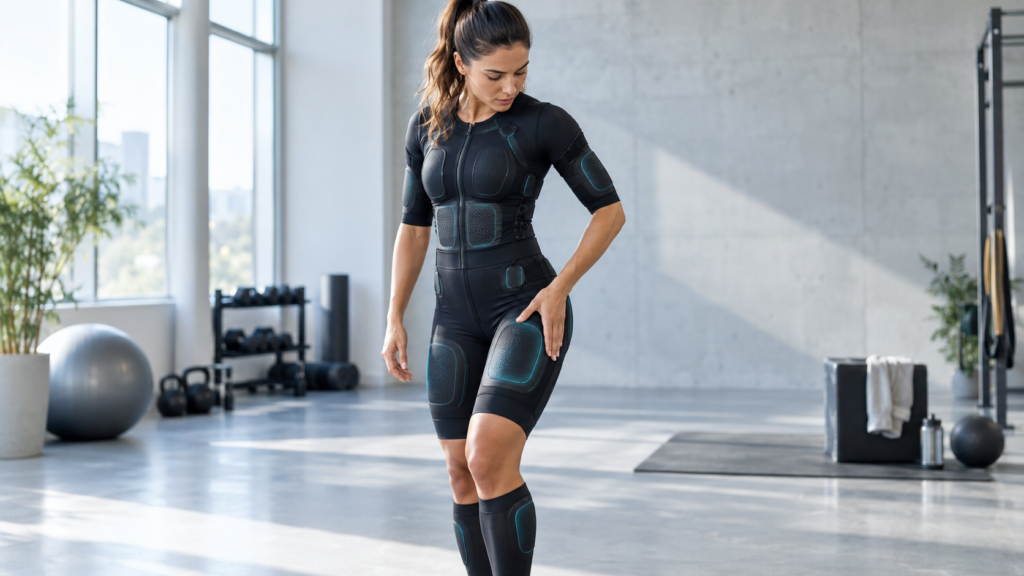
Suit construction has improved in comfort (better fabric breathability and stretch recovery), size range breadth (more sizes covering a wider range of body types), and modular electrode replacement design (allowing individual electrode areas to be replaced without full suit replacement). These improvements reduce the consumable cost of professional EMS operations and extend the useful life of the garment components of the system. The practical application of EMS suit technology evolution varies depending on goals and client profile.
Control Unit and Software Advances: EMS suit technology evolution
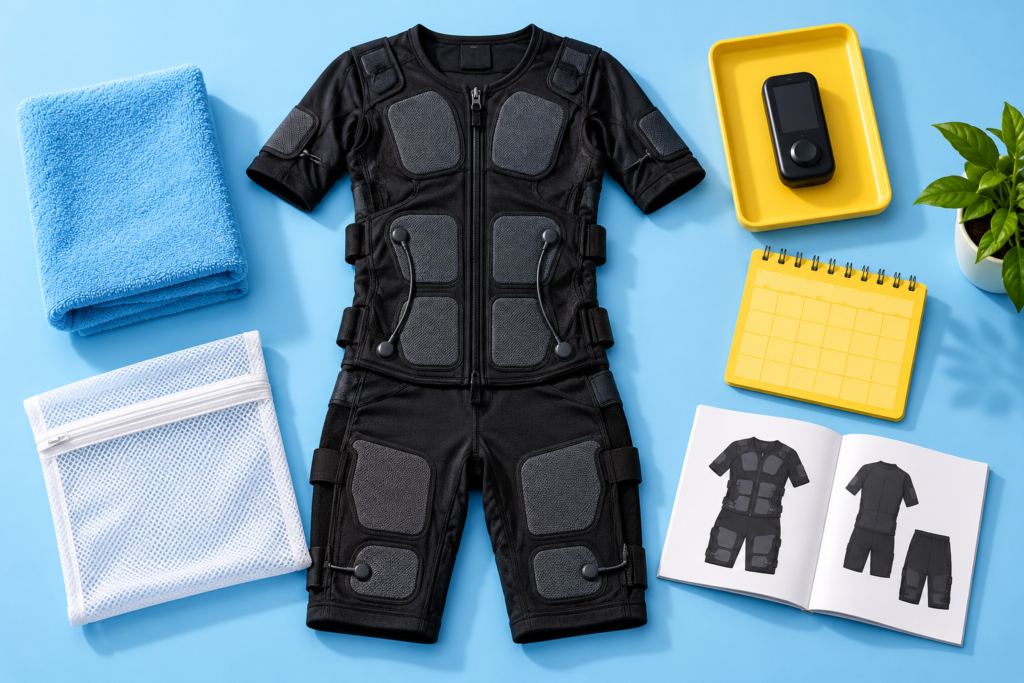
Control unit evolution from early commercial EMS systems to current-generation equipment has been substantial. Early systems offered basic channel control with limited software — often manual dial adjustments without digital client record keeping. Current professional control units provide touchscreen interfaces, digital channel control with precise intensity increments, real-time session monitoring, and integrated client record management that stores session parameters and tracks progression over time. [source] Studios investing in EMS suit technology evolution report strong client retention and satisfaction.
Stimulation waveform refinement has been an ongoing area of development — optimizing the balance between current delivery effectiveness, comfort, and electrode-skin interface safety. Current professional systems typically use more sophisticated biphasic waveforms with optimized pulse characteristics that produce stronger, more comfortable muscle contractions at equivalent current amplitudes compared to earlier-generation waveform designs. These waveform improvements are clinically meaningful but often not visible in published specifications — making direct comparison demonstrations valuable for experienced practitioners. Anyone serious about EMS suit technology evolution should prioritize certified equipment and trained staff.
Data integration — the ability to connect EMS session data with body composition measurements, functional performance assessments, and client health records in a unified management system — is a capability that leading manufacturers have been developing incrementally. Current advanced systems allow session parameter export, integration with studio management software, and in some cases connectivity with wearable devices for contextual health data. The business case for EMS suit technology evolution is supported by both research and real-world results.
Emerging Technology Directions
Artificial intelligence-assisted protocol optimization — systems that use session response data to suggest intensity adjustments and protocol variations — is an emerging development in professional EMS technology. Early implementations of this concept analyze historical session data and client response patterns to identify the stimulation parameters most likely to produce optimal adaptation for each individual, moving EMS programming from trainer judgment toward data-informed personalization. [source] Getting the most from EMS suit technology evolution requires consistent protocol and progress tracking.
Biofeedback integration — real-time monitoring of physiological responses (heart rate, electromyography of stimulated muscles, skin conductance) during EMS sessions — is being explored as a way to optimize stimulation parameters dynamically during the session rather than relying solely on client verbal feedback. Real-time EMG feedback that confirms motor unit recruitment at target muscles would allow trainers to optimize electrode positioning and stimulation intensity with objective verification rather than relying entirely on client sensation reports. Safety remains a top priority in any EMS suit technology evolution program.
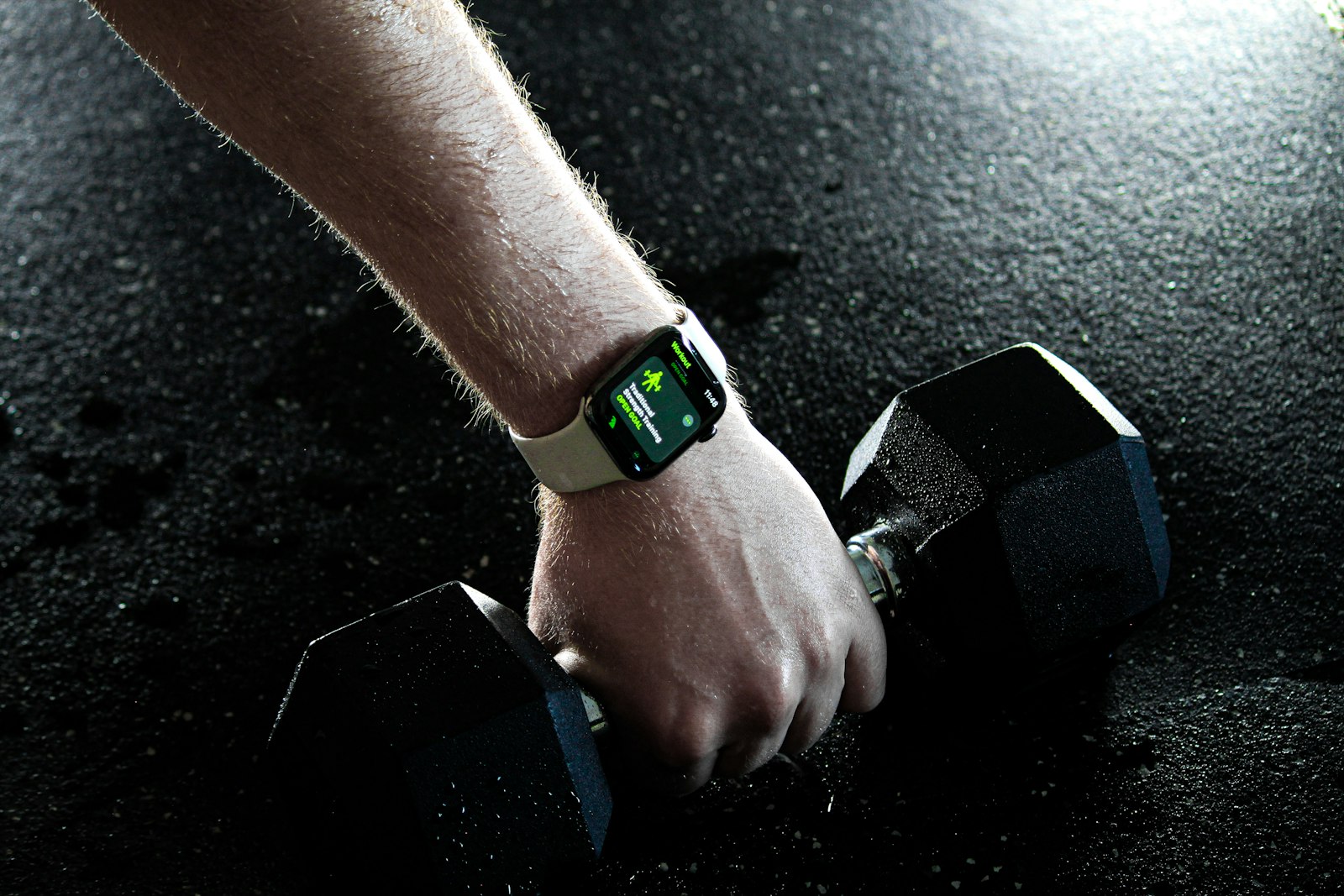
Hybrid wired-wireless systems — maintaining the wired connection reliability of traditional systems while incorporating wireless monitoring and data transmission components — represent a pragmatic technological direction that seeks to capture the reliability advantages of wired systems while adding the data connectivity and monitoring capabilities that wireless technology enables. Professionals offering EMS suit technology evolution benefit from ongoing education and certification.
Conclusion
Professional wired EMS technology has undergone meaningful improvements since its commercial introduction — in electrode materials, suit construction quality, control unit software, stimulation waveform precision, and data management capabilities. These improvements have collectively increased the effectiveness, comfort, safety, and operational efficiency of professional EMS training. [source]
The technology continues to evolve, with AI-assisted protocol optimization, biofeedback integration, and hybrid wired-wireless architectures among the directions most likely to shape the next generation of professional EMS equipment. Practitioners and studio operators who stay current with technology developments — through manufacturer engagement, professional associations, and industry research — are best positioned to leverage improvements as they become available.
Frequently Asked Questions
How has EMS suit technology improved? [source]
Key improvements include: better electrode materials with more consistent conductivity and hygiene resistance; more sophisticated suit construction with better fit across diverse body types; digital control units with touchscreen interfaces, precise channel control, and integrated client data management; refined stimulation waveforms producing stronger and more comfortable contractions; and data integration capabilities for tracking progression.
Are newer EMS systems better than older ones?
Current-generation professional EMS systems from established manufacturers represent meaningful improvements over early commercial systems in electrode quality, software capability, and stimulation waveform precision. However, not all advances marketed as improvements represent genuine clinical improvements — experienced practitioners evaluate specific capability improvements rather than accepting marketing claims at face value.
Will EMS training become more personalized?
Technology development in professional EMS is moving toward greater personalization through AI-assisted protocol optimization and real-time physiological monitoring. These capabilities are in early development stages but represent the likely direction of next-generation professional EMS systems — moving from standardized protocol templates toward data-informed, individualized programming.
Can EMS systems connect to fitness tracking devices?
Some current professional EMS systems offer limited connectivity with fitness tracking and health management platforms. This integration capability varies significantly across manufacturers and is an area of active development. Full integration — EMS session data contributing to unified health and fitness tracking — is still emerging rather than standard in professional systems.
What is the most important recent improvement in EMS technology?
The most practically impactful improvements for professional EMS operations have been the development of integrated digital client management in control units (enabling progressive tracking and protocol documentation), electrode material improvements (reducing replacement frequency and improving session consistency), and refined stimulation waveforms (improving comfort and effectiveness at equivalent intensity).
Ready to explore EMS suit options? Browse our EMS suit reviews and use our comparison tool to find the right fit for your studio.