The defining capability of whole-body EMS training is simultaneously activating multiple major muscle groups across the entire body — a feat no conventional single exercise can replicate. A properly fitted wired EMS suit with all electrode channels active stimulates the quadriceps, hamstrings, glutes, core muscles, back extensors, chest, shoulders, and arms within a single coordinated training session. This simultaneous activation across the body’s major muscle groups is the primary reason WB-EMS training can produce whole-body conditioning effects in 20-minute sessions that would require hours of conventional exercise to approach. Research into EMS suit simultaneous muscle activation continues to expand as more studios adopt this approach.
Understanding how wired EMS suits achieve this simultaneous activation — and why the simultaneous nature of the stimulus matters physiologically — provides important context for understanding both the efficiency advantages and the intensity management requirements of professional WB-EMS training. The same simultaneous activation that makes EMS efficient also explains why EMS produces greater metabolic and muscular demand than the effort level suggests, and why conservative intensity management in early sessions is essential. Understanding EMS suit simultaneous muscle activation is key for any trainer looking to modernize their offering.

This article explains the mechanism of simultaneous multi-muscle activation in wired EMS suits, its physiological implications, and how professional trainers use this capability in protocol design. The evidence supporting EMS suit simultaneous muscle activation is growing steadily in the professional fitness space.
Electrode Coverage and Simultaneous Activation
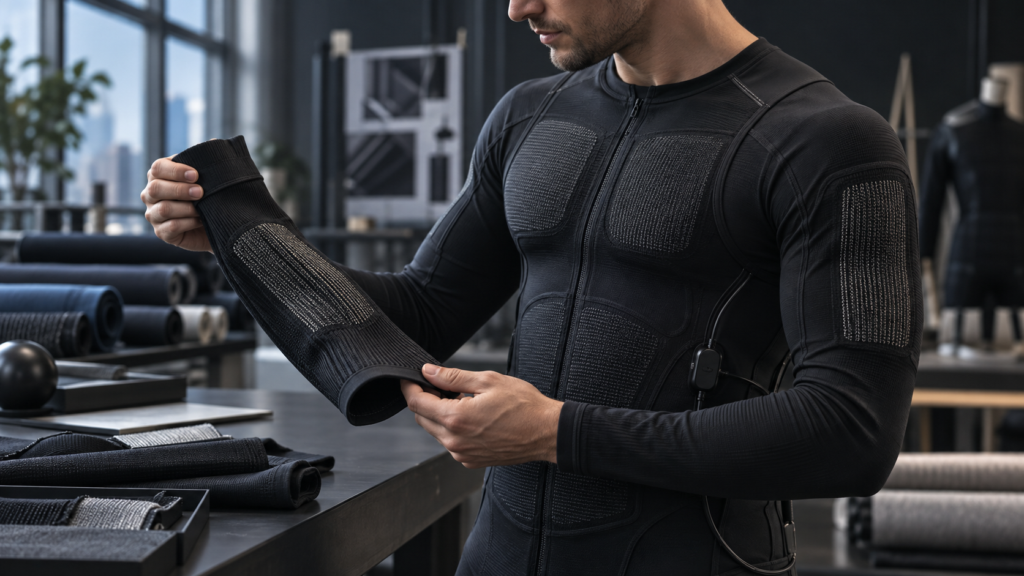
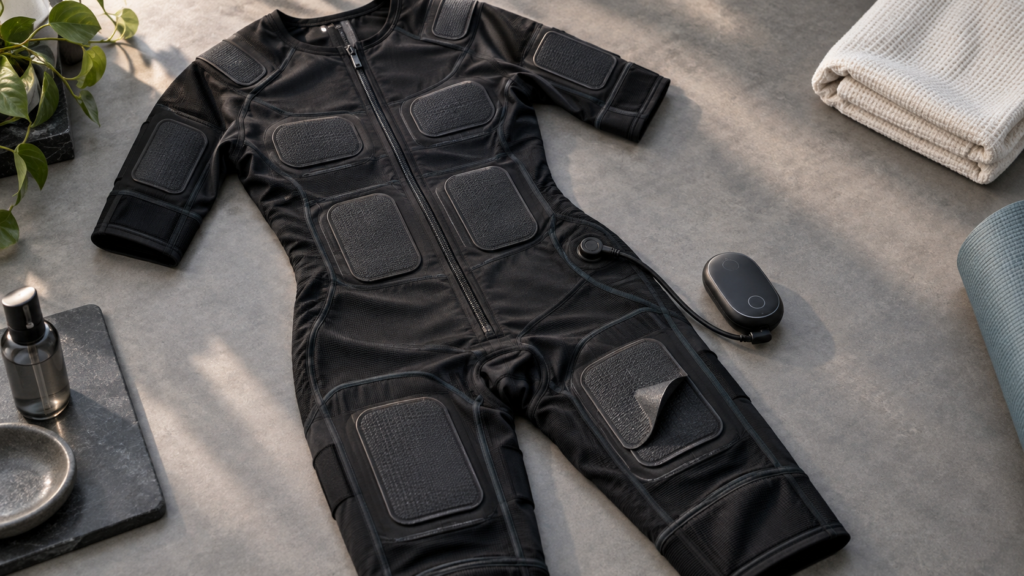
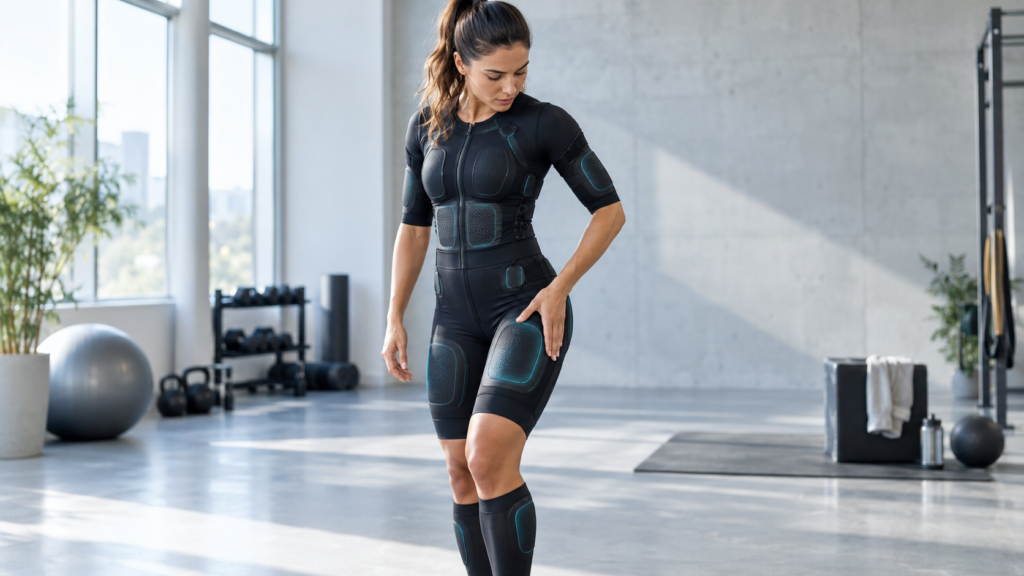
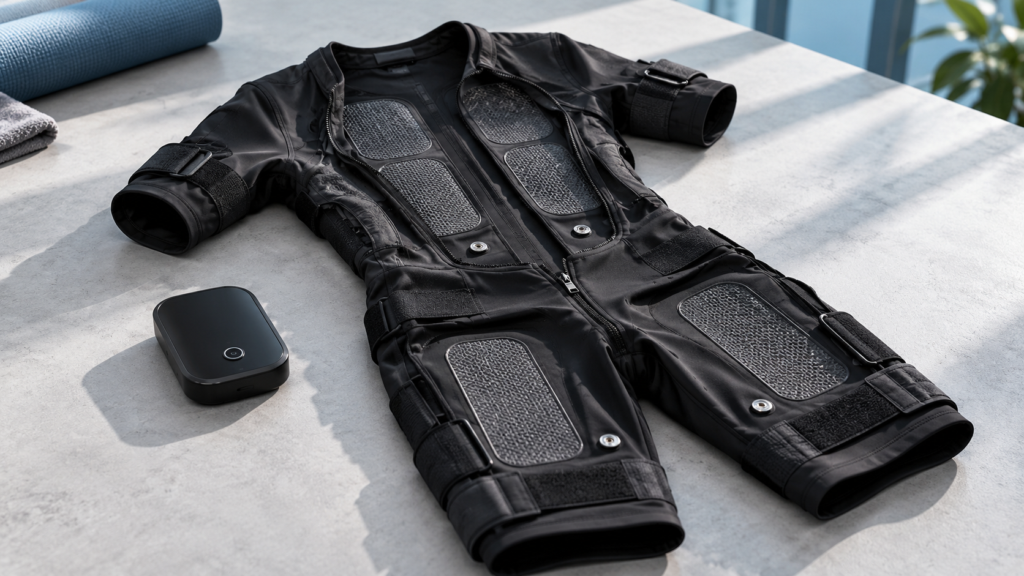
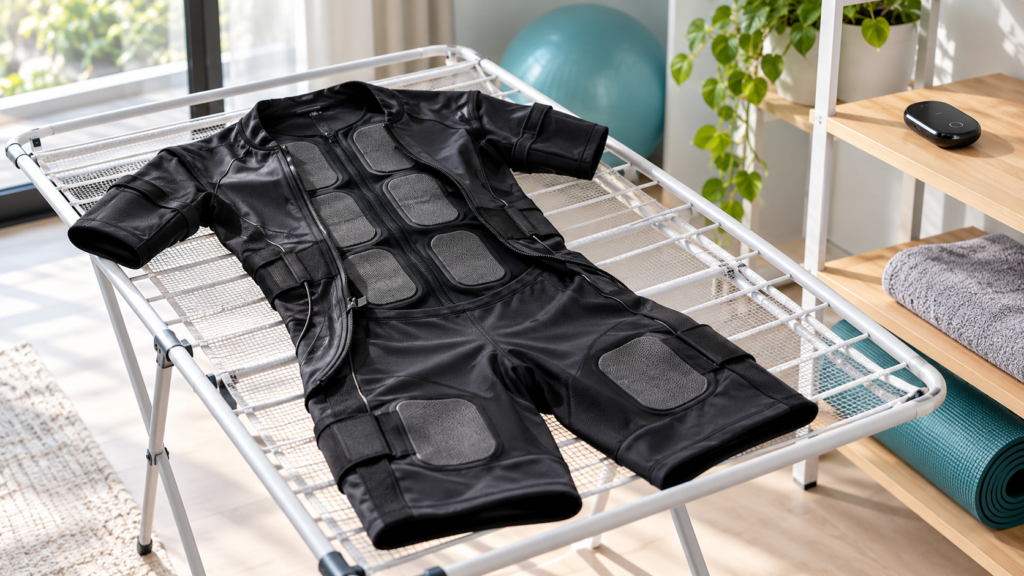
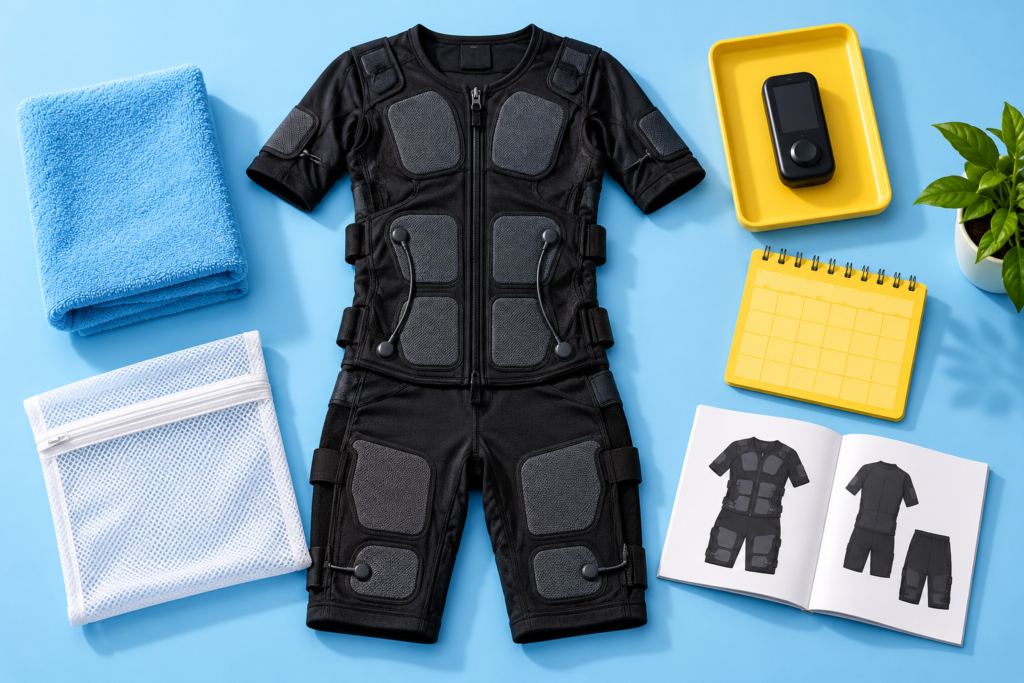
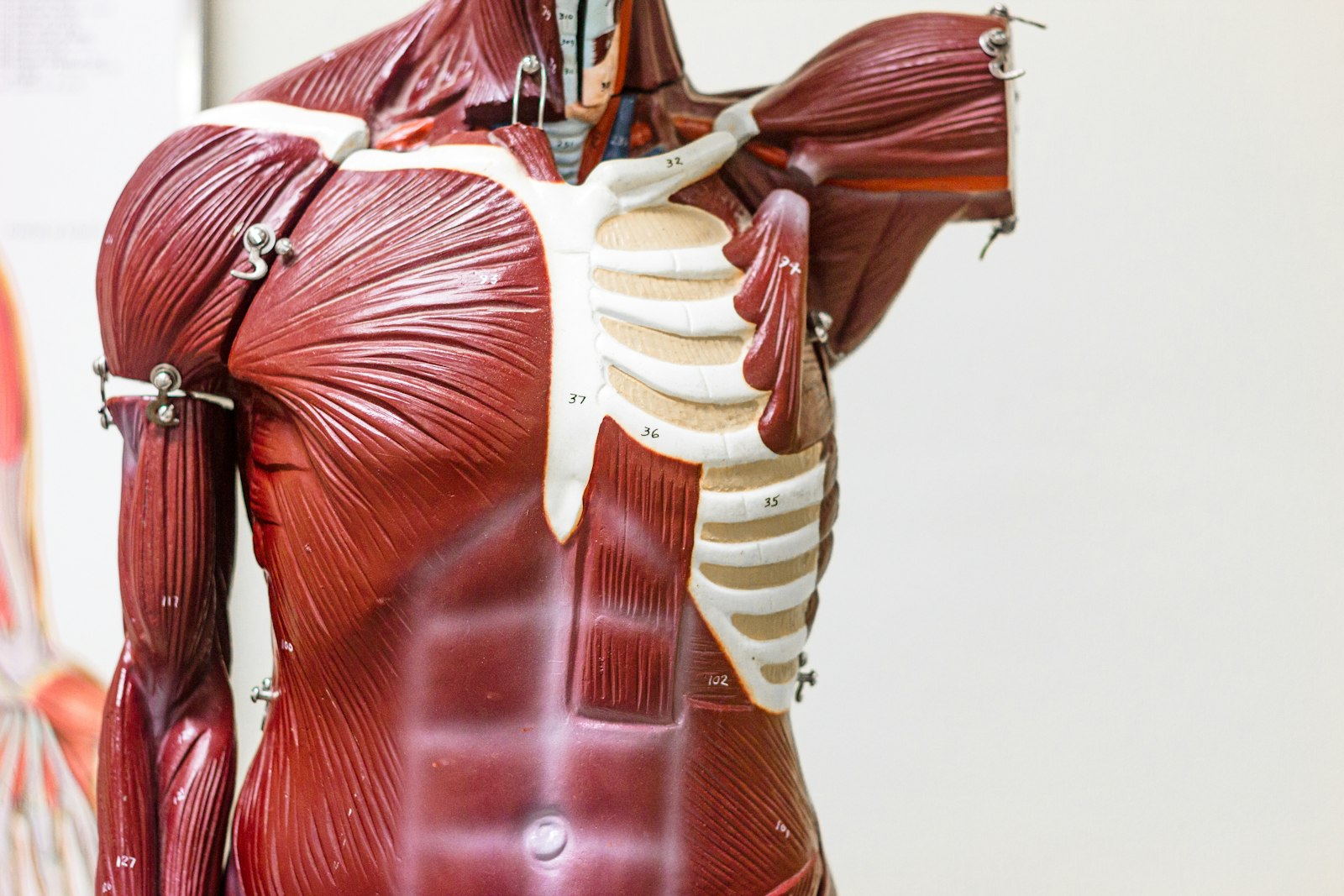
A professional wired EMS suit positions electrode areas over each of the major muscle groups targeted in training: the anterior thigh (quadriceps), posterior thigh (hamstrings), glutes, lower back and lumbar extensors, abdominals and obliques, upper back and trapezius, chest, shoulders, and upper arms (biceps and triceps). The number of electrode channels corresponds to the number of independently controllable muscle group areas — typically 14 to 20 in professional systems. [source] For coaches exploring EMS suit simultaneous muscle activation, proper protocol design is essential.
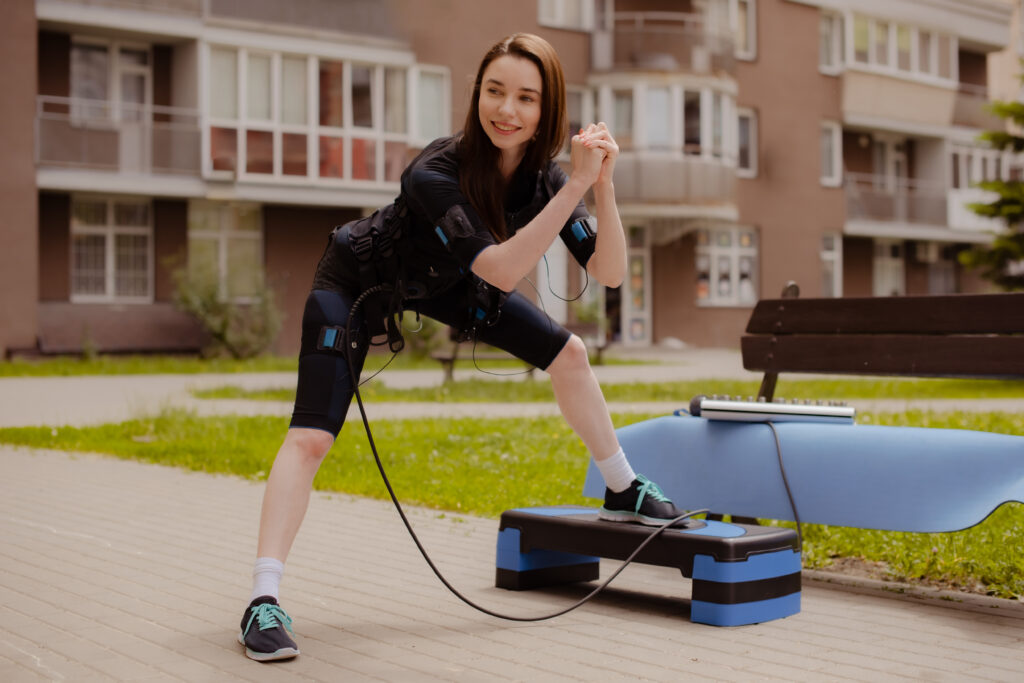
When all channels are active simultaneously, the control unit delivers electrical current to all electrode areas at the same time — producing simultaneous motor nerve depolarization and muscle contractions across all covered muscle groups. The trainer can control the intensity of stimulation for each area independently, allowing higher intensities where larger or more conditioned muscle groups can handle greater stimulus and lower intensities where smaller or more sensitive areas require more conservative stimulation. Clients asking about EMS suit simultaneous muscle activation deserve clear, evidence-informed guidance.
The practical result of this simultaneous coverage is that a 20-minute WB-EMS session activates the musculature that conventional training would address across multiple separate workout sessions — a lower body day, an upper body day, a core session — compressed into a single short training stimulus. Research has confirmed that the metabolic demand and muscle activation breadth of WB-EMS sessions at appropriate intensities substantially exceeds what the brief session duration and low external load would suggest from a conventional training perspective. The practical application of EMS suit simultaneous muscle activation varies depending on goals and client profile.
Physiological Implications of Simultaneous Activation: EMS suit simultaneous muscle activation
The simultaneous activation of large muscle groups across the entire body has several important physiological implications that distinguish WB-EMS from conventional exercise. Cardiovascular demand is significantly elevated relative to the level of voluntary effort because a large proportion of the body’s total muscle mass is contracting simultaneously, creating high metabolic demand and elevated heart rate responses even when the client is performing only light concurrent exercise. [source] Studios investing in EMS suit simultaneous muscle activation report strong client retention and satisfaction.
Metabolic rate elevation from simultaneous whole-body muscle activation is substantial: research on WB-EMS sessions has found that the energy expenditure during sessions significantly exceeds that of comparable-duration low-intensity exercise, and that post-exercise oxygen consumption (EPOC) — the elevated metabolism that follows intense exercise — is maintained for an extended period after WB-EMS sessions, contributing to overall energy expenditure beyond the session itself. Anyone serious about EMS suit simultaneous muscle activation should prioritize certified equipment and trained staff.
The simultaneous activation of antagonist muscle groups — muscles on both sides of a joint (e.g., quadriceps and hamstrings) — is an important aspect of WB-EMS muscle balance. Unlike conventional exercises that tend to work either the anterior or posterior chain with specific movements, WB-EMS can simultaneously stimulate both, supporting balanced development across opposing muscle groups. This bilateral, balanced activation is one of the reasons WB-EMS is associated with posture and muscle balance improvements in research. The business case for EMS suit simultaneous muscle activation is supported by both research and real-world results.
Protocol Design for Whole-Body Activation
Professional trainers design WB-EMS session intensity configurations to match the simultaneous activation across muscle groups to each client’s individual tolerance and training goals. In early sessions, conservative intensities across all channels prevent the excessive cumulative muscular stimulus that the simultaneous nature of WB-EMS creates when intensities are set too high across all muscle groups at once. [source] Getting the most from EMS suit simultaneous muscle activation requires consistent protocol and progress tracking.
As clients adapt over weeks of training, channel intensities are progressively increased — but the trainer’s awareness of the cumulative effect of all channels simultaneously must inform the rate of this progression. Increasing many channels’ intensities simultaneously multiplies the total body stimulus in ways that increasing single channels linearly does not; WB-EMS intensity progression requires awareness of total session load, not just individual channel settings. Safety remains a top priority in any EMS suit simultaneous muscle activation program.
Specialized protocols within WB-EMS sessions can temporarily concentrate activation on specific regions — lower body emphasis for clients with specific leg strength goals, upper body emphasis for shoulder or back development — by increasing intensities on target region channels while maintaining lower intensities elsewhere. This regional emphasis within a whole-body framework allows the trainer to address specific development priorities without losing the whole-body activation that distinguishes EMS from conventional isolated training. Professionals offering EMS suit simultaneous muscle activation benefit from ongoing education and certification.
Conclusion
The simultaneous whole-body muscle activation that wired EMS suits achieve is the core of EMS training’s efficiency advantage — compressing the muscle activation breadth of multiple conventional workout sessions into 20 minutes of simultaneous multi-group stimulation. This capability is what makes WB-EMS a genuinely distinctive training modality rather than a technological variation on conventional exercise. [source]
Understanding the physiology of simultaneous activation — and the implications for metabolic demand, intensity management, and progressive overload — gives trainers and clients a better foundation for using EMS’s unique capabilities effectively and safely, and for appreciating why professional EMS training produces the results that its research evidence consistently documents.
Frequently Asked Questions
How many muscle groups does a WB-EMS suit activate at once? [source]
A professional whole-body EMS suit with all channels active simultaneously stimulates 14 to 20 or more muscle group areas — including quads, hamstrings, glutes, core, back, chest, shoulders, and arms — all in a single session. This simultaneous coverage is the primary reason WB-EMS produces whole-body conditioning effects in 20-minute sessions.
Why does EMS feel harder than regular exercise at the same effort level?
Because WB-EMS simultaneously activates a large proportion of the body’s total muscle mass, creating metabolic demand and cardiovascular response far beyond what the low external load and low voluntary effort would produce in conventional exercise. The cumulative stimulus of whole-body simultaneous activation drives heart rate, energy expenditure, and muscle stress well above what the perceived effort level suggests.
Can EMS activate both the front and back of the body at the same time?
Yes — professional WB-EMS suits include electrode coverage for both anterior (quads, abs, chest) and posterior (hamstrings, glutes, back) muscle groups, and can stimulate all simultaneously. This balanced bilateral activation is one reason WB-EMS is associated with improvements in muscle balance and posture in research.
Why is whole-body EMS more efficient than individual muscle exercises?
Conventional training works one or a few muscle groups per exercise; WB-EMS activates all major muscle groups simultaneously in the same session duration. A 20-minute WB-EMS session provides conditioning stimulus to the musculature that conventional training would address across several separate workout sessions — compressing the training breadth without proportionally compressing the session quality.
Is simultaneous whole-body EMS activation safe?
Simultaneous whole-body EMS is safe when conducted by certified trainers following proper health screening and conservative intensity management protocols. The simultaneous nature of WB-EMS does create greater cumulative muscular and metabolic demand than partial-body EMS — which is why conservative intensity calibration across all channels, particularly in early sessions, is essential for preventing excessive muscle stress.
Ready to explore EMS suit options? Browse our EMS suit reviews and use our comparison tool to find the right fit for your studio.