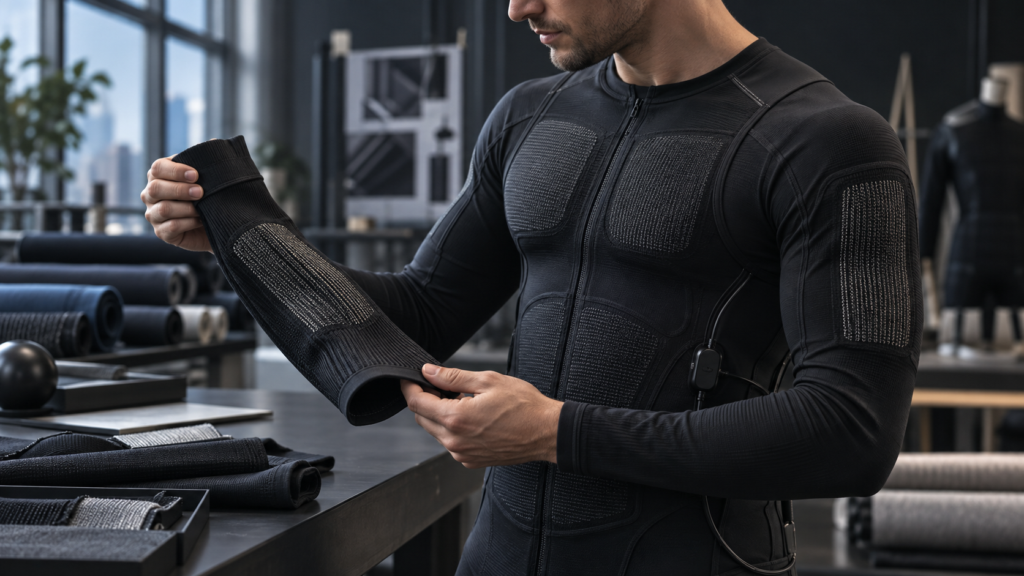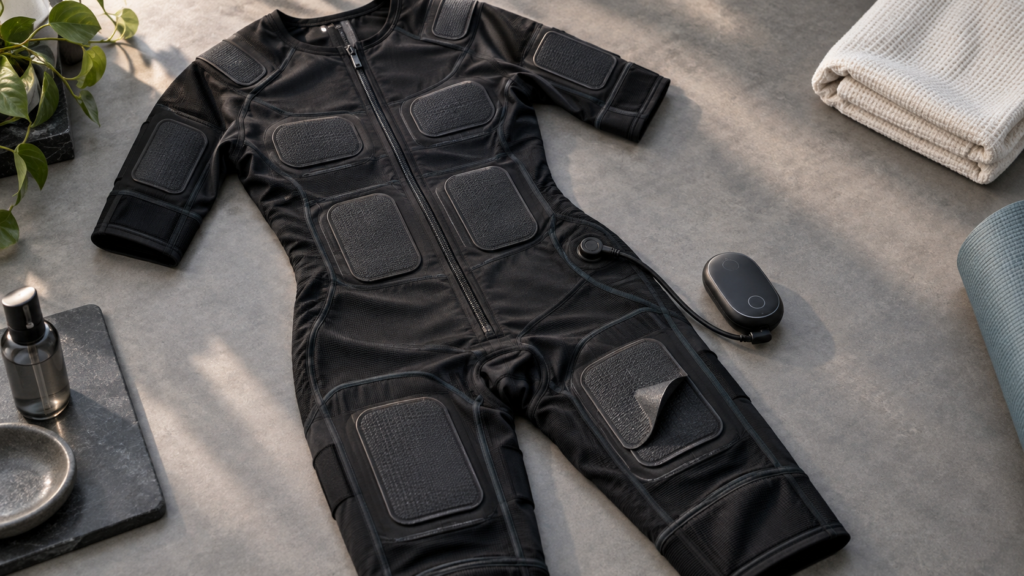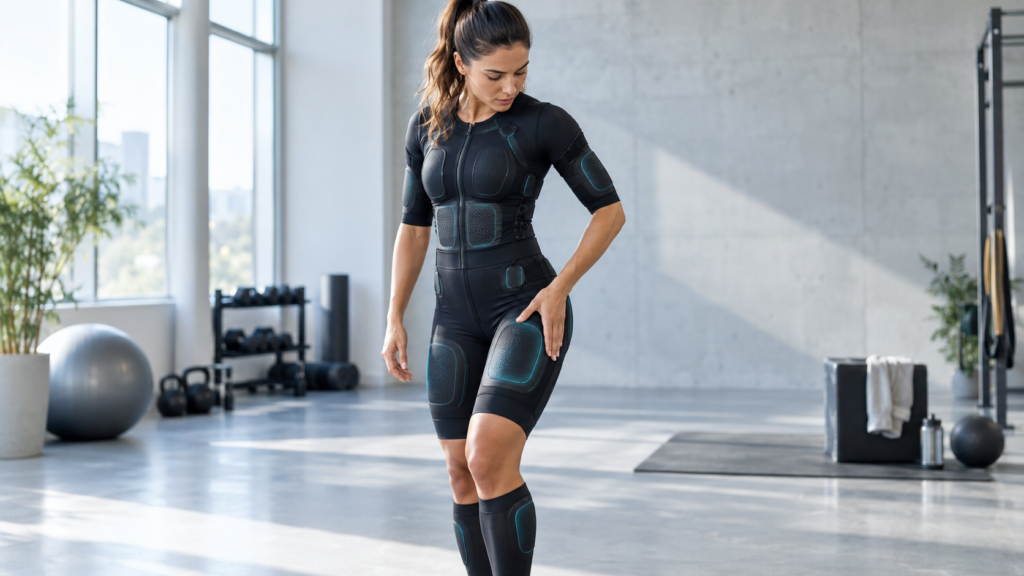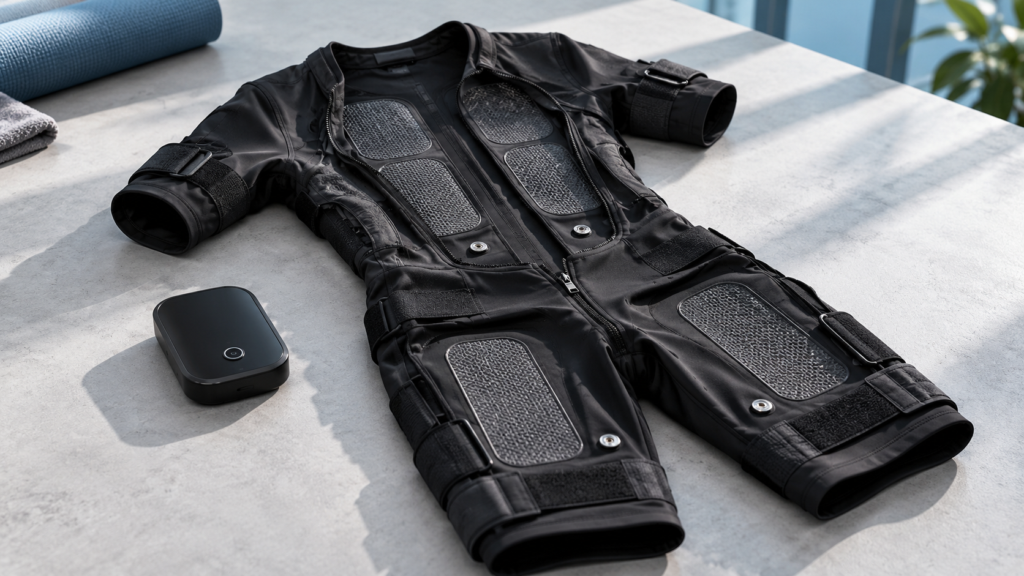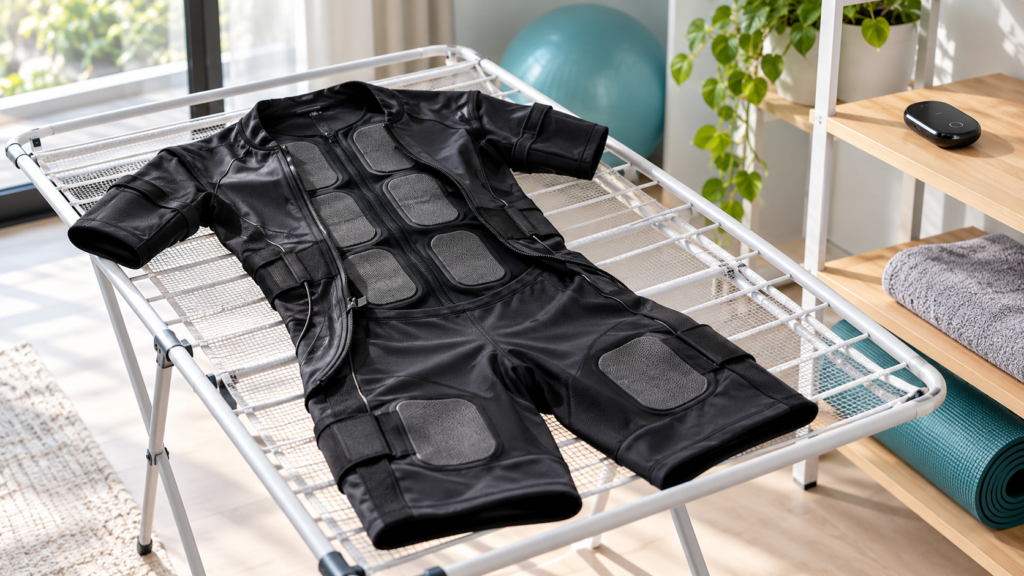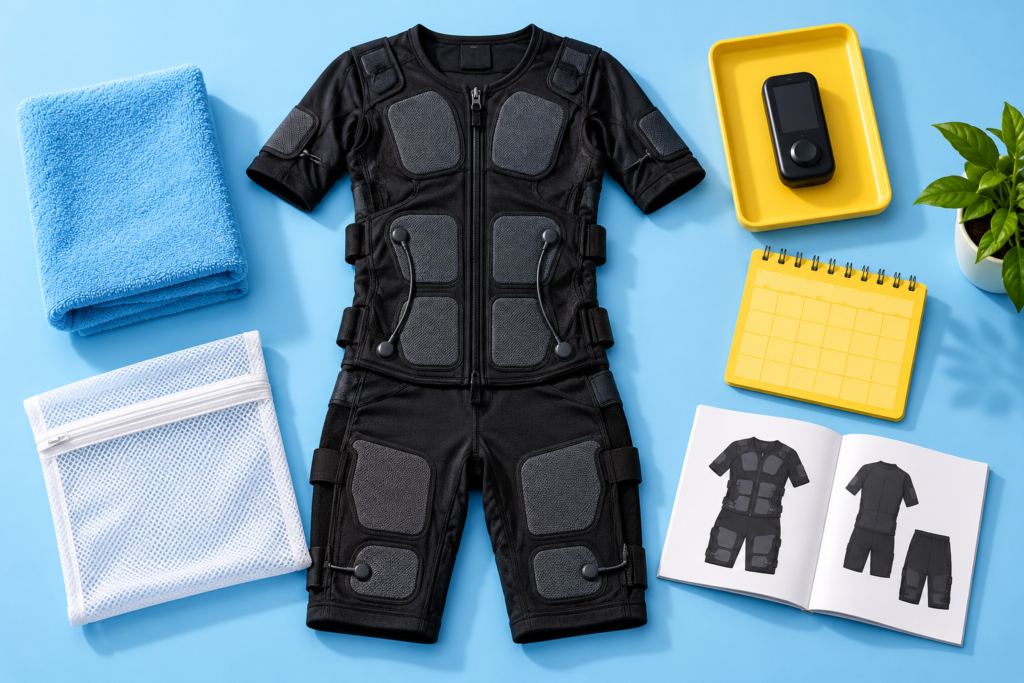
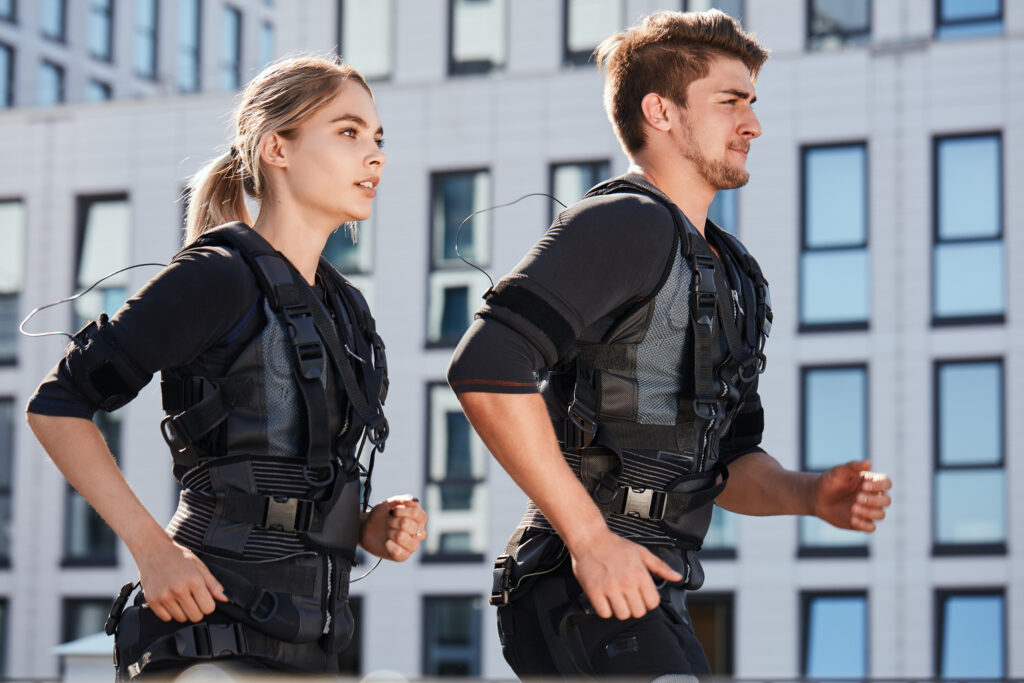
Strength development is among the most researched and best-supported applications of wired EMS suit training. The ability of EMS to recruit a high proportion of motor units — including the high-threshold, fast-twitch motor units most important for strength development — at stimulation intensities that are well tolerated by clients makes it a powerful tool for strength training, particularly for populations where conventional high-load resistance training is difficult to perform safely. Research into wired EMS suit strength training continues to expand as more studios adopt this approach.
Professional EMS strength training protocols are not simply ‘apply EMS while doing exercises’ — they are carefully designed programs that specify frequency, intensity, pulse width, stimulation timing, and the concurrent exercises performed during EMS activation, based on the specific strength outcomes being pursued and the individual client’s characteristics. Understanding how experienced EMS practitioners design and implement strength-oriented protocols illuminates both the sophistication of professional EMS training and the principles that make it effective. Understanding wired EMS suit strength training is key for any trainer looking to modernize their offering.

This article examines the key principles and parameters of professional wired EMS strength training protocols — how frequency and intensity are selected, what concurrent exercise looks like in a strength session, and how progressive overload is applied within the EMS training framework. The evidence supporting wired EMS suit strength training is growing steadily in the professional fitness space.
Stimulation Parameters for Strength Development
The stimulation frequency used in EMS conditioning significantly affects the training outcome. For strength development, moderate-to-high frequencies — typically 50 to 85 Hz — are used to produce the strong, fused tetanic contractions that engage high-threshold motor units and generate the mechanical tension most relevant to strength adaptations. Lower frequencies (10-30 Hz) produce less forceful contractions more suitable for endurance and recovery applications; higher frequencies (above 100 Hz) can cause faster fatigue without proportional strength benefit. [source] For coaches exploring wired EMS suit strength training, proper protocol design is essential.
Pulse width — the duration of each individual electrical pulse — interacts with frequency and intensity to determine the character of the muscle contraction. Longer pulse widths (200-400 microseconds) recruit more motor units at a given intensity because the extended current phase allows depolarization of more nerve fibers. Professional EMS trainers adjust pulse width alongside frequency and intensity to maximize the strength training stimulus within the client’s comfort tolerance. Clients asking about wired EMS suit strength training deserve clear, evidence-informed guidance.
The on/off ratio — the proportion of stimulation-active time to rest time — affects both the metabolic demand of the session and the fatigue characteristics of the training stimulus. For strength training, typical stimulation cycles of 4 to 6 seconds on and 4 to 6 seconds off are common, providing sufficient time for a controlled voluntary contraction to accompany the EMS stimulation while allowing short recovery between contractions. Sessions typically last 20 minutes of active stimulation, producing a concentrated training stimulus in a shorter total session time. The practical application of wired EMS suit strength training varies depending on goals and client profile.
Concurrent Exercise in EMS Strength Sessions: Wired EMS suit strength training
EMS strength training is most effective when the electrical stimulation is combined with concurrent voluntary exercise — having the client actively contract the stimulated muscles during the EMS-on phase and perform controlled movements that challenge the stimulated muscle groups. This combination of EMS-driven and voluntary motor unit recruitment produces a more complete neuromuscular training stimulus than EMS passive stimulation alone. [source] Studios investing in wired EMS suit strength training report strong client retention and satisfaction.
Concurrent exercises in wired EMS strength sessions are typically functional compound movements that engage the major muscle groups being stimulated: squats and squat variations for lower body and core; resistance band rows and pulls for back and arms; push-up positions or press patterns for chest and triceps; and hip hinge patterns for posterior chain. The resistance used is typically light (body weight or light bands) because the EMS stimulation is providing the primary training load — the concurrent exercises provide movement pattern context and voluntary activation rather than high external load. Anyone serious about wired EMS suit strength training should prioritize certified equipment and trained staff.
Exercise selection for wired EMS sessions must accommodate the cable constraint of wired systems: all exercises must be performable within the cable reach of the control unit. Experienced EMS trainers develop a movement vocabulary suited to the wired context — compound movements, isometric holds, and resistance band exercises that provide full training stimulus without translational movement beyond cable range. The business case for wired EMS suit strength training is supported by both research and real-world results.
Progressive Overload in EMS Strength Training
Progressive overload — the fundamental principle of strength training that requires progressively increasing training stimulus to drive continued adaptation — applies to EMS strength training as it does to conventional resistance training. In EMS, progressive overload is achieved primarily through increasing stimulation intensity over time: as the client adapts to a given intensity level and the training stimulus it provides diminishes, intensity is progressively increased to maintain the adaptive stimulus. [source] Getting the most from wired EMS suit strength training requires consistent protocol and progress tracking.

Intensity progression in professional EMS programs is managed conservatively, particularly in early training when the neuromuscular system is adapting to an entirely novel stimulus. Most experienced EMS practitioners begin at 30 to 50% of the client’s tolerated maximum intensity in the first sessions and progress by 5 to 15% of maximum intensity per session over the first several weeks, reaching working intensities of 70 to 90% of tolerated maximum after 4 to 8 weeks of gradual progression. Safety remains a top priority in any wired EMS suit strength training program.
Beyond intensity, overload can be applied through increasing exercise complexity (progressing from bilateral to unilateral movements), increasing concurrent exercise resistance (heavier bands or adding dumbbells), and varying stimulation parameters (frequency, pulse width, timing) to present different neuromuscular challenges. A well-programmed EMS strength training protocol continues to evolve over the training period to prevent adaptation plateaus and maintain the progressive overload that drives continued strength development. Professionals offering wired EMS suit strength training benefit from ongoing education and certification.
Conclusion
Professional wired EMS strength training protocols represent a sophisticated integration of electrical stimulation science and exercise physiology — combining carefully selected stimulation parameters with concurrent functional exercise and progressive overload principles to produce the strength adaptations that EMS’s unique motor unit recruitment capability makes possible. [source]
The most effective EMS strength training programs are those designed by certified practitioners who understand both the physiological mechanisms of EMS and the exercise science principles that govern strength development — applying EMS not as a replacement for thoughtful programming but as a powerful additional dimension of the training stimulus.
Frequently Asked Questions
What EMS frequency is best for strength training? [source]
Moderate-to-high frequencies in the 50 to 85 Hz range are most used for EMS strength development, producing the strong tetanic contractions that recruit high-threshold motor units and generate the mechanical tension relevant to strength adaptations. The specific frequency selection depends on the target muscle groups, individual client response, and concurrent exercise design.
Should I contract my muscles during EMS strength training?
Yes — concurrent voluntary contraction during EMS stimulation produces a more complete neuromuscular training stimulus than passive EMS alone. Professional EMS strength sessions combine EMS-driven stimulation with active concurrent exercises so the client is voluntarily contracting the target muscles during the EMS-on phase, maximizing motor unit recruitment and motor learning stimulus.
How much strength gain can EMS produce?
Research has found meaningful strength gains from WB-EMS training — comparable to moderate conventional resistance training in studies with sedentary and moderately active populations. The degree of strength gain depends on the individual’s starting point, training intensity and consistency, and how well the EMS program is designed and progressively overloaded. EMS produces larger relative strength gains in deconditioned populations.
How long does EMS strength training take to show results?
Early neuromuscular adaptations (improved motor unit recruitment and coordination) occur within 2 to 4 weeks of regular EMS training. Meaningful muscle strength increases are typically measurable after 6 to 8 weeks of consistent twice-weekly training. Body composition changes from EMS strength training generally develop over 12 to 16 weeks or longer.
Can wired EMS be used for heavy strength training?
Wired EMS provides a significant strength training stimulus through high motor unit recruitment — often exceeding what conventional training at equivalent perceived exertion achieves — without requiring heavy external loads. EMS strength training is not typically combined with maximal external loads (heavy barbell training) because the combination increases injury risk and is unnecessary given EMS’s independent training stimulus.
Ready to explore EMS suit options? Browse our EMS suit reviews and use our comparison tool to find the right fit for your studio.