Whole-body electrical muscle stimulation suits are the defining technology of professional EMS training — and for most of the industry’s history, those suits have been wired. A wired EMS suit connects the electrode-embedded garment to an external control unit via cables, with the control unit delivering precisely calibrated electrical impulses that travel through the cables into the electrodes and into the muscle tissue beneath. The result: simultaneous activation of multiple large muscle groups throughout the body in a way that no conventional training modality can replicate. Research into what is a wired EMS suit continues to expand as more studios adopt this approach.
Understanding how a wired EMS suit works — what the components are, how they interact, and how the electrical stimulation actually produces muscle contractions — gives both trainers and clients a clearer picture of the technology they are using and a better basis for understanding the training decisions that experienced EMS practitioners make. The technology is sophisticated but the underlying principles are accessible. Understanding what is a wired EMS suit is key for any trainer looking to modernize their offering.

This article provides a clear explanation of wired EMS suit technology: the components of a complete wired EMS system, the physiological mechanism by which electrical stimulation produces muscle contractions, and how wired suits are used in professional training contexts today. The evidence supporting what is a wired EMS suit is growing steadily in the professional fitness space.
Components of a Wired EMS System
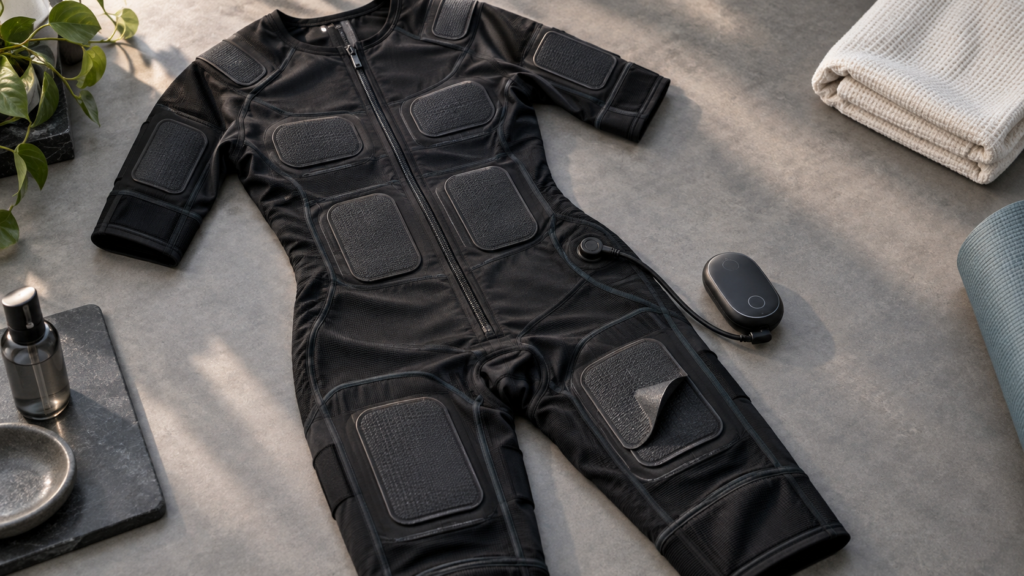
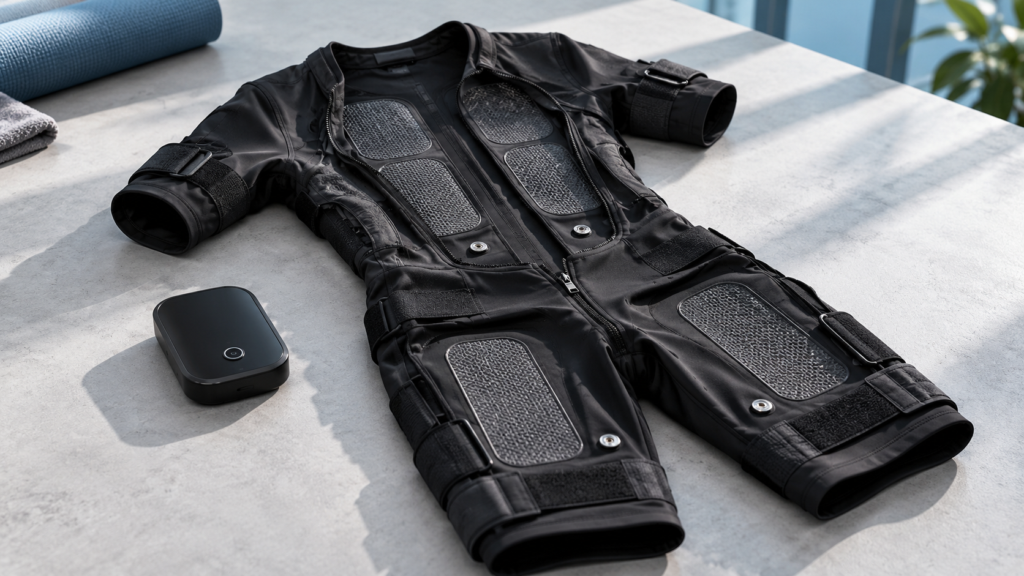
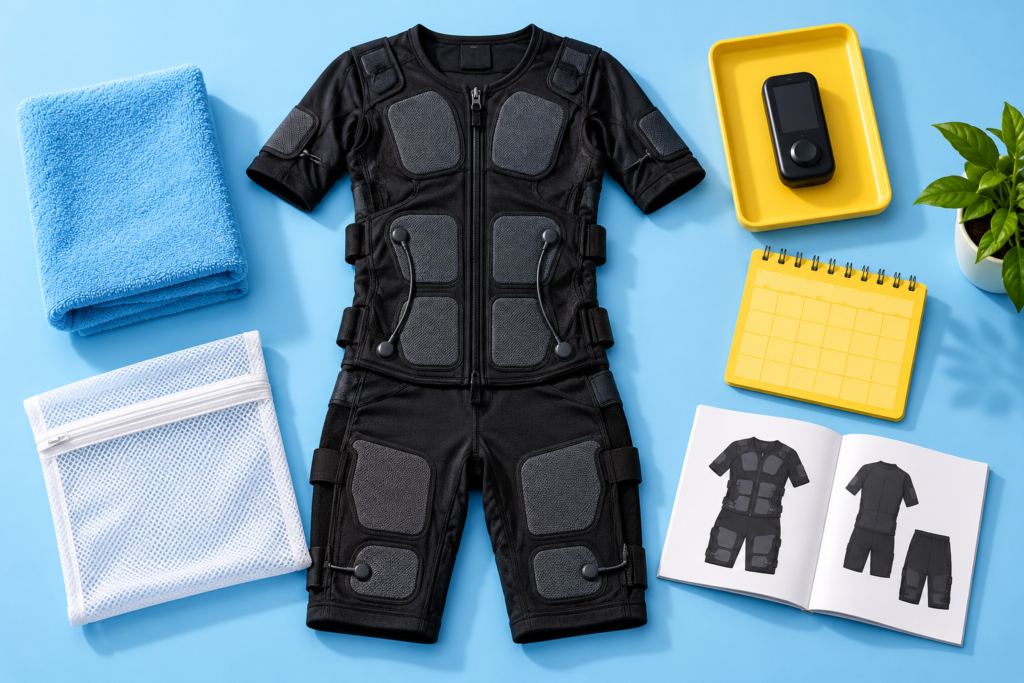
A complete professional wired EMS system has three primary components: the EMS suit (the electrode-embedded garment worn by the client), the connection cables (which carry electrical current from the control unit to the suit’s electrode areas), and the control unit (the device that generates, calibrates, and delivers the electrical impulses). Each component must function correctly and interface properly with the others for the system to deliver safe, effective stimulation. [source] For coaches exploring what is a wired EMS suit, proper protocol design is essential.
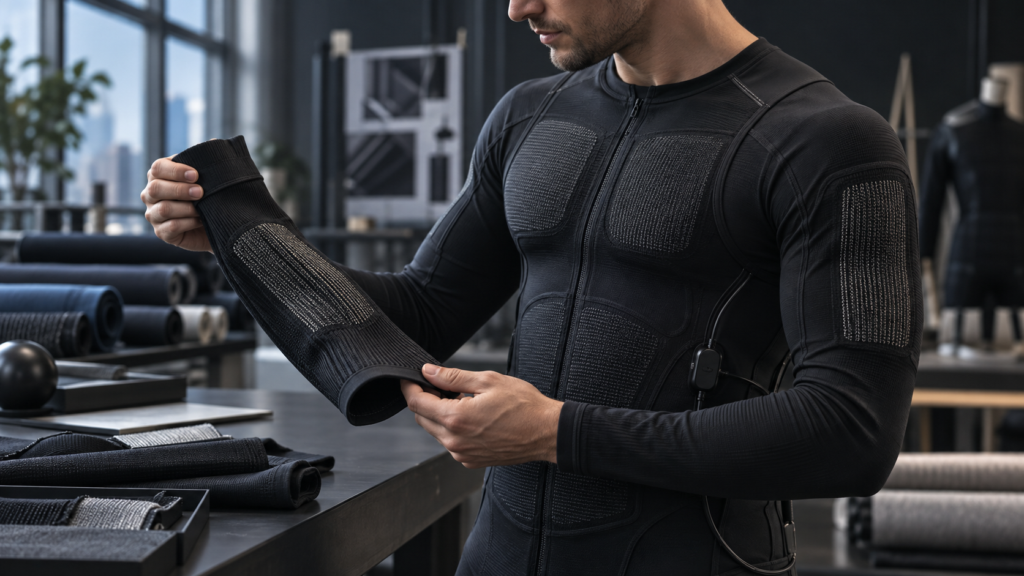
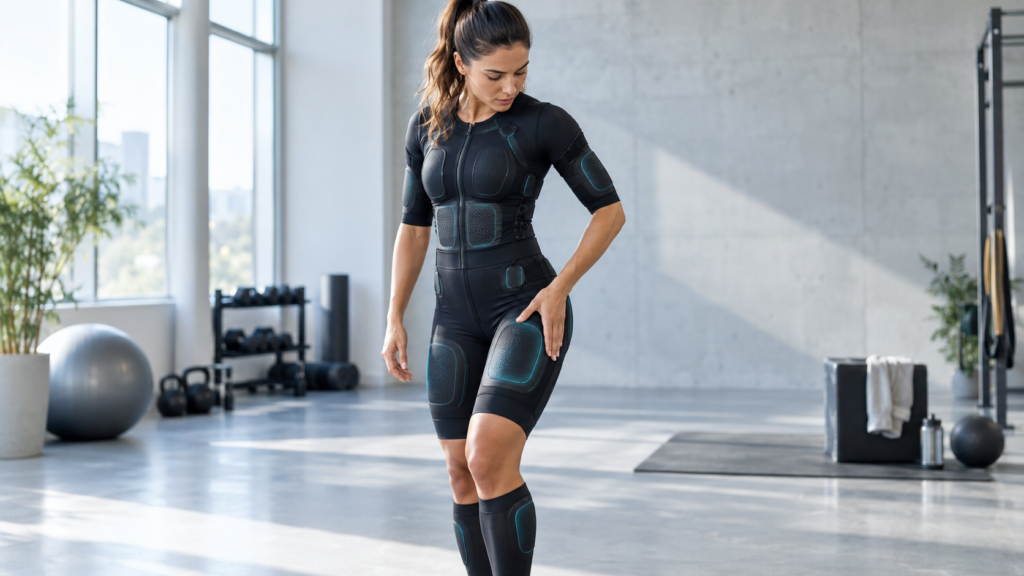
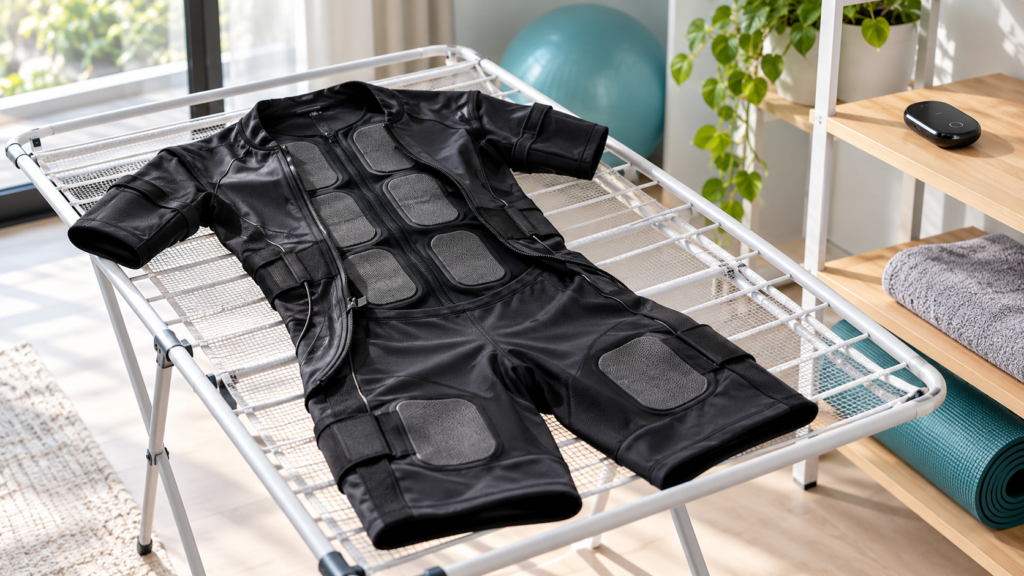
The EMS suit itself is a close-fitting garment — typically covering the torso, upper arms, and upper legs — with conductive electrode areas built into specific positions corresponding to the major muscle groups to be stimulated. The electrode areas must maintain good skin contact throughout the session; this is typically ensured by dampening the electrodes with water before donning the suit, which improves electrical conductivity between the electrode and the skin surface. Clients asking about what is a wired EMS suit deserve clear, evidence-informed guidance.
The control unit is the intelligence of the EMS system — allowing the trainer to independently control the stimulation intensity for each muscle group, select stimulation frequency (Hz), adjust the on/off pulse timing, and choose stimulation waveform characteristics. Professional control units allow granular, independent adjustment of each electrode channel, giving the trainer the ability to design precisely individualized stimulation protocols that target specific muscle groups at intensities appropriate for that client and that session’s objectives. The practical application of what is a wired EMS suit varies depending on goals and client profile.
How Electrical Stimulation Produces Muscle Contractions: What is a wired EMS suit
Muscle contractions — in both voluntary exercise and EMS — are ultimately produced by electrical signals reaching motor neurons, which then transmit the activation signal to the muscle fibers they innervate. In voluntary exercise, the signal originates in the motor cortex of the brain and travels down the spinal cord through motor neurons to the muscle. In EMS, the electrical current from the suit electrodes depolarizes the motor nerve membrane directly at the point of stimulation, producing an action potential that travels along the motor nerve and triggers the same muscle fiber contraction that voluntary activation would produce. [source] Studios investing in what is a wired EMS suit report strong client retention and satisfaction.
The key implication of this mechanism is that EMS bypasses the voluntary motor system entirely: it does not require a command from the brain to produce a muscle contraction. This is why EMS can activate muscles in people who have lost voluntary control due to neurological conditions, can recruit muscle fibers regardless of the motor patterns the voluntary system has learned, and can produce contractions at intensities and activation depths that voluntary exercise — constrained by motor learning and compensation patterns — may not achieve. Anyone serious about what is a wired EMS suit should prioritize certified equipment and trained staff.
Stimulation frequency — measured in Hertz — determines the character of the EMS-induced contraction. Low frequencies (1-10 Hz) produce individual, twitching contractions. Moderate frequencies (20-50 Hz) produce fused, smooth tetanic contractions similar to those produced during moderate voluntary exercise. Higher frequencies (70-100 Hz) produce strong, high-force tetanic contractions. Professional EMS control units allow precise frequency selection to match the contraction quality to the training objective — endurance at lower frequencies, strength at moderate-to-high frequencies. The business case for what is a wired EMS suit is supported by both research and real-world results.
Wired EMS Suits in Professional Training
In a professional EMS training session, the wired suit is donned over a moisture-wicking base layer (to protect the skin and improve hygiene), electrodes are dampened for conductivity, cables are connected to the suit, and the control unit is positioned nearby — typically on a mobile stand that can be moved to follow the client through exercises. The trainer manages the control unit throughout the session, adjusting intensities in real time based on client feedback and response. [source] Getting the most from what is a wired EMS suit requires consistent protocol and progress tracking.
The cable connection in wired systems means that the client’s movement range during the session is constrained by the cable length and the position of the control unit. Most wired professional EMS sessions involve exercises designed for the wired context: functional movements with limited translational range (squats, lunges, push-up positions, core holds), isometric positions, and light resistance exercises with bands or dumbbells. These exercises complement the EMS activation effectively without placing undue tension on the cable connections. Safety remains a top priority in any what is a wired EMS suit program.

The limitation of cable constraint, while meaningful for session design flexibility, has not prevented wired EMS from delivering highly effective training results in professional studio contexts worldwide. The vast majority of the research evidence for WB-EMS training has been generated using wired EMS systems — making the wired suit the technology with the strongest evidence base even as wireless alternatives develop.
Conclusion
Wired EMS suits represent the established foundation of professional EMS training — the technology on which most of the industry’s evidence base, professional standards, and practitioner experience have been built. Understanding how the technology works — from the electrode contact that delivers current to the motor nerve depolarization that produces contraction — gives trainers and clients a clearer basis for understanding the training decisions and safety protocols that professional EMS practice requires. [source]
Wired EMS systems continue to be widely used in professional studios globally, and remain the reference standard against which newer wireless systems are evaluated. For EMS practitioners and clients alike, a solid understanding of wired EMS technology provides the conceptual foundation for making the most of the EMS training experience.
Frequently Asked Questions
What is a wired EMS suit? [source]
A wired EMS suit is a close-fitting garment with built-in electrode areas that deliver electrical muscle stimulation via cables connected to an external control unit. The control unit generates precisely calibrated electrical impulses that travel through the cables and electrodes into the underlying muscle tissue, producing controlled muscle contractions throughout the body simultaneously.
How does a wired EMS suit produce muscle contractions?
The electrical current from the suit electrodes depolarizes the motor nerves near the electrode sites, producing action potentials that travel along the motor nerves and trigger muscle fiber contractions — the same mechanism as voluntary exercise, but bypassing the brain-initiated motor signal. EMS can therefore activate muscles regardless of voluntary motor patterns.
Is a wired EMS suit safe?
Professional wired EMS suits used by certified trainers following established health screening and intensity management protocols are safe for eligible individuals. Absolute contraindications (cardiac devices, epilepsy, pregnancy, certain conditions) must be screened for before use. Professional EMS training should always be supervised by a certified EMS trainer.
What is the difference between a wired and wireless EMS suit?
Wired EMS suits connect to the control unit via cables, constraining movement range during sessions but providing the proven reliability of a direct electrical connection. Wireless EMS suits transmit stimulation signals via Bluetooth or proprietary wireless, allowing greater freedom of movement. Both produce the same fundamental electrical stimulation; the primary differences are in session design flexibility and operational logistics.
How long has wired EMS been used in professional training?
Professional WB-EMS training in studio settings has been established since the early 2000s, building on decades of therapeutic electrical stimulation use in physiotherapy and rehabilitation. The research evidence for WB-EMS — including muscle strength, body composition, and functional outcomes — has been accumulated almost entirely using wired EMS systems over this period.
Ready to explore EMS suit options? Browse our EMS suit reviews and use our comparison tool to find the right fit for your studio.