
The EMS fitness industry is at an inflection point. What began as a clinical rehabilitation technology has grown into a global fitness sector with thousands of studios, multiple established business models, a growing body of research evidence, and an increasingly sophisticated consumer awareness. The decade ahead is likely to see continued growth across several dimensions — technology advancement, business model diversification, geographic market expansion, and clinical integration — that will reshape the EMS landscape for both operators and clients. Research into EMS fitness industry future continues to expand as more studios adopt this approach.
Understanding the trajectory of the EMS industry is valuable for anyone with a stake in it — current EMS studio operators planning their next phase of investment, aspiring EMS entrepreneurs evaluating market entry timing, and EMS clients interested in how the training experience will evolve. The key trends shaping the industry’s future involve both the technology itself and the business and regulatory environment in which it operates. Understanding EMS fitness industry future is key for any trainer looking to modernize their offering.

This article examines the major trends shaping the EMS fitness industry’s future — from wireless technology and personalization to regulatory development and market expansion — with a focus on the practical implications for EMS businesses and practitioners. The evidence supporting EMS fitness industry future is growing steadily in the professional fitness space.
Technology: Wireless, Wearable, and Data-Driven EMS
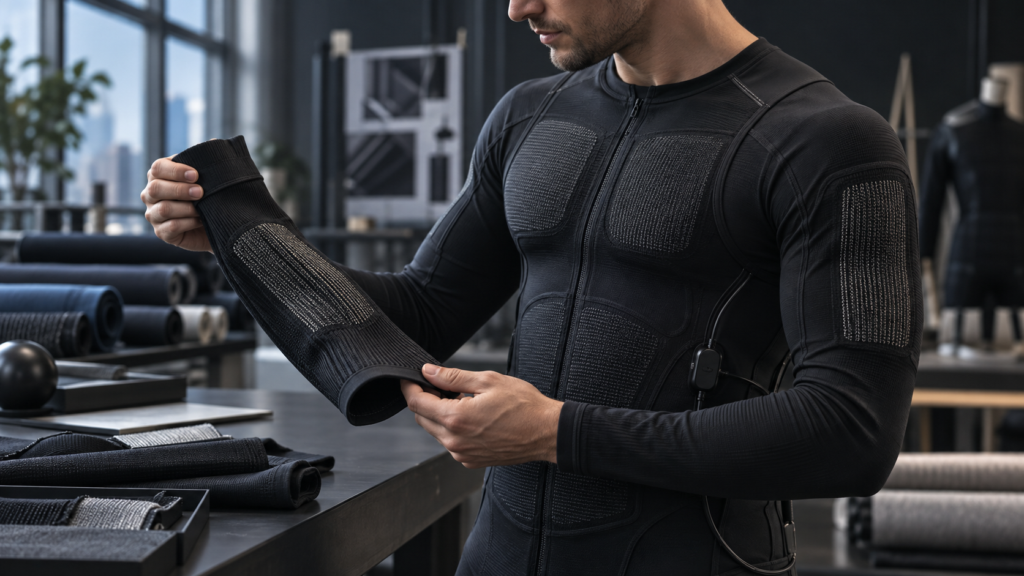
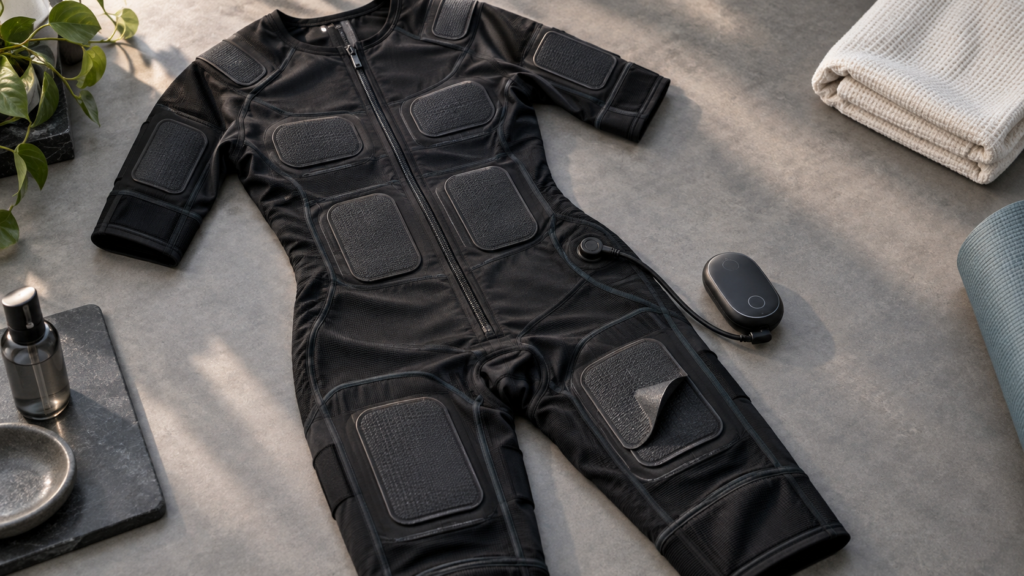
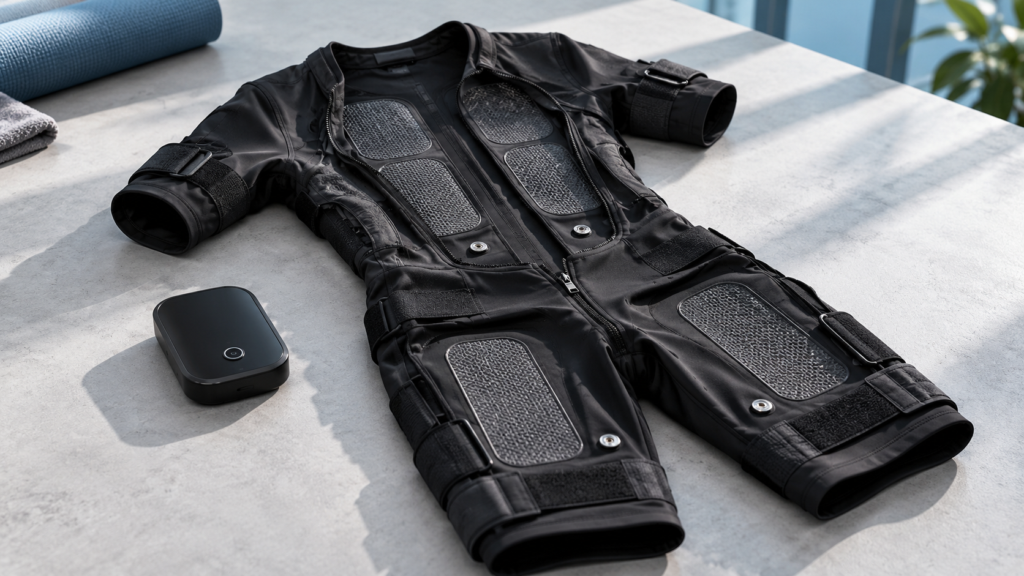
The most significant technology trend in the EMS fitness industry is the rapid advancement of wireless EMS systems. Traditional EMS suits required wired connections between the suit and control unit — limiting movement and creating logistical constraints in session design. Wireless EMS systems — which transmit stimulation signals via Bluetooth or proprietary wireless protocols, eliminating cables — have reached professional-grade quality and are increasingly adopted by EMS studios and trainers who value the freedom of movement and simplified session management they provide. [source] For coaches exploring EMS fitness industry future, proper protocol design is essential.
Wearable EMS technology — consumer-grade devices that allow self-directed EMS stimulation outside of professional sessions — is expanding the EMS market beyond the studio context. While consumer devices are typically less powerful than professional systems and lack the professional supervision that maximizes safety and effectiveness, they represent a growing segment that is building consumer awareness of EMS and expanding the population familiar with the technology. Clients asking about EMS fitness industry future deserve clear, evidence-informed guidance.
Data integration — connecting EMS training data with wearable fitness trackers, health platforms, and individualized training algorithms — is an emerging development that could significantly advance EMS personalization. Future EMS systems may integrate real-time biometric feedback (heart rate, muscle activation patterns, recovery markers) to automatically optimize stimulation parameters for each session, moving from standardized protocol templates toward genuinely individualized EMS prescription. The practical application of EMS fitness industry future varies depending on goals and client profile.
Market and Business Model Trends: EMS fitness industry future
Global EMS market growth has been robust and is projected to continue. Market research estimates for the global EMS fitness market vary, but consistent double-digit annual growth rates have been observed across key markets in Europe, Asia, and increasingly North America. As consumer awareness of EMS grows, the addressable market expands significantly — reducing the education barrier that currently limits first-mover adoption in markets where EMS is still unfamiliar to most consumers. [source] Studios investing in EMS fitness industry future report strong client retention and satisfaction.
Business model diversification will characterize the next phase of EMS industry development. The hybrid studio/mobile model, corporate wellness integration, clinical EMS partnerships (with physiotherapy, sports medicine, and rehabilitation medicine), and direct-to-consumer EMS coaching (remote programming for home device users) are all growing as EMS operators identify new ways to reach clients and monetize EMS expertise beyond traditional studio sessions. Anyone serious about EMS fitness industry future should prioritize certified equipment and trained staff.
Consolidation in the EMS industry — both franchise network growth and potential private equity interest in scaling successful independent studio models — may accelerate as the market matures. Larger, more professionalized EMS brands with stronger quality standards and consumer recognition will likely gain market share at the expense of lower-quality operators — a pattern that has characterized the maturation of other boutique fitness categories. The business case for EMS fitness industry future is supported by both research and real-world results.
Regulatory and Research Developments
Regulatory clarity around EMS equipment classification and use will be a significant development for the EMS industry in the coming years. As the market grows and more consumers experience EMS training, regulatory bodies in various markets are increasing their scrutiny of EMS equipment claims, practitioner qualification requirements, and the boundary between fitness and medical device applications. [source] Getting the most from EMS fitness industry future requires consistent protocol and progress tracking.
The evidence base for EMS efficacy and safety continues to develop. The research pipeline includes larger randomized controlled trials of WB-EMS for specific populations (sarcopenia, cardiac rehabilitation, metabolic syndrome), longer-term follow-up studies examining sustained EMS training outcomes, and direct comparisons of EMS with other training modalities that will strengthen or refine the existing evidence base. A growing evidence base supports stronger clinical integration and more precise claims about EMS outcomes. Safety remains a top priority in any EMS fitness industry future program.

Professional standards development — through EMS-specific professional associations, certification accreditation, and industry self-regulation — is likely to accelerate as larger EMS operators recognize the reputational risk of industry-wide standards remaining underdeveloped. Studios that invest in professional standards today position themselves as leaders in the professional environment that the EMS industry is moving toward. Professionals offering EMS fitness industry future benefit from ongoing education and certification.
Conclusion
The EMS fitness industry’s future trajectory is positive — supported by growing consumer awareness, advancing technology, a strengthening evidence base, and expanding business models that make EMS accessible across a wider range of client contexts. The operators best positioned for this future are those who are investing now in the professional standards, technology understanding, and business model adaptability that the next phase of EMS industry development will reward.
For EMS studios and practitioners, the industry’s evolution is an opportunity to grow with a sector that is still in its early mainstream phase — before EMS becomes as familiar as yoga or HIIT, and while the first-mover advantages of professional positioning, client relationships, and market knowledge are still available to those who invest in them today.
Frequently Asked Questions
Is the EMS fitness industry growing?
Yes — global EMS fitness market research consistently shows strong growth, driven by increasing consumer awareness, technology advances making EMS more accessible, growing research evidence supporting EMS efficacy, and expanding business models reaching new client populations. Europe leads adoption, with North America and Asia growing rapidly.
What is the future of wireless EMS training?
Wireless EMS systems are advancing rapidly in professional-grade quality and are increasingly displacing wired systems in new studio installations. The freedom of movement wireless systems enable allows more dynamic session design and a significantly improved client experience. Wireless is likely to become the dominant professional EMS format within the next five years.
Will EMS fitness become mainstream?
EMS is progressively moving toward mainstream consumer awareness, driven by media coverage, influencer adoption, and word-of-mouth from the growing population with direct EMS experience. The 20-minute full-body workout value proposition aligns strongly with the time-scarcity and efficiency priorities of modern consumers. Mainstream adoption will accelerate as the education barrier decreases.
Are there investment opportunities in the EMS fitness industry?
The EMS fitness industry has attracted increasing investor interest as growth rates and unit economics become better understood. Franchise systems, multi-location independent studios, EMS technology companies, and digital EMS coaching platforms are among the investment areas with the most active development. As with any investment in a growing but still-maturing industry, due diligence on specific opportunities is essential.
How will EMS training change in the next 10 years?
Key changes likely in the next decade include: wireless EMS becoming the standard; data integration enabling personalized EMS programming based on real-time biometric feedback; stronger clinical integration with rehabilitation and healthcare settings; expanded consumer wearable EMS; and more formalized professional standards and certification requirements across markets.
Ready to explore EMS suit options? Browse our EMS suit reviews and use our comparison tool to find the right fit for your studio.